Unsanitary Living Conditions For A Child
Description


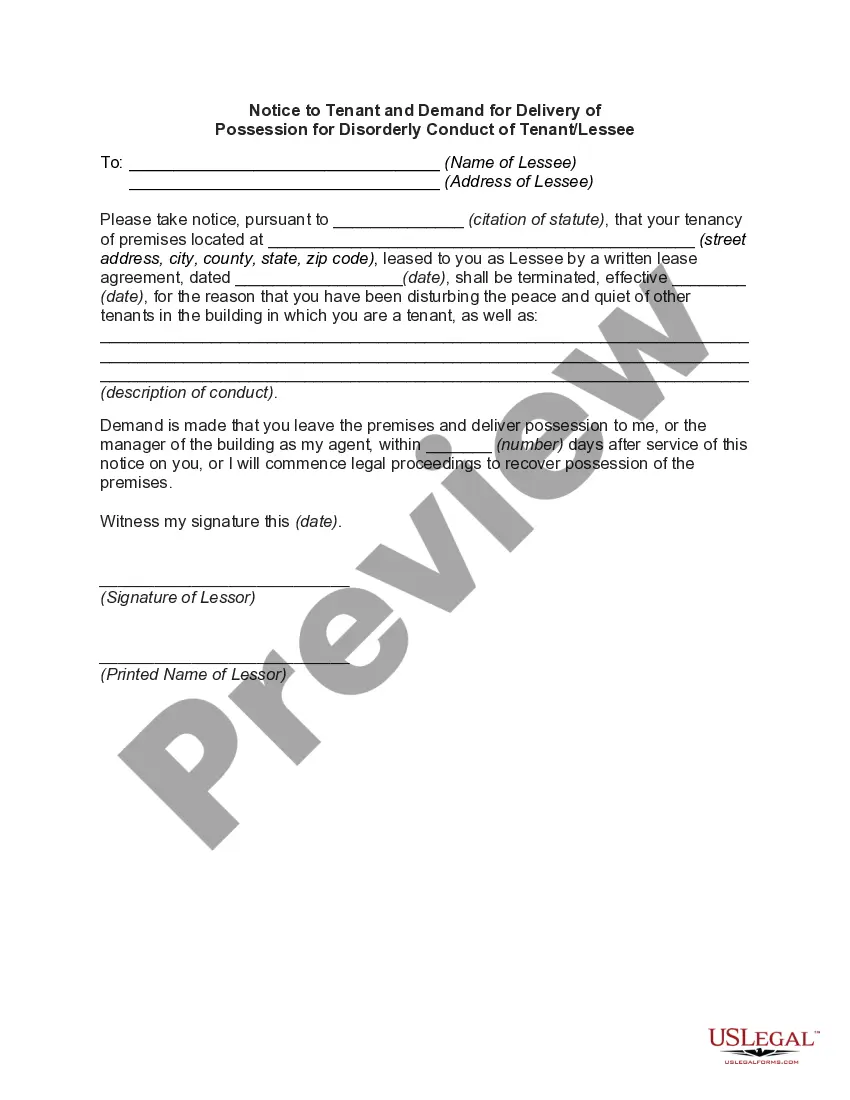
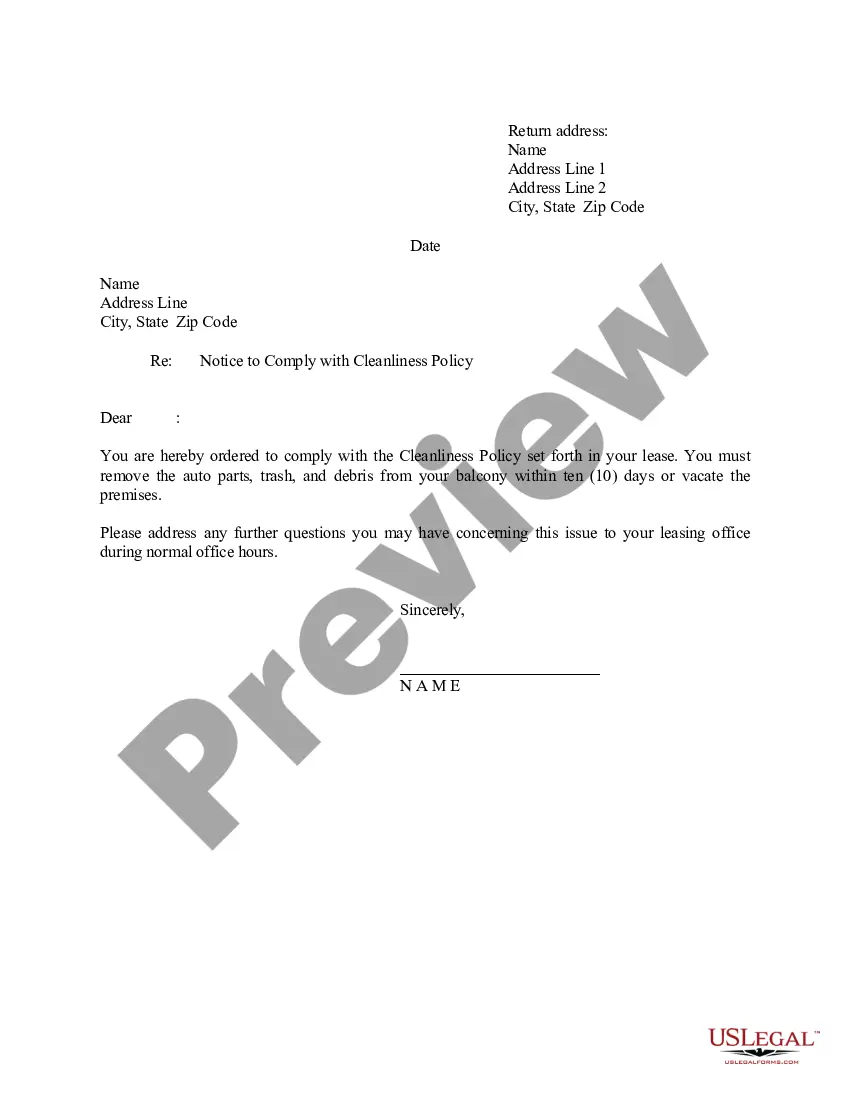
Get your form ready online
Our built-in tools help you complete, sign, share, and store your documents in one place.
Make edits, fill in missing information, and update formatting in US Legal Forms—just like you would in MS Word.
Download a copy, print it, send it by email, or mail it via USPS—whatever works best for your next step.
Sign and collect signatures with our SignNow integration. Send to multiple recipients, set reminders, and more. Go Premium to unlock E-Sign.
If this form requires notarization, complete it online through a secure video call—no need to meet a notary in person or wait for an appointment.
We protect your documents and personal data by following strict security and privacy standards.

Make edits, fill in missing information, and update formatting in US Legal Forms—just like you would in MS Word.

Download a copy, print it, send it by email, or mail it via USPS—whatever works best for your next step.

Sign and collect signatures with our SignNow integration. Send to multiple recipients, set reminders, and more. Go Premium to unlock E-Sign.

If this form requires notarization, complete it online through a secure video call—no need to meet a notary in person or wait for an appointment.

We protect your documents and personal data by following strict security and privacy standards.
Looking for another form?
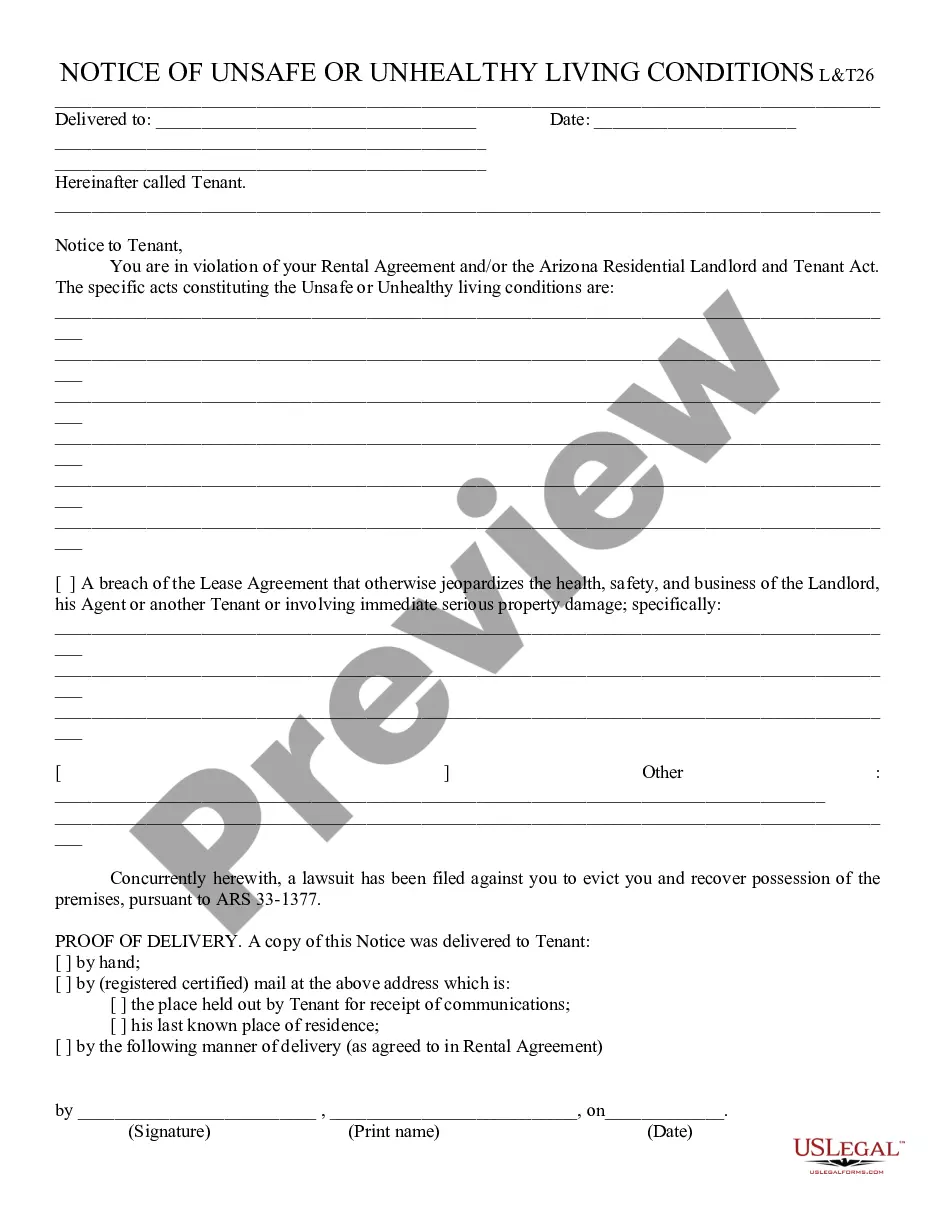
How to fill out Arizona Notice Of Unhealthy Or Unsafe Living Conditions Landlord To Tenant?
Traversing through the red tape of traditional documents and formats can be challenging, particularly if one does not engage in that professionally.
Even selecting the appropriate template for the Unsanitary Living Conditions For A Child will consume significant time, as it must be valid and precise to the very last numeral.
However, you will need to spend considerably less time picking a suitable template from a resource you can depend on.
Acquire the appropriate form in a few straightforward steps: Enter the title of the document in the search field. Locate the right Unsanitary Living Conditions For A Child among the outcomes. Review the description of the sample or access its preview. If the template aligns with your requirements, click Buy Now. Continue to select your subscription plan. Use your email to create a password to register an account at US Legal Forms. Choose a credit card or PayPal payment method. Save the template file on your device in the format of your preference. US Legal Forms will save you time and effort determining whether the form you found online is suitable for your needs. Create an account and gain unrestricted access to all the templates you require.
- US Legal Forms is a platform that streamlines the task of locating the right forms online.
- US Legal Forms is a singular destination where you can discover the most current samples of documents, verify their usage, and download these samples for completion.
- This is a repository containing over 85K forms that are applicable in various professional sectors.
- When searching for an Unsanitary Living Conditions For A Child, you will not need to question its relevance as all forms are authenticated.
- An account at US Legal Forms will guarantee you have all the required samples readily available.
- Store them in your history or add them to the My documents catalog.
- You can access your saved forms from any device by simply clicking Log In at the library site.
- If you still do not possess an account, you can always search anew for the template you need.
Form popularity
FAQ
Generally, it is not OK to live in a dirty house, especially if it creates unsanitary living conditions for a child. Dirty environments can lead to health issues or accidents, raising concerns among caretakers and authorities. Striving for a clean and safe home is essential for the well-being of everyone, especially children. If you face difficulties, resources like US Legal Forms can provide guidance and support for improving your situation.
Not cleaning your house can lead to unsanitary living conditions for a child, which may qualify as neglect. A consistently unclean environment can pose health risks, including illness or injury. Maintaining a safe and clean home is vital for a child’s well-being and development. If you're struggling with cleanliness, seeking support can ease the burden and create a healthier home.
Living in a dirty house can be considered child neglect if it creates unsanitary living conditions for a child. The presence of harmful clutter, pests, or lack of hygiene can endanger a child’s health. Authorities evaluate the situation based on how these conditions affect the child’s safety and development. If you feel overwhelmed, resources are available to help improve your living situation.
Child Protective Services (CPS) takes messy living conditions seriously, especially if they pose a risk to children's health. While a typical messy house may not prompt an intervention, persistent unsanitary living conditions for a child could lead to an investigation. CPS evaluates the overall environment and how it impacts the child's safety and well-being. If you're worried, consider seeking advice to improve your living space.
Yes, a child can be taken away if living in unsanitary conditions affects their safety or well-being. Messy houses may not always lead to child removal, but severe clutter, dangers, or lack of hygiene can raise concerns. Authorities prioritize the child’s health and safety above all. If you find yourself in such a situation, it’s crucial to address any unsanitary living conditions for a child.
To support a child who faces neglect, begin by listening and validating their feelings. Ensure they know they are not alone and that there are caring adults willing to help. Addressing upfront issues like unsanitary living conditions for a child is vital, and you can leverage resources available through uslegalforms to seek the necessary assistance in improving their living situation.
Helping a child recover from neglect involves creating a safe and nurturing environment. Support their emotional needs by providing consistent care, attention, and love. Additionally, if unsanitary living conditions for a child contributed to their neglect, consider seeking resources from platforms like uslegalforms to address legal concerns and create a safer home setting.
When a child seems indifferent, it’s essential to engage with them actively. Show genuine interest in their thoughts and feelings to foster connection. Encouraging participation in activities can spark interest and joy, guiding them away from negative environments, such as unsanitary living conditions for a child, towards more supportive surroundings.
Disciplining a child who shows little concern for consequences can be challenging. First, establish clear and consistent rules that relate to their behavior. Then, focus on communication, discussing the reasons behind the rules. When you address issues like unsanitary living conditions for a child, emphasize the importance of a healthy environment and tie consequences to their actions.
An unsafe environment for a child includes any surroundings that may harm their health or development. This can encompass physical dangers, such as exposed electrical wires, sharp objects, or substance abuse in the home. It is important for parents and guardians to assess these dangers, addressing unsanitary living conditions for a child to foster a nurturing space. Legal resources, like those provided by uslegalforms, can help families understand their rights and options in these situations.