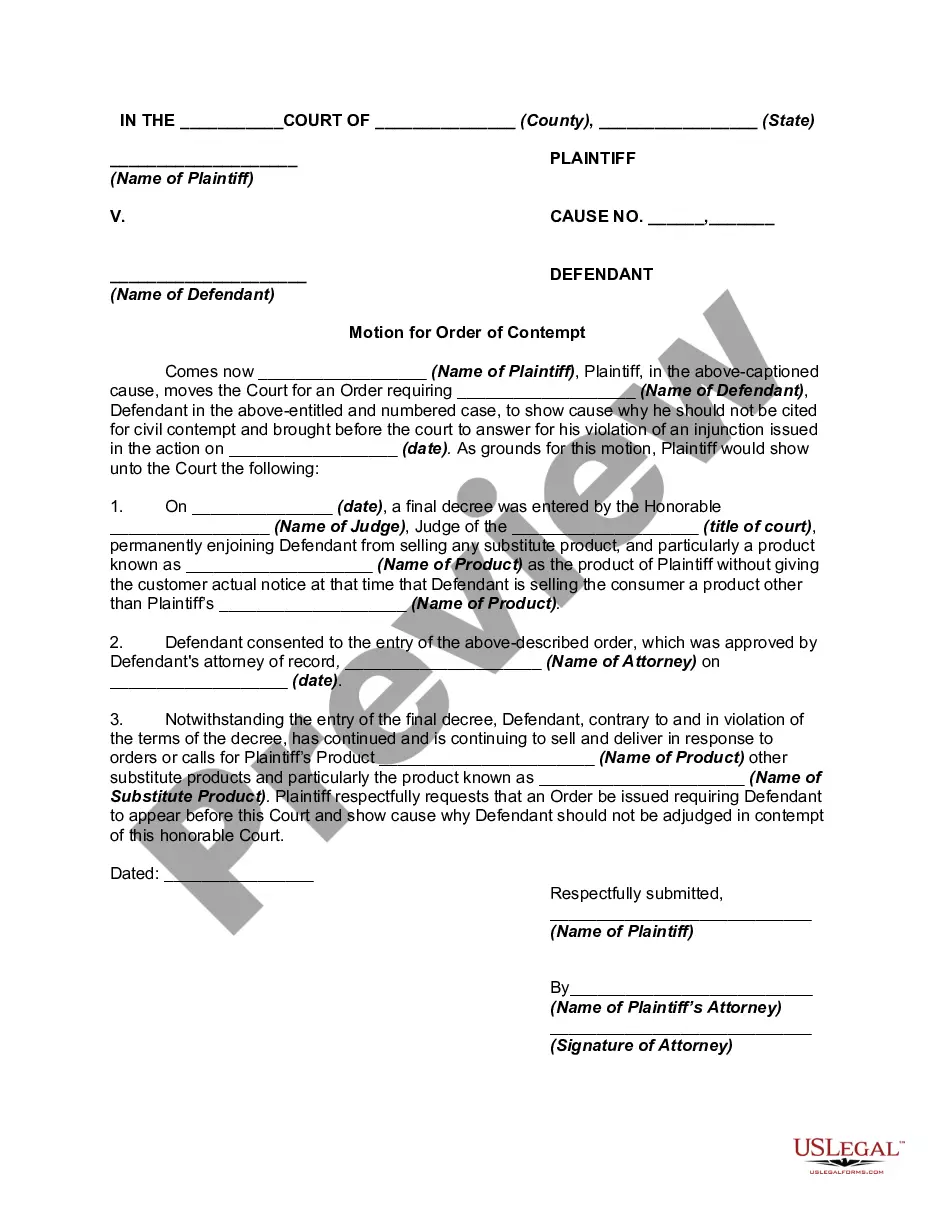
Contempt With Court
Description
Get your form ready online
Our built-in tools help you complete, sign, share, and store your documents in one place.
Make edits, fill in missing information, and update formatting in US Legal Forms—just like you would in MS Word.
Download a copy, print it, send it by email, or mail it via USPS—whatever works best for your next step.
Sign and collect signatures with our SignNow integration. Send to multiple recipients, set reminders, and more. Go Premium to unlock E-Sign.
If this form requires notarization, complete it online through a secure video call—no need to meet a notary in person or wait for an appointment.
We protect your documents and personal data by following strict security and privacy standards.

Make edits, fill in missing information, and update formatting in US Legal Forms—just like you would in MS Word.

Download a copy, print it, send it by email, or mail it via USPS—whatever works best for your next step.

Sign and collect signatures with our SignNow integration. Send to multiple recipients, set reminders, and more. Go Premium to unlock E-Sign.

If this form requires notarization, complete it online through a secure video call—no need to meet a notary in person or wait for an appointment.

We protect your documents and personal data by following strict security and privacy standards.
Looking for another form?







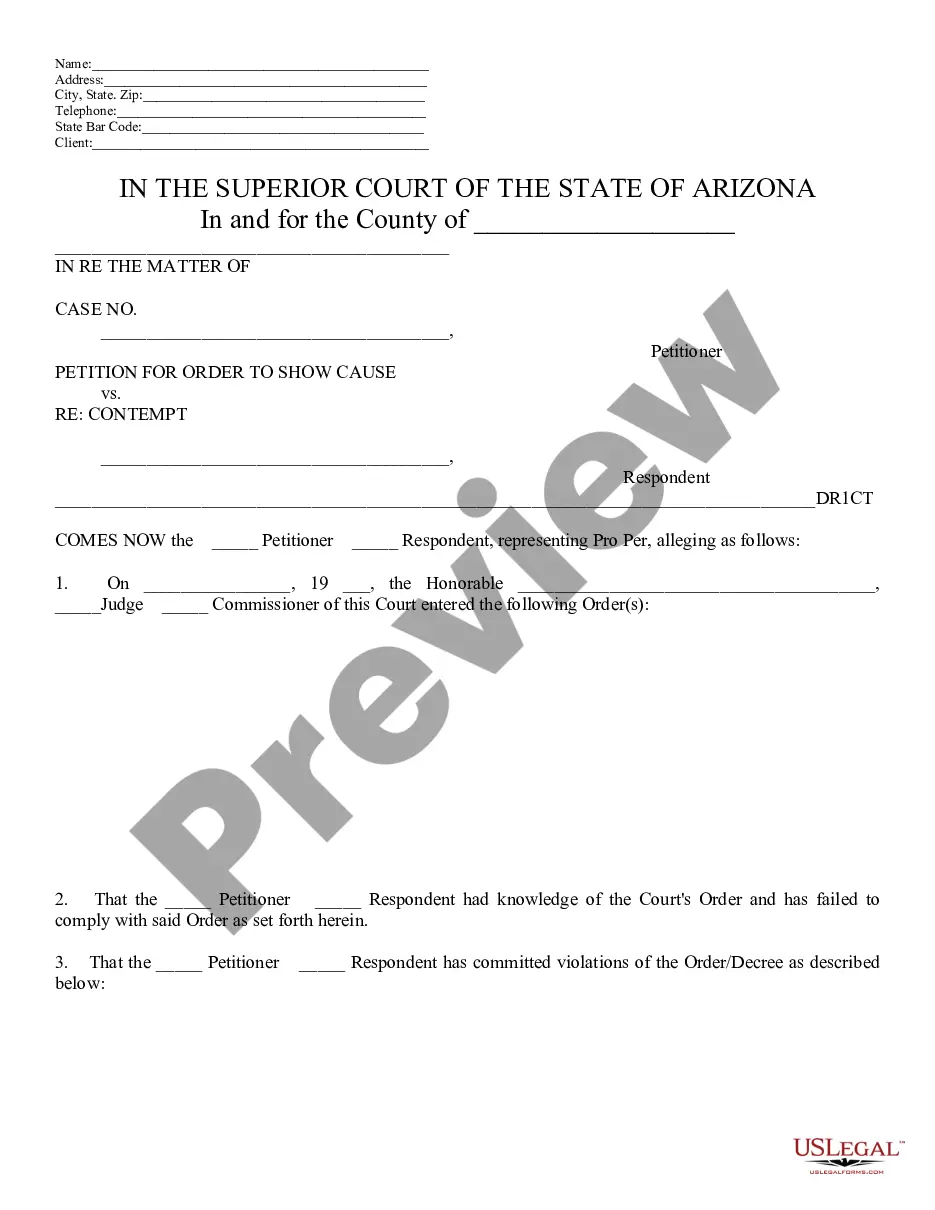
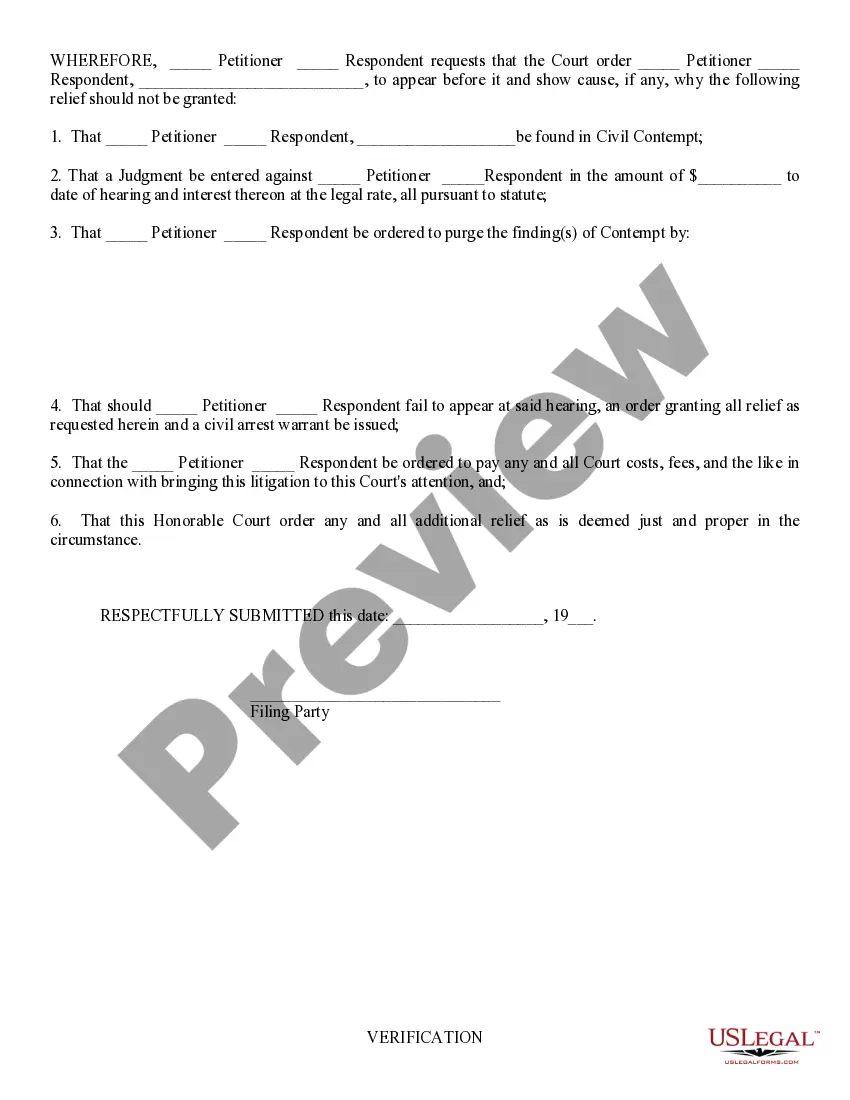
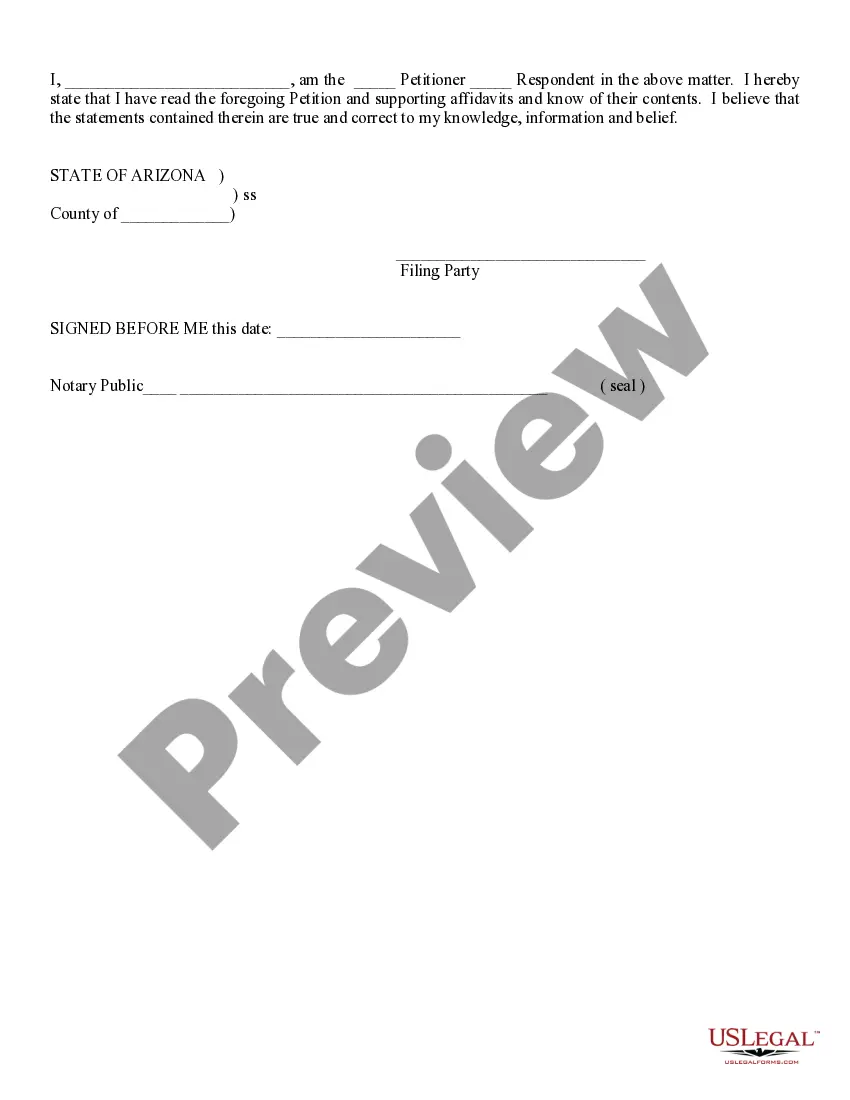
How to fill out Arizona Petition For Order To Show Cause Regarding Contempt?
Utilizing legal documents that conform to federal and state regulations is essential, and the internet provides numerous choices to select from.
However, what’s the purpose of spending time searching for the appropriate Contempt With Court example online when the US Legal Forms digital library already consolidates these templates in one location.
US Legal Forms is the largest online legal repository featuring over 85,000 fillable documents created by attorneys for a variety of business and personal scenarios.
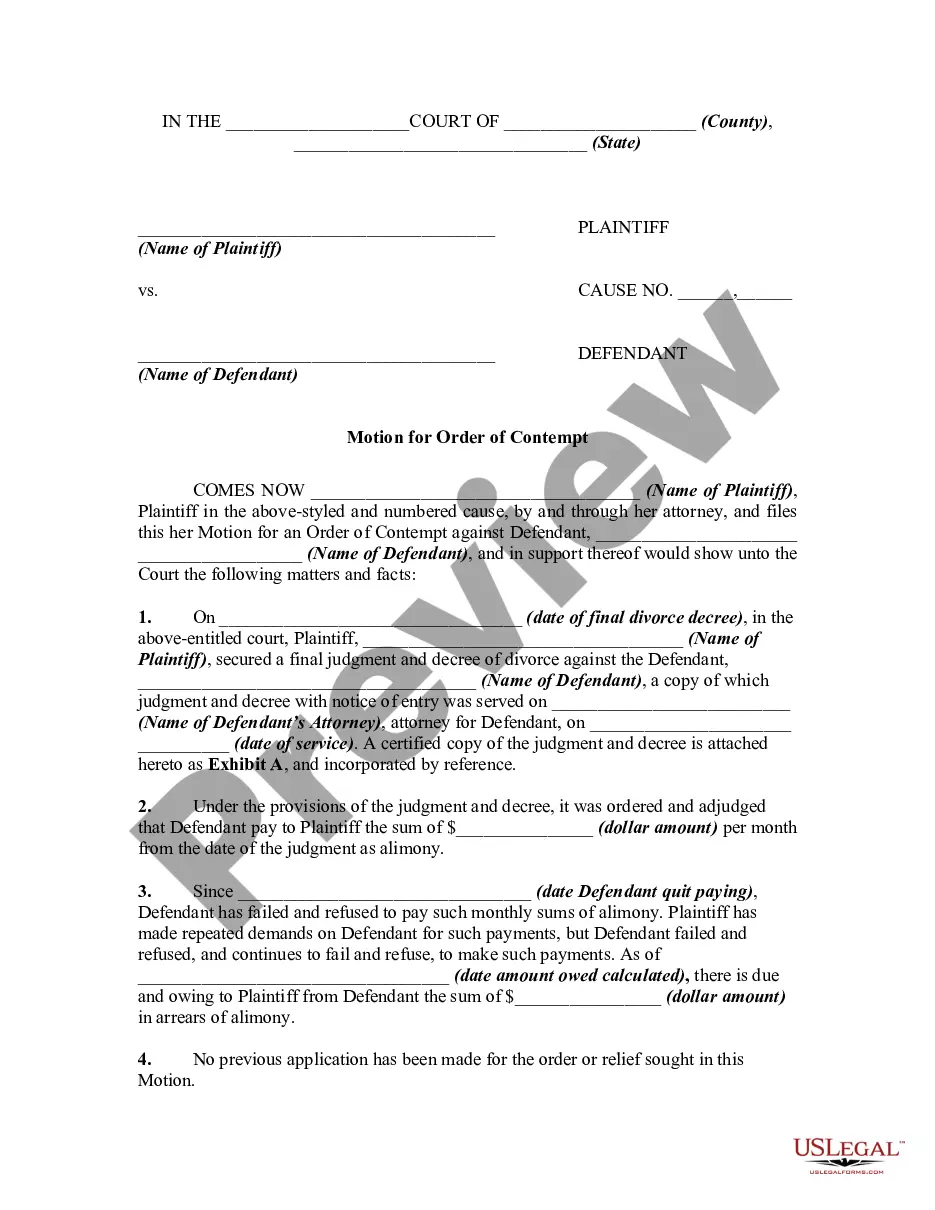
Review the template using the Preview feature or through the text summary to ensure it satisfies your requirements.
- They are easy to navigate with all documents categorized by state and intended use.
- Our experts keep abreast of legal updates, ensuring your documents are current and compliant when obtaining a Contempt With Court from our site.
- Acquiring a Contempt With Court is quick and straightforward for both existing and new users.
- If you already possess an account with an active subscription, Log In and save the required document template in your chosen format.
- For newcomers to our website, follow the steps outlined below.
Form popularity
FAQ
To win a contempt hearing, you must clearly demonstrate compliance with the court order in question or provide a valid explanation for any noncompliance. Gather evidence and witness statements that support your case, showing that you acted in good faith. You can also utilize resources from USLegalForms to help draft necessary documents and prepare your defense. By being well-prepared and organized, you can effectively make your case and mitigate the chances of a contempt ruling.
A judge determines contempt of court by evaluating the facts surrounding an alleged violation of a court order. Evidence presented during a hearing is critical in this process, allowing the judge to see if the individual understood the order and willfully disobeyed it. The judge will also consider the motive behind the noncompliance and any justification presented. It is essential for respondents to clearly communicate any challenges that affect their ability to comply.
Typically, a judge decides if someone is in contempt with court. This decision is based on evidence presented during a hearing. The judge assesses whether the individual failed to comply with a court order, and their authority in making this determination is crucial. In some cases, a party may request a clarification or enforcement of the order, prompting the court's review.
Winning a contempt of court case often involves demonstrating your compliance with the court order. Show that you took reasonable steps to meet the requirements outlined in the order, which is vital when addressing claims of contempt with court. Collect all relevant evidence and potentially bring witnesses who can substantiate your claims. Engaging with legal platforms such as US Legal Forms can also provide guidance and resources to strengthen your case.
To effectively prepare for a contempt of court hearing, start by thoroughly reviewing the court order or judgment at the center of your case. Understand what actions or inactions led to the claim of contempt with court. Gather evidence and documentation that supports your position, such as communications or records proving compliance. Lastly, consider consulting legal resources or platforms, like US Legal Forms, to ensure you follow the proper procedures.
Yes, contempt of court is a significant issue that can lead to serious legal repercussions. It can undermine the authority of the judicial system and affect the outcome of your case. Taking a proactive approach to any court-related matters is essential to avoid being found in contempt. Utilizing resources from platforms like USLegalForms can guide you through the process and help ensure you comply with court orders.
The four main types of contempt include civil contempt, criminal contempt, direct contempt, and indirect contempt. Civil contempt typically aims to compel compliance with a court order, while criminal contempt punishes disrespect towards the court. Direct contempt occurs in the presence of the court, whereas indirect contempt happens outside the court's immediate view. Recognizing these types helps you manage issues related to contempt with court more effectively.
Contempt of court is a serious legal matter that can carry significant penalties. The severity often depends on the nature of the contempt, whether it's civil or criminal, and the context of the case. Ignoring a court's order or misbehaving in court can lead to jail time or hefty fines. It’s crucial to take any issues regarding contempt with court seriously to avoid escalating consequences.
When a court finds you in contempt, it means you have disobeyed a court order or shown disrespect to the court. This can lead to various consequences, such as fines, jail time, or compliance orders. The court may require you to rectify the situation or face additional penalties. Understanding the implications of contempt with court helps you navigate the legal landscape effectively.
The best defense against contempt with court often hinges on demonstrating that you did not willfully violate a court order. Showing that compliance was impossible due to circumstances beyond your control can be a strong argument. Additionally, providing evidence that the order was unclear or misinterpreted may also help your case. Consultation with a legal professional can provide you with tailored strategies to defend against contempt charges.