Contempt In Court Penalty
Description
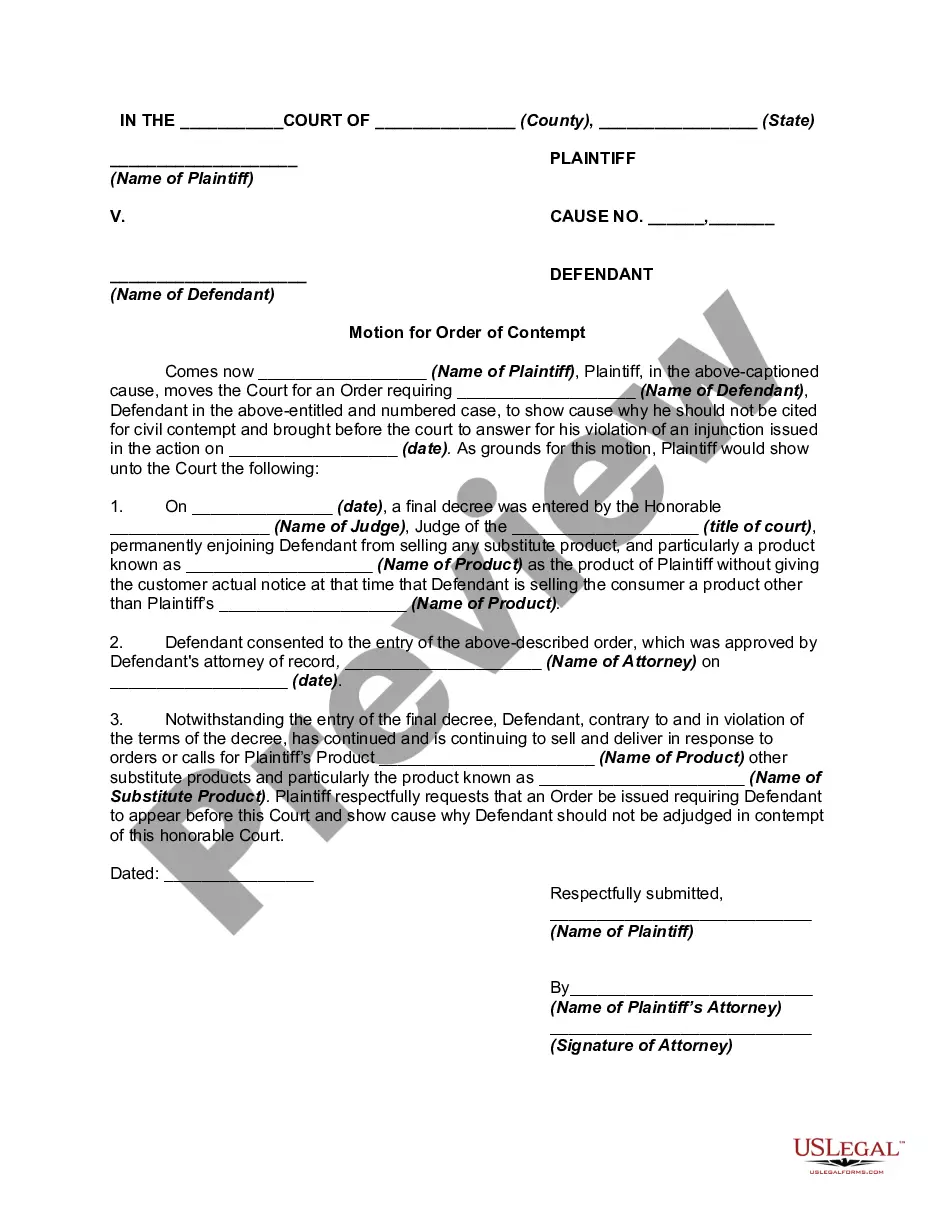
Get your form ready online
Our built-in tools help you complete, sign, share, and store your documents in one place.
Make edits, fill in missing information, and update formatting in US Legal Forms—just like you would in MS Word.
Download a copy, print it, send it by email, or mail it via USPS—whatever works best for your next step.
Sign and collect signatures with our SignNow integration. Send to multiple recipients, set reminders, and more. Go Premium to unlock E-Sign.
If this form requires notarization, complete it online through a secure video call—no need to meet a notary in person or wait for an appointment.
We protect your documents and personal data by following strict security and privacy standards.

Make edits, fill in missing information, and update formatting in US Legal Forms—just like you would in MS Word.

Download a copy, print it, send it by email, or mail it via USPS—whatever works best for your next step.

Sign and collect signatures with our SignNow integration. Send to multiple recipients, set reminders, and more. Go Premium to unlock E-Sign.

If this form requires notarization, complete it online through a secure video call—no need to meet a notary in person or wait for an appointment.

We protect your documents and personal data by following strict security and privacy standards.
Looking for another form?






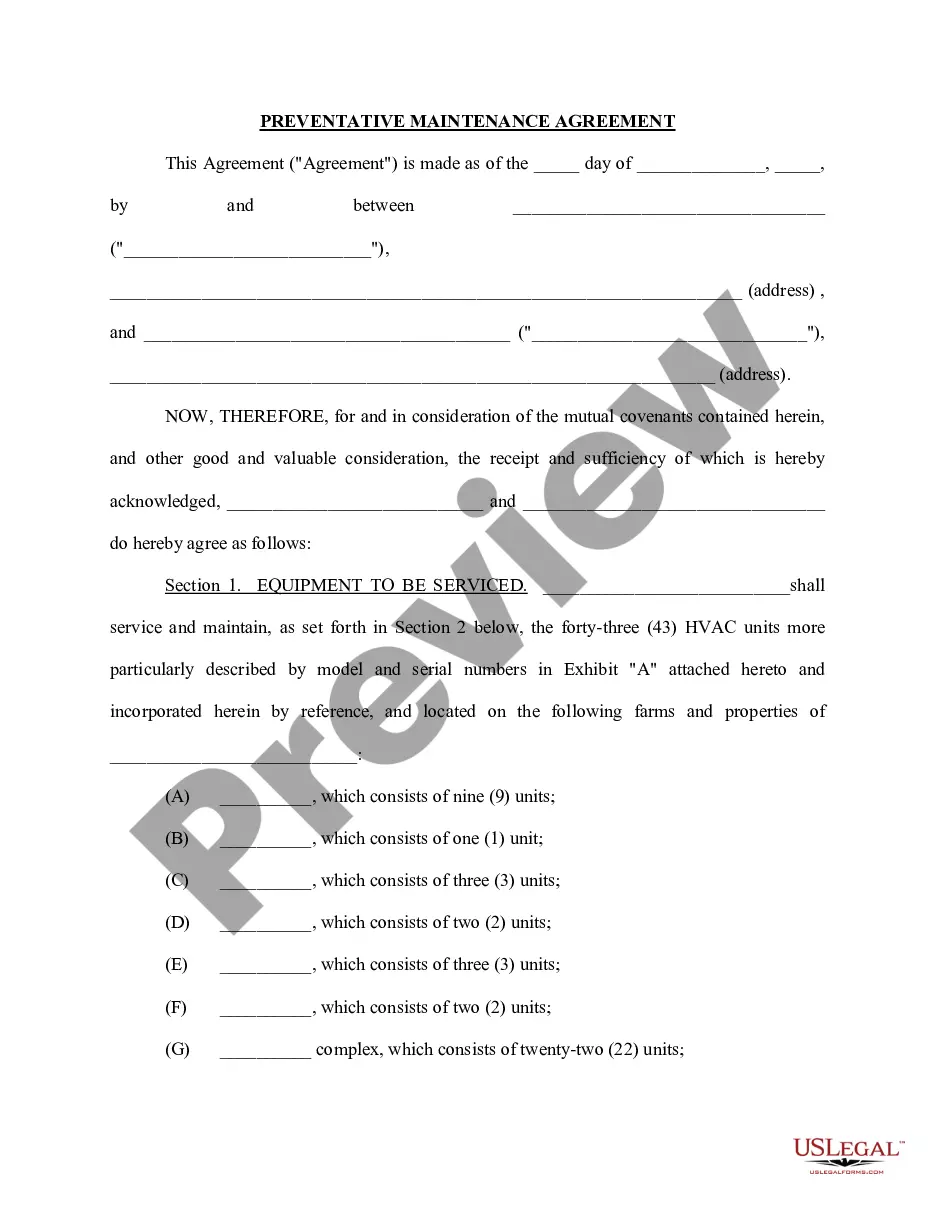



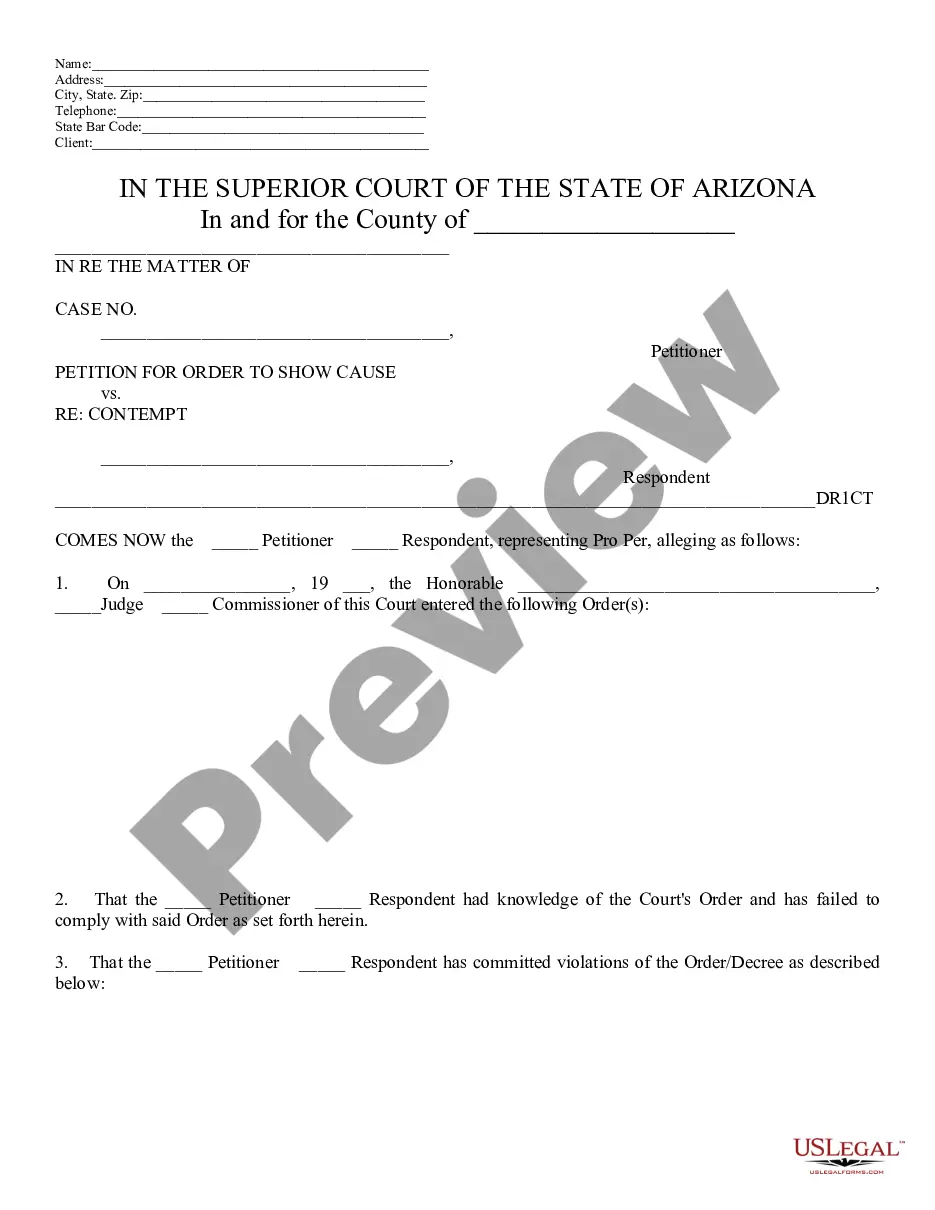
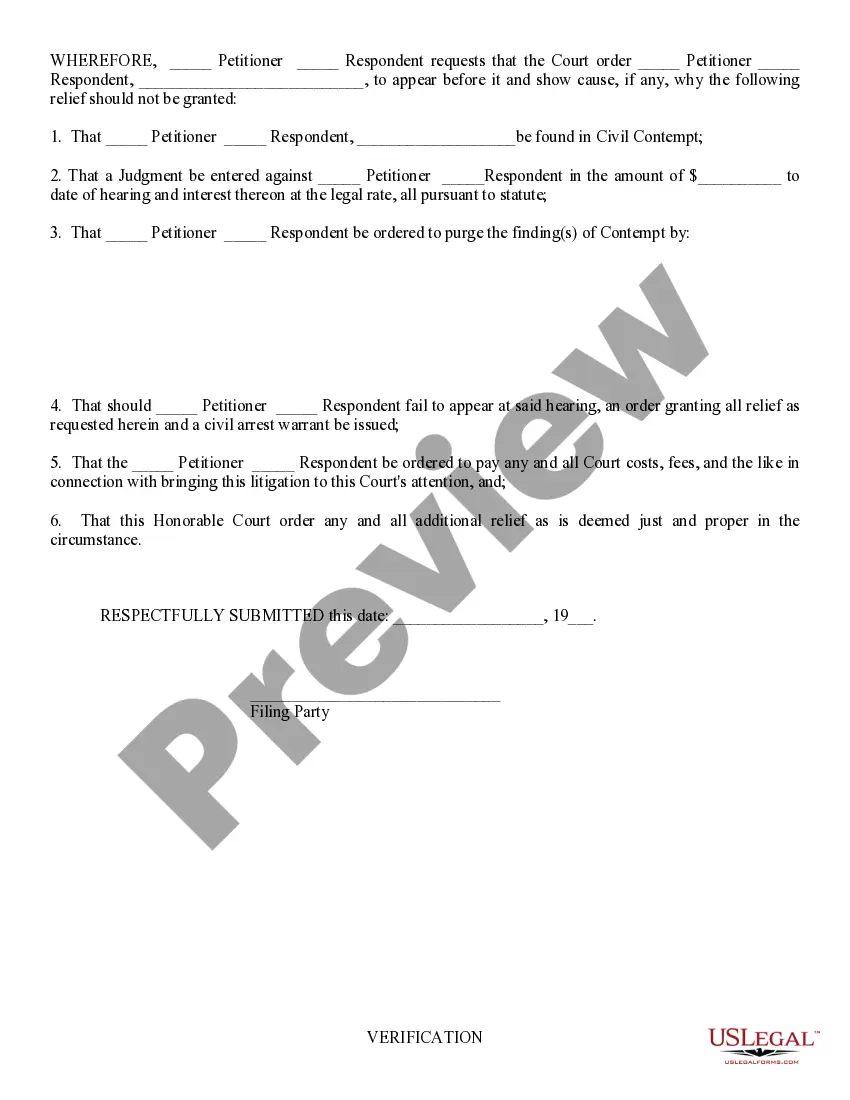
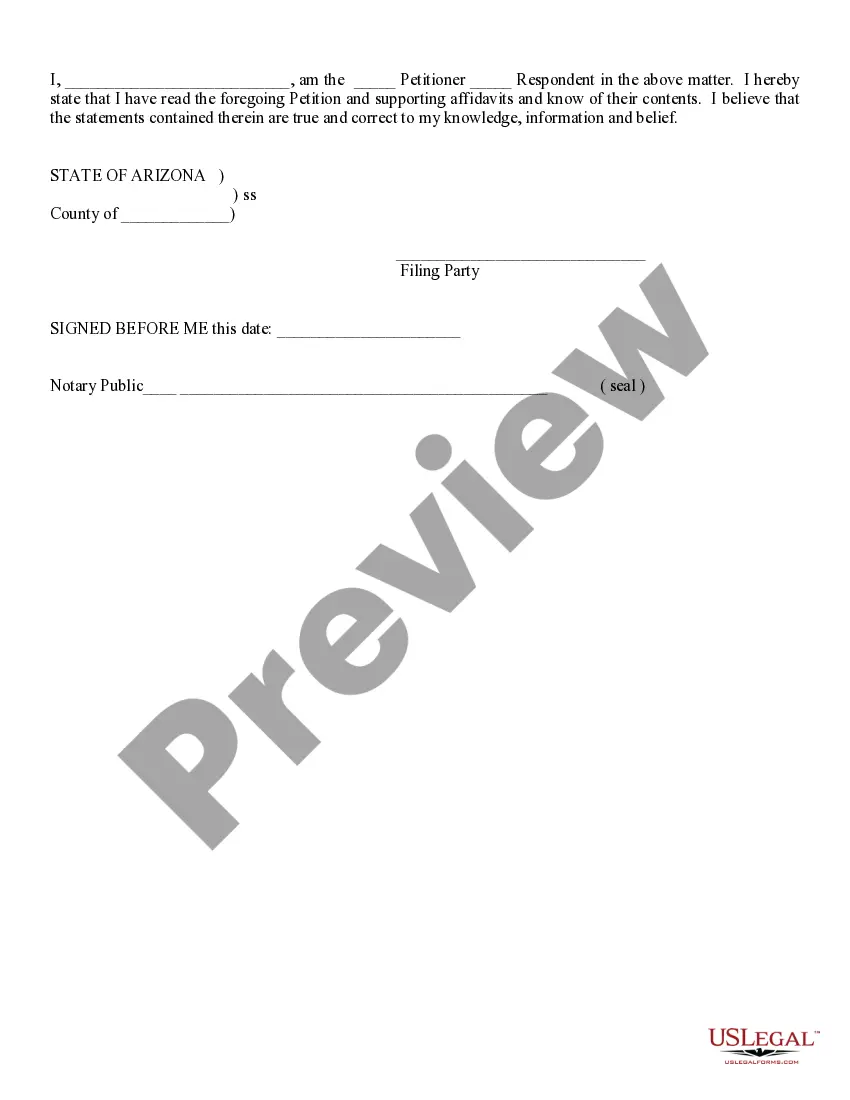
How to fill out Arizona Petition For Order To Show Cause Regarding Contempt?
Creating legal documents from the ground up can frequently be daunting.
Certain situations may require extensive research and significant financial expenditure.
If you’re seeking a more straightforward and budget-friendly method for preparing Contempt In Court Penalty or any other documents without unnecessary complications, US Legal Forms is readily available to you.
Our digital catalog of over 85,000 current legal forms covers nearly every facet of your financial, legal, and personal needs. With just a few clicks, you can quickly obtain state- and county-compliant templates meticulously crafted by our legal professionals.
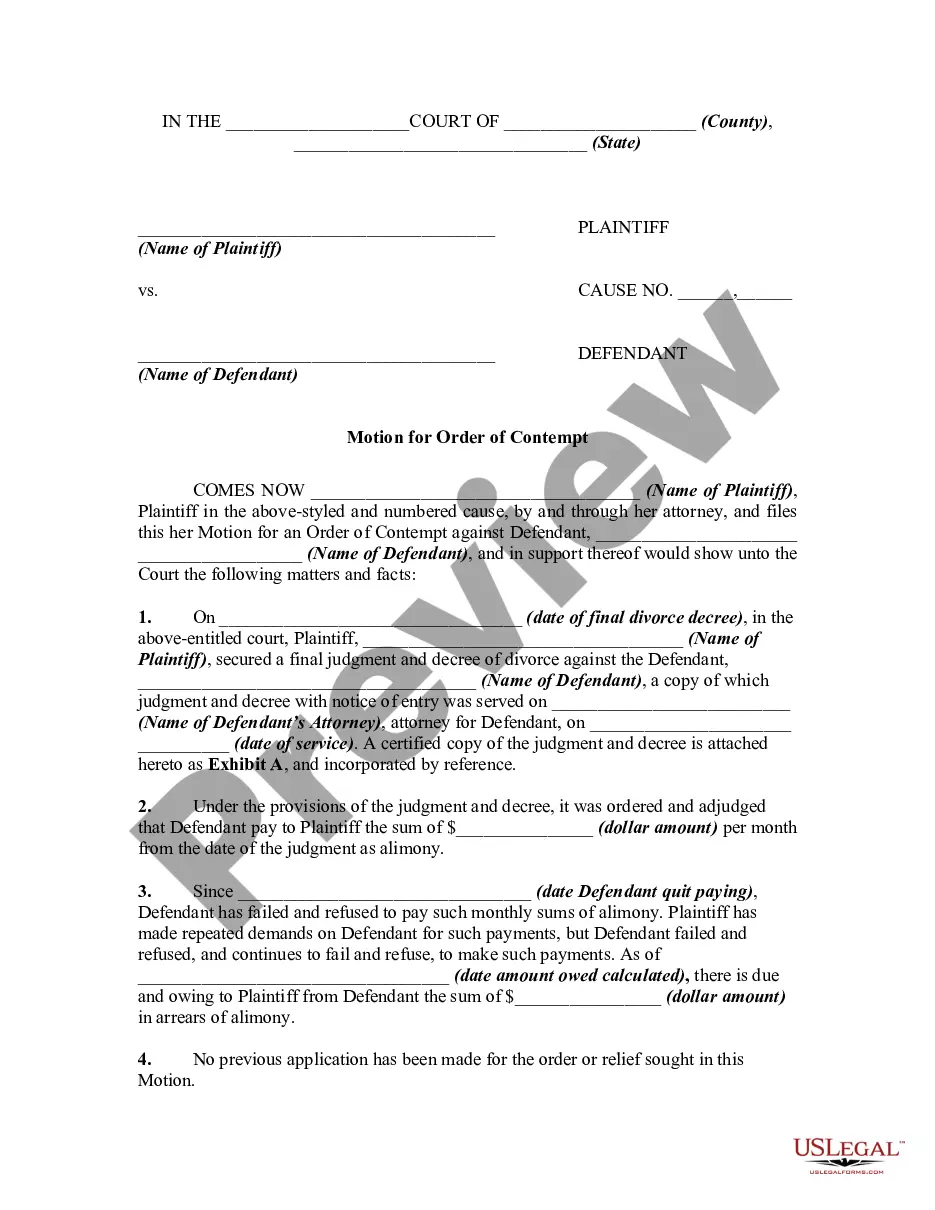
Examine the document preview and descriptions to confirm that you have identified the document you need. Ensure the template you choose adheres to the regulations and laws of your state and county. Select the most appropriate subscription option to obtain the Contempt In Court Penalty. Download the form, then complete, sign, and print it. US Legal Forms has a pristine reputation and over 25 years of experience. Join us today and make form completion an easy and efficient process!
- Utilize our platform whenever you require dependable and trustworthy services to conveniently find and download the Contempt In Court Penalty.
- If you’re familiar with our services and have previously registered an account with us, just Log In to your account, find the form, and download it or access it again anytime in the My documents section.
- Not registered yet? No worries. It takes only a few minutes to set it up and navigate the library.
- Before you proceed to download the Contempt In Court Penalty, take these suggestions into account.
Form popularity
FAQ
To prepare for a contempt of court hearing, start by gathering all relevant documents and evidence that support your case. Clearly understand the court's previous orders that you are accused of violating, as compliance is critical to avoid contempt in court penalties. Consider consulting with a legal professional to help you formulate your arguments and present them effectively in court. Taking these steps can significantly enhance your chances of a favorable outcome.
If you are found in contempt of court in Alabama, the court may impose various penalties that could include fines, jail time, or both. The specific contempt in court penalty depends on the nature and severity of the offense. Additionally, the court may require you to comply with its previous orders to avoid further penalties. It is crucial to understand your rights and seek legal advice to navigate this challenging situation.
Contempt of court is determined through a careful evaluation of the circumstances surrounding the alleged behavior. The judge assesses whether the actions were in direct violation of court orders or disrupted the legal process. If the evidence supports a finding of contempt, the judge will impose a contempt in court penalty. Resources like USLegalForms can provide guidance on how to comply with court orders and avoid the risks associated with contempt.
The judge presiding over a case is the one who decides if someone is in contempt of court. This decision is based on the evidence presented and the context of the behaviors in question. If the judge finds sufficient grounds for contempt, they can impose a contempt in court penalty. Understanding the role of the judge in this process helps clarify the importance of following court orders and procedures.
A judge can hold you in contempt for various actions, including disobeying court orders, showing disrespect in court, or failing to appear when required. Other behaviors, like ignoring legal summons or obstructing justice, can also lead to a contempt in court penalty. It is crucial to understand that these actions undermine the legal process, prompting the judge to take appropriate action. Being aware of these factors can help you navigate legal proceedings more effectively.
To be held in contempt of court, an individual must fail to comply with a court order or disrupt court proceedings. Courts typically require clear evidence that the behavior was intentional. When a judge determines that someone has violated the court's authority, they may impose a contempt in court penalty. This penalty serves to uphold the court's dignity and ensure future compliance with its orders.
Typically, the party who is affected by the alleged contempt can file a contempt application. This includes individuals who were granted rights or protections by the court. If you believe that your court order has been violated, you have the standing to seek enforcement. When dealing with such matters, USLegalForms can assist you in understanding the process and implications of the contempt in court penalty.
Yes, you can file a contempt of court order yourself. However, ensuring that your application is comprehensive and adheres to legal standards is crucial. This process can be daunting, so using tools like USLegalForms may simplify your experience. They provide templates and guidance to assist you in addressing the contempt in court penalty properly.
Contempt of court is enforced through various penalties determined by the judge. This can include monetary fines, compensatory actions, or even imprisonment in certain situations. The enforcement mechanism depends on the severity of the contempt and its impact on the court's authority. Staying informed about these mechanisms can help you navigate the potential consequences of a contempt in court penalty.
The best defense for contempt of court often hinges on demonstrating that you did not willfully disobey a court order. Proving that circumstances beyond your control prevented compliance can be a strong argument. It's also essential to provide any evidence or documentation that supports your case. Consider using USLegalForms to help organize your defense strategy against contempt in court penalty.