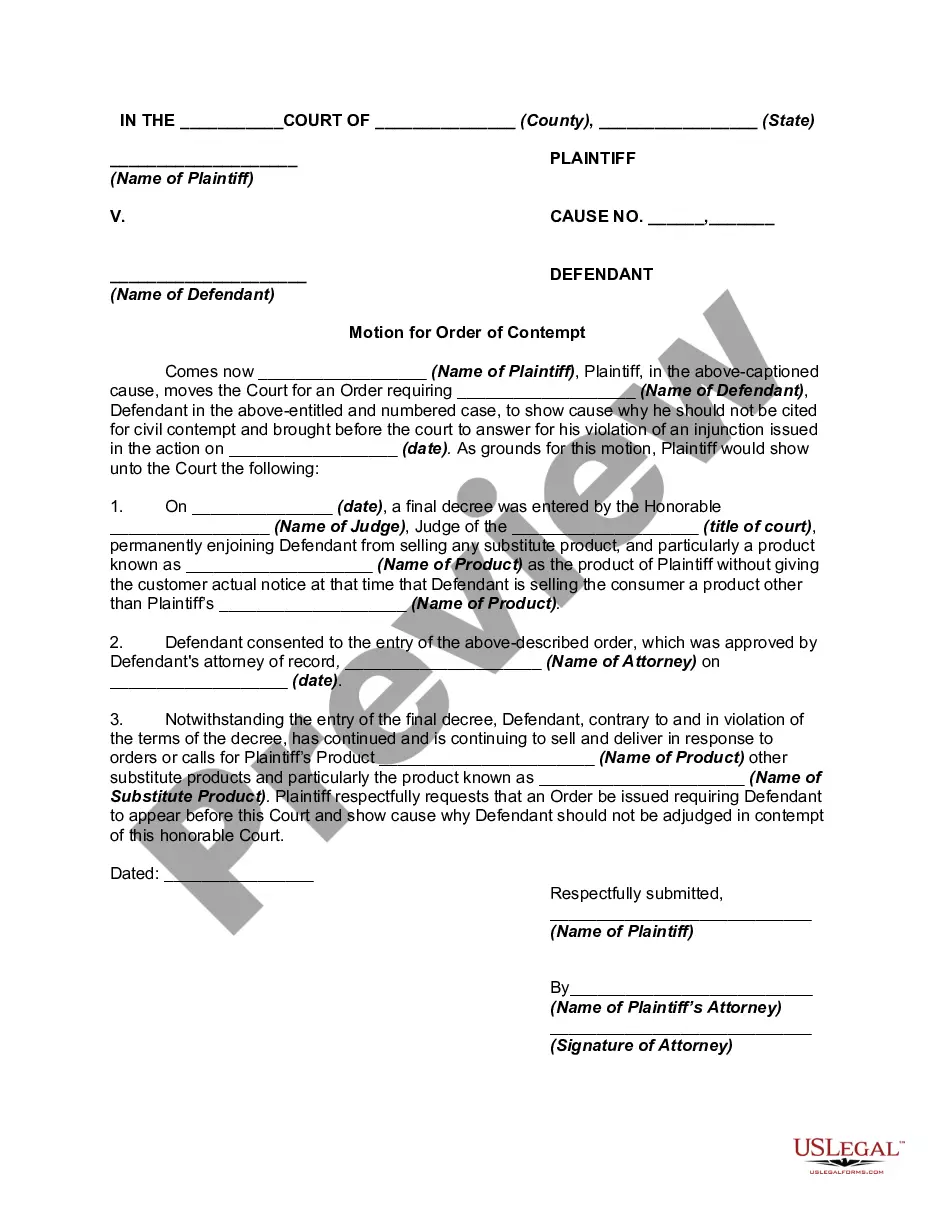
Contempt For Court Hearing
Description
Get your form ready online
Our built-in tools help you complete, sign, share, and store your documents in one place.
Make edits, fill in missing information, and update formatting in US Legal Forms—just like you would in MS Word.
Download a copy, print it, send it by email, or mail it via USPS—whatever works best for your next step.
Sign and collect signatures with our SignNow integration. Send to multiple recipients, set reminders, and more. Go Premium to unlock E-Sign.
If this form requires notarization, complete it online through a secure video call—no need to meet a notary in person or wait for an appointment.
We protect your documents and personal data by following strict security and privacy standards.

Make edits, fill in missing information, and update formatting in US Legal Forms—just like you would in MS Word.

Download a copy, print it, send it by email, or mail it via USPS—whatever works best for your next step.

Sign and collect signatures with our SignNow integration. Send to multiple recipients, set reminders, and more. Go Premium to unlock E-Sign.

If this form requires notarization, complete it online through a secure video call—no need to meet a notary in person or wait for an appointment.

We protect your documents and personal data by following strict security and privacy standards.
Looking for another form?










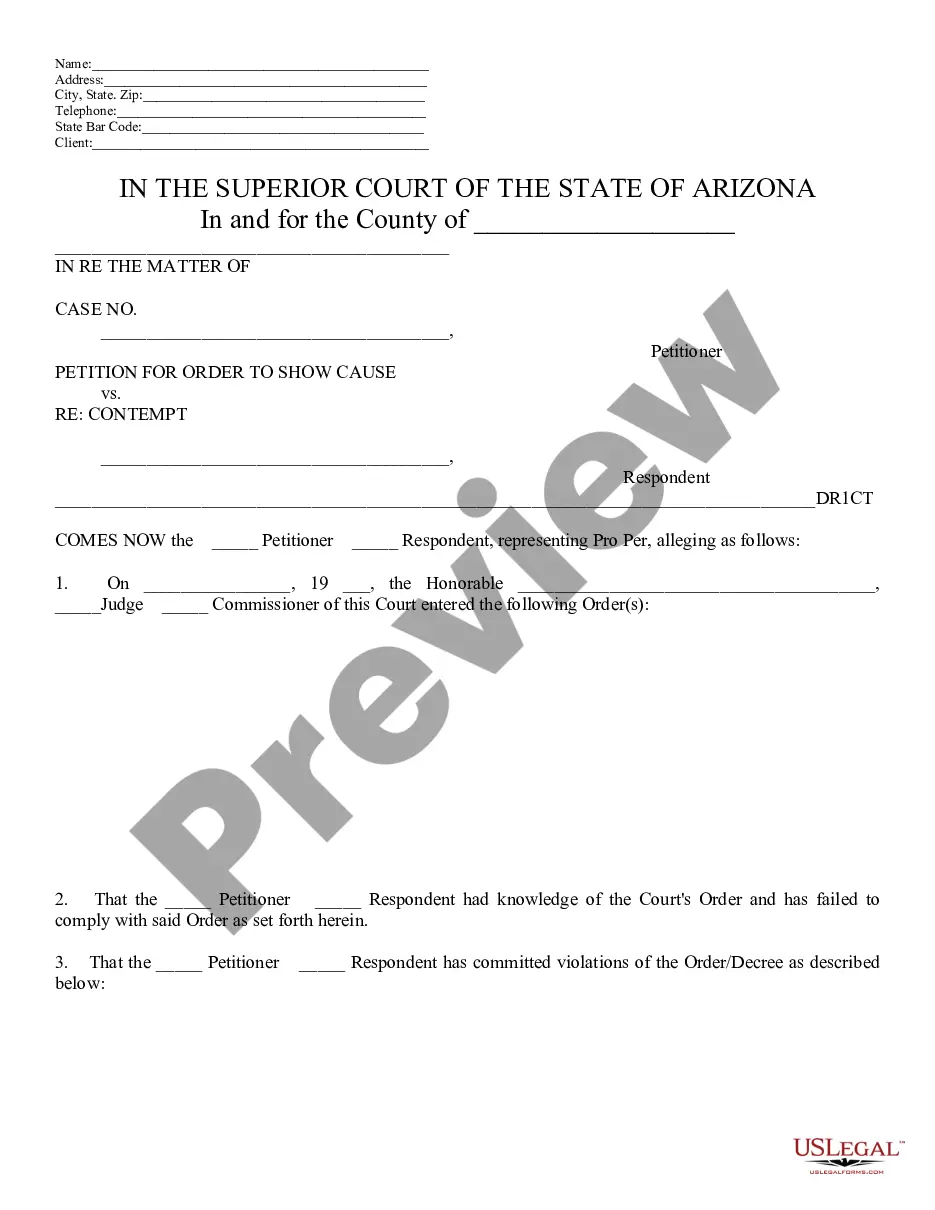
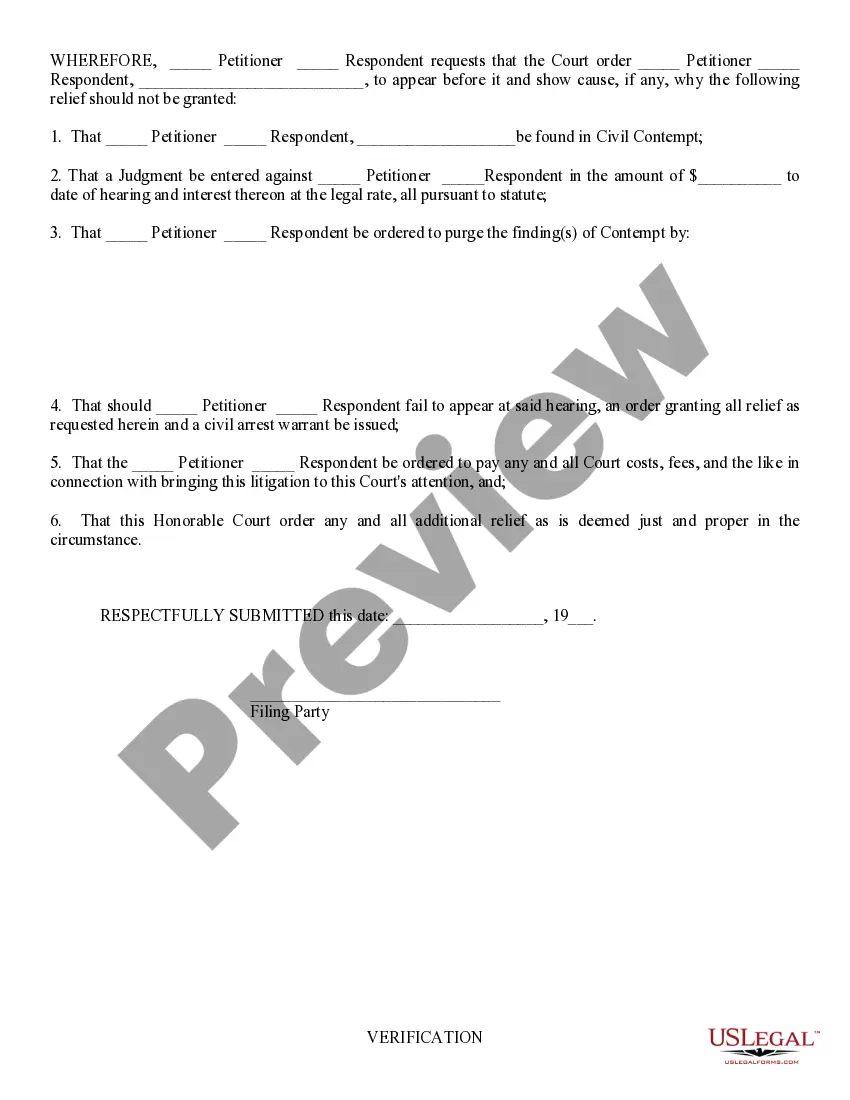
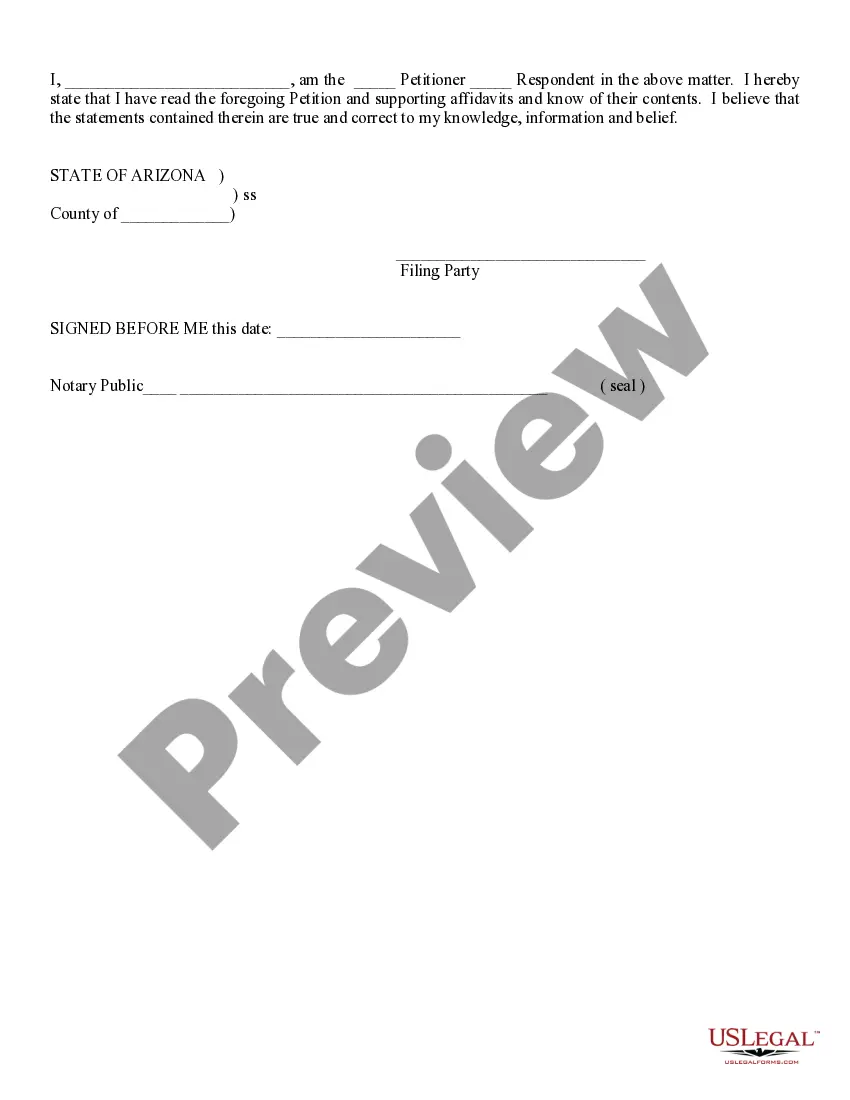
How to fill out Arizona Petition For Order To Show Cause Regarding Contempt?
Acquiring legal documents that adhere to federal and state statutes is essential, and the web provides numerous selections to choose from.
However, what’s the benefit of wasting time searching for the suitable Contempt For Court Hearing template online if the US Legal Forms digital library already has those documents collected in one location.
US Legal Forms is the largest online legal collection featuring over 85,000 editable templates created by legal professionals for various business and personal situations.
Evaluate the template using the Preview function or through the text outline to ensure it meets your specifications.
- They are easy to navigate with all documents categorized by state and intended use.
- Our experts stay updated with legal amendments, ensuring your documentation is current and compliant when obtaining a Contempt For Court Hearing from our site.
- Getting a Contempt For Court Hearing is simple and swift for both existing and new users.
- If you already hold an account with an active subscription, Log In and save the document template you need in the preferred format.
- If you are new to our site, follow the instructions below.
Form popularity
FAQ
Generally, any party who is affected by the non-compliance of a court order can file a contempt application. This includes individuals, attorneys representing clients, or even certain government agencies. During a contempt for court hearing, the filing party must provide evidence that the order was indeed violated. Utilizing the support of platforms like US Legal Forms can help clarify the steps involved in submitting your application.
In Iowa, if a court finds you in contempt during a hearing, it can impose various penalties, including fines, community service, or even jail time. The purpose of these measures is to compel compliance with court orders. It's essential to understand that contempt for court hearings are serious matters, and failing to comply can have significant repercussions. Consulting resources like US Legal Forms can assist you in navigating these legal challenges.
Filing a motion of contempt without a lawyer is indeed possible, allowing you to take action when necessary. However, consider that legal procedures can be complex, especially during a contempt for court hearing. Having legal support may lead to a better understanding of your rights and help in presenting your case effectively. Platforms like US Legal Forms offer tools that can guide you in preparing your documents correctly.
Yes, you can file a contempt of court order yourself if you feel another party is not complying with a court ruling. However, preparing for the contempt for court hearing requires specific legal knowledge and documentation. While self-representation is possible, consider seeking legal advice to ensure you meet all necessary requirements. Ultimately, using resources available through US Legal Forms can simplify your filing process.
Typically, the individual who believes the other party has violated a court order files a motion for contempt. This motion is presented during a contempt for court hearing, where the filing party seeks enforcement of the original order. It is crucial to have clear evidence of the violation to support the motion. Using platforms like US Legal Forms can help streamline this process.
A judge can hold an individual in contempt for various reasons, including failing to obey a court order, disrupting court proceedings, or showing disrespect towards the court. Actions that undermine the legal process can lead to contempt charges, which the court takes seriously. Understanding these potential violations can help you avoid actions that may lead to a contempt for court hearing. It's always wise to respect the court's authority and comply with its directives.
Contempt of court is determined by evaluating the actions of the individual in relation to the terms of a court order. The court will look for evidence that demonstrates a failure to comply willingly with the order. During a contempt for court hearing, both parties have the opportunity to present their cases, and the judge makes a ruling based on the evidence provided. Knowing this process is crucial for anyone involved in a contempt case.
In Kansas, the contempt statute outlines the legal processes for addressing contempt for court hearing situations. It specifies both civil and criminal contempt, along with the penalties associated with each type. The statute is designed to uphold the authority of the court and encourage compliance with its orders. Familiarizing yourself with these statutes can empower you as you approach any related legal proceedings.
To be held in contempt of court, a judge must determine that there has been a willful failure to comply with a valid court order. This requires clear evidence of the violation, along with knowledge of the order's specifics. The judge will assess whether the disobedience was intentional or if extenuating circumstances existed. Being aware of these factors can help you prepare for your contempt for court hearing.
Yes, you can file a contempt of court claim without a lawyer, though it is often advisable to seek legal help. The process can be complex and requires clear documentation of how the court order was violated. If you choose to proceed on your own, take the time to understand the rules and procedures relevant to your case. Utilizing platforms like US Legal Forms can provide helpful resources and templates to assist you along the way.