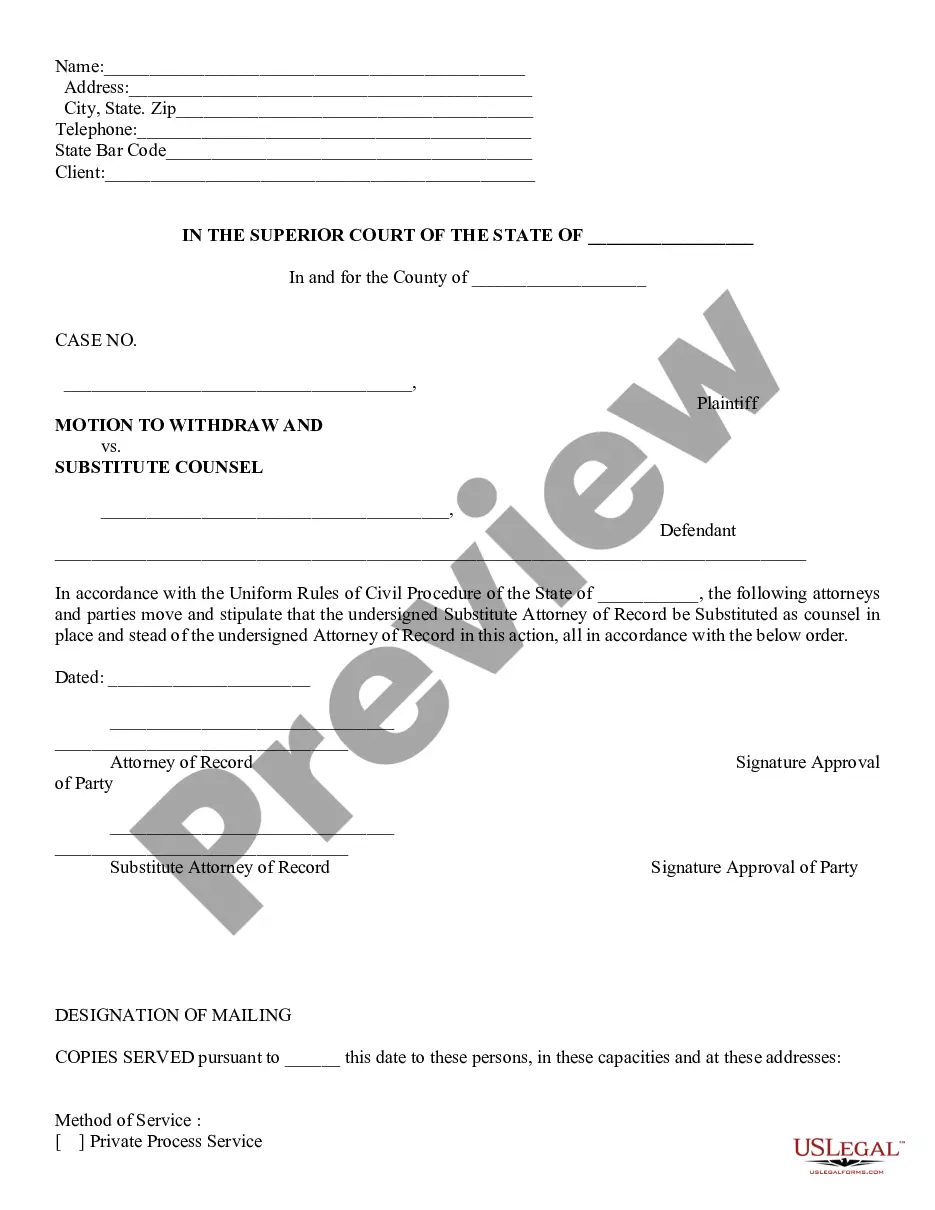
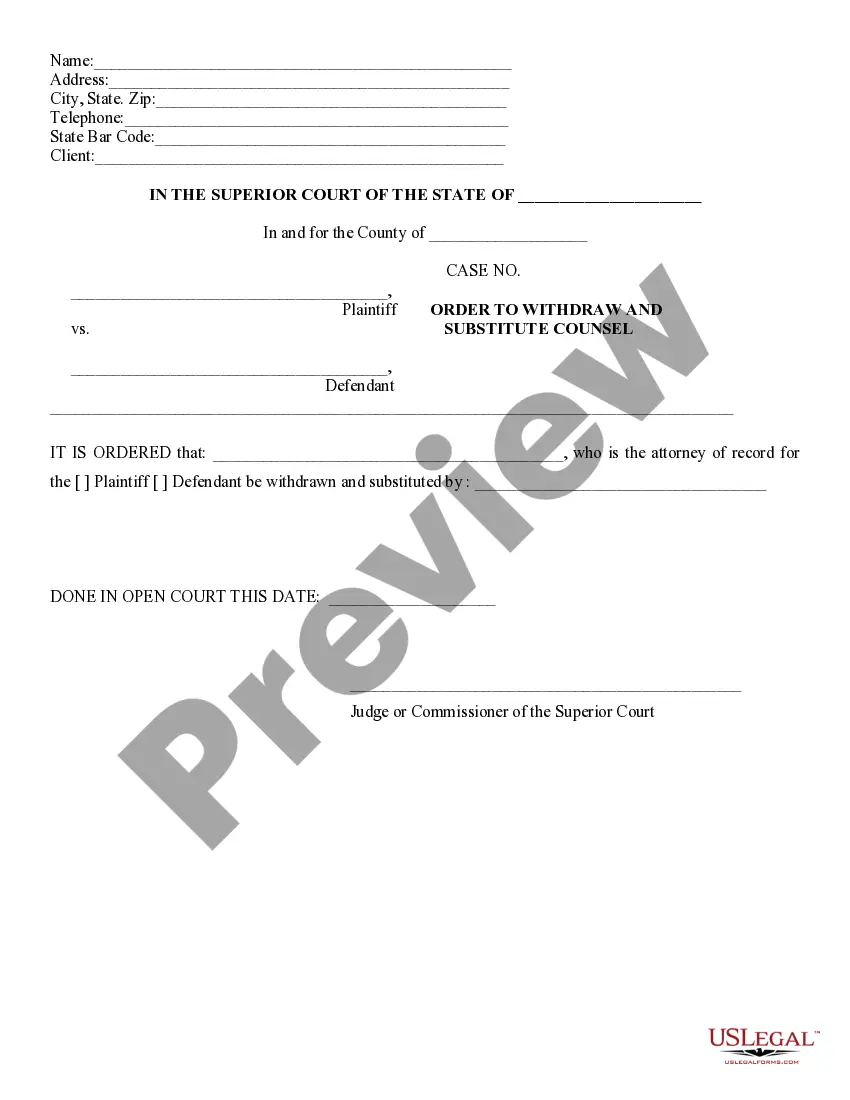
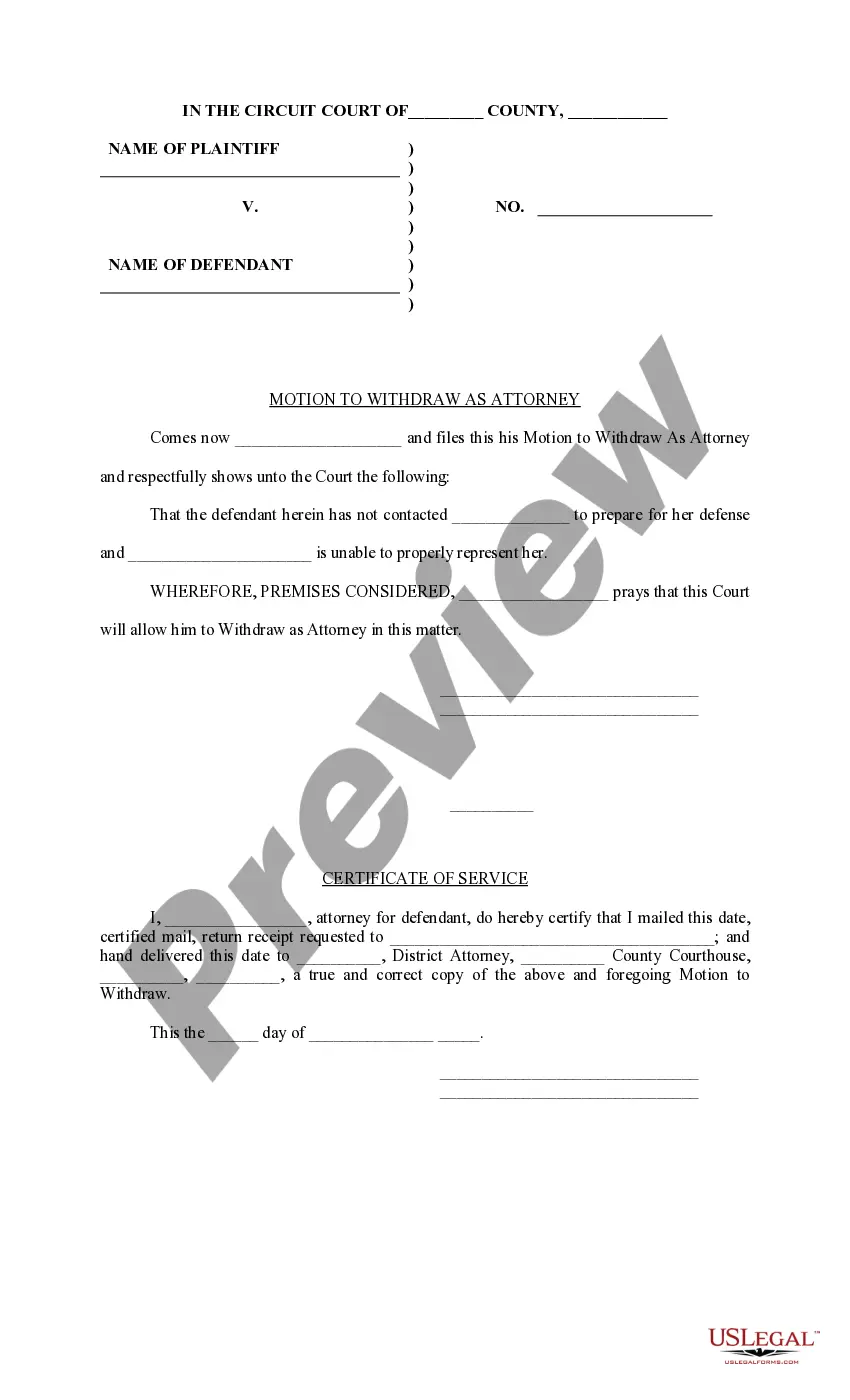
Motion To Withdraw Form For Guardianship
Description
Get your form ready online
Our built-in tools help you complete, sign, share, and store your documents in one place.
Make edits, fill in missing information, and update formatting in US Legal Forms—just like you would in MS Word.
Download a copy, print it, send it by email, or mail it via USPS—whatever works best for your next step.
Sign and collect signatures with our SignNow integration. Send to multiple recipients, set reminders, and more. Go Premium to unlock E-Sign.
If this form requires notarization, complete it online through a secure video call—no need to meet a notary in person or wait for an appointment.
We protect your documents and personal data by following strict security and privacy standards.

Make edits, fill in missing information, and update formatting in US Legal Forms—just like you would in MS Word.

Download a copy, print it, send it by email, or mail it via USPS—whatever works best for your next step.

Sign and collect signatures with our SignNow integration. Send to multiple recipients, set reminders, and more. Go Premium to unlock E-Sign.

If this form requires notarization, complete it online through a secure video call—no need to meet a notary in person or wait for an appointment.

We protect your documents and personal data by following strict security and privacy standards.
Looking for another form?
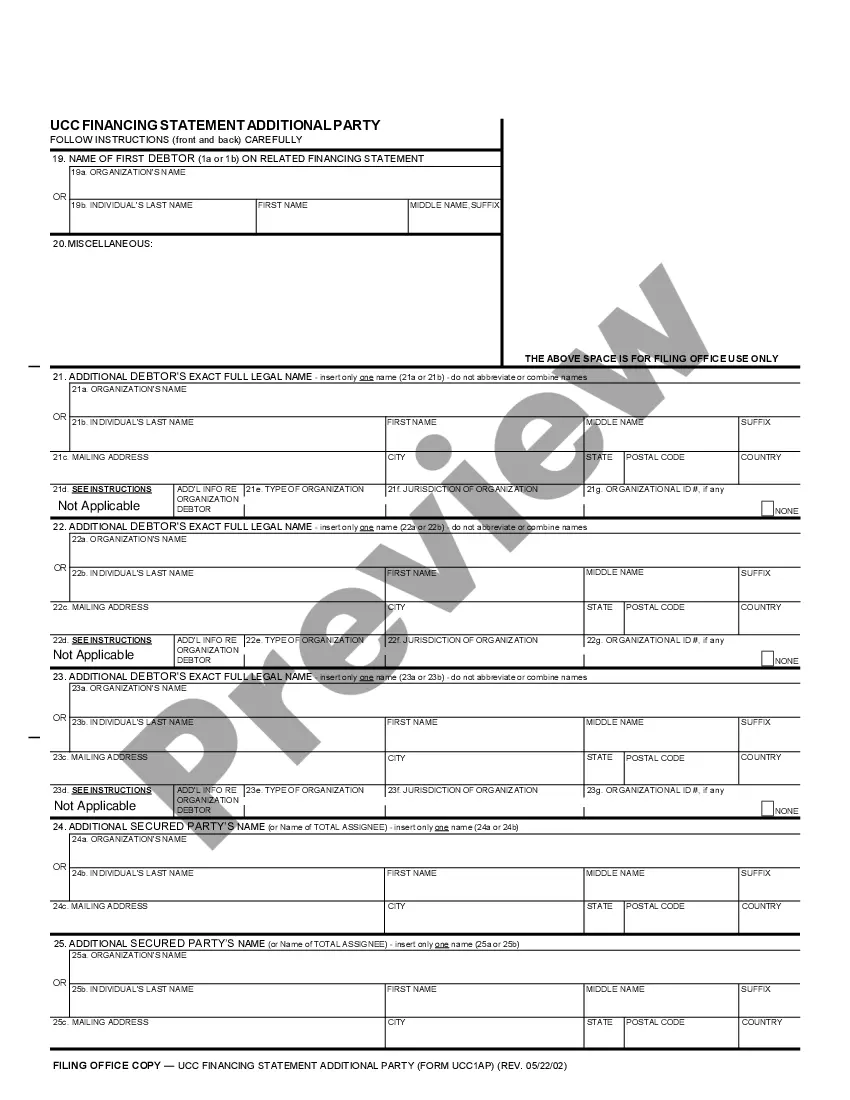

How to fill out Arizona Motion To Withdraw And Substitute Counsel And Order?
Regardless of whether it is for professional reasons or personal matters, everyone must handle legal issues at some point in their lives.
Completing legal documents necessitates thorough care, beginning with choosing the appropriate form template.
Once downloaded, you can complete the form using editing software or print it and fill it out manually. With an extensive catalog of US Legal Forms available, you will never waste time searching for the suitable template online. Take advantage of the library’s straightforward navigation to locate the correct form for any circumstance.
- Locate the template you need by utilizing the search box or browsing the catalog.
- Review the form’s details to ensure it aligns with your situation, state, and locality.
- Click on the form’s preview to examine it.
- If it is not the correct document, return to the search feature to find the Motion To Withdraw Form For Guardianship sample you require.
- Download the file when it suits your needs.
- If you possess a US Legal Forms account, click Log in to retrieve previously stored documents in My documents.
- If you do not have an account, you may acquire the form by clicking Buy now.
- Select the appropriate pricing option.
- Complete the account registration form.
- Choose your payment method: utilize a credit card or PayPal account.
- Select the document format you desire and download the Motion To Withdraw Form For Guardianship.
Form popularity
FAQ
If you wish to remove a guardian, you must file a motion to withdraw form for guardianship with the court. The court will evaluate the reasons you present for removing the guardian. It's vital to provide compelling evidence to support your request. Seeking help from a knowledgeable attorney can significantly improve your chances of success.
A person who isn't a parent can become a guardian only by court order or under a will. They can't become a child's guardian just because someone puts it into an agreement. Once a person is named as a guardian, they'll always be a guardian unless: a court order takes away their right to be a guardian, or.
The only way to become a guardian of the person is by applying to court. Speak to a lawyer if you are considering applying.
A court will terminate (end) guardianship only as a last resort and if there's no other way to protect the child's best interests. Before they take away a person's guardianship, a judge will look at other ways to protect a child's best interests.
It can first be terminated by a court order. This would only be possible once it's proven in court that terminating a guardian's role is in the best interest of a child/ward. This is often the case with guardians who're not actual parents of the child/ward in question.
How to terminate your guardianship Fill out the forms. Claim - Family Law Act. Statement - Terminate Guardianship. Affidavit of Service - Applicant. File your order. Do this at the same court, in the same location, where you've either: already been to court with the other party.