30 Days Notice
Description
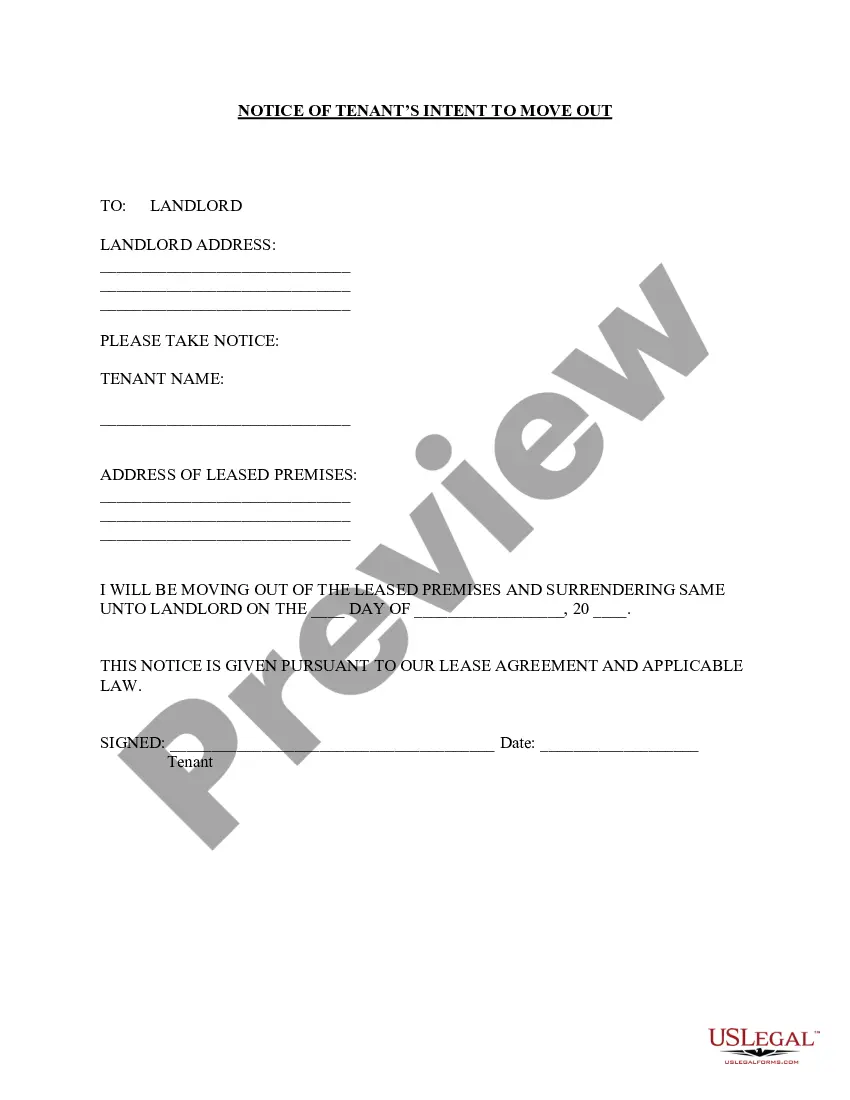

Get your form ready online
Our built-in tools help you complete, sign, share, and store your documents in one place.
Make edits, fill in missing information, and update formatting in US Legal Forms—just like you would in MS Word.
Download a copy, print it, send it by email, or mail it via USPS—whatever works best for your next step.
Sign and collect signatures with our SignNow integration. Send to multiple recipients, set reminders, and more. Go Premium to unlock E-Sign.
If this form requires notarization, complete it online through a secure video call—no need to meet a notary in person or wait for an appointment.
We protect your documents and personal data by following strict security and privacy standards.

Make edits, fill in missing information, and update formatting in US Legal Forms—just like you would in MS Word.

Download a copy, print it, send it by email, or mail it via USPS—whatever works best for your next step.

Sign and collect signatures with our SignNow integration. Send to multiple recipients, set reminders, and more. Go Premium to unlock E-Sign.

If this form requires notarization, complete it online through a secure video call—no need to meet a notary in person or wait for an appointment.

We protect your documents and personal data by following strict security and privacy standards.
Looking for another form?



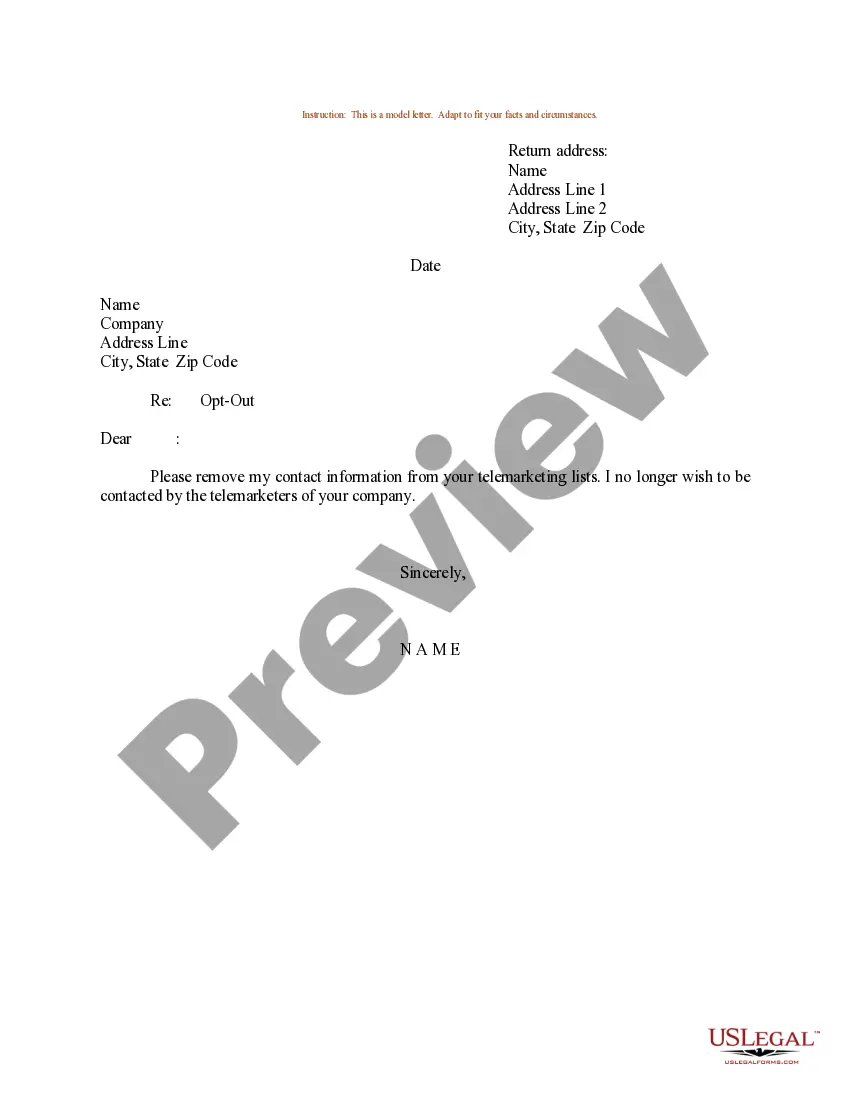






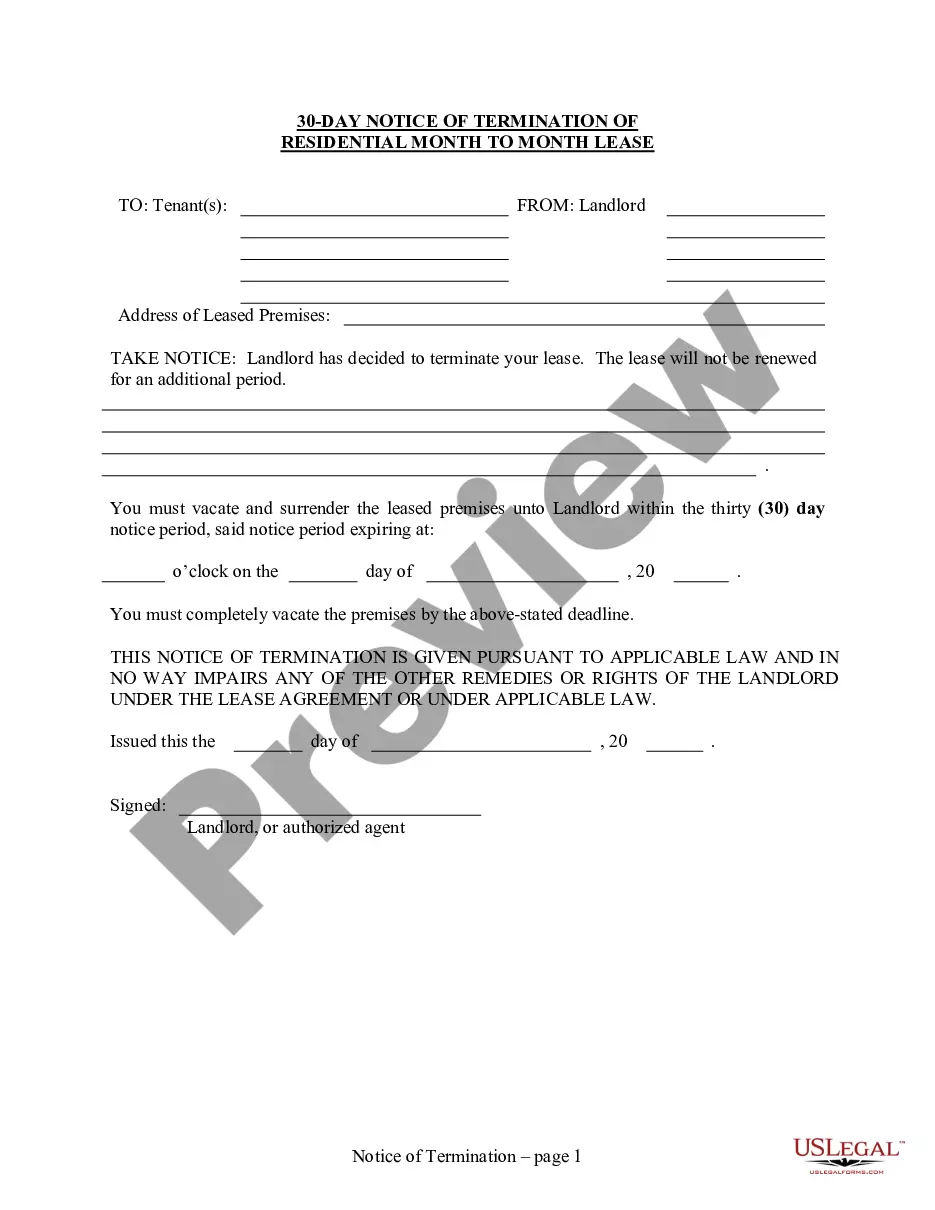
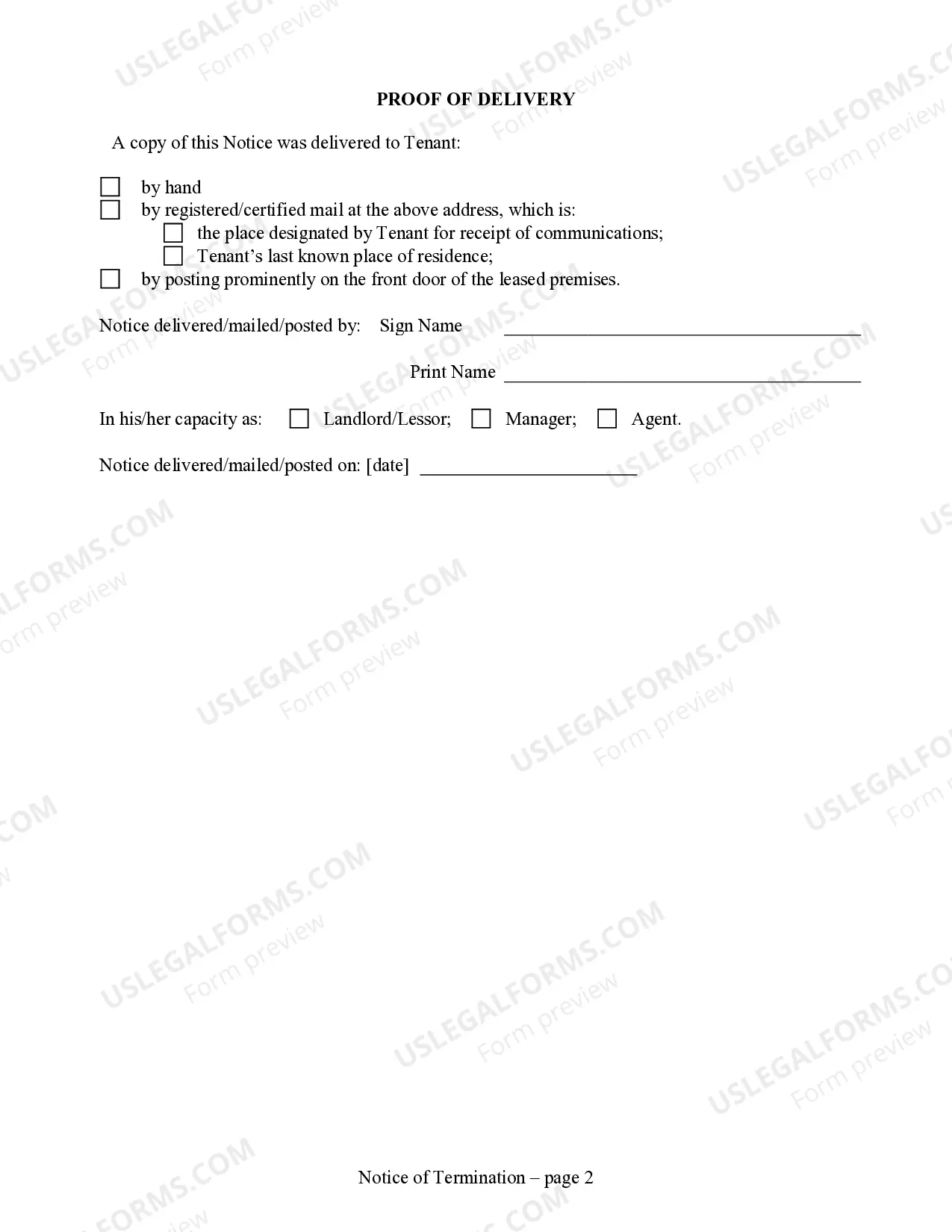
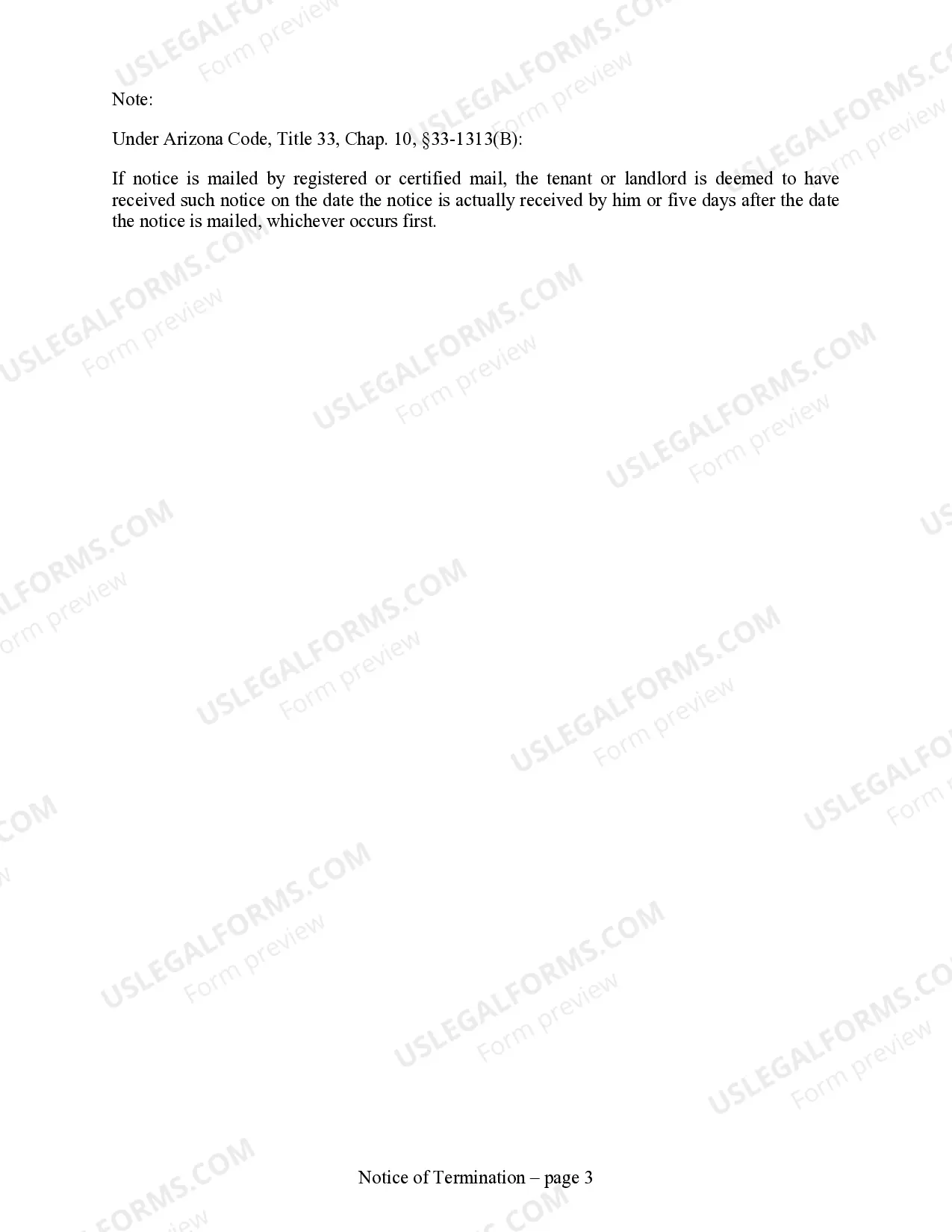
How to fill out Arizona 30 Day Notice To Terminate Month To Month Lease - Residential From Landlord To Tenant?
- Log in to your US Legal Forms account if you're a returning user. Ensure your subscription is active to access the latest forms.
- If you’re a new user, start by exploring the extensive library. Quickly search for the 30 days notice template that meets your local legal requirements.
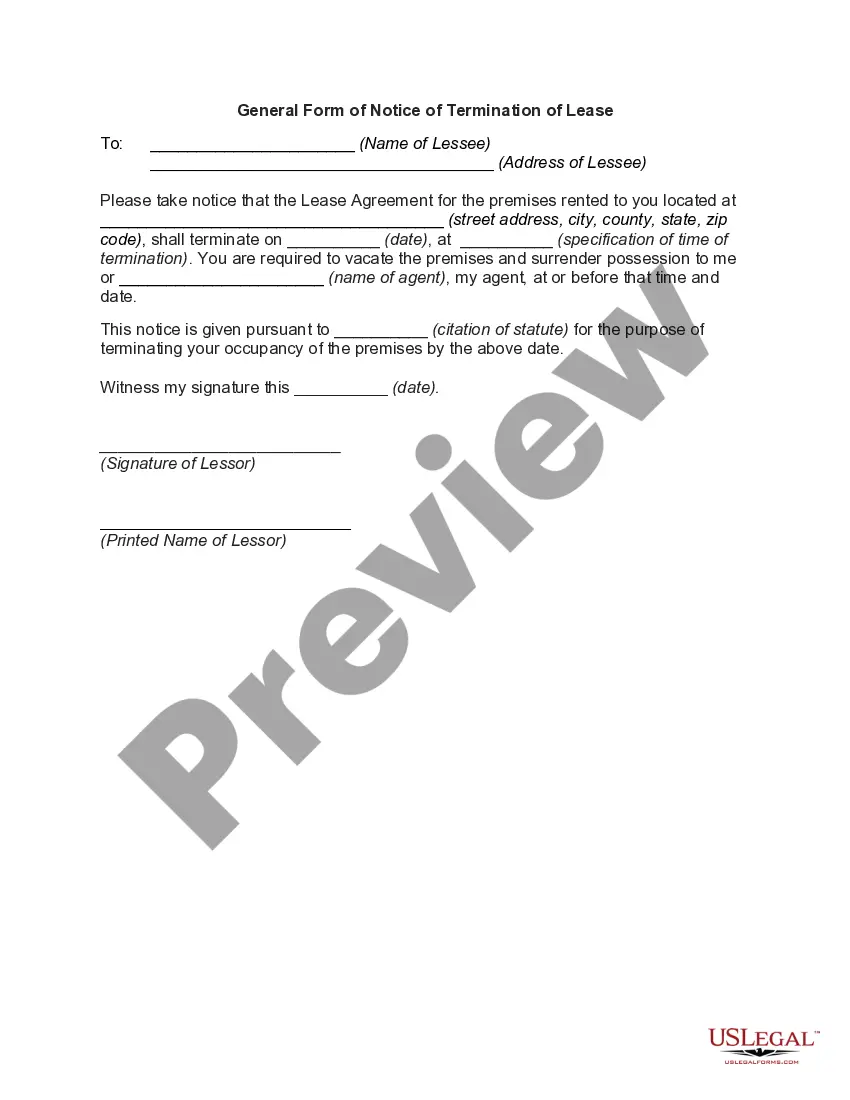
- Preview the selected form to confirm it aligns with your needs. If adjustments are necessary, use the search function to find a more suitable template.
- Proceed to purchase by clicking the Buy Now button. Choose the subscription plan that best fits your situation.
- Enter your payment details using your credit card or PayPal to complete the transaction.
- Once completed, download your 30 days notice form directly to your device, or access it anytime from the My Forms section of your profile.
In conclusion, US Legal Forms simplifies the process of obtaining legal documentation like the 30 days notice. With a wealth of resources at your fingertips and expert support when needed, you can ensure your documents are accurate and legally compliant.
Start your journey today by visiting US Legal Forms and take the hassle out of legal paperwork!
Form popularity
FAQ
Counting one month notice can be straightforward. Start from the day you give your notice and count forward to the same day in the following month. Make sure to keep track of any specific deadlines in your contract to avoid misunderstandings.
To write a 30-day notice for work, begin with a formal salutation followed by a clear statement of your intent to resign. Include your last working day, offering a brief reason if you feel comfortable. Use a positive tone, as this can maintain professional relationships in the future.
A 30 days notice is precisely one month long, giving the recipient 30 days to prepare for the upcoming change. This timeframe allows individuals time to make necessary arrangements, such as finding a new home or securing new employment. The clear timeline offers certainty and structure.
A 30-day notice should be clear and concise, typically including the date, the recipient's name, and the reason for the notice. It's best to format it formally, with a respectful tone and clear intent. This structure helps convey professionalism and respect.
To work out a 30 days notice, start counting from the date you provide the notice. Ensure you include all calendar days in your count. Keeping a clear timeline in mind helps you avoid conflicts and ensures you meet your obligations.
You can say '30 days notice' clearly and directly to convey the message of providing a month’s notice. It’s a straightforward term widely understood in legal contexts, especially related to housing or job termination. Use this phrase to ensure clarity in your communication.
A 30-day notice is a formal communication that notifies the recipient that a certain action will take place in 30 days. Typically, this relates to ending a lease or terminating employment. Understanding this notice is essential for both tenants and employees to ensure compliance with contractual obligations.
In Vermont, the rules for eviction include providing the tenant with a written notice, often a 30 days notice, depending on the circumstances. The landlord must serve the notice correctly, following specific guidelines. Always consult local laws to ensure compliance during this process.
When writing a 30-day notice to your employer, begin by addressing your supervisor or HR. Clearly state your intention to resign and include the effective date, giving a notice period of 30 days. It’s beneficial to express gratitude for the opportunity while maintaining a professional tone.
To start a 30-day notice, include your name, address, and the date you are writing the notice. Then, clarify your intent to vacate the property, specifying that the notice applies for the next 30 days. Always ensure you follow any specific requirements set forth in your lease.