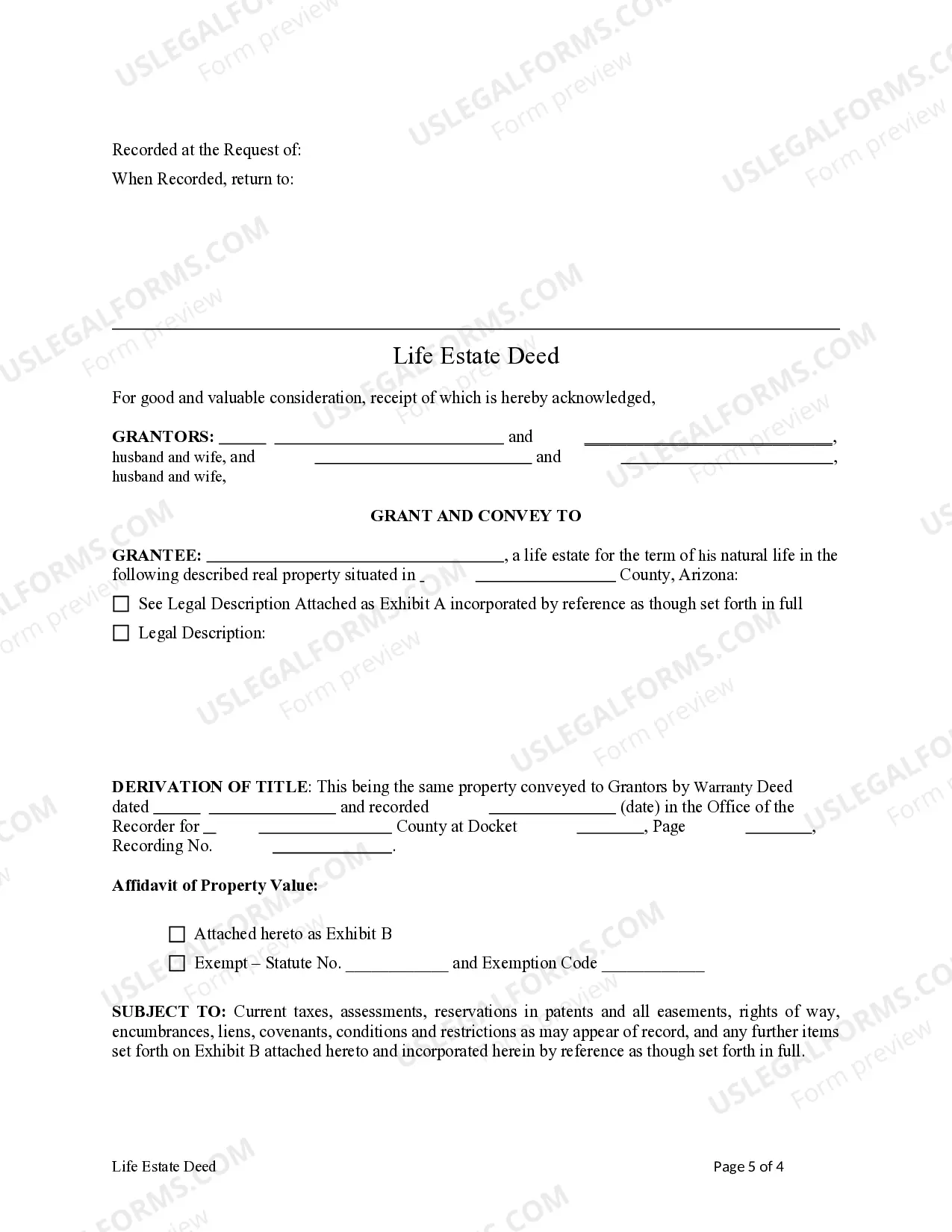
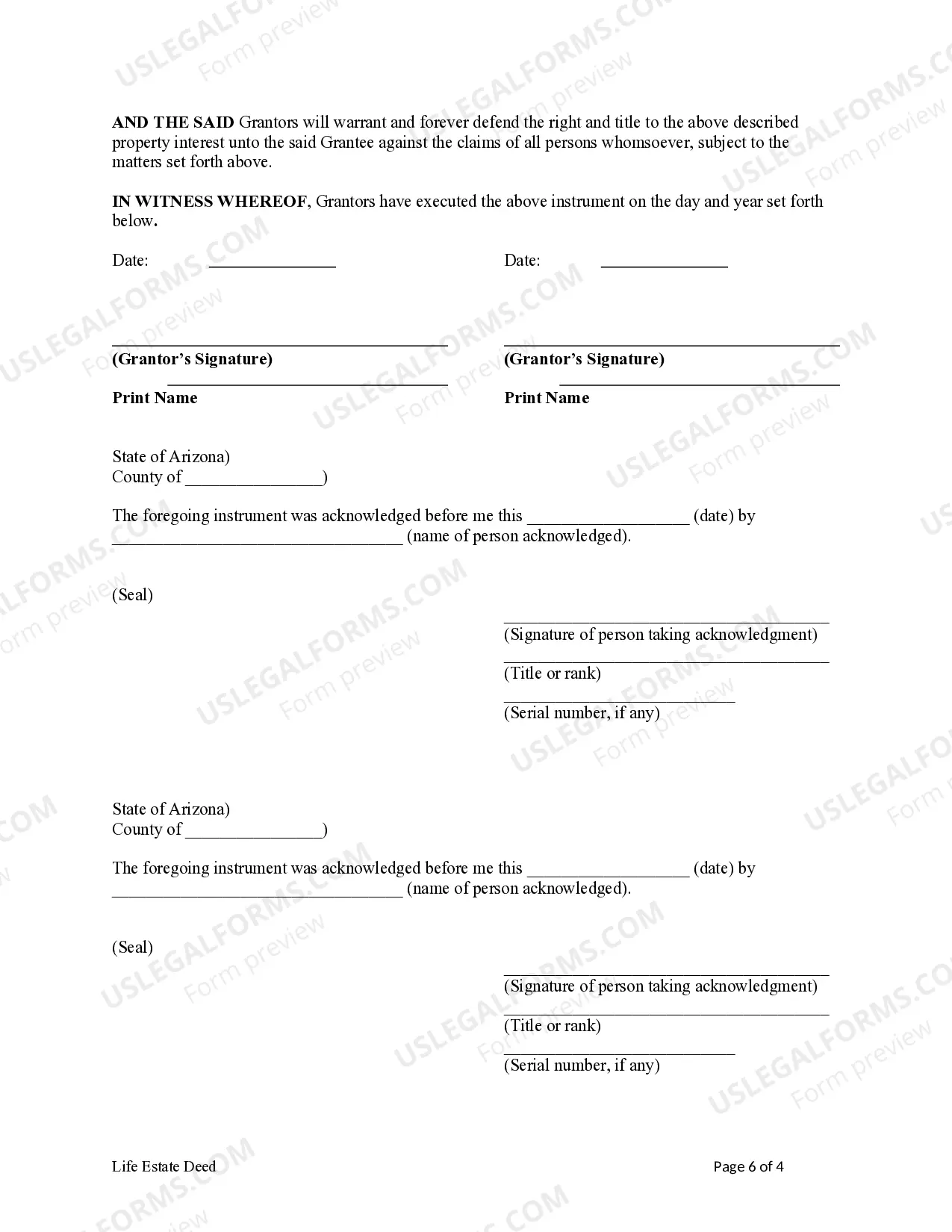
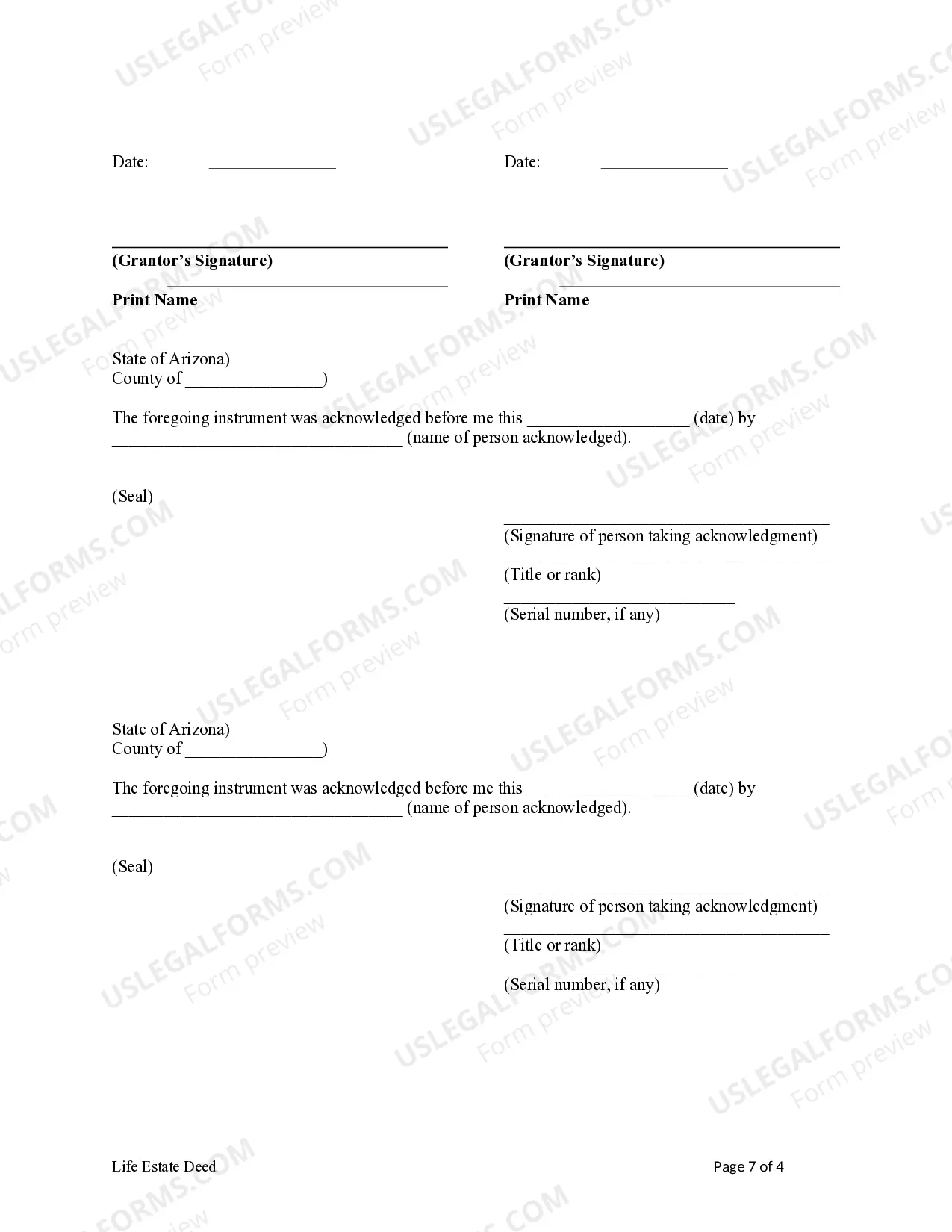
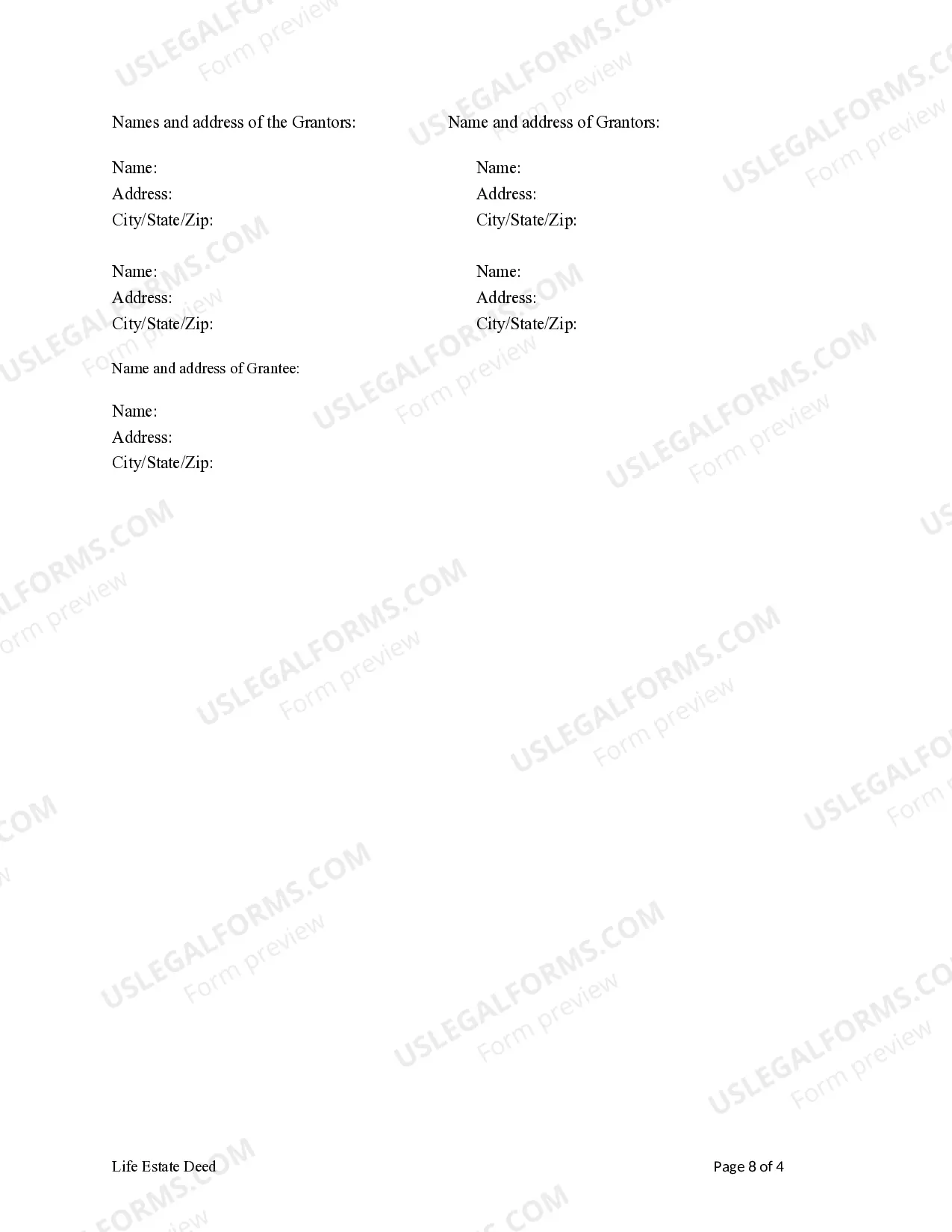
Arizona Estate Deed Without Powers
Description

Get your form ready online
Our built-in tools help you complete, sign, share, and store your documents in one place.
Make edits, fill in missing information, and update formatting in US Legal Forms—just like you would in MS Word.
Download a copy, print it, send it by email, or mail it via USPS—whatever works best for your next step.
Sign and collect signatures with our SignNow integration. Send to multiple recipients, set reminders, and more. Go Premium to unlock E-Sign.
If this form requires notarization, complete it online through a secure video call—no need to meet a notary in person or wait for an appointment.
We protect your documents and personal data by following strict security and privacy standards.

Make edits, fill in missing information, and update formatting in US Legal Forms—just like you would in MS Word.

Download a copy, print it, send it by email, or mail it via USPS—whatever works best for your next step.

Sign and collect signatures with our SignNow integration. Send to multiple recipients, set reminders, and more. Go Premium to unlock E-Sign.

If this form requires notarization, complete it online through a secure video call—no need to meet a notary in person or wait for an appointment.

We protect your documents and personal data by following strict security and privacy standards.
Looking for another form?




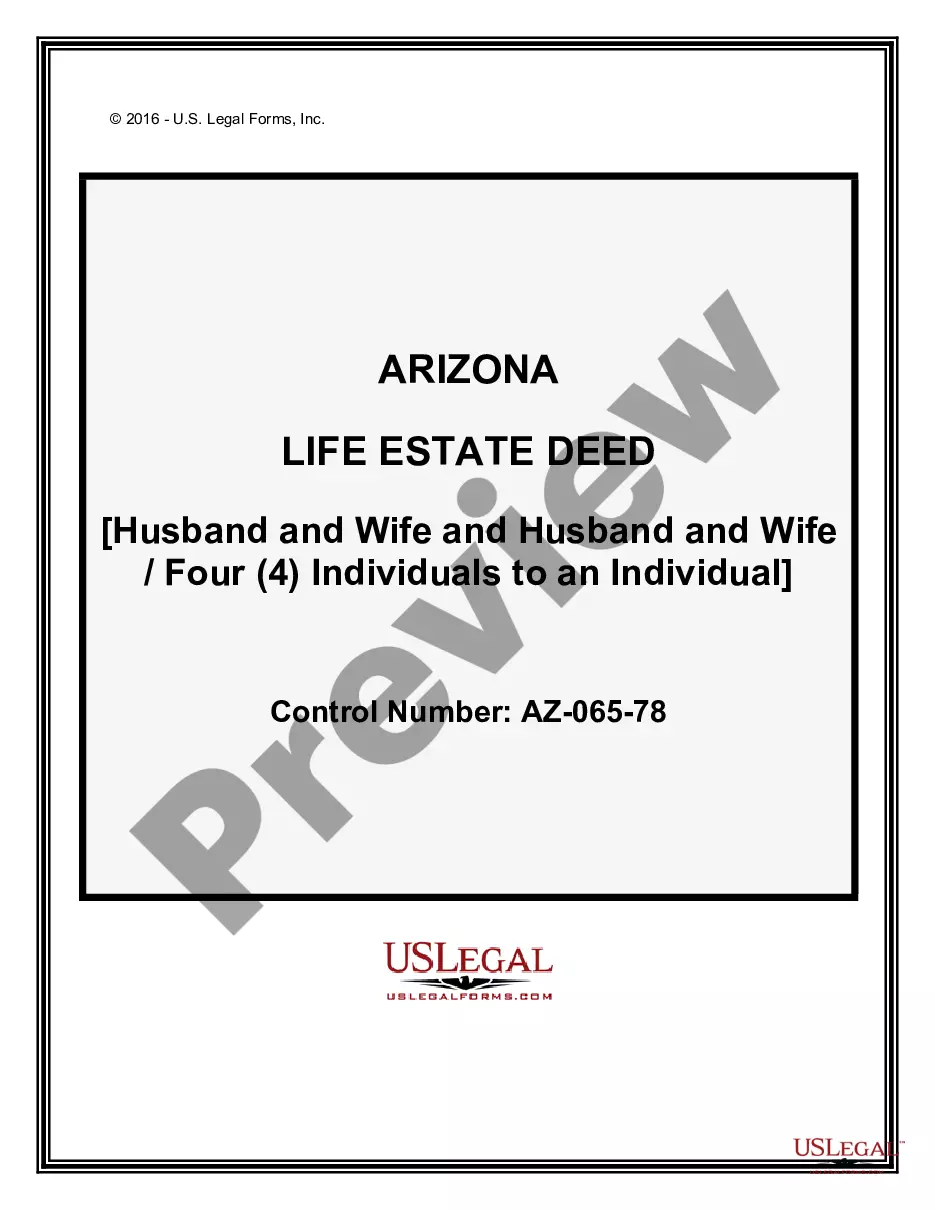
How to fill out Arizona Life Estate Deed From Two Married Couples To An Individual?
Managing legal documents and activities can be a lengthy addition to your schedule.
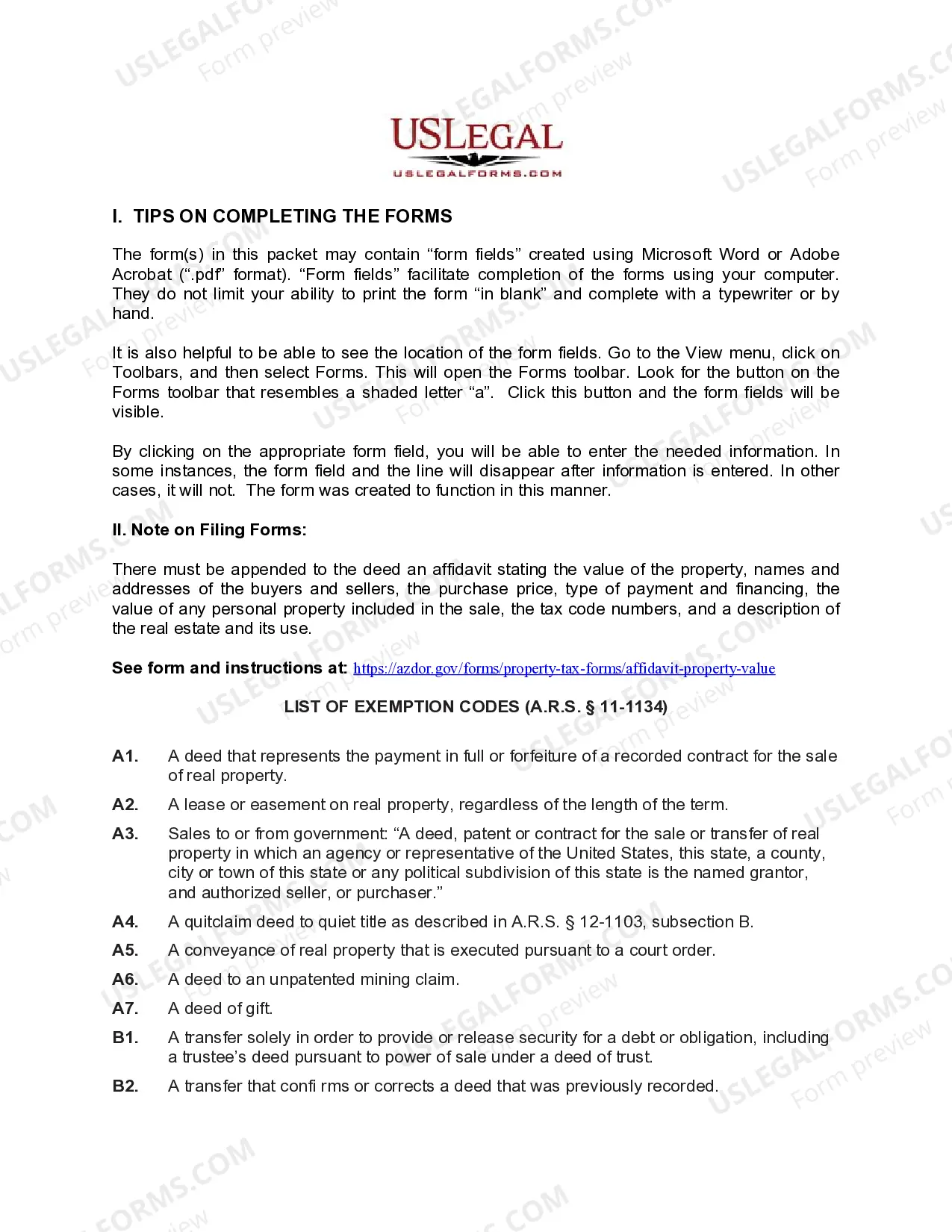
Arizona Estate Deed Without Powers and similar forms generally require you to search for them and understand how to fill them out accurately.
Thus, whether you are handling financial, legal, or personal issues, employing a comprehensive and user-friendly online directory of forms right at your fingertips will greatly assist you.
US Legal Forms is the leading online resource for legal templates, offering over 85,000 state-specific forms and a range of tools to help you complete your documentation effortlessly.
Just Log In to your account, find Arizona Estate Deed Without Powers, and download it right away from the My documents section. You can also retrieve previously downloaded forms.
- Browse the collection of relevant documents available with just one click.
- US Legal Forms provides state- and county-specific forms accessible for download anytime.
- Streamline your document management processes with premium support that enables you to create any form within minutes without extra or hidden fees.
Form popularity
FAQ
In addition, life estates allow the owner to control the property in all respects, except that they cannot sell or mortgage the property without the consent of their heirs. If created in a timely manner, a life estate can even help its creator qualify for Medicaid assistance.
To get title to the property after your death, the beneficiary must record a certified copy of the death certificate in the recorder's office. No probate is necessary. Use Nolo's Quicken WillMaker to make a beneficiary deed or transfer on death deed in any state that allows it.
In Arizona, the surviving spouse will always receive 50% of the decedent's estate; the remaining 50% usually passes to the surviving spouse as well, unless the decedent has any children from a separate relationship. In that case, the remaining 50% would be given to the decedent's other children.
A Proof of Authority is a statutory based mechanism whereby a ?foreign? personal representative (foreign meaning, the personal representative was granted executorships powers in a State other than Arizona) may petition the Arizona probate court to exercise its foreign powers.
In Arizona, real estate can be transferred via a Beneficiary Deed, more commonly known as a TOD deed. This deed allows a property owner to designate a beneficiary who will automatically inherit the property upon the owner's death, avoiding probate.