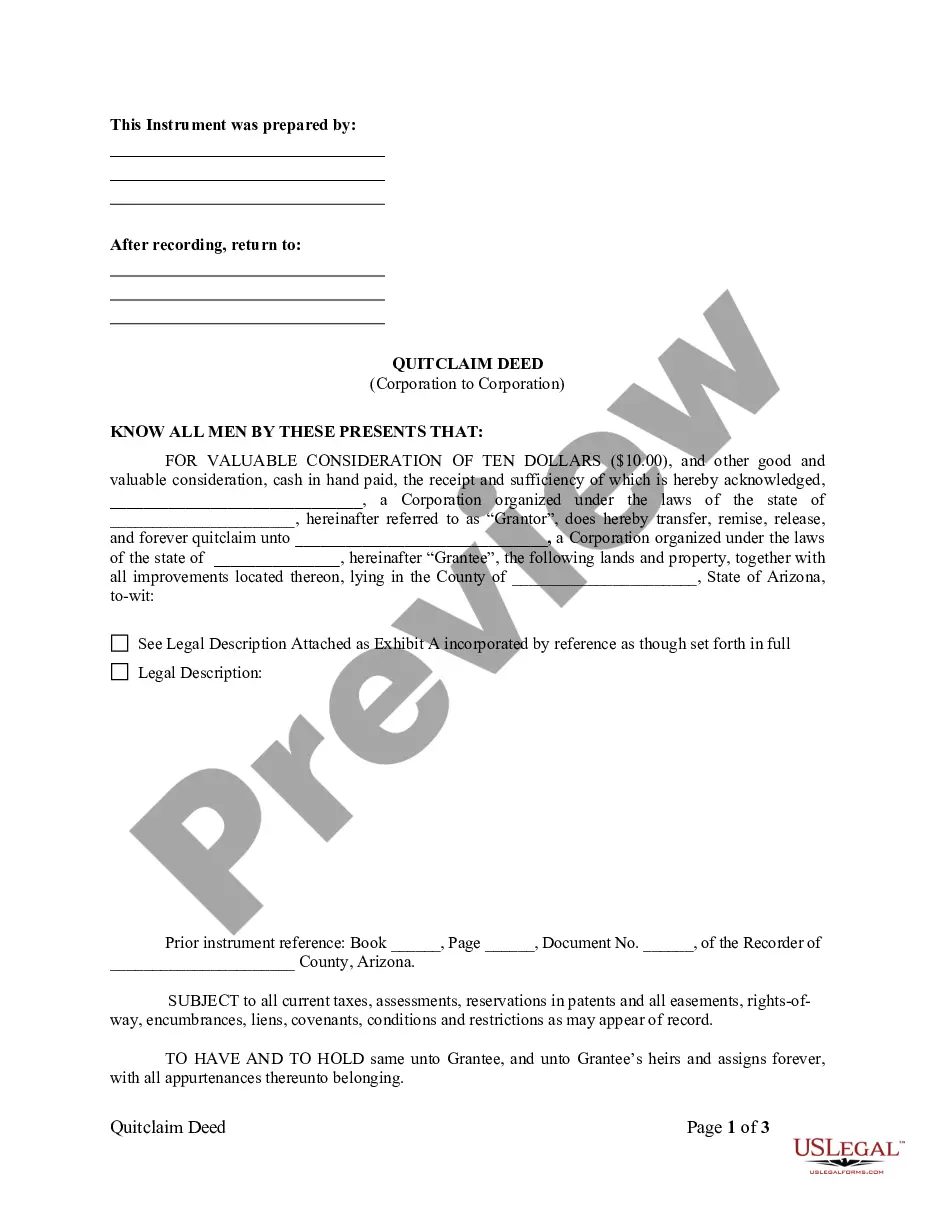
Quit Claim Deed Form For Colorado
Description

Get your form ready online
Our built-in tools help you complete, sign, share, and store your documents in one place.
Make edits, fill in missing information, and update formatting in US Legal Forms—just like you would in MS Word.
Download a copy, print it, send it by email, or mail it via USPS—whatever works best for your next step.
Sign and collect signatures with our SignNow integration. Send to multiple recipients, set reminders, and more. Go Premium to unlock E-Sign.
If this form requires notarization, complete it online through a secure video call—no need to meet a notary in person or wait for an appointment.
We protect your documents and personal data by following strict security and privacy standards.

Make edits, fill in missing information, and update formatting in US Legal Forms—just like you would in MS Word.

Download a copy, print it, send it by email, or mail it via USPS—whatever works best for your next step.

Sign and collect signatures with our SignNow integration. Send to multiple recipients, set reminders, and more. Go Premium to unlock E-Sign.

If this form requires notarization, complete it online through a secure video call—no need to meet a notary in person or wait for an appointment.

We protect your documents and personal data by following strict security and privacy standards.
Looking for another form?


How to fill out Arizona Quitclaim Deed From Corporation To Corporation?
- Start by visiting the US Legal Forms website and log into your account if you're a returning user. Click on the Download button after confirming your subscription is active.
- If you're new to the service, first, take a moment to preview the quit claim deed form. Ensure it meets your local requirements.
- Should you require a different template, use the Search feature to find an alternative that fits your needs.
- Select the appropriate form and click the Buy Now button. Choose your preferred subscription plan and create your account to access a vast array of legal resources.
- Complete your purchase by entering your payment details via credit card or PayPal.
- Once your payment is processed, download your quit claim deed form and save it for later use. You can find it anytime in your My Forms menu.
In conclusion, US Legal Forms simplifies the process of obtaining vital legal documents with a robust collection of over 85,000 easily fillable forms. Take advantage of premium expert assistance for completing your forms to ensure accuracy and compliance.
Start accessing your quit claim deed form today and experience the convenience and reliability of US Legal Forms!
Form popularity
FAQ
To fill out a quit claim deed form, first gather important information such as the property’s legal description, owner details, and the intended recipient’s information. Use clear and accurate language to describe the transfer, ensuring all parties understand the implications. After signing and notarizing the document, file it with your county to officially transfer ownership and maintain proper public records.
Filling out a quit claim deed form correctly is essential to avoid potential legal issues. Begin by ensuring that all names are spelled correctly and match the names on the title. After entering the property details, both parties should sign the deed before a notary, and then ensure it is recorded at the local county office to provide public notice of the transfer.
To fill out a quit claim deed form for Colorado, start by entering the property owner's name and the names of the parties involved in the transfer. Include a full legal description of the property, which you can find in the current deed or property records. Finally, sign the document in front of a notary and record it with the county clerk and recorder to complete the process.
The main disadvantage of a quitclaim deed is the lack of guarantees regarding the title's condition. If the property has liens or unresolved legal issues, the grantee might be held liable. Additionally, using a quit claim deed form for Colorado does not provide any recourse if problems arise after the transaction.
Quitclaim deeds are sometimes viewed negatively because they offer no warranty on the property title. This means that the grantee receives whatever interest the grantor had, and there could be unknown issues. It's crucial for anyone considering this option to be aware of these risks and to perform due diligence on the property's history.
Individuals involved in property transfers, such as family members or divorcing spouses, often benefit the most from a quitclaim deed. It allows for quick and efficient transfer of ownership without extensive legal processes. If you need a simple and effective way to transfer property, using a quit claim deed form for Colorado can be a practical solution.
Filing a quitclaim deed in Colorado involves a few steps. First, complete the quit claim deed form for Colorado, ensuring that all required information is included. Next, have the deed notarized, and then file it with the county clerk and recorder's office in the county where the property is located.
In Colorado, a quit claim deed does need to be notarized to be considered valid. This ensures that the signatures on the quit claim deed form for Colorado are authentic and meet legal requirements. Always check that your document is properly executed before filing with the county clerk.
Yes, you can file a quit claim deed yourself in Colorado. However, it's important to ensure that you are using the correct quit claim deed form for Colorado. This helps avoid any mistakes that could delay the process or lead to legal issues. Consider using platforms like US Legal Forms to access accurate and legally compliant templates.
A quit claim deed can become invalid if it contains errors, is not properly notarized, or if it wasn't filed with the county clerk. Additionally, if the grantor did not have the legal right to transfer the property, the deed may be contested. To avoid these issues, utilize a reliable quit claim deed form for Colorado, ensuring all necessary details are correct and complete.