Quitclaim Deed Husband With Child
Description


Get your form ready online
Our built-in tools help you complete, sign, share, and store your documents in one place.
Make edits, fill in missing information, and update formatting in US Legal Forms—just like you would in MS Word.
Download a copy, print it, send it by email, or mail it via USPS—whatever works best for your next step.
Sign and collect signatures with our SignNow integration. Send to multiple recipients, set reminders, and more. Go Premium to unlock E-Sign.
If this form requires notarization, complete it online through a secure video call—no need to meet a notary in person or wait for an appointment.
We protect your documents and personal data by following strict security and privacy standards.

Make edits, fill in missing information, and update formatting in US Legal Forms—just like you would in MS Word.

Download a copy, print it, send it by email, or mail it via USPS—whatever works best for your next step.

Sign and collect signatures with our SignNow integration. Send to multiple recipients, set reminders, and more. Go Premium to unlock E-Sign.

If this form requires notarization, complete it online through a secure video call—no need to meet a notary in person or wait for an appointment.

We protect your documents and personal data by following strict security and privacy standards.
Looking for another form?








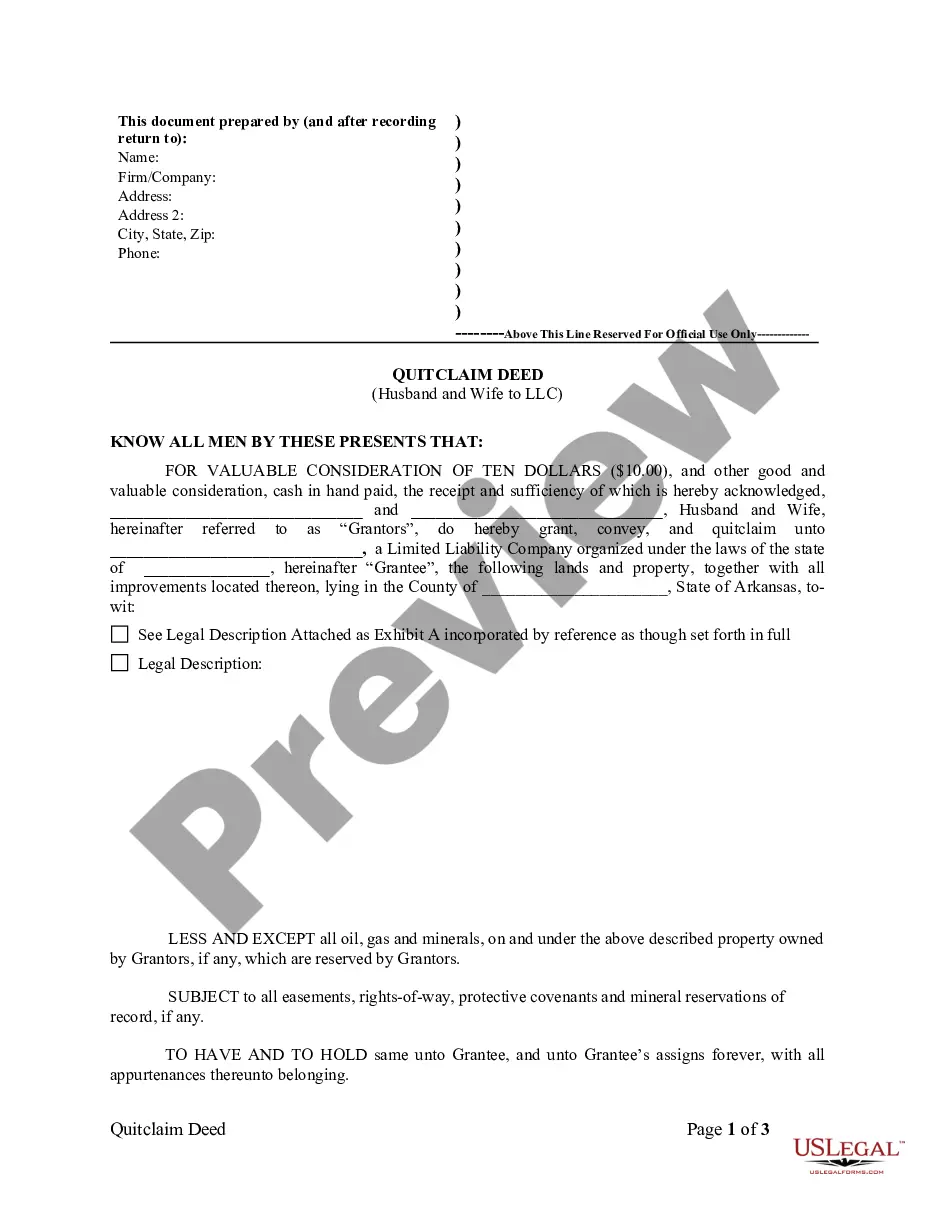
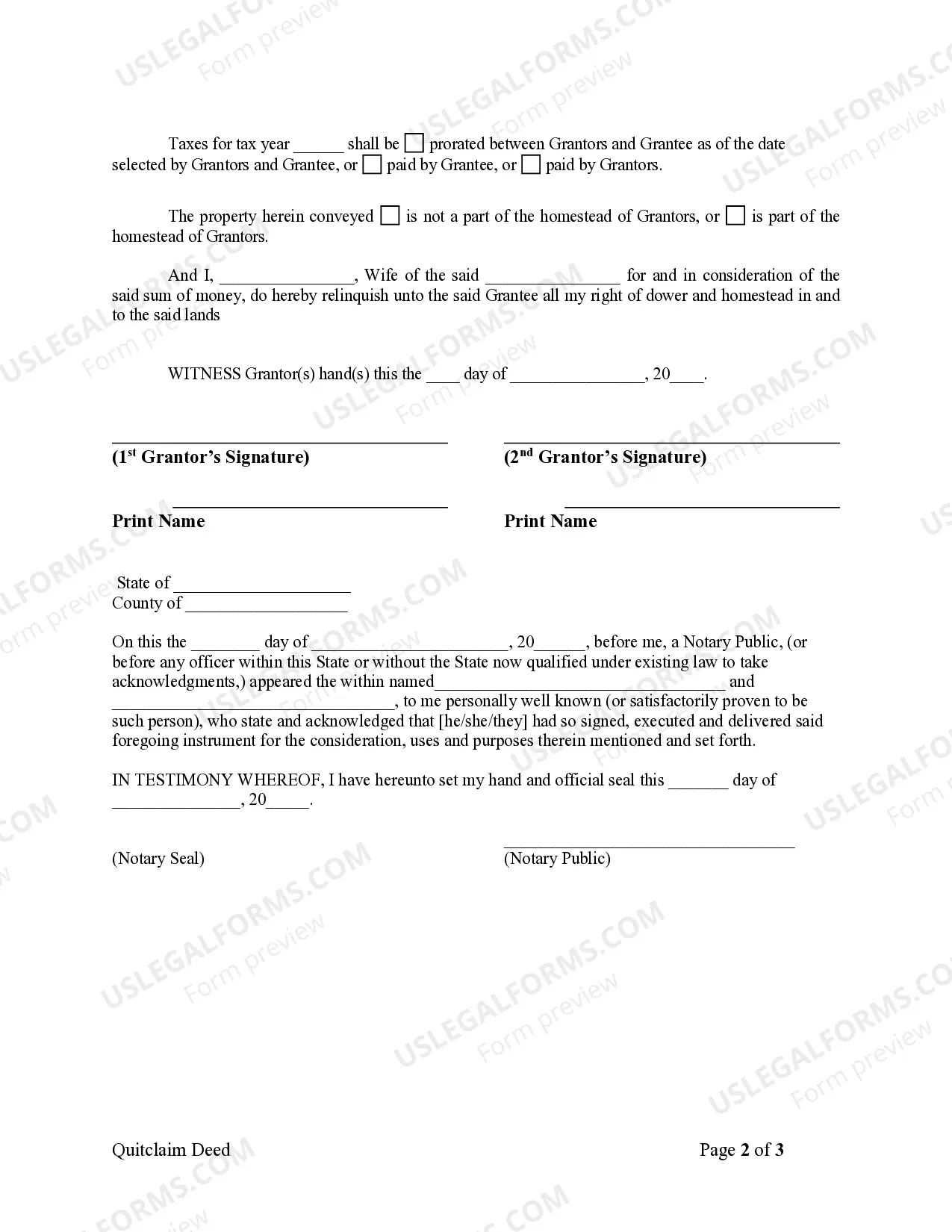
How to fill out Arkansas Quitclaim Deed From Husband And Wife To LLC?
- Log in to your existing US Legal Forms account. If you do not have one, create a new account to start your journey.
- Browse through the legal forms library. Ensure you preview the quitclaim deed template that aligns with your specific requirements and adheres to your local jurisdiction.
- In case the selected template doesn't match your needs, use the search function to find the appropriate document.
- Proceed to purchase the form by clicking the Buy Now button, and select a subscription plan that works best for you.
- Complete your payment by entering credit card details or using PayPal for a seamless transaction.
- Download your quitclaim deed and save it on your device. You can also revisit it anytime in the My Forms section of your US Legal Forms profile.
Once you have completed these steps, you can confidently execute your quitclaim deed, ensuring that the document meets legal standards for your family situation.
For quick and reliable access to a wide range of legal documents, consider US Legal Forms. Experience the simplicity and peace of mind that comes with expert assistance in form completion.
Form popularity
FAQ
To add a spouse to a quitclaim deed, you first need to create a new deed that includes both you and your spouse as owners. It's important to clearly indicate the type of ownership you both will have, such as joint tenancy or tenancy in common. After drafting this quitclaim deed with the appropriate details, you must sign the document in front of a notary public. Finally, record the new deed with your local county recorder’s office to ensure the change is legally recognized. This process simplifies property transfer and protects the interests of all parties, especially important when a husband has a child.
The best way to add your wife to your deed is to use a quitclaim deed husband with child. This process allows you to transfer interest in your property simply and effectively. Always consult local laws to ensure compliance and consider using platforms like US Legal Forms to assist in crafting the necessary documents.
One main disadvantage of adding a name to a deed includes potential liability for debts owed by the new co-owner. Furthermore, if the property is sold, both parties may have to agree, which could lead to conflict. Understanding these risks is crucial, especially when involving a quitclaim deed husband with child during family transitions.
You can add your spouse to the deed by executing a quitclaim deed husband with child, which does not require refinancing the mortgage. This process allows you to add their name to the property title directly. Make sure to check local regulations for filing and any tax implications that may arise.
To remove your husband's name from the deed, you can consider filing a quitclaim deed husband with child. This process allows one spouse to give up their claim to the property. Ensure you follow the legal procedures in your state, which may include notarization and filing with the local authorities.
A spouse might use a quitclaim deed to transfer ownership rights in a property, especially during a divorce or when managing family property with a child involved. This deed can help clarify ownership and protect the interests of both partners. In situations involving children, this transfer may ensure that property remains in the family.
Adding a spouse to a deed can be straightforward, particularly when using a quitclaim deed husband with child. You typically need to fill out the appropriate form and have it signed by both parties. It is often a simple process, but it may require notarization or filing with the county clerk, depending on your state's requirements.
One notable disadvantage of a quitclaim deed is that it does not guarantee a clear title, which may lead to future disputes about ownership. When using a quitclaim deed husband with child, the lack of warranty means the recipient assumes the risk of any liens or claims against the property. Additionally, this method does not provide the same legal protections as a traditional warranty deed. Thus, it’s essential to conduct thorough research and possibly consult legal help when using this type of document.
A quitclaim deed from parent to child allows a parent to transfer property rights to their child. This type of transfer can simplify inheritance or assist with estate planning, especially in cases where the husband wishes to secure property for their child. With this deed, the parent relinquishes any claims to the property, transferring ownership directly to the child. Consider using a service like US Legal Forms to ensure the document meets all legal requirements.
Quitclaim deeds are often used for transferring property ownership without a financial exchange. They are useful in situations like divorce, where a husband may transfer property to his ex-wife, or between family members, such as a quitclaim deed from husband to child. This type of deed provides a simple way to convey ownership, but it does not guarantee that the title is clear or that other claims do not exist. Always ensure checks are in place to avoid future disputes.