Attorney Motivation
Description
Get your form ready online
Our built-in tools help you complete, sign, share, and store your documents in one place.
Make edits, fill in missing information, and update formatting in US Legal Forms—just like you would in MS Word.
Download a copy, print it, send it by email, or mail it via USPS—whatever works best for your next step.
Sign and collect signatures with our SignNow integration. Send to multiple recipients, set reminders, and more. Go Premium to unlock E-Sign.
If this form requires notarization, complete it online through a secure video call—no need to meet a notary in person or wait for an appointment.
We protect your documents and personal data by following strict security and privacy standards.

Make edits, fill in missing information, and update formatting in US Legal Forms—just like you would in MS Word.

Download a copy, print it, send it by email, or mail it via USPS—whatever works best for your next step.

Sign and collect signatures with our SignNow integration. Send to multiple recipients, set reminders, and more. Go Premium to unlock E-Sign.

If this form requires notarization, complete it online through a secure video call—no need to meet a notary in person or wait for an appointment.

We protect your documents and personal data by following strict security and privacy standards.
Looking for another form?
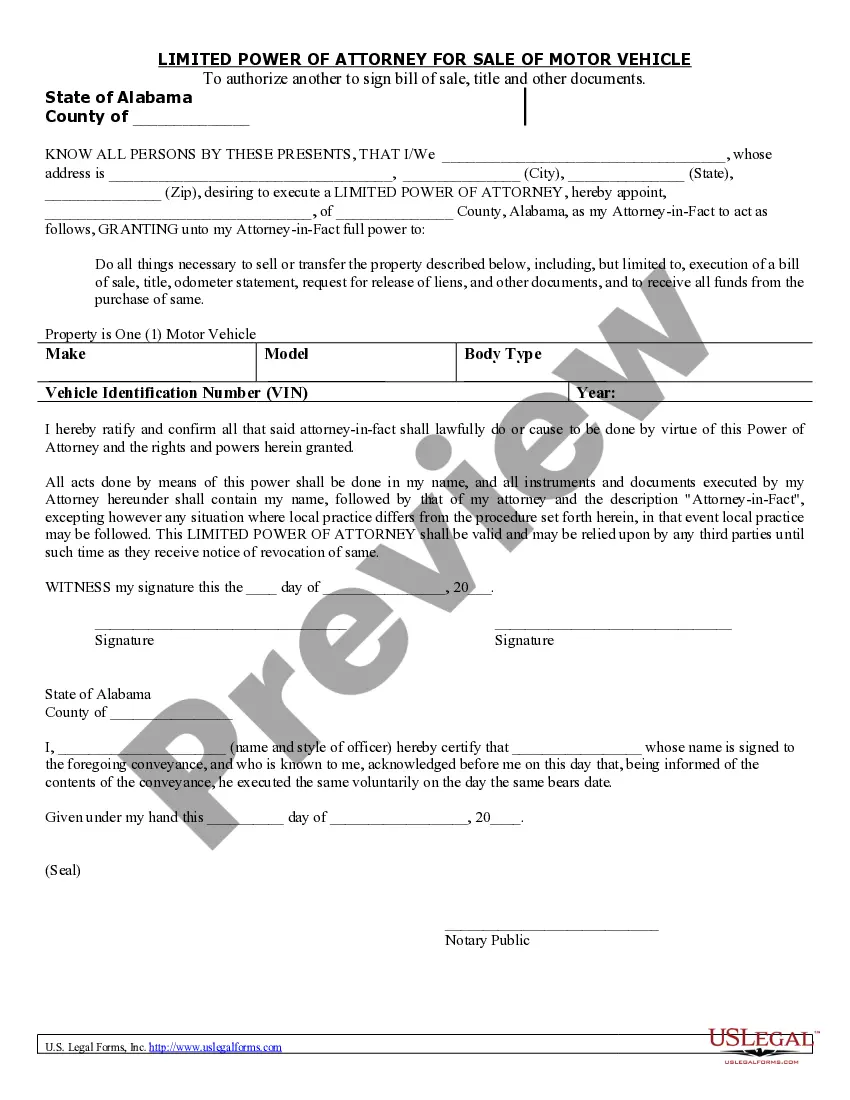
How to fill out Alabama Power Of Attorney For Sale Of Motor Vehicle?
- If you're already a member, log in to your account and download the form template you need by clicking the Download button. Ensure your subscription is active; if not, renew it based on your payment plan.
- For new users, start by checking the Preview mode and form description. Confirm you've selected the accurate legal form that meets your specifications and local jurisdiction requirements.
- If the form does not match your needs, use the Search tab to locate a different template. Keep searching until you find the right document.
- Once you identify the appropriate form, click the Buy Now button and select your desired subscription plan. You'll need to create an account to access the library's features.
- Proceed with payment by entering your credit card information or opting for PayPal to complete your subscription.
- Finally, download your form and save it to your device. This template will also be accessible in the My Forms section of your profile for future use.
By following these steps, you can leverage US Legal Forms' extensive resources to ensure your documents are accurately completed and legally compliant.
Take the hassle out of legal documentation today—explore US Legal Forms and unlock your lawyer's potential!
Form popularity
FAQ
Your motivation to become an attorney might stem from a belief in justice and a desire to impact society. You could have a passion for defending the rights of individuals or a keen interest in the complexities of law. Sharing these motivations in your journey helps connect you with the core values of the legal profession.
Individuals may want to become attorneys for various reasons, including a passion for justice or a desire to effect change. The profession offers opportunities for advocacy, negotiation, and intellectual challenge, all of which can be highly rewarding. This drive stems from individual attorney motivations and personal values that resonate with pursuing a legal career.
The main goal of an attorney is to serve their clients' best interests while upholding the law. This often involves providing legal advice, representing clients in disputes, and ensuring fair treatment under the law. Each attorney's motivation may vary, but the commitment to justice and advocacy remains central to the profession.
Lawyers can earn $400 an hour, especially in specialized areas such as corporate law or intellectual property. However, earnings can vary based on location, experience, and the nature of the practice. To better understand potential earnings, one might explore resources like US Legal Forms to gather insights on different career paths.
Each individual’s journey into law is unique. Many are driven by a strong sense of justice or personal experiences that sparked their attorney motivation. Reflecting on these motivations is important; it can guide your practice and help you stay focused through various challenges.
Staying motivated as a lawyer can be challenging, but maintaining a clear sense of purpose helps. Consider setting personal goals that align with your attorney motivation, such as taking on pro bono cases or pursuing a specialization you care about. Additionally, connecting with mentors and participating in legal communities can rejuvenate your enthusiasm for the law.
When answering why you want to be a lawyer, focus on your passion for justice and helping others. You might mention your desire to advocate for those who cannot advocate for themselves. Highlight any personal experiences that shaped your attorney motivation, and explain how a legal career aligns with your values and goals.
Invoking the right to counsel means formally requesting legal representation to protect your rights during legal proceedings. It signals to law enforcement, judges, and other parties involved that you want to consult with an attorney before proceeding. This right is crucial in maintaining a fair legal process, and recognizing attorney motivation in this situation can empower you to navigate complexities effectively.
To invoke your right to an attorney, you should clearly and assertively express your desire for legal representation as soon as you are taken into custody or when legal proceedings commence. Politely stating that you wish to have an attorney present can initiate this process. Understanding the degree of attorney motivation helps ensure that your needs are met during legal challenges, so do not hesitate to ask for support.
In essence, the terms 'lawyer' and 'attorney' are often used interchangeably, though there can be nuanced differences. An attorney is a lawyer who has passed the bar exam and is authorized to practice law in court. Consequently, both roles share similar powers regarding legal representation, making the individual's skills and motivation crucial. Finding an attorney who demonstrates strong commitment can lead to more effective legal outcomes.