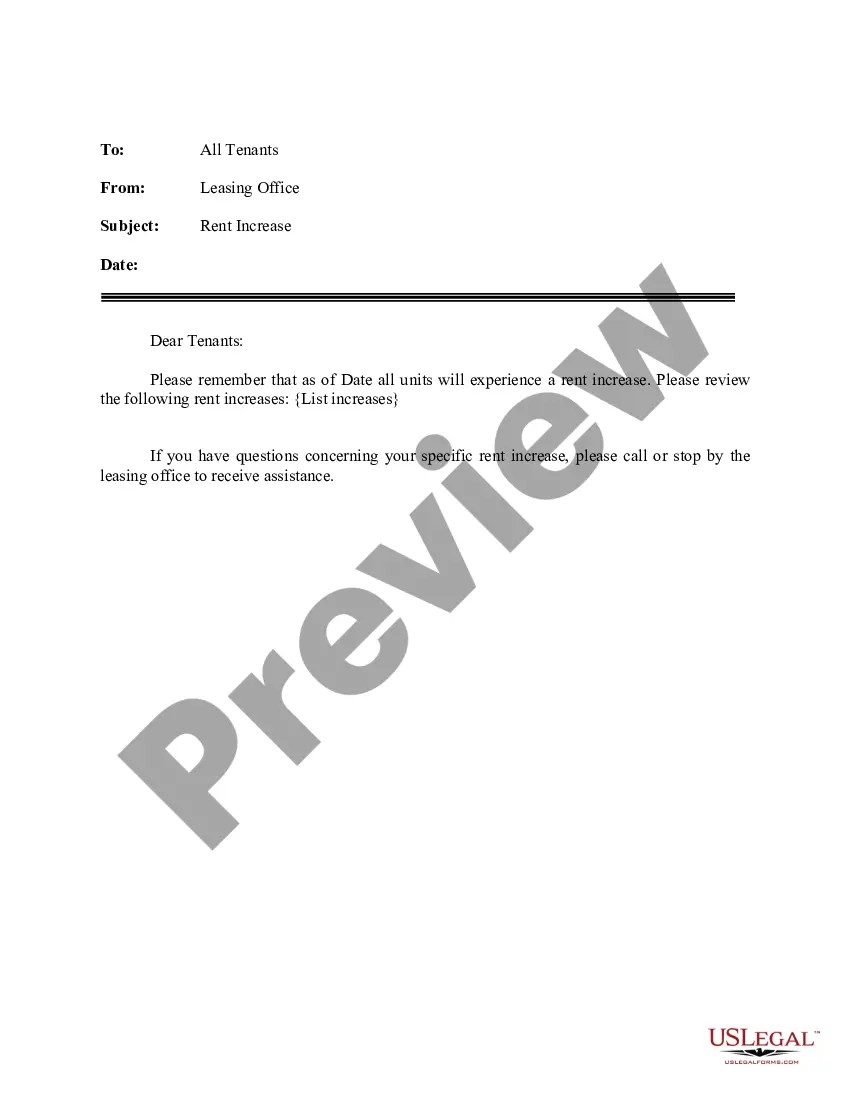
Notice Increase Rent
Description
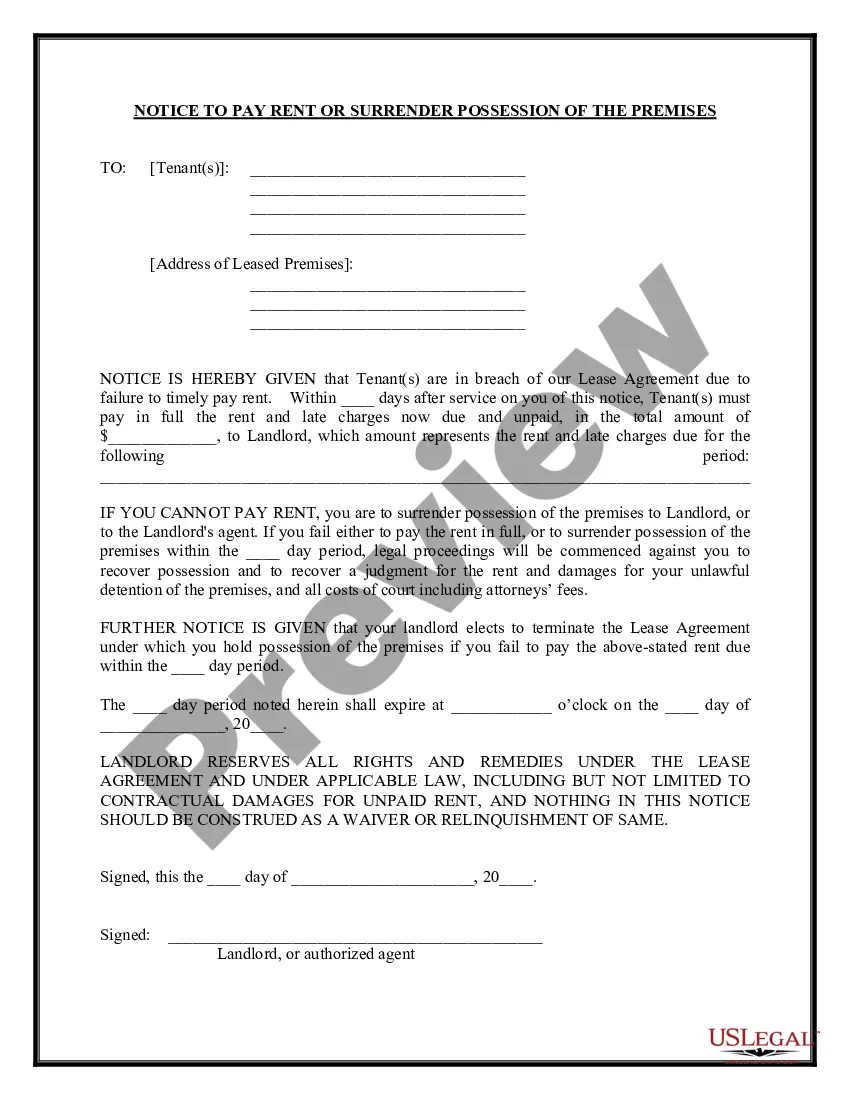
Get your form ready online
Our built-in tools help you complete, sign, share, and store your documents in one place.
Make edits, fill in missing information, and update formatting in US Legal Forms—just like you would in MS Word.
Download a copy, print it, send it by email, or mail it via USPS—whatever works best for your next step.
Sign and collect signatures with our SignNow integration. Send to multiple recipients, set reminders, and more. Go Premium to unlock E-Sign.
If this form requires notarization, complete it online through a secure video call—no need to meet a notary in person or wait for an appointment.
We protect your documents and personal data by following strict security and privacy standards.

Make edits, fill in missing information, and update formatting in US Legal Forms—just like you would in MS Word.

Download a copy, print it, send it by email, or mail it via USPS—whatever works best for your next step.

Sign and collect signatures with our SignNow integration. Send to multiple recipients, set reminders, and more. Go Premium to unlock E-Sign.

If this form requires notarization, complete it online through a secure video call—no need to meet a notary in person or wait for an appointment.

We protect your documents and personal data by following strict security and privacy standards.
Looking for another form?

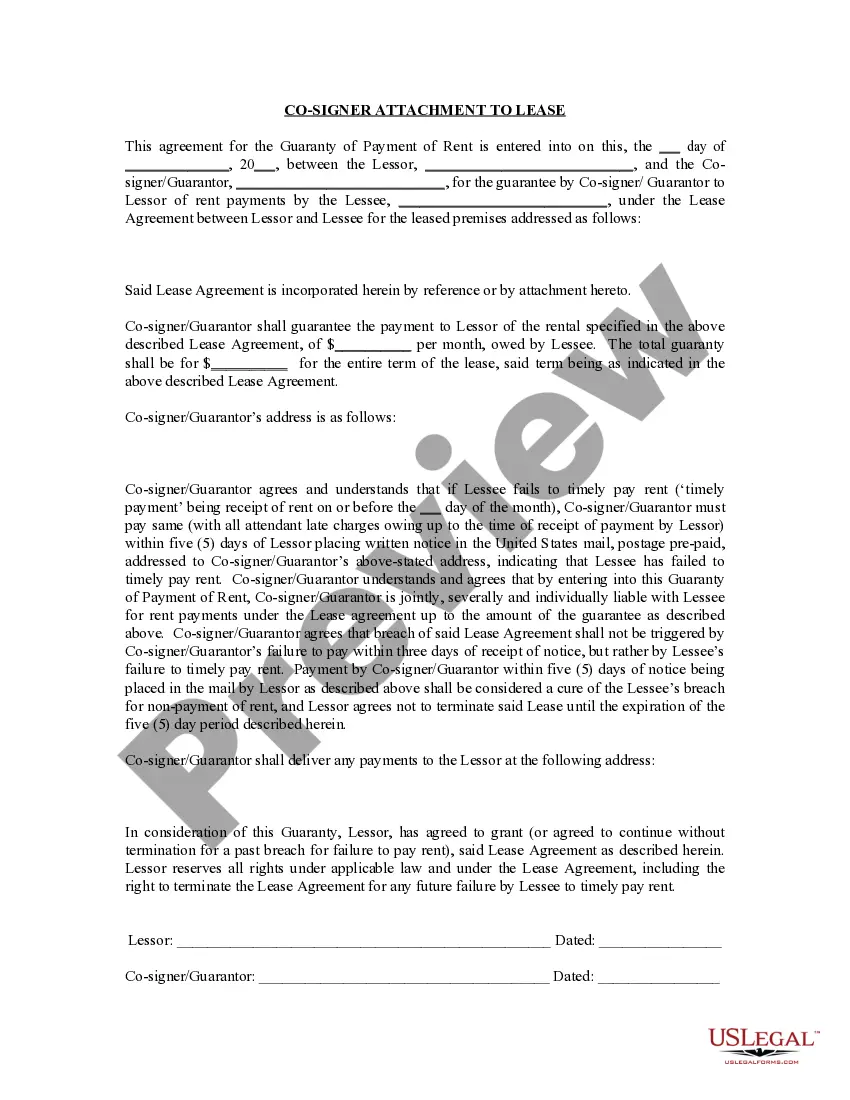



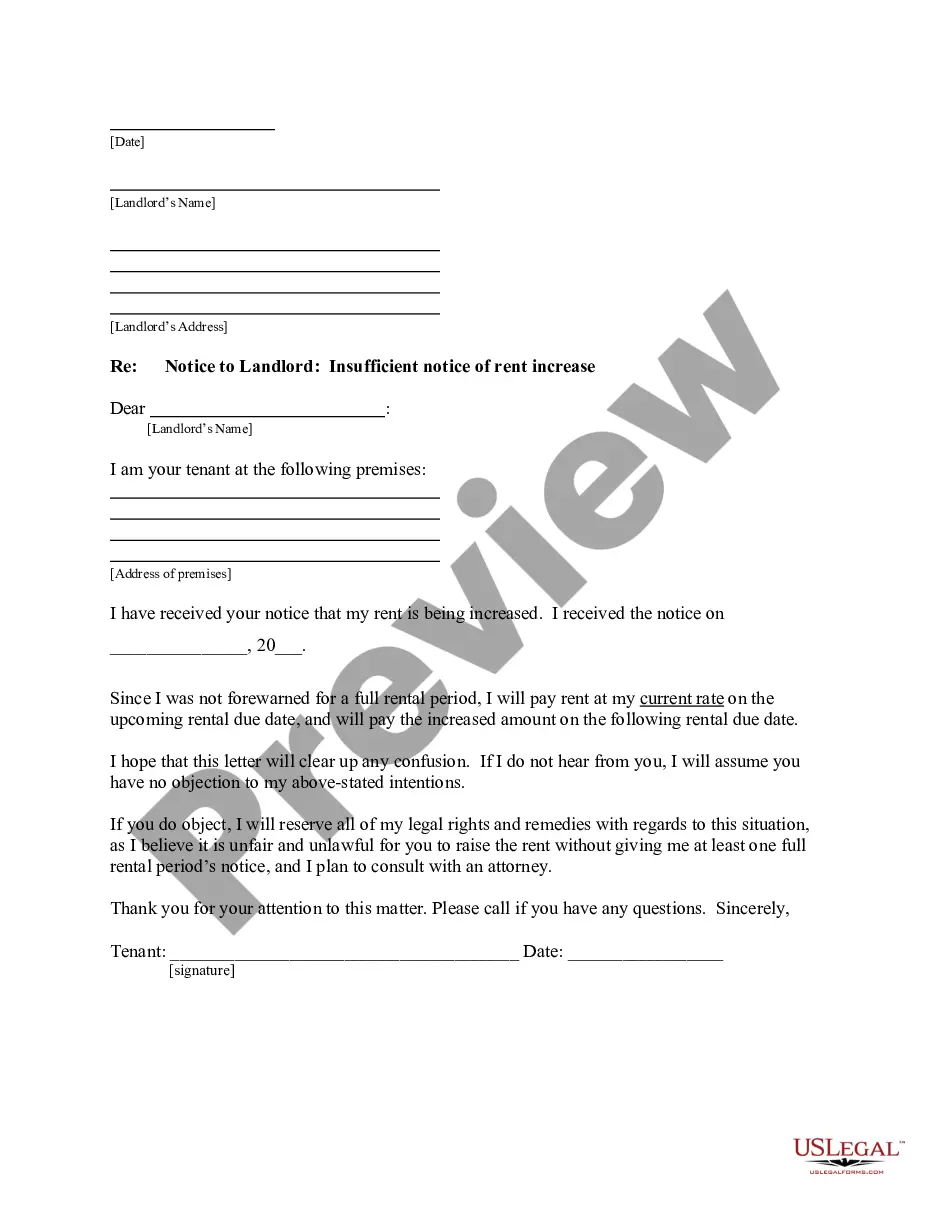
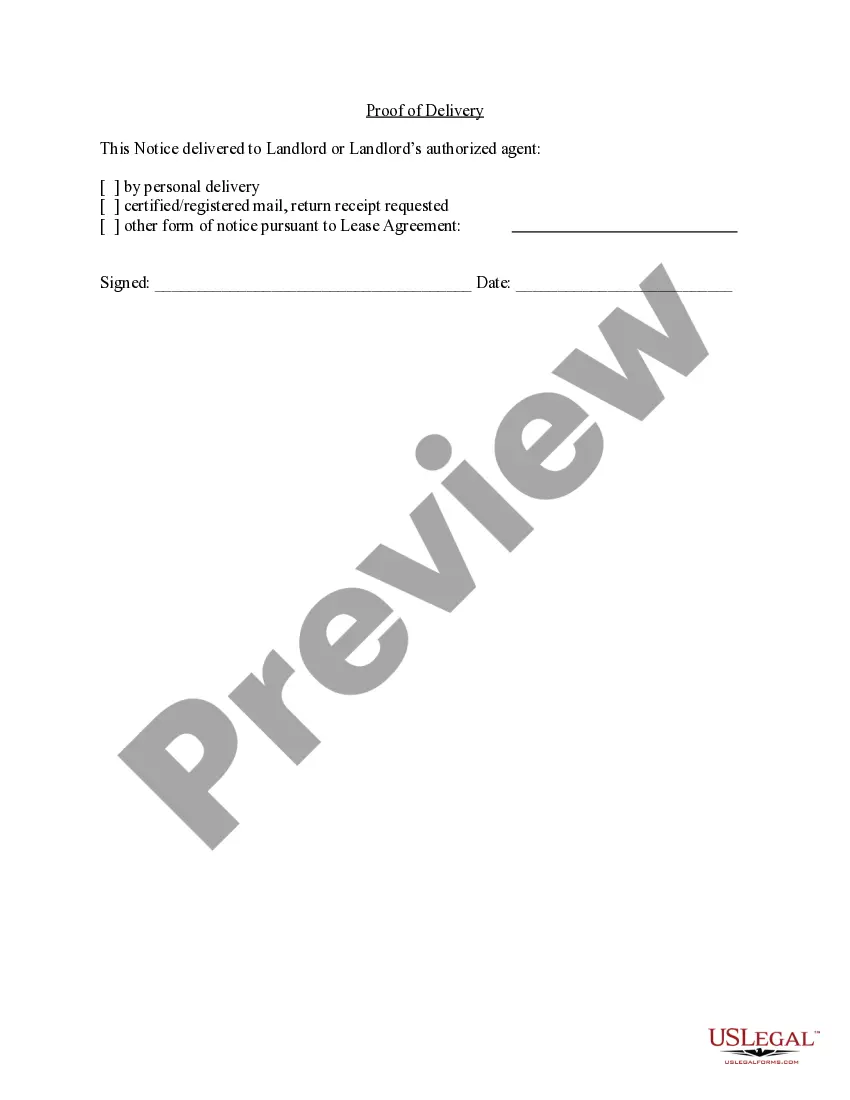
How to fill out Alabama Letter From Tenant To Landlord About Insufficient Notice Of Rent Increase?
- If you’re a returning user, log into your account and download the necessary form template by clicking the Download button, ensuring your subscription is current. If expired, renew it as per your payment plan.
- For first-time users, start by checking the Preview mode and form description to confirm you’ve selected the right document that fits your requirements and jurisdiction.
- If discrepancies arise, use the Search tab above to locate another suitable template that complies with your needs.
- Once you find the correct document, proceed with the purchase by clicking the Buy Now button, selecting your preferred subscription plan, and creating an account for full access.
- Complete your purchase by entering your payment details via credit card or PayPal.
- After payment, download your form and save it to your device. Access it anytime in the My Forms section of your profile.
Utilizing US Legal Forms not only provides access to an extensive library of over 85,000 legal forms but also connects you with premium experts who can guide you through form completion, ensuring your documents are accurate and compliant.
Start simplifying your legal documentation process today by visiting US Legal Forms and experience the benefits firsthand.
Form popularity
FAQ
The maximum rent increase a landlord can enforce often differs based on the state, local ordinances, and the specifics of the rental agreement. In many areas, there is no cap, but landlords must follow notice increase rent requirements for transparency. Always check with local regulations or consult legal resources for guidance on allowable increases.
The most you can raise someone's rent varies by local regulations and lease terms. In some jurisdictions, there may be limits to protect tenants from sudden hikes. It is crucial to understand the local laws surrounding notice increase rent so you can make informed decisions as a landlord.
When writing a letter to your landlord about a rent increase, start with a polite greeting and state the purpose of your communication. Mention the current rent, the proposed increase, and ask for clarification on the reason. This approach can help foster open dialogue and address your concerns about the notice increase rent effectively.
To mail a rent increase notice, write a clear and concise letter outlining the current rent, the new rent amount, and the effective date. Ensure you keep a copy for your records and consider using certified mail to confirm the tenant receives it. Properly notifying tenants of a notice increase rent demonstrates professionalism and helps maintain a good landlord-tenant relationship.
The maximum amount a landlord can raise the rent largely depends on local laws and lease agreements. In many areas, there are no specific limits, allowing landlords to determine rent based on market conditions. It's essential to review your lease for any stipulations concerning notice increase rent and stay informed about local regulations.
In Michigan, landlords must provide tenants with written notice of a rent increase at least 30 days before the new rent amount takes effect. This notice must include the current rent, the new rent amount, and the effective date of the increase. Understanding the notice increase rent requirement can help you stay compliant and avoid potential disputes.
To request an increase in rent from your landlord, present a well-reasoned argument highlighting improvements you've made or market comparisons. Be direct while remaining respectful, and outline how the proposed increase reflects your property's value. Make the conversation constructive by suggesting a timeframe for the increase. For formal documentation, refer to USLegalForms for help crafting a notice that conveys your request professionally.
In your letter to inform a tenant of a rent increase, start with a formal greeting and clearly state the purpose of the letter. Include the new rent amount, the effective date, and any reasons for the increase if applicable. Ensure you comply with local laws about notice periods. Utilize templates from USLegalForms to ensure your letter meets all legal requirements.
When discussing rent increases with your landlord, it's important to remain professional and research comparable rental prices in your area. Explain your position clearly, citing any improvements you may have made or changes in the market. Politely express your willingness to negotiate or discuss alternatives. Remember, using USLegalForms can guide you in drafting a notice that communicates your points effectively.
The most a landlord can raise rent often depends on local laws and regulations. Generally, many states do not have an outright cap on rent increases but require a proper notice to be given. It’s essential to check the specific guidelines for your area. Consulting USLegalForms can help clarify your rights and obligations regarding rent increases.