Funeral For The Queen
Description
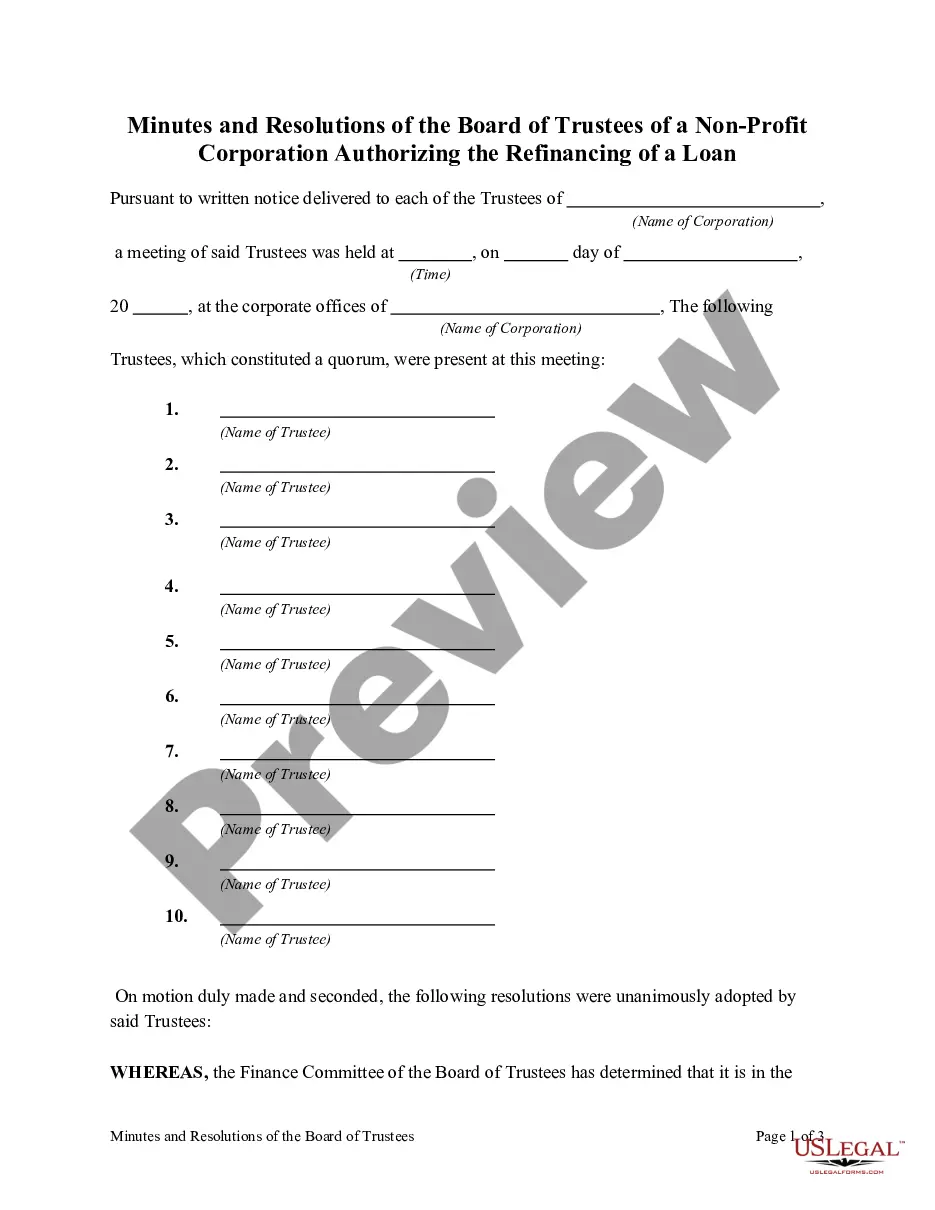
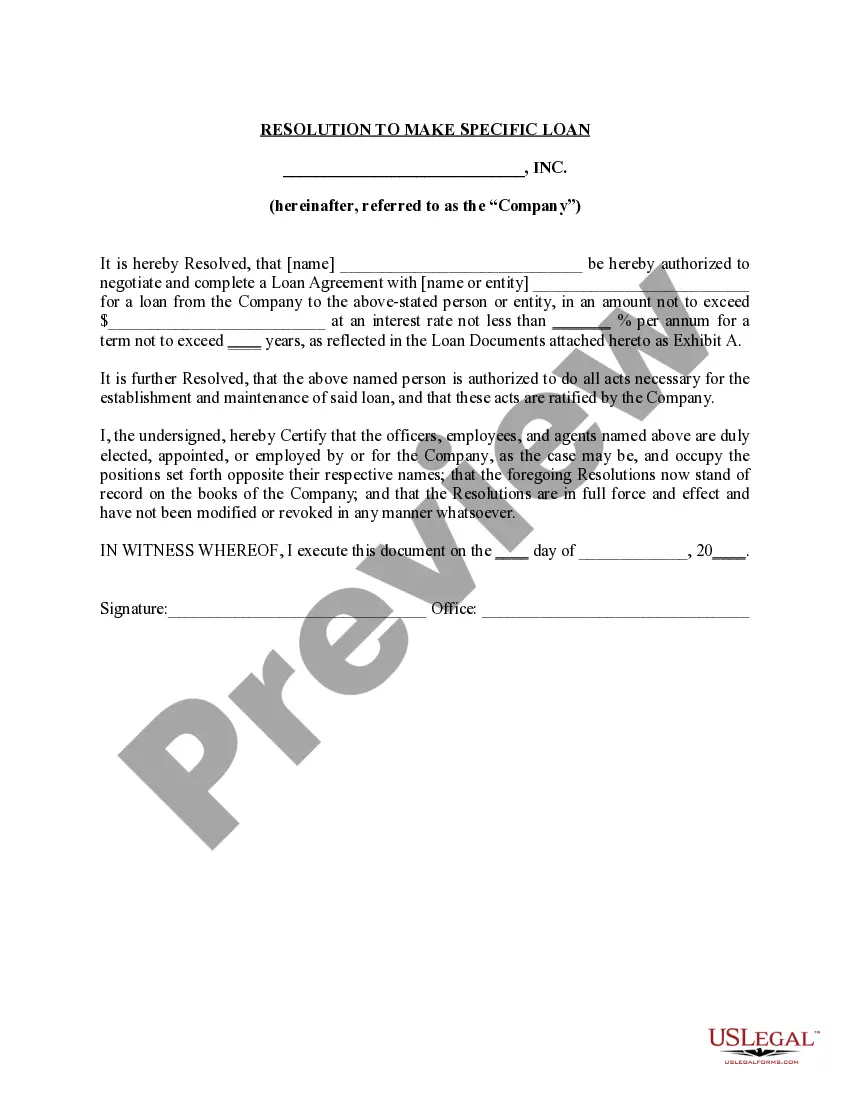
Get your form ready online
Our built-in tools help you complete, sign, share, and store your documents in one place.
Make edits, fill in missing information, and update formatting in US Legal Forms—just like you would in MS Word.
Download a copy, print it, send it by email, or mail it via USPS—whatever works best for your next step.
Sign and collect signatures with our SignNow integration. Send to multiple recipients, set reminders, and more. Go Premium to unlock E-Sign.
If this form requires notarization, complete it online through a secure video call—no need to meet a notary in person or wait for an appointment.
We protect your documents and personal data by following strict security and privacy standards.

Make edits, fill in missing information, and update formatting in US Legal Forms—just like you would in MS Word.

Download a copy, print it, send it by email, or mail it via USPS—whatever works best for your next step.

Sign and collect signatures with our SignNow integration. Send to multiple recipients, set reminders, and more. Go Premium to unlock E-Sign.

If this form requires notarization, complete it online through a secure video call—no need to meet a notary in person or wait for an appointment.

We protect your documents and personal data by following strict security and privacy standards.
Looking for another form?



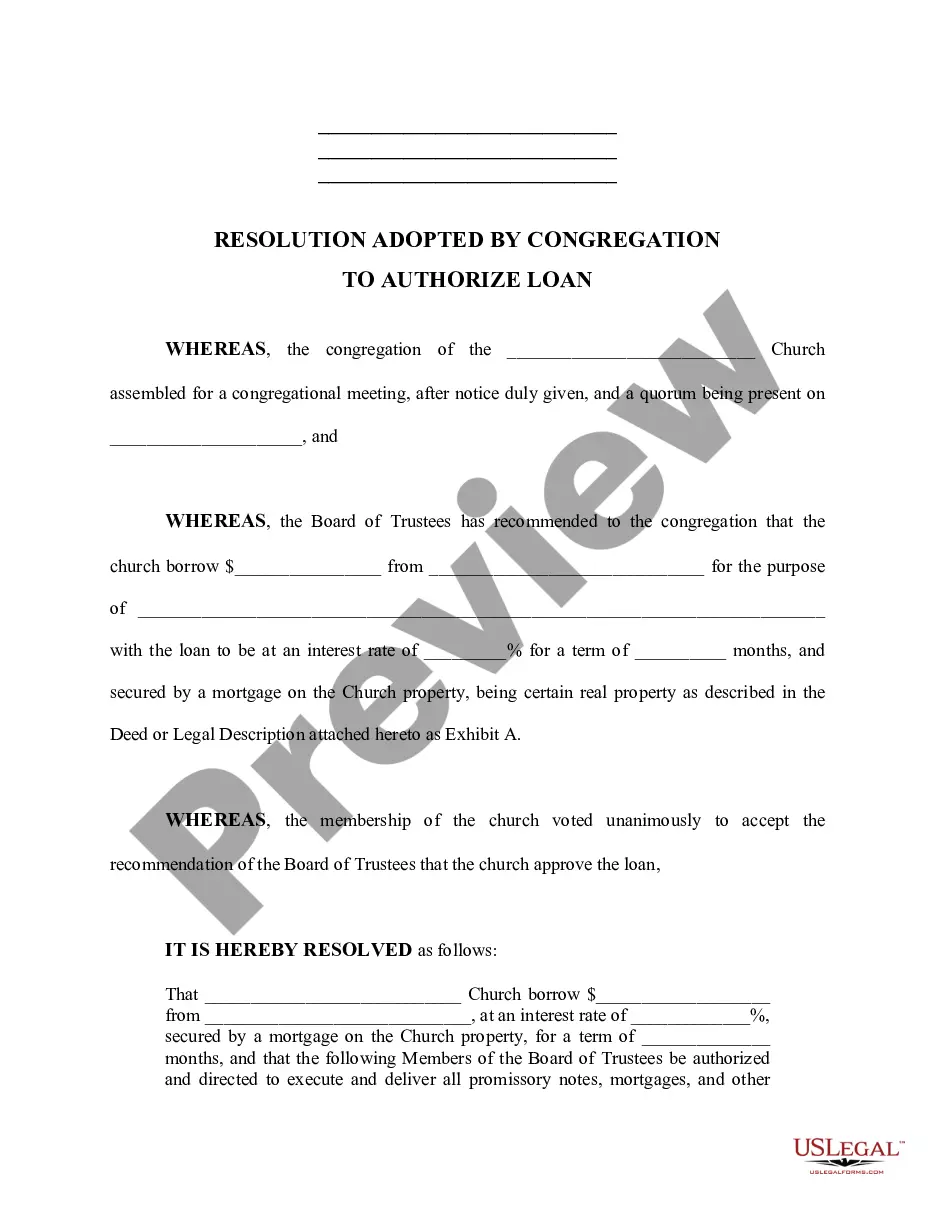
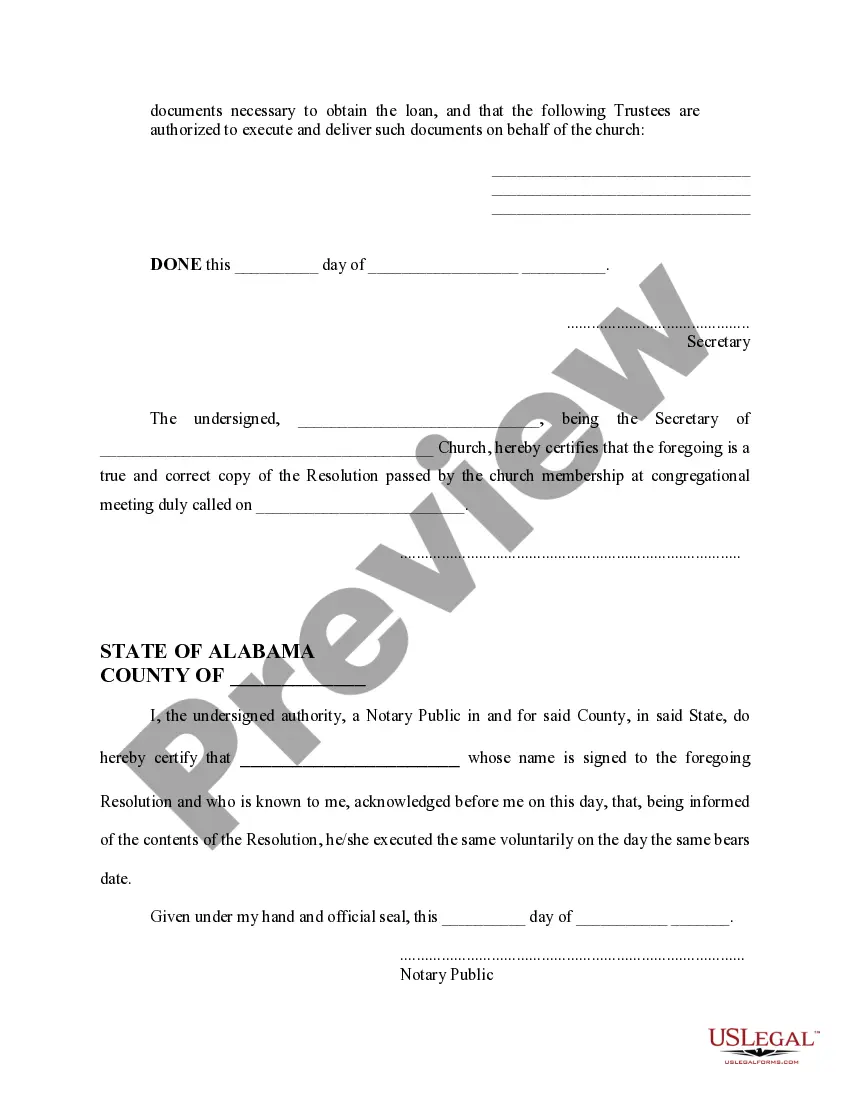
How to fill out Alabama Church Resolution To Authorize Loan?
- Log in to your US Legal Forms account. Ensure your subscription is active; if not, renew it based on your selected payment plan.
- Preview the required form. Review the description and ensure it aligns with your specific needs and complies with local regulations.
- Search for alternative templates if needed. Use the Search tab if inconsistencies are found to identify the correct document.
- Proceed to purchase the document. Click on the Buy Now button, choose a subscription plan, and create an account for access to the legal library.
- Complete your purchase. Enter payment information through credit card or PayPal to secure your subscription.
- Download your template. Save it directly to your device; you can also access it anytime through the My Forms section in your profile.
In conclusion, US Legal Forms streamlines the process of acquiring legal documents, ensuring that users have access to a vast library of resources tailored to various needs. By following these steps, you can easily obtain the forms necessary for any situation, including planning a 'Funeral for the queen.'
Don't hesitate—embark on your journey to hassle-free legal document preparation today!
Form popularity
FAQ
You refer to her as 'Queen Elizabeth II' during her life, and after her passing, you can use 'the late Queen Elizabeth II.' This manner of addressing her reflects her significance in history and the nation’s heart. Discussions leading up to the funeral for the queen will explore her impact on many aspects of society.
When a king dies, his wife is often referred to as 'the dowager queen' or 'the queen mother,' depending on her age and status. This terminology illustrates her place in the royal hierarchy and acknowledges her loss. As the nation prepares for the funeral for the queen, these terms emphasize the deep respect for the royal family.
Following her death, you can refer to her as 'the late Queen Elizabeth II' or 'Queen Elizabeth II.' These references maintain respect while recognizing her important role in history. As conversations about her legacy increase, the importance of the funeral for the queen becomes evident, marking a pivotal moment for the nation.
After her passing, it's respectful to refer to her as 'the late Queen Elizabeth' or simply 'Queen Elizabeth.' This terminology recognizes her status and contributions while honoring her memory. Discussions and reflections on her life will naturally lead up to the funeral for the queen, marking a time of remembrance.
When the Queen dies, it is appropriate to express your condolences and reflect on her contributions to the nation. You might say something like, 'I am deeply saddened by the news of the Queen's passing, and I honor her legacy.' Sharing memories or thoughts on her leadership provides comfort during this solemn time, especially as the nation prepares for the funeral for the queen.
Yes, the coffin used for the funeral for the queen is lead-lined. This design provides necessary protection and preservation for her remains. The choice of a lead-lined coffin is customary for notable figures, ensuring respectful and long-lasting remembrance.
The queen wore symbolic attire in her coffin during the funeral for the queen, including royal garments that reflected her status. This attire typically includes a beautiful gown, accompanied by meaningful accessories. Each piece chosen holds significance, celebrating her life and contributions.
Yes, the funeral for the queen concluded with her interment in a royal grave. This grave is located in a site of great historical significance, allowing her to rest alongside other notable monarchs. The burial process was a public event, symbolizing the end of her reign and the continuation of her legacy.
During the funeral for the queen, there was no open casket. Her passing marked a significant moment in history, and the decision was made to maintain a dignified presentation. This choice ensures that the focus remains on the legacy and contributions of the queen rather than on the physical appearance.
The details surrounding Queen Elizabeth II's final words have not been publicly shared, maintaining the family’s privacy. However, many believe she expressed love and care for her family, reflecting her devotion. The funeral for the queen became a moment for the public to celebrate her life and contributions. In times of mourning, having a plan in place can help ease the burden for those left behind.