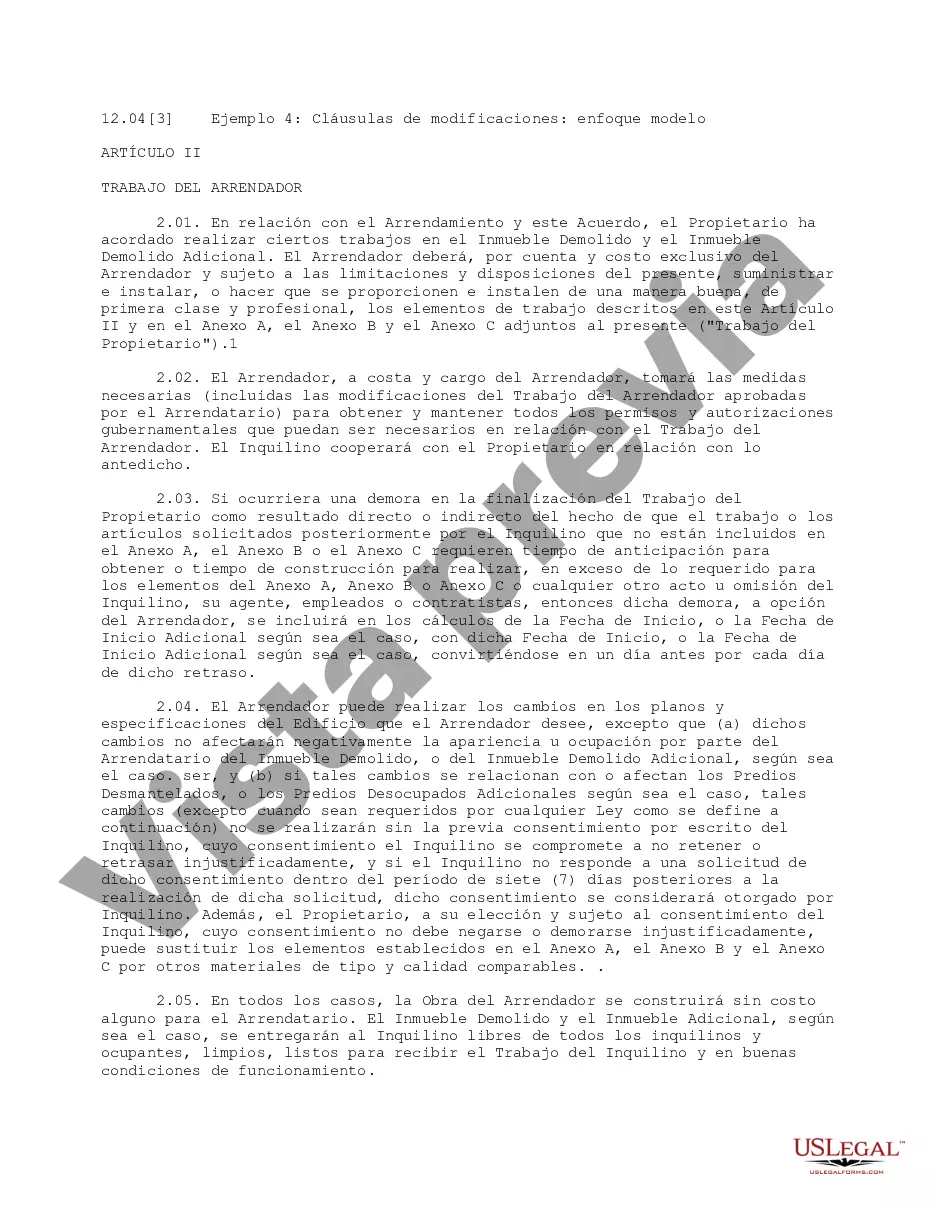
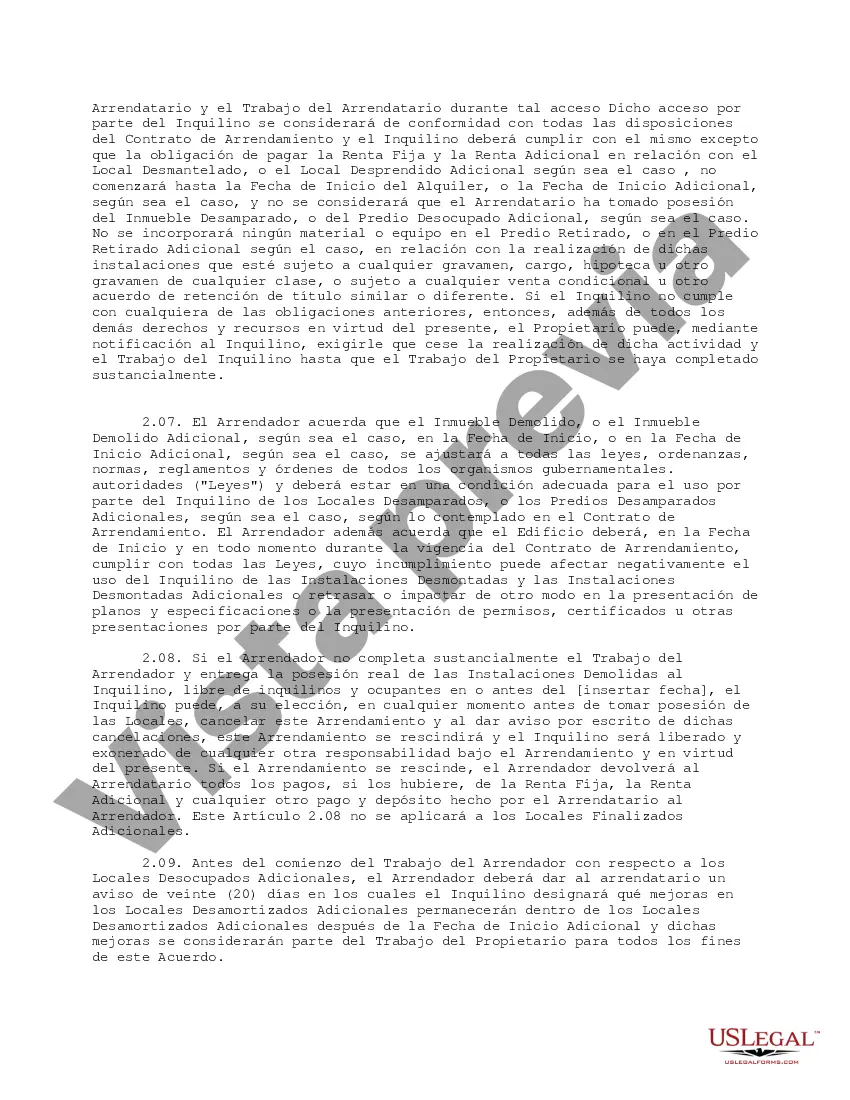
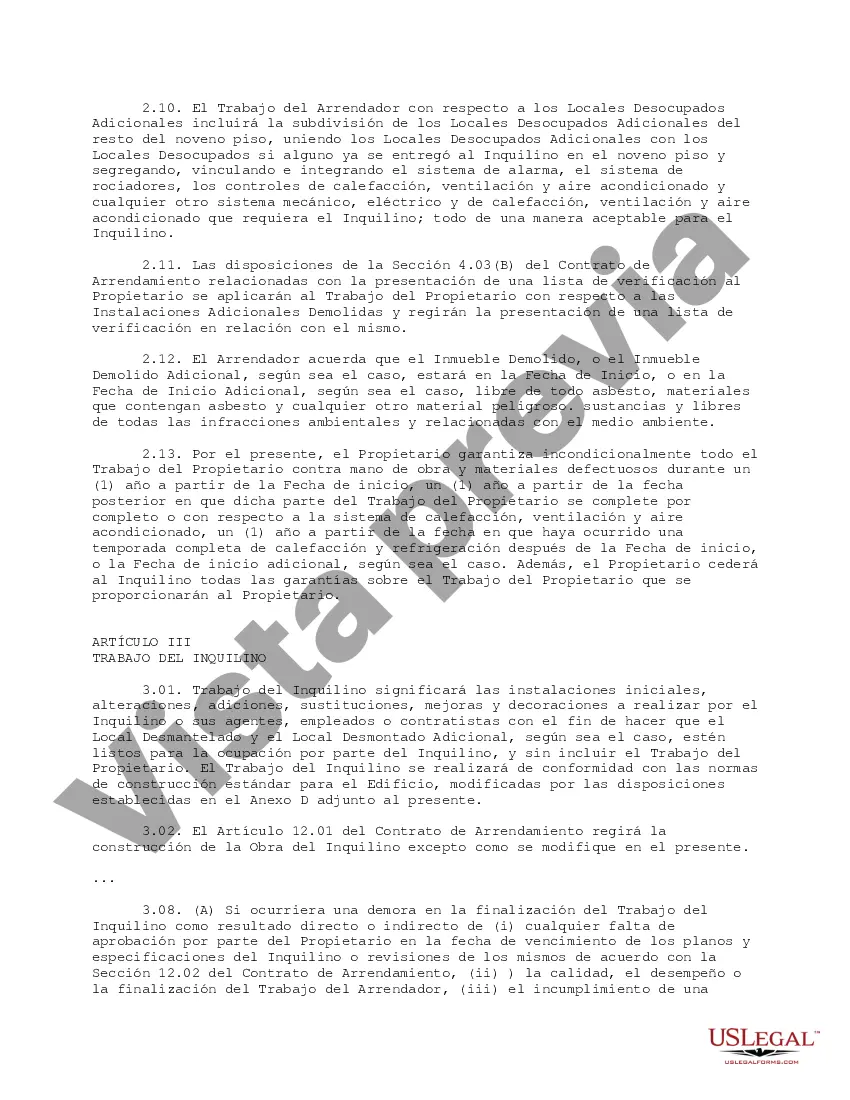
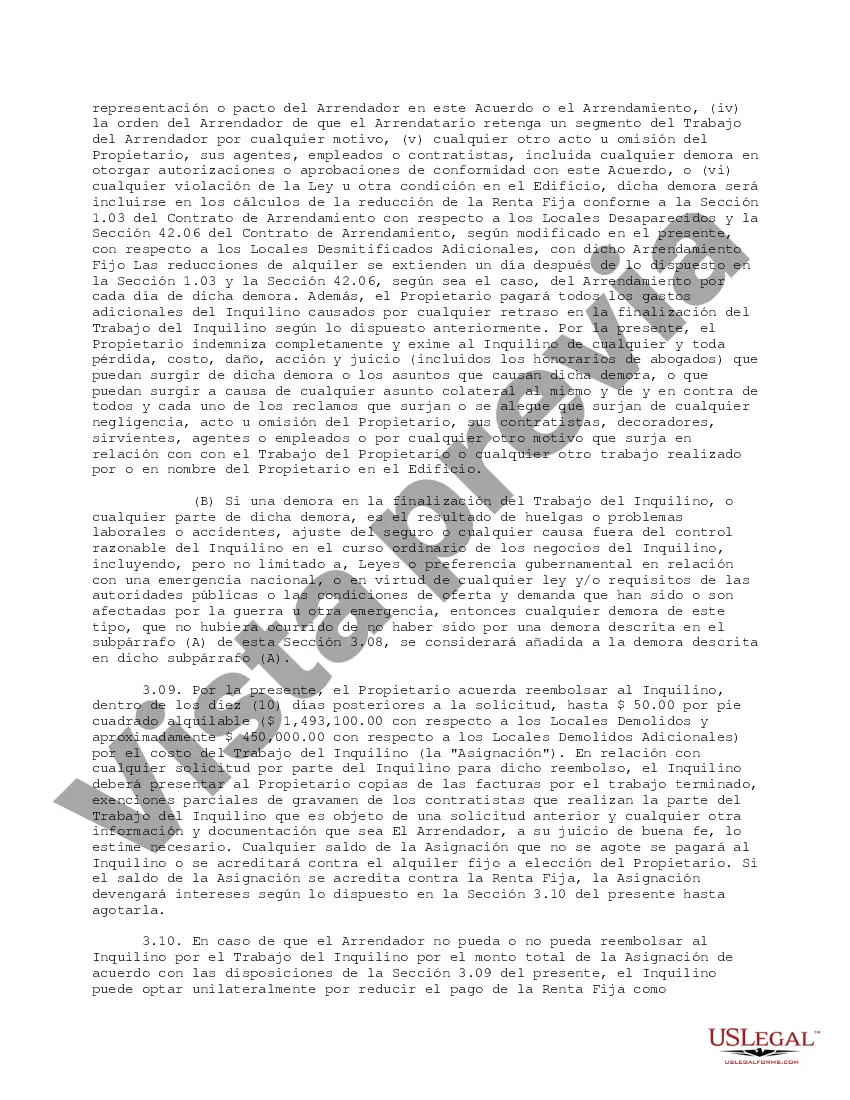
Negociación y Redacción de Arrendamientos de Oficinas
Para su conveniencia, debajo del texto en español le brindamos la versión completa de este formulario en inglés.
For your convenience, the complete English version of this form is attached below the Spanish version.
If you go rogue and make changes without a heads-up, you could face penalties or even have to restore the property to its original state. It’s a safe bet to keep the lines of communication open!
Great question! Typically, commercial leases might have more leeway for alterations since businesses often need specific setups. Residential leases, on the other hand, often have stricter rules to protect the property.
If your landlord says no, don’t sweat it! You can ask for reasons, and sometimes, a little back-and-forth might help. Just approach it with an open mind and see if there’s room for negotiation.
Absolutely! Many leases might have restrictions on major renovations, materials used, or anything that could affect the property's structure. It’s all about keeping the place shipshape!
First off, check your lease for any alteration clauses. If it's allowed, give your landlord a heads-up and see if they need to approve it before you start playing electrician!
Usually, you’ll need to get the green light from your landlord first. It’s best to check your lease, since many agreements have specific rules about changes like painting.
Alterations clauses are provisions in lease agreements that outline how tenants can make changes or improvements to a property. They’re important because they help clarify what you can and can't do to the space without causing headaches.
Trusted and secure by over 3 million people of the world’s leading companies
Cincinnati Ohio Modelo de Cláusulas de Modificación Enfoque