Employers look at patterns of attendance, how many days you've missed, and the reasons given. They have to consider how much your absences impact the team and work.
After receiving a verbal warning, focus on improving your attendance. Keep your communication open with your boss, and consider making a plan to avoid future issues.
Yes, if your absenteeism doesn’t improve after a verbal warning, it could lead to more serious consequences, including termination.
Be honest! Share any legitimate reasons for your absences like health issues or personal circumstances. It's good to communicate openly with your employer.
A verbal warning is usually a first step. It shows that your employer is concerned, but it's not the end of the road. You still have a chance to turn things around.
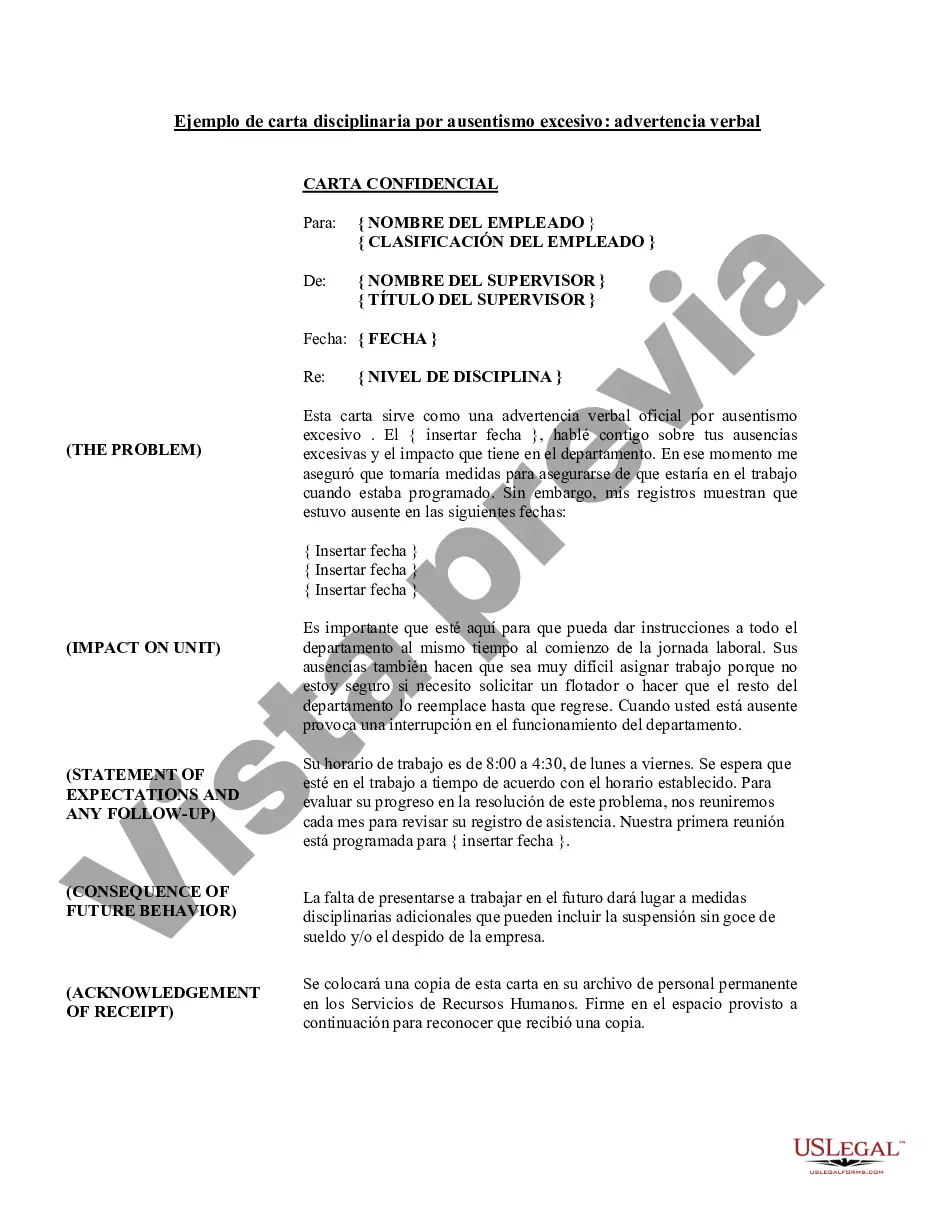
If you get a verbal warning, take it seriously. Talk to your supervisor about the reasons for your absences and try to improve moving forward.
Excessive absenteeism means frequently missing work without a good reason. It's when someone takes too many days off, and it affects their job.
Trusted and secure by over 3 million people of the world’s leading companies
Austin Texas Ejemplo de carta disciplinaria por ausentismo excesivo: advertencia verbal