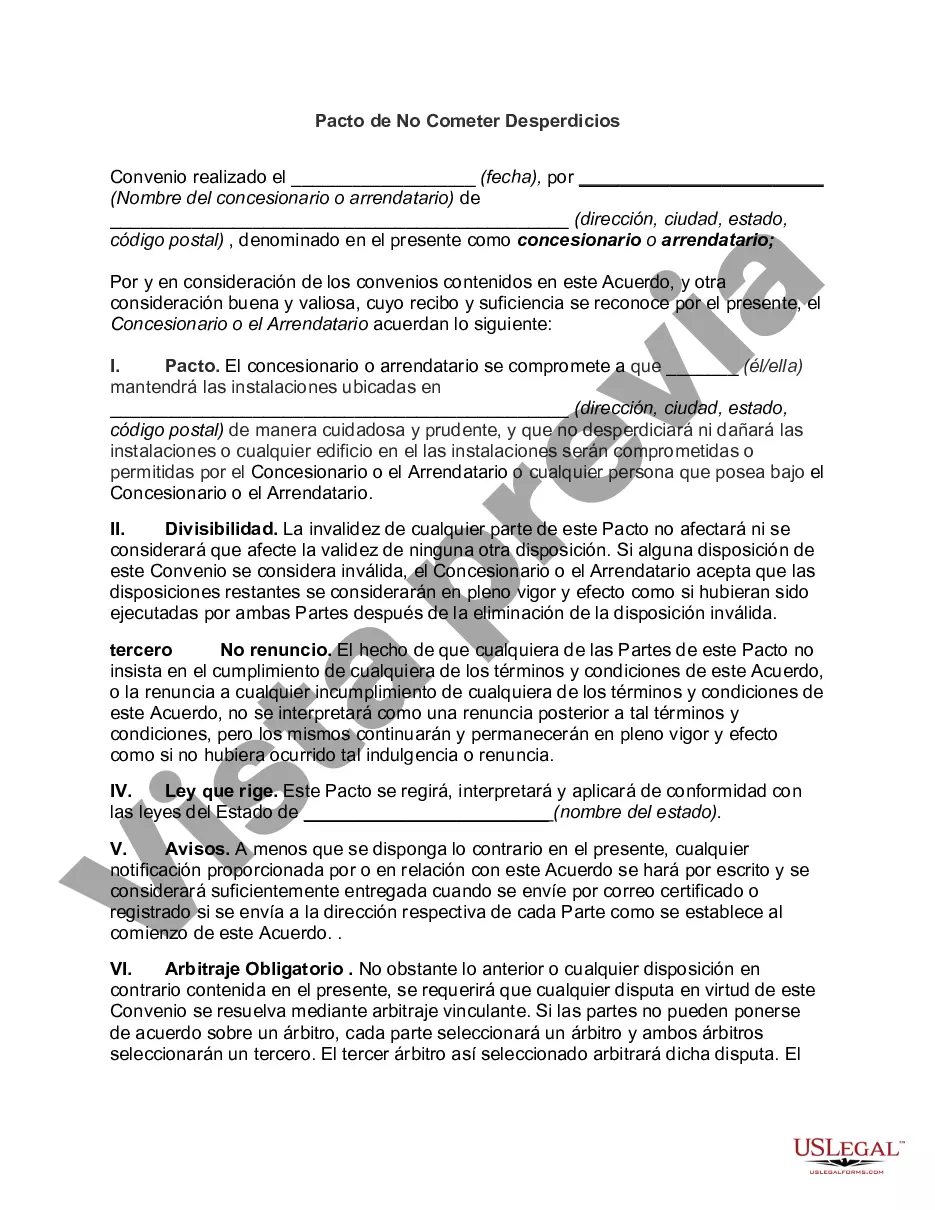
A Covenant is means a formal promise or agreement. It can be an obligation or promise made in a deed burdening or favoring the owner of a real property. Covenant also means an action to recover damages under common law for breaching a contract.
Para su conveniencia, debajo del texto en español le brindamos la versión completa de este formulario en inglés.
For your convenience, the complete English version of this form is attached below the Spanish version.
Absolutely! If a person disagrees with the claim of waste, they can present their side in court. It's always best to document everything to back up your case.
Property owners can include a clear Covenant Not to Commit Waste in their lease agreements. It's like a safety net that helps keep all parties on the same page.
If waste occurs, the owner may take legal action. This can lead to eviction, the need to repair the damage, or even financial compensation for lost value.
You bet! If tenants cause damage beyond normal wear and tear, they can be held responsible for committing waste.
Sure thing! Examples include allowing the property to fall into disrepair, not paying attention to landscaping, or doing substantial renovations without permission.
Typically, the property owner or the landlord can enforce this covenant. If someone is damaging the property, they can take action to stop it.
Committing waste means harming or reducing the value of a property. In Omaha, this can be anything from neglecting repairs to making alterations that lower the property's worth.
Trusted and secure by over 3 million people of the world’s leading companies