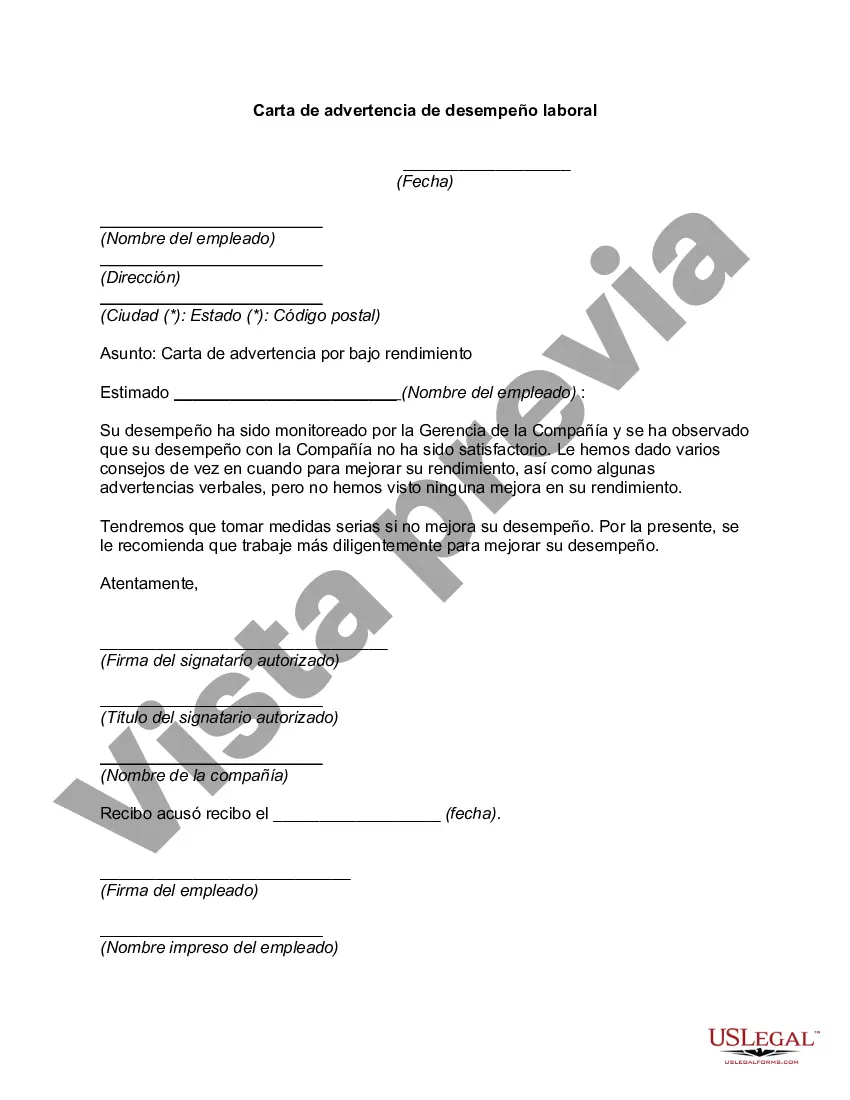
This is a warning letter to an employee that he/she needs to work more diligently to improve his/her job performance.
Para su conveniencia, debajo del texto en español le brindamos la versión completa de este formulario en inglés.
For your convenience, the complete English version of this form is attached below the Spanish version.
To prevent getting a warning letter, employees should communicate openly with their managers, seek feedback regularly, and proactively address any shortcomings. It’s all about keeping the lines of communication open and staying ahead of the curve.
Absolutely. A warning letter is a chance to fix issues, while a termination notice means the job is over. It’s the difference between a friendly heads-up and a final goodbye.
Yes, a job performance warning letter can impact an employee's status, especially if there are repeated issues. It’s like putting a spotlight on the problems; ignoring it could lead to serious consequences like suspension or termination.
An employee should take the letter seriously, understand the issues raised, and respond constructively. It’s best to acknowledge the concerns and outline a plan to improve—showing you're willing to turn over a new leaf.
A warning letter should detail the performance issues, include specific examples, outline expectations for improvement, and explain potential consequences if things don't change. Think of it as a roadmap for getting back on track.
An employer usually sends a warning letter when an employee isn't meeting job expectations, like missing deadlines or not following company policies. It's their way of saying 'Hey, we need to talk about this.'
A job performance warning letter is a formal document given to an employee to address specific performance issues or violations. It's like getting a gentle nudge to improve before things get serious.
Trusted and secure by over 3 million people of the world’s leading companies
Seattle Washington Carta de advertencia de desempeño laboral