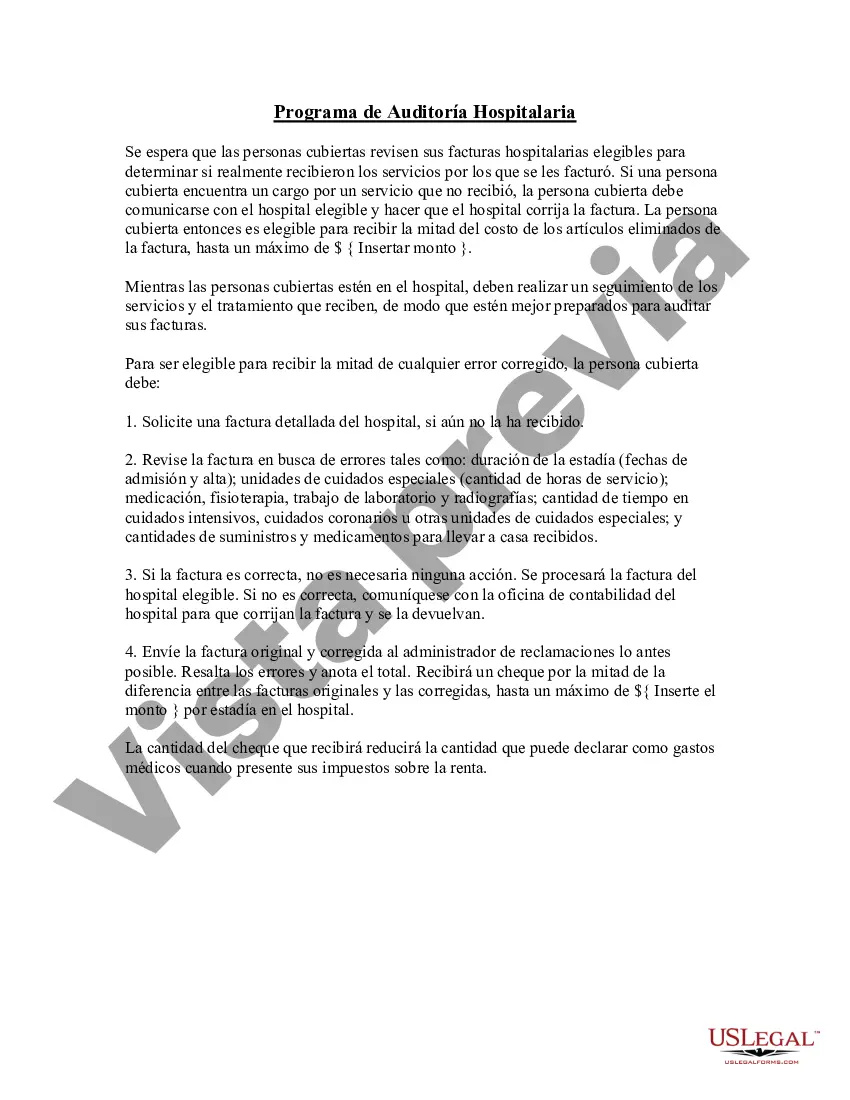
El formulario explica el procedimiento y la política sobre cómo los empleados deben auditar sus facturas hospitalarias para determinar si recibieron todos los servicios por los que
Para su conveniencia, debajo del texto en español le brindamos la versión completa de este formulario en inglés.
For your convenience, the complete English version of this form is attached below the Spanish version.

After an audit, hospitals usually review the findings, create an action plan to address any concerns, and follow up to ensure improvements are made. It’s all about keeping the ball rolling for better patient care.
Patients can often find audit results through state health department websites or hospital reports. It's like reading the fine print before you buy something — it helps you make informed choices.
If a hospital doesn’t pass the audit, it’s not the end of the road. They’ll usually get some guidance on what needs fixing and a chance to make improvements. It's like getting a second chance to get things right.
Audits typically happen on a regular basis, but the exact schedule can vary. Sometimes it’s like clockwork, and other times, it might be prompted by specific concerns.
The audits are usually carried out by experienced professionals, like healthcare inspectors and auditors, who know their stuff inside and out. They go through records and practices to spot any issues.
Hospital audits help keep everyone on their toes. They make sure that hospitals are doing their best for patients, following the law, and using resources wisely. This way, patients can trust that they're in good hands.
The Tucson Arizona Hospital Audit Program checks how well hospitals follow the rules and provide care. It's like giving hospitals a thorough check-up to ensure patients are safe and getting top-notch treatment.
Trusted and secure by over 3 million people of the world’s leading companies