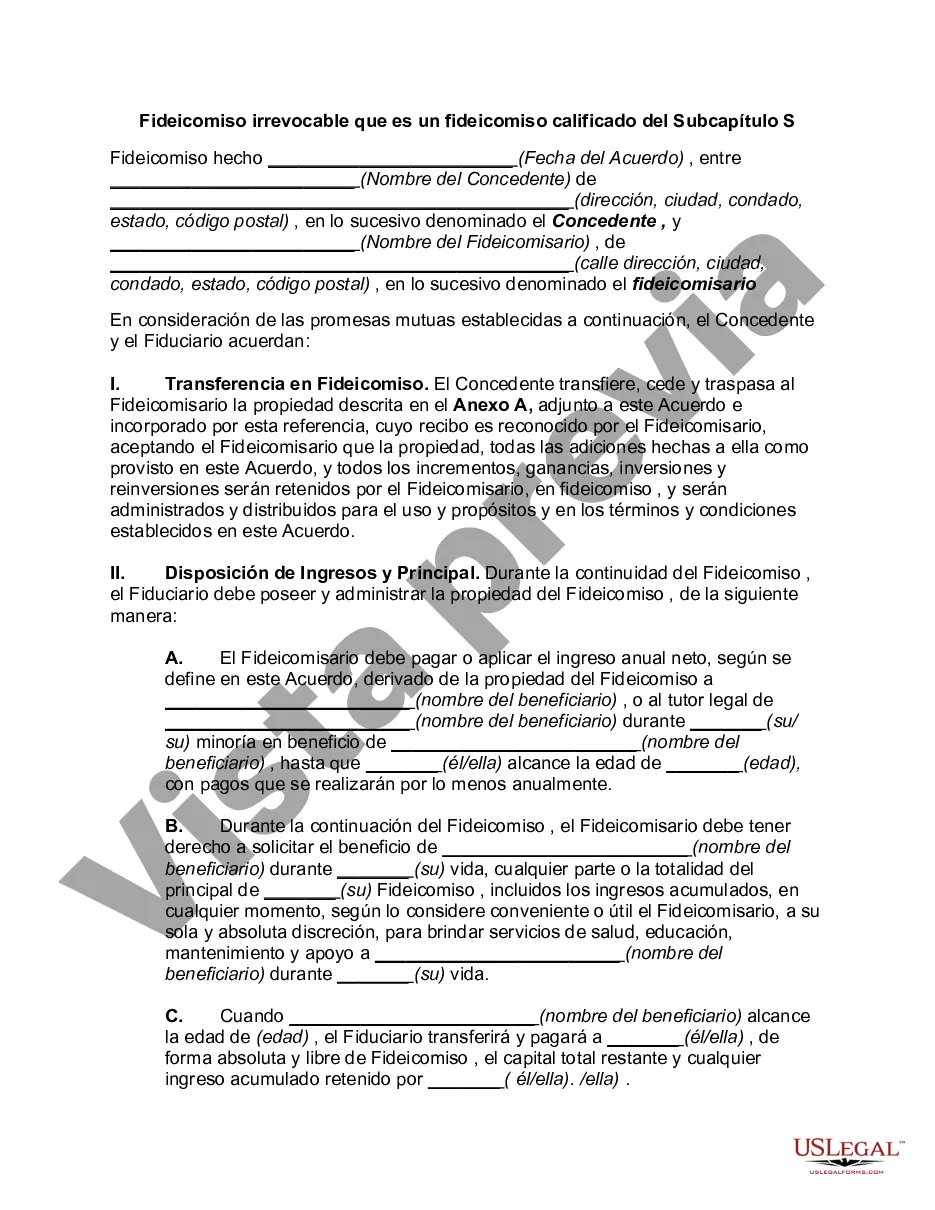
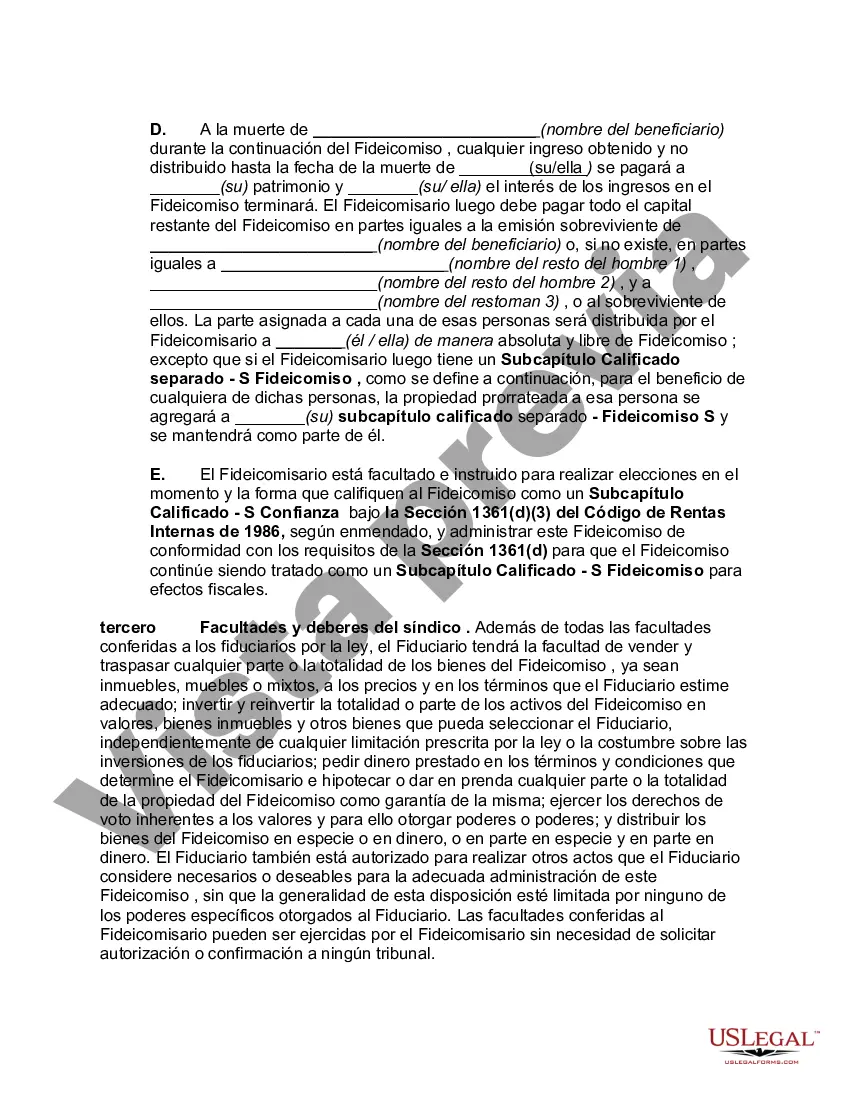
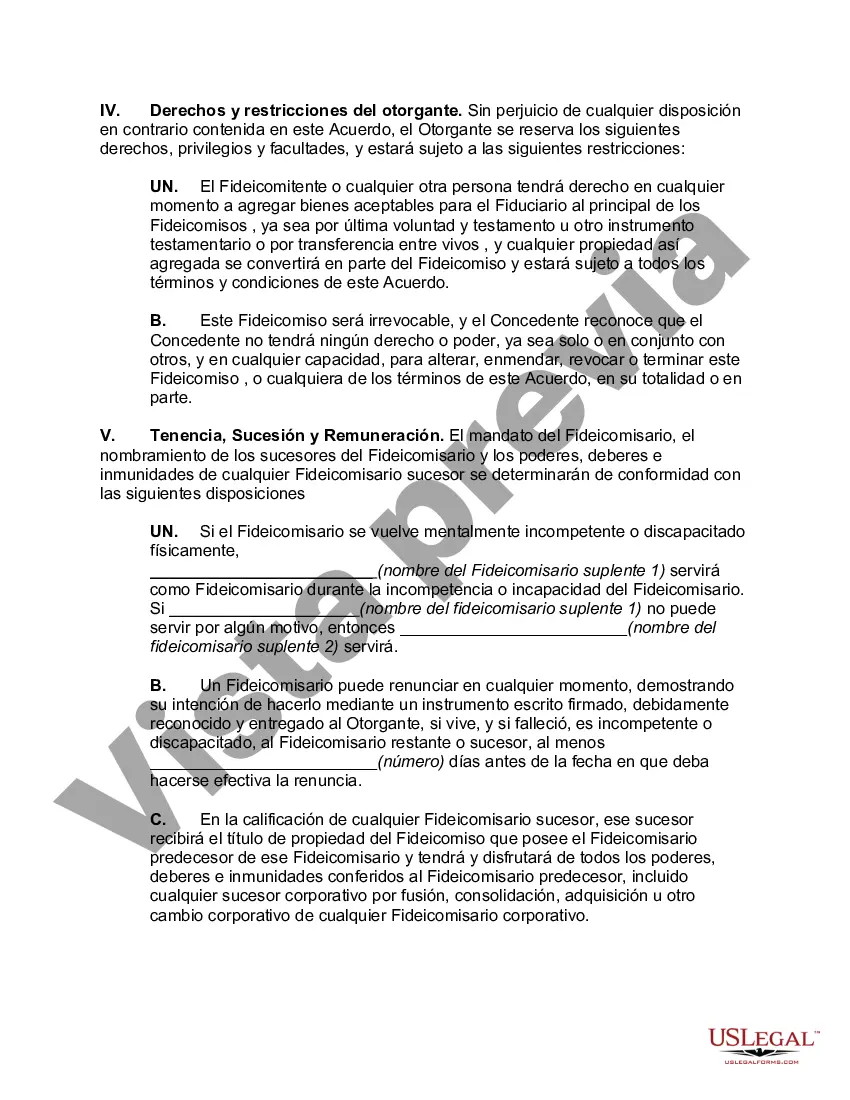
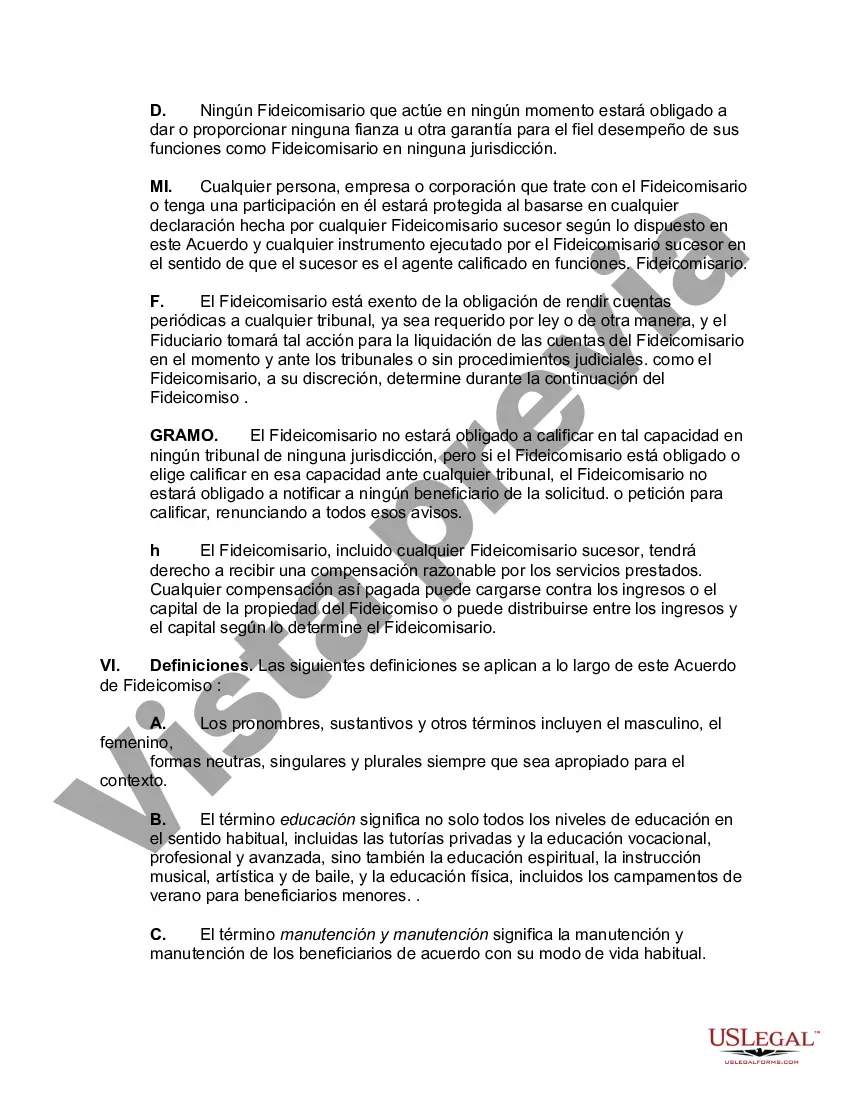
An irrevocable trust is a trust that cannot be modified or terminated without the permission of the beneficiary. In most states, a trust will be deemed irrevocable unless the grantor specifies otherwise. Once the grantor has transferred assets into the tr
Para su conveniencia, debajo del texto en español le brindamos la versión completa de este formulario en inglés.
For your convenience, the complete English version of this form is attached below the Spanish version.
The assets in your irrevocable trust will be distributed according to your trust's terms without going through probate. It's kind of like a quick pass to the finish line for your loved ones.
Once the ink is dry, changing the terms of an irrevocable trust is like trying to unring a bell—you really can't. That's the trade-off for its benefits: stability and protection, but no do-overs!
A QSST allows beneficiaries to enjoy the income from an S corporation while keeping things simple for the trust. It provides clarity on distributions and helps manage tax responsibilities efficiently. It's a win-win situation!
Setting up an irrevocable trust can potentially reduce the size of your taxable estate, which can lead to lower estate taxes. It’s a crafty move for those wanting to pass on more to their heirs.
Nope! Once you set up an irrevocable trust, you can't be the trustee. You'll need to appoint a trustworthy third-party to manage the trust, ensuring everything is above board.
A Qualifying Subchapter-S Trust, or QSST, is a special type of trust that allows a trust to hold stock in S corporations, giving beneficiaries benefits of S corporation income. Think of it as a bridge between corporate benefits and estate planning.
An irrevocable trust is a legal arrangement where the trust creator gives up control over their assets. It's a way to protect assets and plan for taxation, often making it a smart choice for folks looking to secure their family’s future.
Trusted and secure by over 3 million people of the world’s leading companies
Mesa Arizona Fideicomiso irrevocable que es un fideicomiso calificado del Subcapítulo S