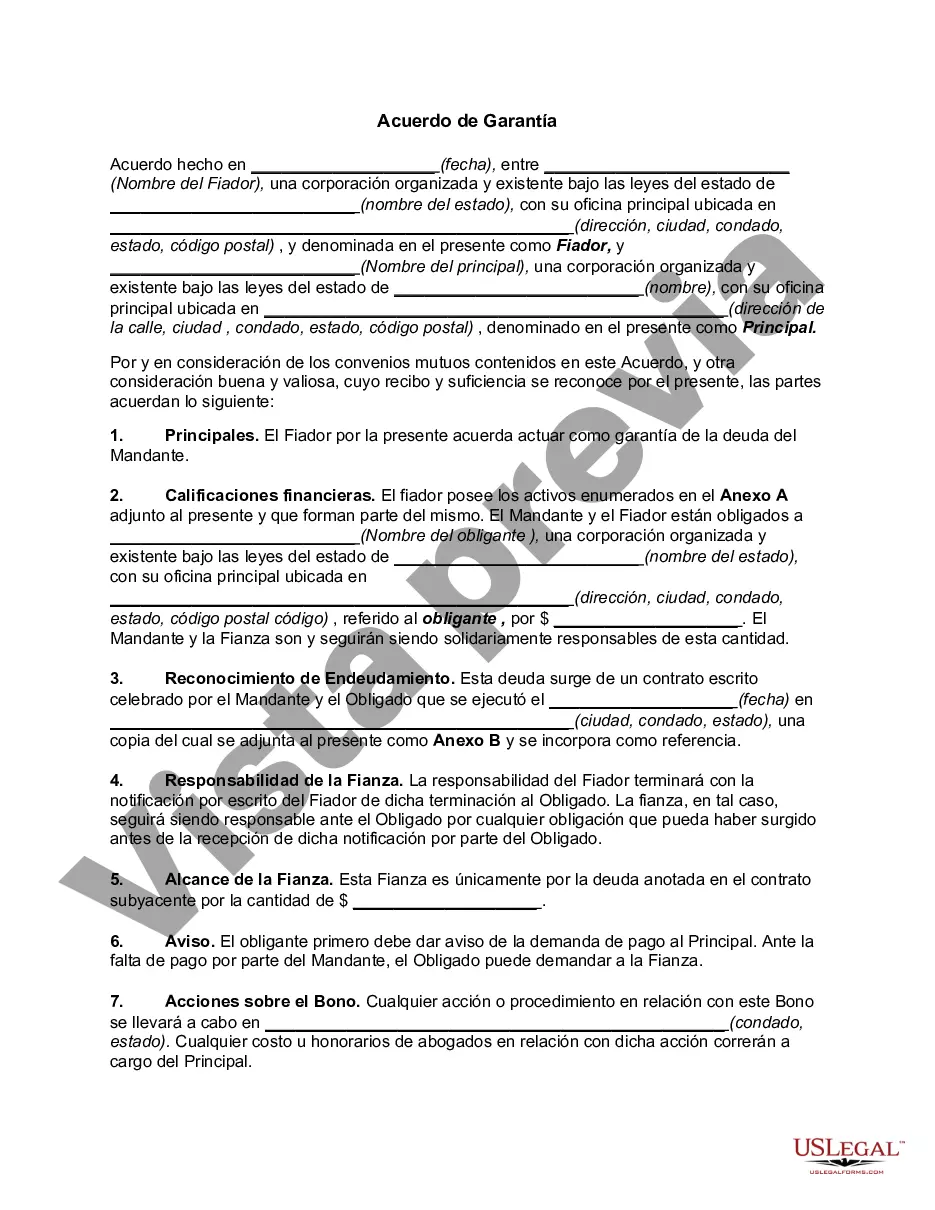
A surety is a person obligated by a contract under which one person agrees to pay a debt or perform a duty if the other person who is bound to pay the debt or perform the duty fails to do so. Usually, the party receiving the surety's performance will firs
Para su conveniencia, debajo del texto en español le brindamos la versión completa de este formulario en inglés.
For your convenience, the complete English version of this form is attached below the Spanish version.
While it’s not strictly necessary, having a lawyer can help ensure everything is above board and meets legal standards. It’s always wise to have an expert on your team.
If the principal defaults, the surety company takes action to cover the obligations and may seek reimbursement from the principal. Think of it as a safety valve getting a workout.
Typically, a Surety Agreement lasts until the obligation is fulfilled. Once the job is done and dusted, the agreement can be wrapped up.
There are several types, such as performance bonds, payment bonds, and bid bonds. Each one serves a different purpose in keeping things on the up and up.
Generally, contractors or business owners who want to assure clients they can meet contract obligations may need a Surety Agreement. It’s like saying, 'I've got your back!'
A Surety Agreement is a legal contract where one party agrees to take responsibility for the debt or obligation of another party if they can’t fulfill it. Think of it like having a safety net.
Look for a company with a solid reputation, good financial backing, and a history of treating clients fairly. Trust your gut when making the choice.
Trusted and secure by over 3 million people of the world’s leading companies