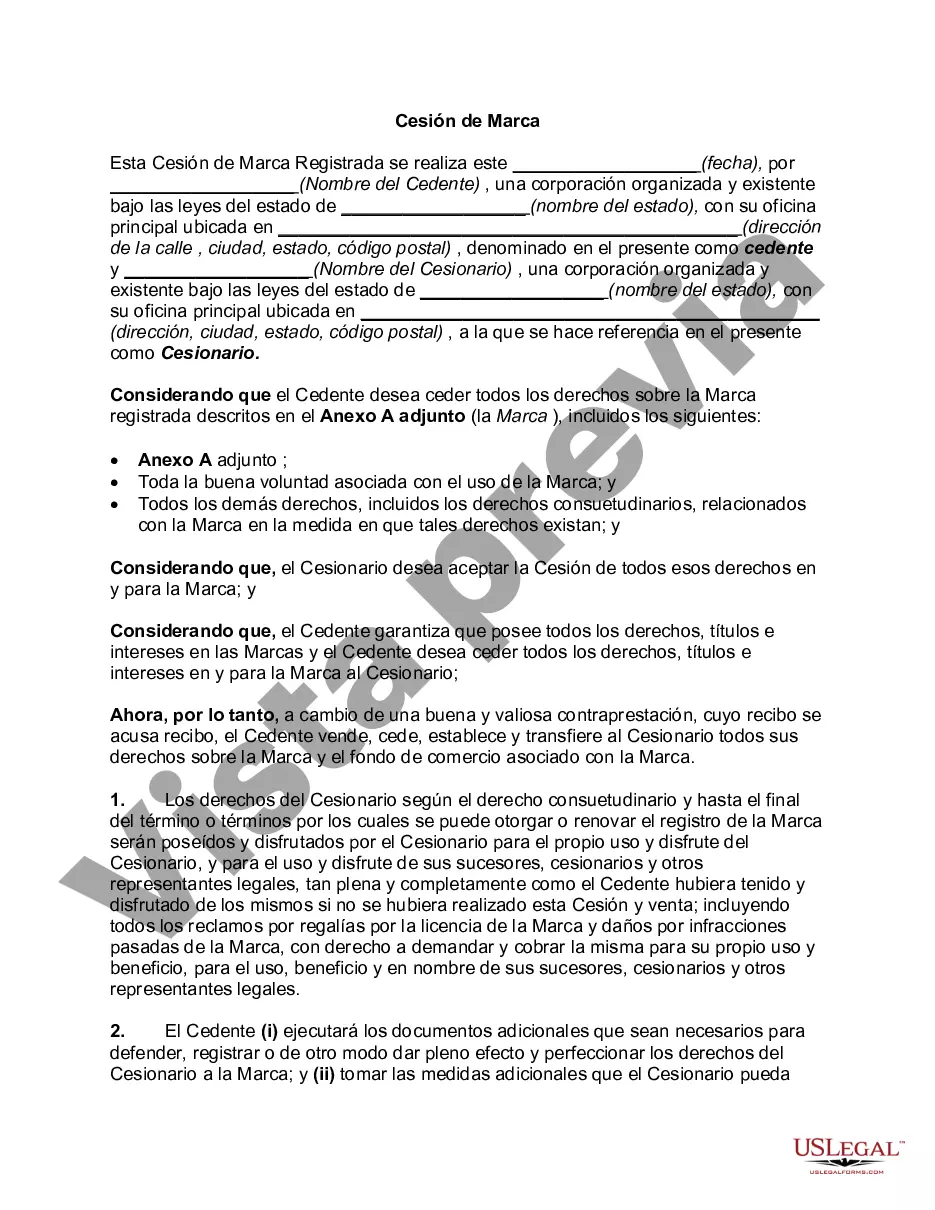
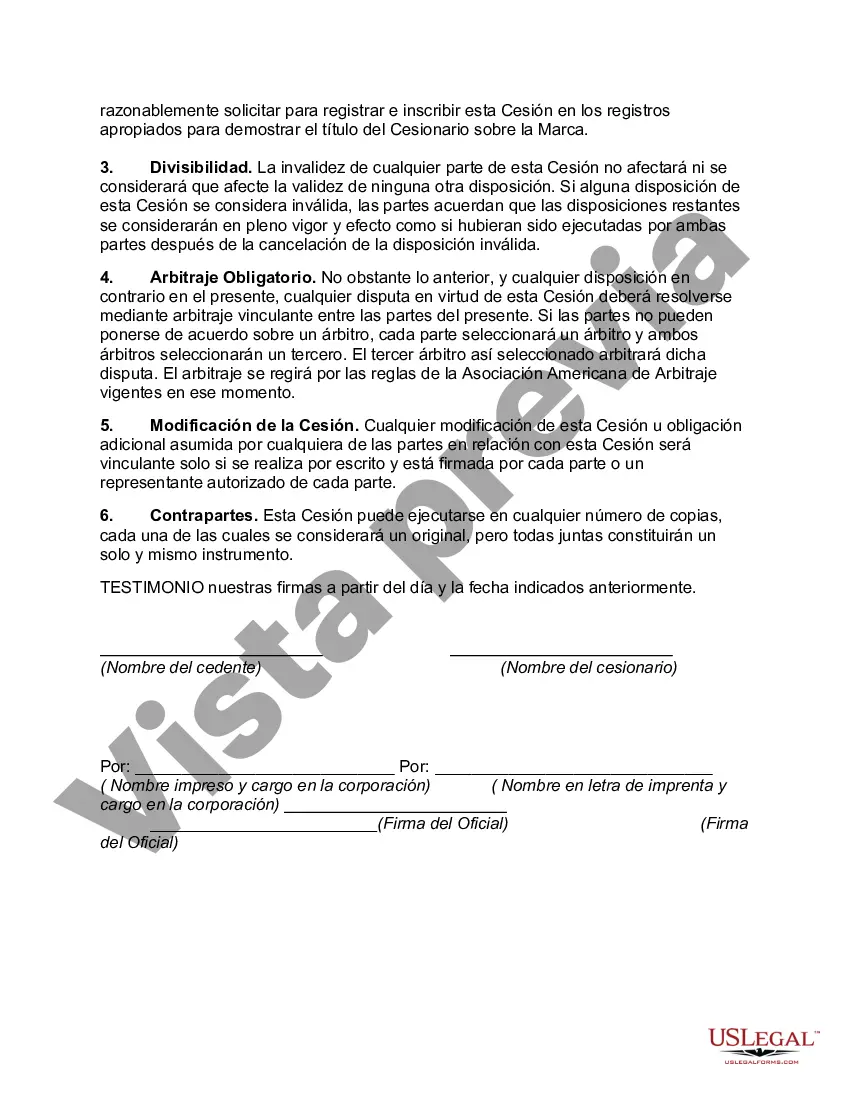
This form is an assignment of trademark.
Para su conveniencia, debajo del texto en español le brindamos la versión completa de este formulario en inglés.
For your convenience, the complete English version of this form is attached below the Spanish version.
While it’s not mandatory to hire a lawyer for trademark assignments, it’s wise to consult one to navigate the ins and outs. Think of it like exploring a new city; having a local guide can save you from getting lost.
If you don't register the assignment, you might miss out on legal protections. It's like having a great recipe but not writing it down—you could lose it if someone else claims your dish!
Not exactly. Generally, a trademark can only be assigned to one entity at a time. Assigning it to multiple parties is like trying to share a pizza while keeping all the slices—it's tricky and can lead to disputes.
Yes, trademark assignments in Ohio are governed by federal laws, but there are also state laws to consider. It's like having a set of traffic rules; you have to follow both the national rules and any local quirks.
In Cincinnati, the process usually involves creating a written agreement that outlines the transfer of rights, and then filing that agreement with the United States Patent and Trademark Office (USPTO). Think of it like making a deal and then making it official on paper.
People might assign their trademark for various reasons, such as selling their business, wanting to rebrand, or if they no longer need the trademark. It's a bit like deciding to sell your car when it no longer fits your needs.
If you die, your trademark can be passed on as part of your estate, just like any other asset. So, it’s crucial to include it in your will or estate plan, ensuring it doesn’t just vanish into thin air.
Trusted and secure by over 3 million people of the world’s leading companies