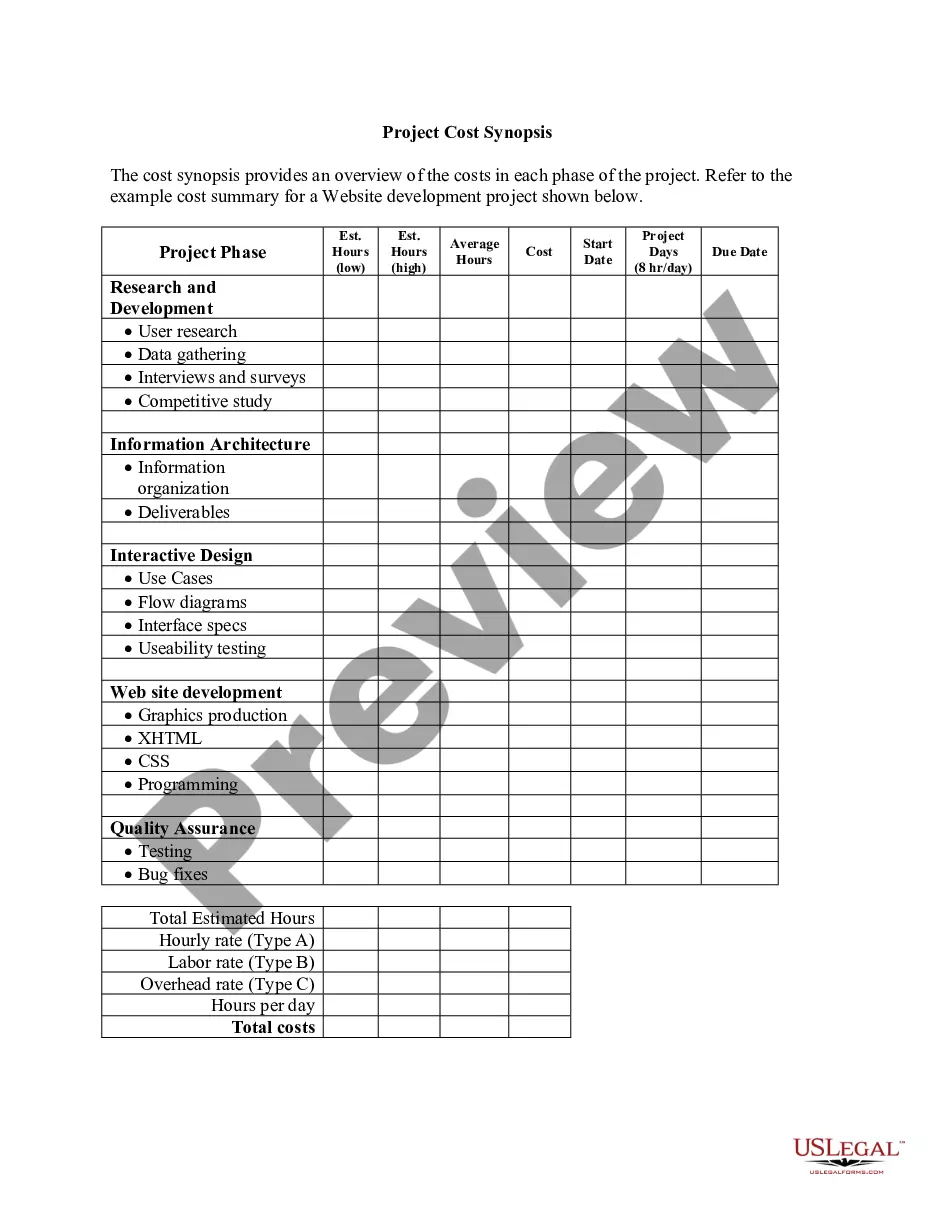
Time sheets were originally developed for an employer to determine payroll. However time sheets are not just for payroll any more. Time sheets may record the start and end time of tasks, or just the duration. It may contain a detailed breakdown of tasks accomplished throughout the project or program. This information may be used for payroll, client billing, and increasingly for project costing, estimation, tracking and management.
Para su conveniencia, debajo del texto en español le brindamos la versión completa de este formulario en inglés.
For your convenience, the complete English version of this form is attached below the Spanish version.
If you work overtime, make sure to note those extra hours on your Time Sheet. It’s important to be specific so that you get credited for all the time you’ve put in!
Yes, you can usually make changes, but you’ll need to let your supervisor or HR know about them. It's better to correct any mistakes sooner rather than later!
If you forget to submit it, don’t worry too much! Just get it in as soon as you remember and communicate with your supervisor. It’s important to keep the lines of communication open.
Once you've filled out your Time Sheet, you typically submit it to your manager or directly to the HR department, depending on your company’s guidelines.
Filling out the Seattle Time Sheet is straightforward. Just enter the date, your hours worked for each day, and any breaks you took. Be sure to double-check for any errors before submitting it!
Absolutely! It's important to note breaks, especially if they affect your hours worked, to comply with labor regulations.
Yes, Washington state has labor laws that require employers to keep accurate records of hours worked, especially for non-exempt employees.
Trusted and secure by over 3 million people of the world’s leading companies
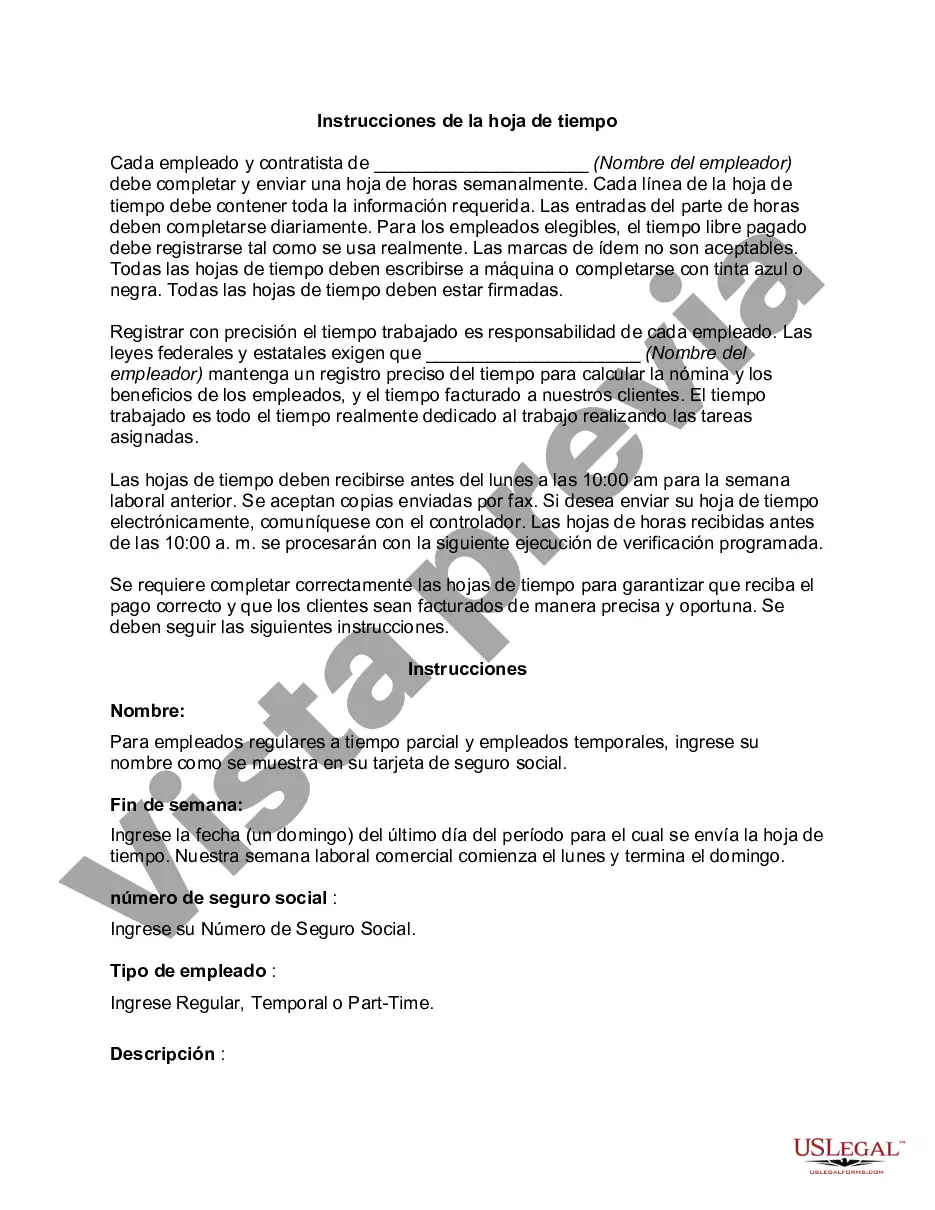
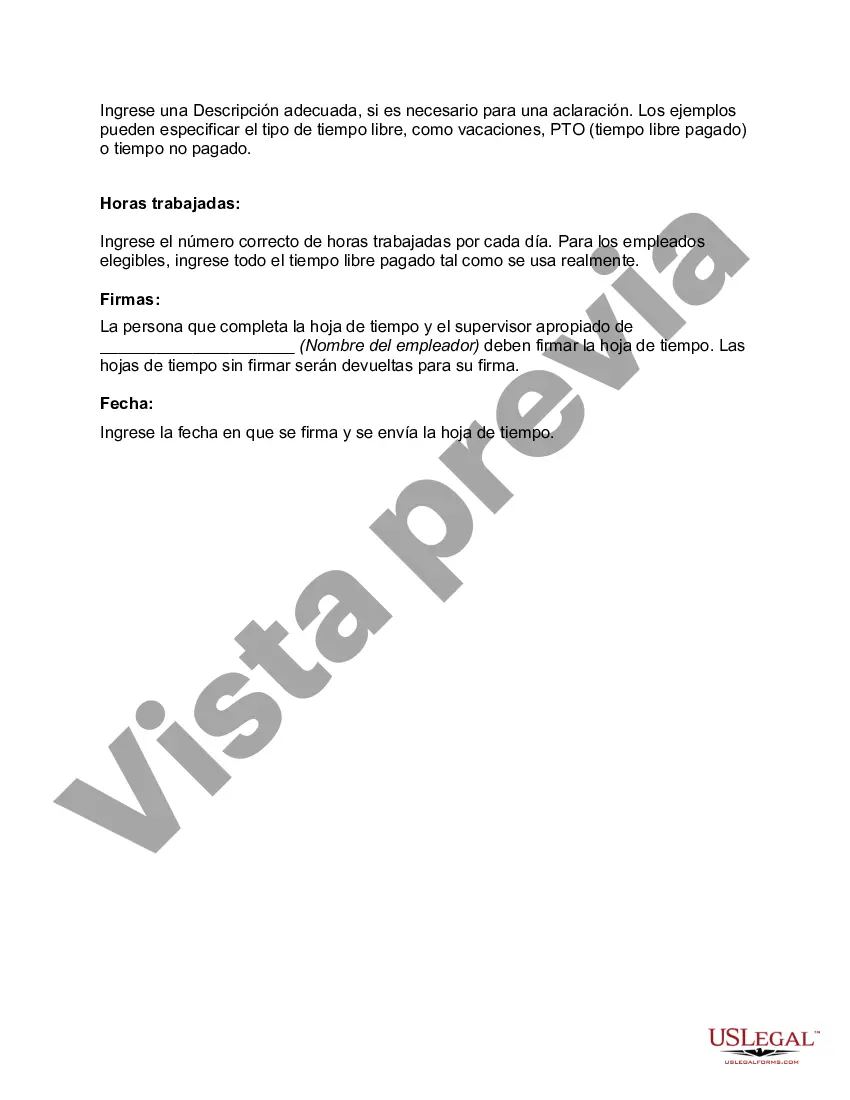
Seattle Washington Instrucciones de la hoja de tiempo