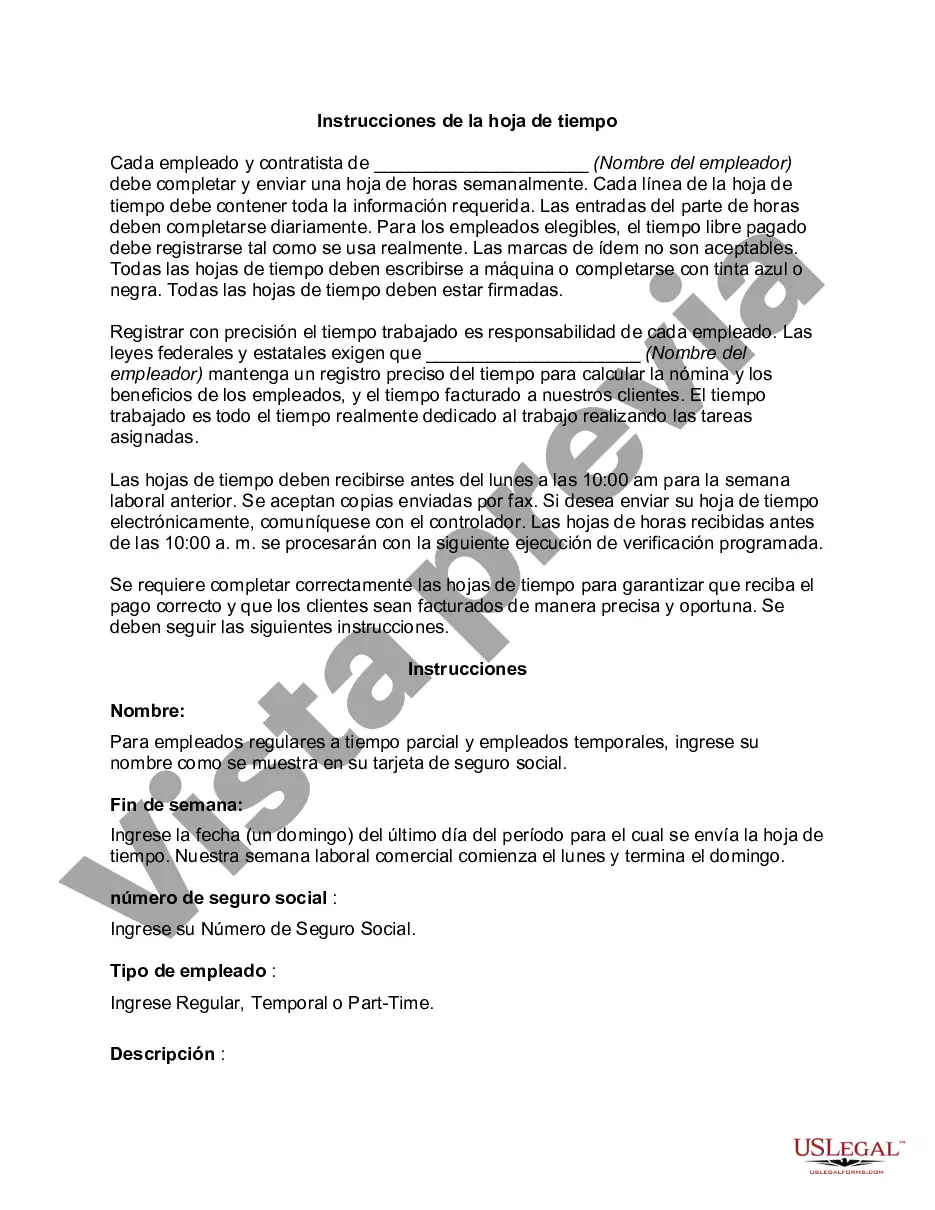
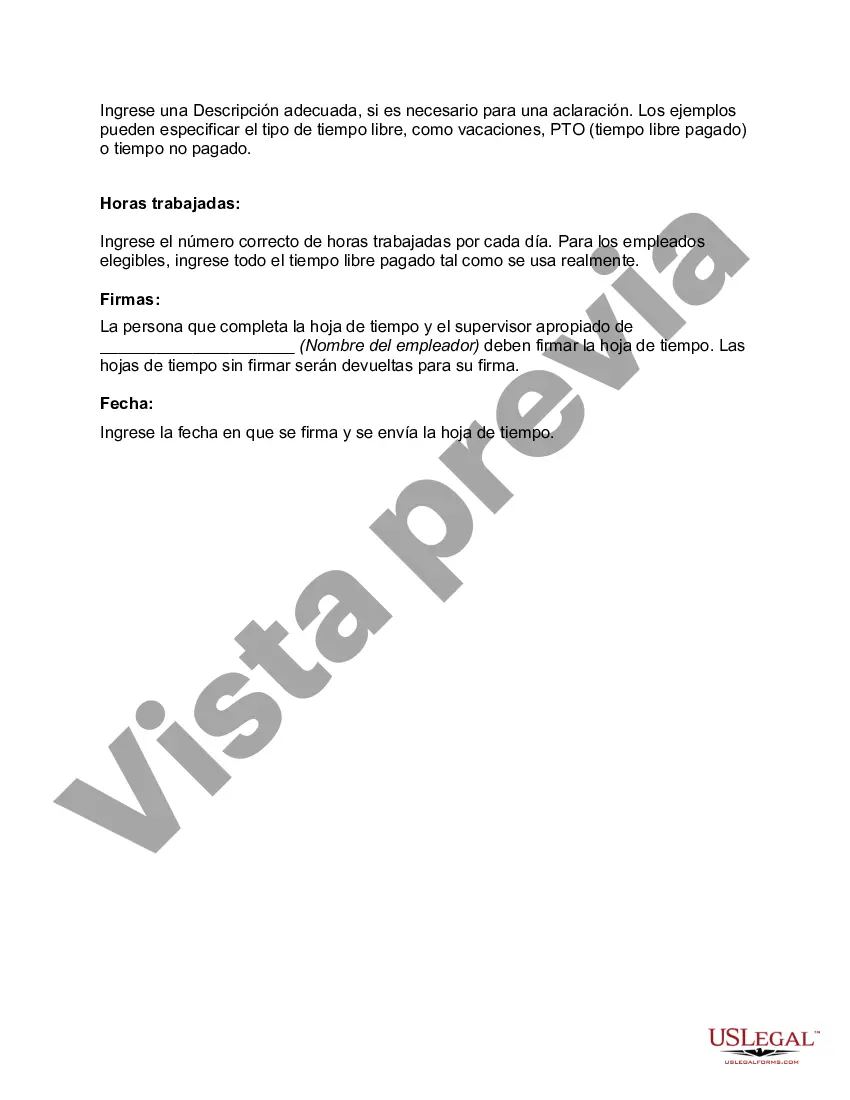
Time sheets were originally developed for an employer to determine payroll. However time sheets are not just for payroll any more. Time sheets may record the start and end time of tasks, or just the duration. It may contain a detailed breakdown of tasks accomplished throughout the project or program. This information may be used for payroll, client billing, and increasingly for project costing, estimation, tracking and management.
Para su conveniencia, debajo del texto en español le brindamos la versión completa de este formulario en inglés.
For your convenience, the complete English version of this form is attached below the Spanish version.
If you're scratching your head about your timesheet, reach out to your supervisor or HR department. They're your go-to people and will help clear the fog!
Great question! Simply note your overtime hours separately on your timesheet. It's like adding a cherry on top - just make sure it’s clear so you get credit where it’s due!
Yes, but it’s a bit tricky! You'll need to talk to your supervisor or HR. They'll help you sort it out - it’s all about staying on the right track!
If you forget to fill it out, don't worry too much! Just let your boss know right away, and they’ll guide you on what to do next. Better late than never!
Filling out a timesheet is as easy as pie! Just note down the hours you worked each day, along with any breaks you took. Make sure to double-check your math to avoid any hiccups.
A timesheet is a way to track the hours you work. It helps your employer keep tabs on how much time you put in on the job. Think of it as your personal clock-in record!
Common hiccups include forgetting to log all your hours, not following the right format, or missing the deadline. Keep your eyes peeled—double-check before hitting send!
Trusted and secure by over 3 million people of the world’s leading companies
Anaheim California Instrucciones de la hoja de tiempo