Proxy voting refers to the procedure of delegating the right to vote by one person to another. In proxy voting in the absence of a person his/her vote will be secured by some other person. A person so designated to cast the vote of another is called a "proxy" and the person who delegates the power is called a principal. A voter must have a trust in the proxy. Any person including the official of the chosen party can be appointed as the proxy.
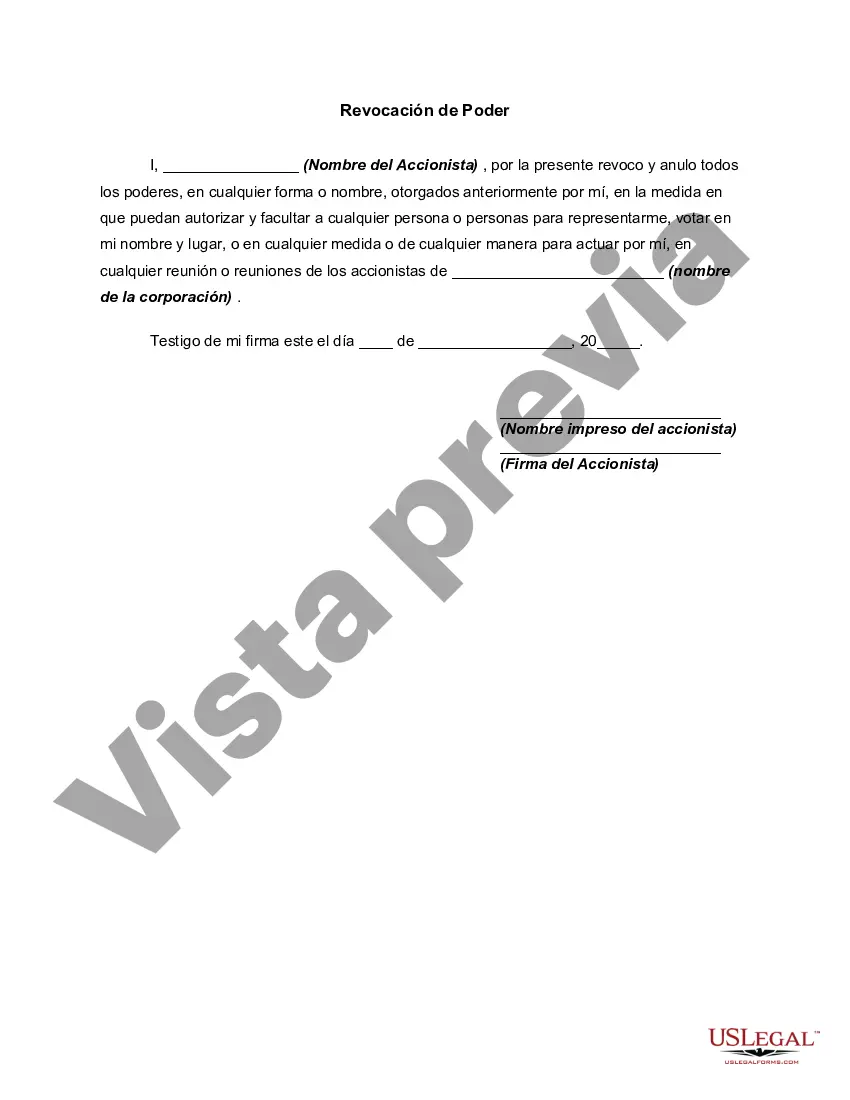
A proxy can also be revoked unless the terms of the proxy say otherwise.
Para su conveniencia, debajo del texto en español le brindamos la versión completa de este formulario en inglés.
For your convenience, the complete English version of this form is attached below the Spanish version.
You typically don’t need to submit it anywhere unless it’s related to a specific legal situation. Just keep it for your records and inform the concerned parties.
Not really! While having a formal document is helpful, as long as you clearly state your intention to revoke, you’re golden.
If you don’t revoke your proxy, the person you appointed can continue to make decisions for you until the proxy expires or you decide to cancel it.
Absolutely! You can revoke a proxy whenever you feel like it – there are no hard and fast rules stopping you.
Yes, it's best practice to let the person know that the proxy has been revoked. It helps avoid any confusion down the line.
To revoke a proxy, you can write a new document or just verbally tell the person you wish to cancel it. It's a good idea to put it in writing for your records.
A revocation of proxy is basically when you take back permission for someone to act on your behalf in a legal matter, like voting or managing your property.
Trusted and secure by over 3 million people of the world’s leading companies