Proxy voting refers to the procedure of delegating the right to vote by one person to another. In proxy voting in the absence of a person his/her vote will be secured by some other person. A person so designated to cast the vote of another is called a "proxy" and the person who delegates the power is called a principal. A voter must have a trust in the proxy. Any person including the official of the chosen party can be appointed as the proxy.
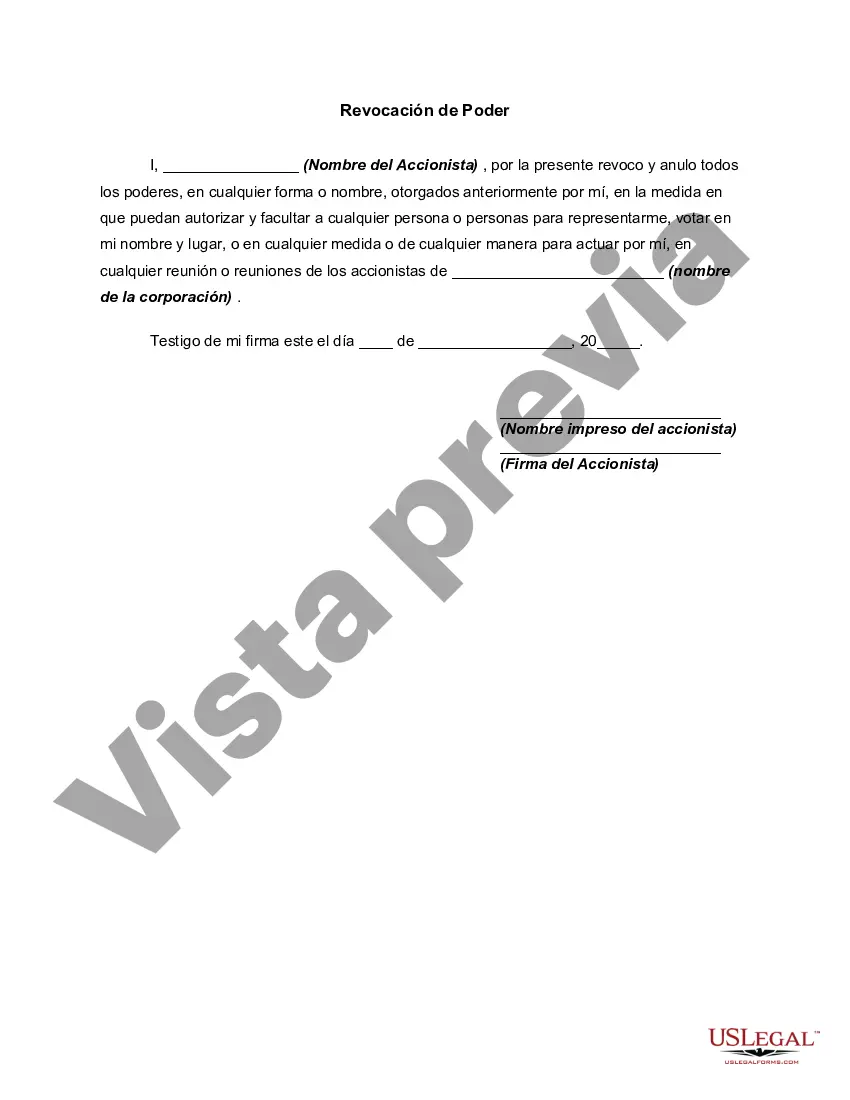
A proxy can also be revoked unless the terms of the proxy say otherwise.
Para su conveniencia, debajo del texto en español le brindamos la versión completa de este formulario en inglés.
For your convenience, the complete English version of this form is attached below the Spanish version.
Typically, the revocation takes effect as soon as you notify the person you appointed and anyone else who needs to know. It's smart to act quickly to avoid any confusion.
Generally, once you revoke a proxy, it’s final. However, if there’s a dispute, it might end up in court, but that's usually rare.
Keep a copy of the revoked proxy for your records, and make sure to give the original to the person you revoked it from, so they know they no longer have the authority.
To revoke a proxy, you typically need to fill out a simple form stating that you’re canceling it. Then, make sure to notify the person you appointed and anyone else involved.
You might want to revoke a proxy if you’ve changed your mind about who you want handling your affairs, or if the person you appointed can no longer do the job you need.
A Revoke Proxy is a legal way to cancel someone else's power to act on your behalf. Think of it as saying, 'Thanks, but no thanks!' to the person you appointed before.
While you can revoke a proxy verbally, it's much safer to do it in writing. This way, you have something to back you up in case of any misunderstandings down the road.
Trusted and secure by over 3 million people of the world’s leading companies