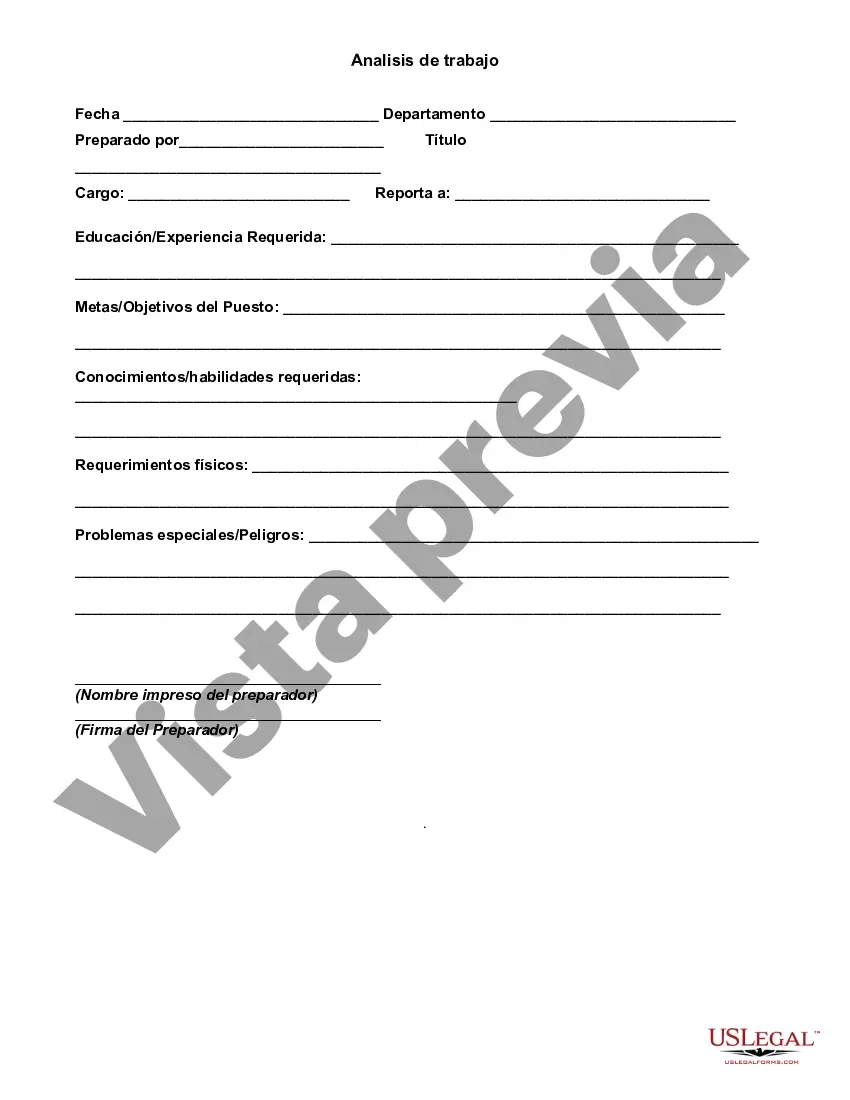
Job analysis is the systematic study of jobs to identify the observable work activities, tasks, and responsibilities associated with a particular job or group of jobs. It is a systematic method for gathering information which focuses on work behaviors, tasks, and outcomes. It identifies the personal qualifications necessary to perform the job and the conditions under which work is performed .
Para su conveniencia, debajo del texto en español le brindamos la versión completa de este formulario en inglés.
For your convenience, the complete English version of this form is attached below the Spanish version.

Absolutely! Job analysis identifies skill gaps and training needs, which is like having a roadmap for employee development, guiding them along the right path toward growth.
Job analyses should be reviewed regularly, at least every few years or whenever significant changes occur in job roles. Staying current keeps businesses ahead of the curve.
The benefits include better employee performance, clearer job descriptions, and improved training programs. It’s like hitting two birds with one stone—boosting efficiency and morale.
Typically, HR professionals, managers, and sometimes employees themselves are involved. It’s a team effort, ensuring all perspectives are considered for a clear picture.
There are several ways to conduct a job analysis like interviews, surveys, and direct observation. It's like using a toolbox; you pick the right tool for the job to get the best insights.
Job analysis lays the groundwork for hiring by defining the exact qualifications and skills needed. This helps employers attract the right candidates, making the hiring process smoother than a well-oiled machine.
Job analysis is a detailed look at the duties, responsibilities, and skills required for a job. It's important in Aurora because it helps employers find the right fit for their needs and ensures employees know what’s expected of them.
Trusted and secure by over 3 million people of the world’s leading companies