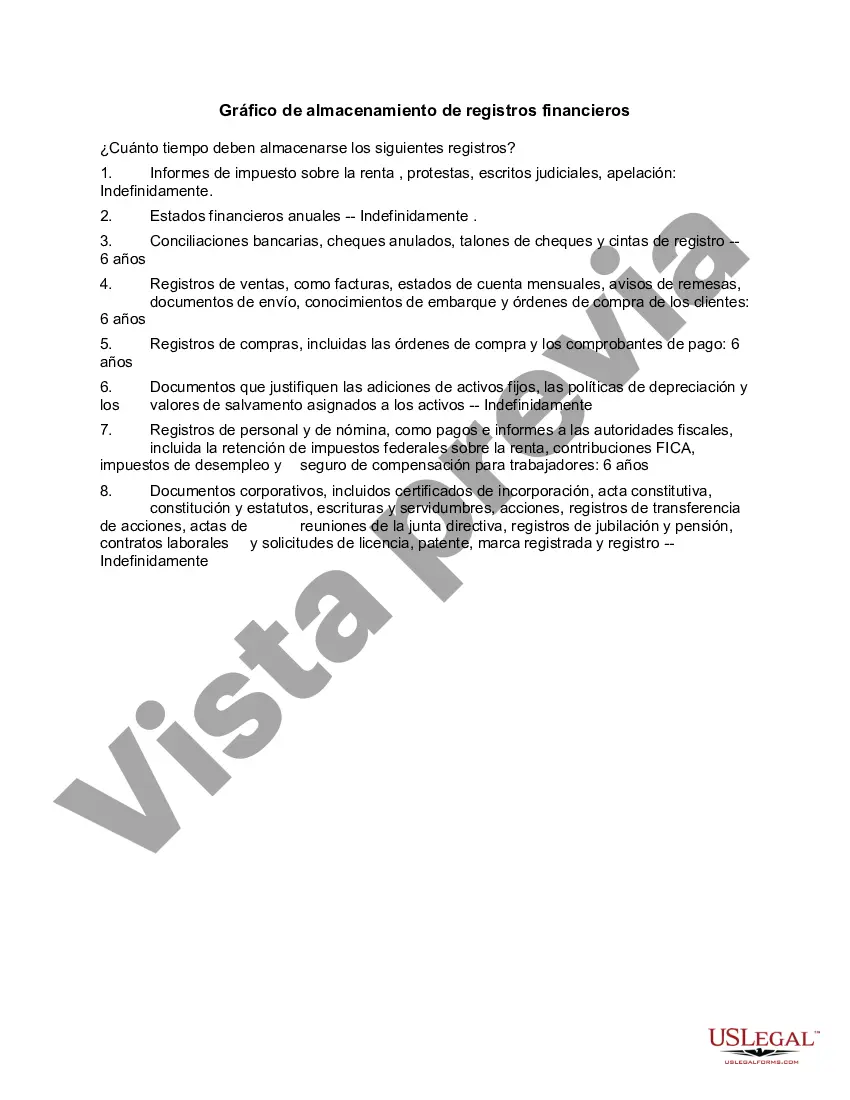
Consider using this checklist to ensure that you are saving the right financial records for tax purposes and keeping them for an appropriate amount of time.
Para su conveniencia, debajo del texto en español le brindamos la versión completa de este formulario en inglés.
For your convenience, the complete English version of this form is attached below the Spanish version.
If you spot a discrepancy, don't let it slide! Investigate right away to get to the bottom of it. Keeping your records straight now will save you a headache later on.
Absolutely! You can digitize your records to save space; just make sure those digital files are backed up regularly so you won't lose them in case of a tech hiccup.
You’ll want to hang onto things like tax returns, bank statements, receipts, and any other documents that could be a part of your financial picture. Better safe than sorry!
It's a good idea to update your financial records regularly—think of it as checking the oil in your car. A good rule of thumb is to review and update them at least once a month.
To keep your records safe, store them in a secure location, whether that’s a locked filing cabinet or a digital cloud service that offers strong security measures.
Anyone who wants to stay on top of their financial records can benefit from it. This includes small business owners, freelancers, and even families managing household finances.
The financial record storage chart helps individuals and businesses keep their financial documents organized and easily accessible, so they don't go chasing after paperwork when they need it.
Trusted and secure by over 3 million people of the world’s leading companies
Minneapolis Minnesota Gráfico de almacenamiento de registros financieros