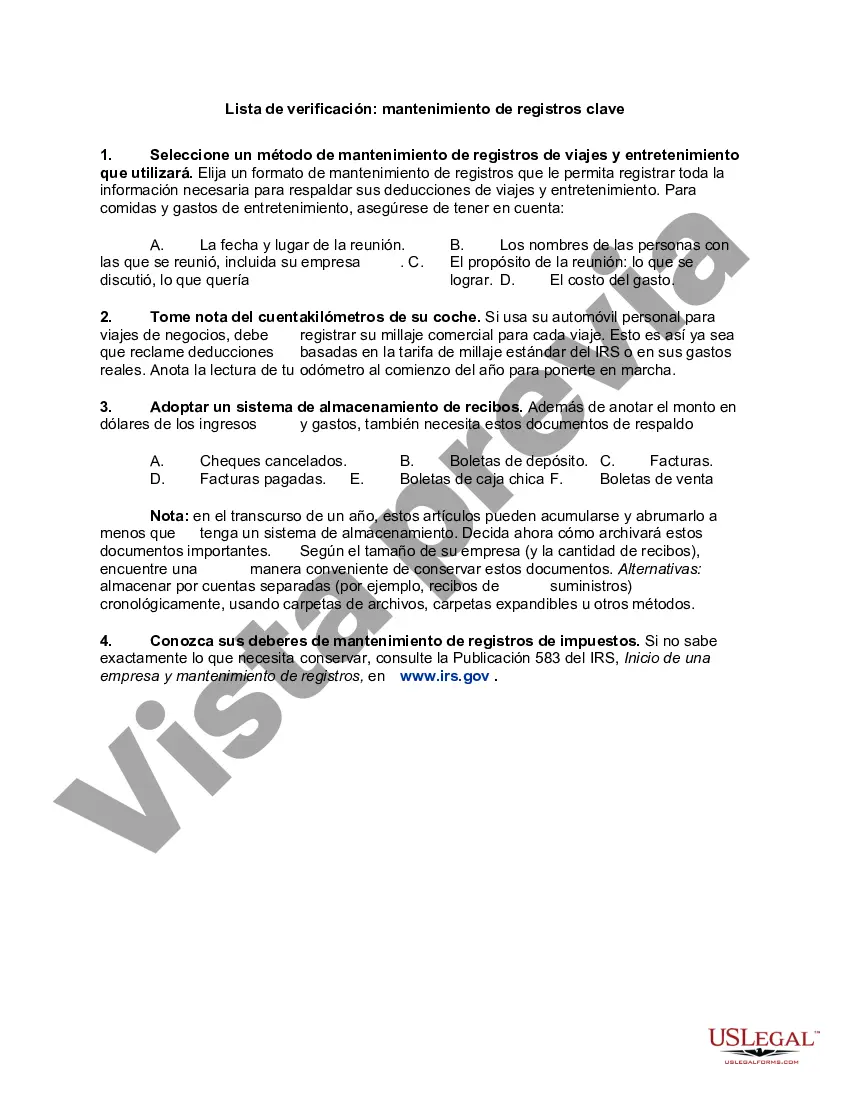
Records are an essential element in claiming deductions on your taxes. Record keeping is important to help you track your business activities so you know where you stand at all times. Records also enable you to prepare financial statements for your bank and creditors. But for tax purposes, records are essential. You must have them in order to prepare your return and claim certain deductions. This checklist may help.
Para su conveniencia, debajo del texto en español le brindamos la versión completa de este formulario en inglés.
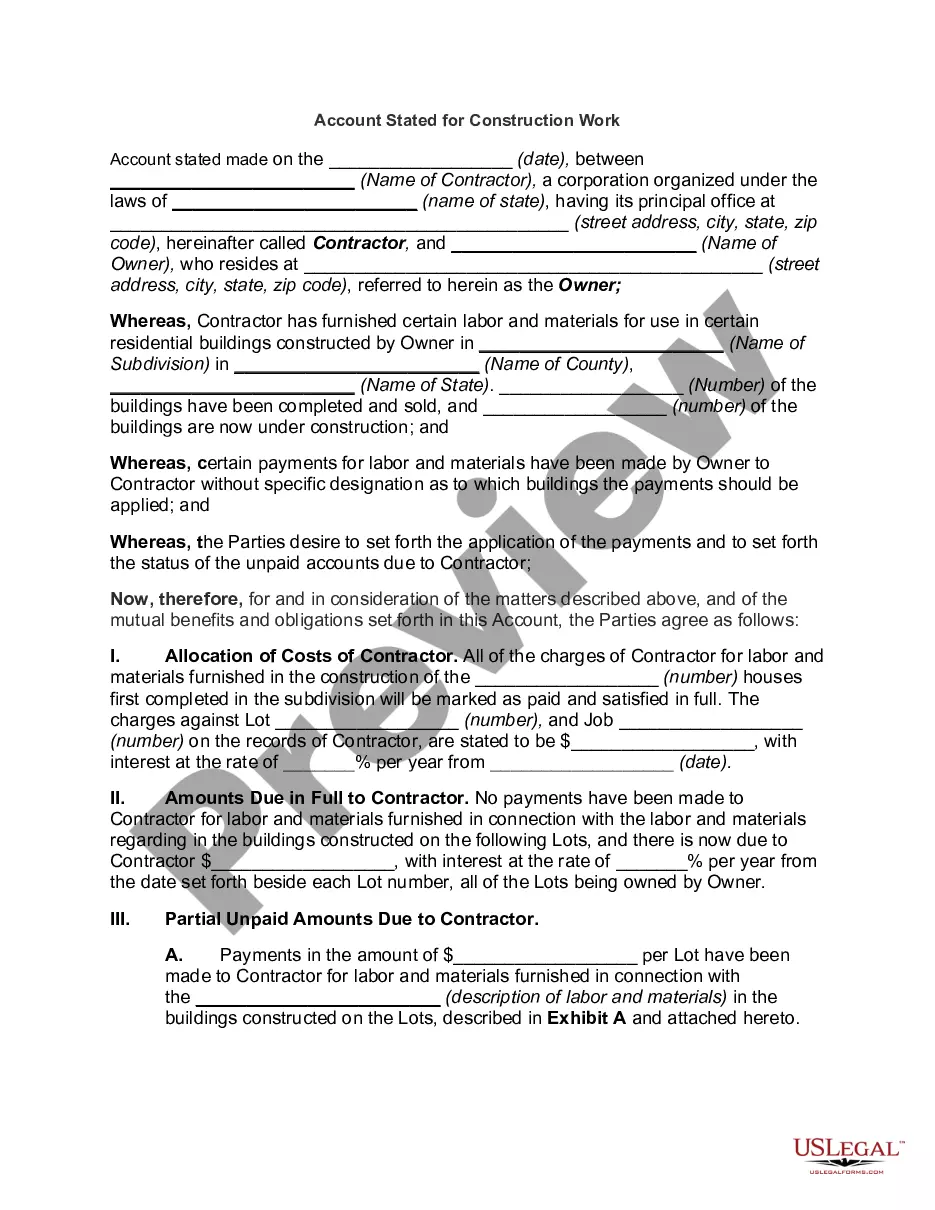
For your convenience, the complete English version of this form is attached below the Spanish version.
As a rule of thumb, it's wise to keep most records for at least seven years. This way, you're covered in case you ever need to revisit any past transactions.
Backing up your records to the cloud or using an external hard drive is like having an insurance policy for your information—better safe than sorry!
Yes, indeed! Documenting your home improvements is crucial. It not only helps with future sales but can also add to your property value down the line.
Keep your homeowners insurance policy and any claims paperwork on file. It's a good idea to have these at your fingertips just in case the worst happens.
Absolutely! Hang on to your property tax statements and assessments. These will come in handy when it's time to file your taxes or if you consider selling.
Try using a file cabinet or a digital folder system. Keeping everything shipshape helps when you need to find something in a pinch!
You should keep your property deed, mortgage documents, and any renovation paperwork—basically, the nuts and bolts of your home.
Trusted and secure by over 3 million people of the world’s leading companies
Plano Texas Lista de verificación: mantenimiento de registros clave