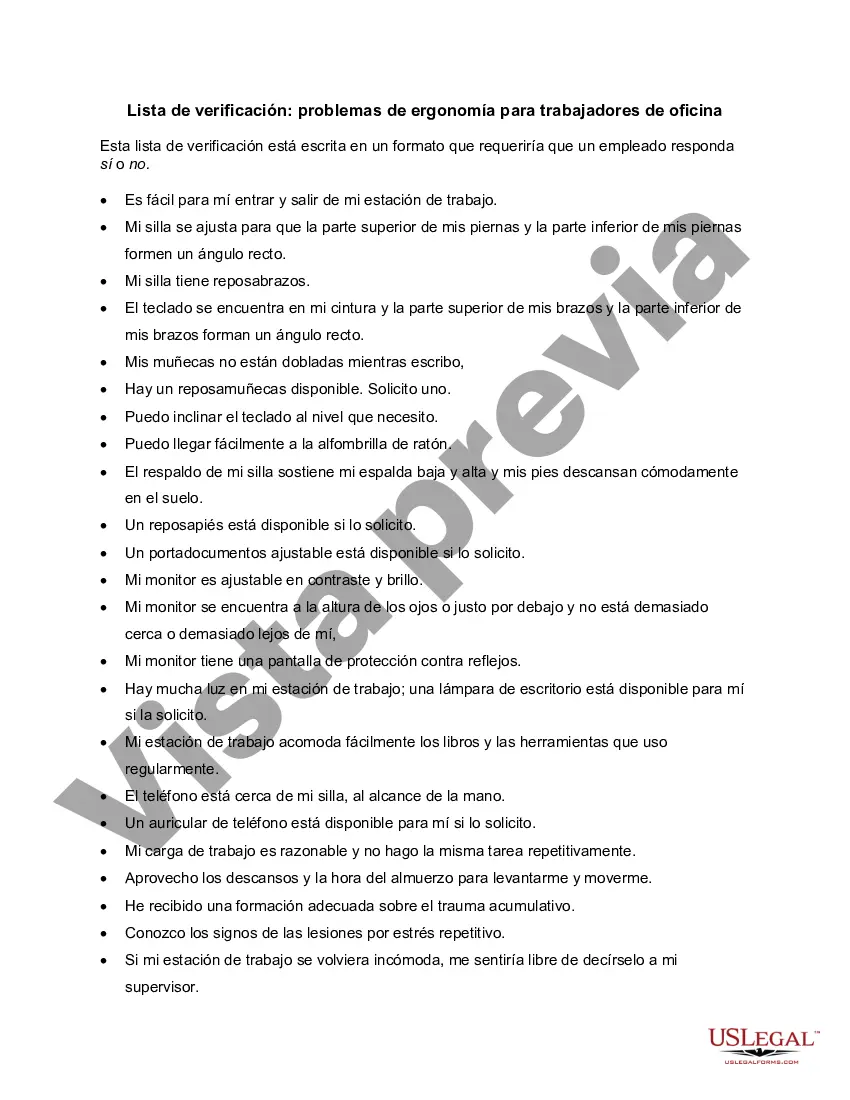
Ergonomics is the study of the kind of work you do, the environment you work in, and the tools you use to do your job. The goal of office ergonomics is to set up your office work space so that it fits you and the job you are doing and you do not suffer any injuries (e.g. carpal tunnel syndrome).
Para su conveniencia, debajo del texto en español le brindamos la versión completa de este formulario en inglés.
For your convenience, the complete English version of this form is attached below the Spanish version.

Posture is key! Sitting up straight with your shoulders back can help avoid a slew of issues. Good posture is your best mate when it comes to working comfortably.
It's a good rule of thumb to take a short break every 30-60 minutes. Just a quick stretch or a stroll can refresh you and keep those aches and pains at bay.
Good lighting helps reduce eye strain and keeps you alert. Bad lighting can make you squint and cause headaches, so it’s like a breath of fresh air for your eyes!
Absolutely! Simple stretches for your neck, shoulders, and wrists can work wonders. Taking short breaks to stand up and move around can also keep discomfort at bay.
To make your desk more ergonomic, ensure your monitor is at eye level, keep your keyboard at elbow height, and position your mouse close enough to avoid reaching. A little tweak can go a long way!
An ergonomic chair should support your lower back, allow your feet to rest flat on the floor, and have adjustable features. If you find yourself slouching or feeling uncomfortable after a few hours, it might be time to rethink your seating.
Common ergonomic issues for office workers include back pain, neck strain, and wrist discomfort. These problems can crop up if your workstation isn't set up just right.
Trusted and secure by over 3 million people of the world’s leading companies
Aurora Colorado Lista de verificación: problemas de ergonomía para trabajadores de oficina