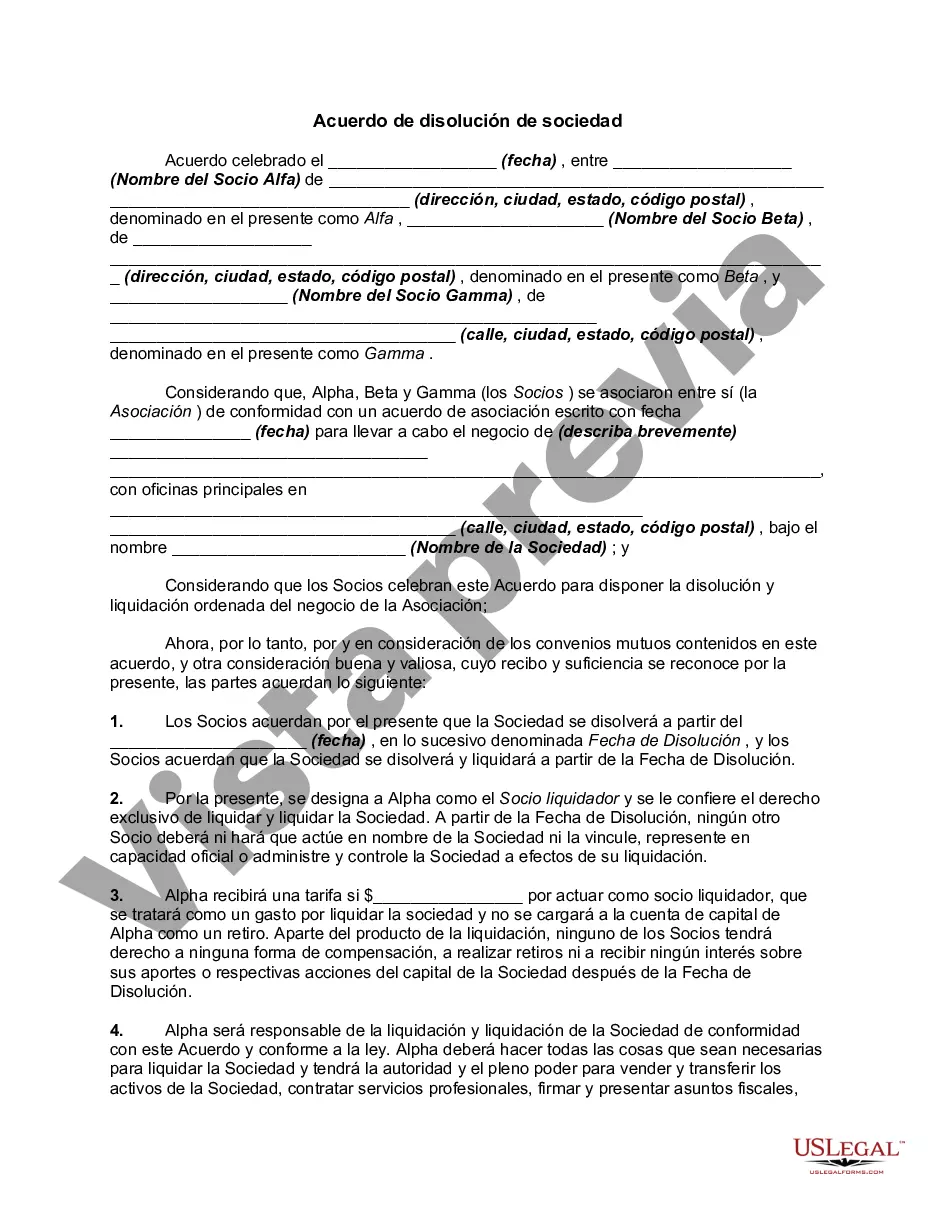
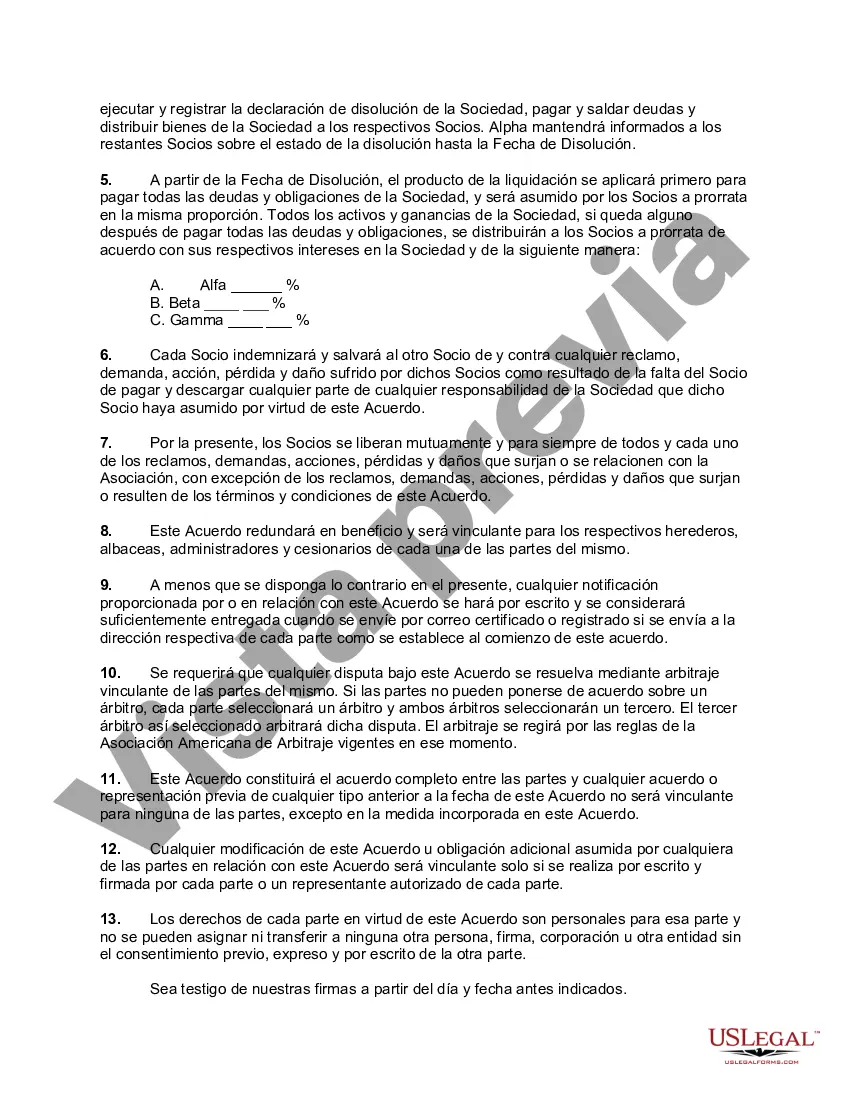
A dissolution of a partnership is the point where partners cease operating as a partnership, and termination is an event occurring after all affairs of the partnership have been completed. The process between dissolution and termination is generally referred to as a winding up of the partnership business.
Para su conveniencia, debajo del texto en español le brindamos la versión completa de este formulario en inglés.
For your convenience, the complete English version of this form is attached below the Spanish version.
If one partner wants to continue running the business, they may need to buy out the exiting partner’s share. This should be clearly addressed in the Partnership Dissolution Agreement to avoid any hard feelings down the line.
Generally, the partners are responsible for the partnership's debts after dissolution. It’s wise to sort out who will handle what, so you don’t find yourself in murky waters later on.
While you can draft one yourself, having a lawyer can help ensure that everything is legally sound and fair. It’s like having a safety net, just in case!
Partners might want to dissolve their partnership for various reasons, such as different visions for the business, personal differences, or even just wanting to pursue new opportunities. It's often about moving on to greener pastures.
Yes, a well-drafted agreement can help mitigate misunderstandings and conflicts that might arise during and after the dissolution process by clearly outlining each partner's responsibilities.
Generally, partners are responsible for settling any debts before the business can be entirely dissolved. The agreement should clearly state how these debts will be handled.
The time it takes can vary, but generally, it depends on how complicated the business is and whether the partners agree on everything. It can take anywhere from a few weeks to several months.
Trusted and secure by over 3 million people of the world’s leading companies