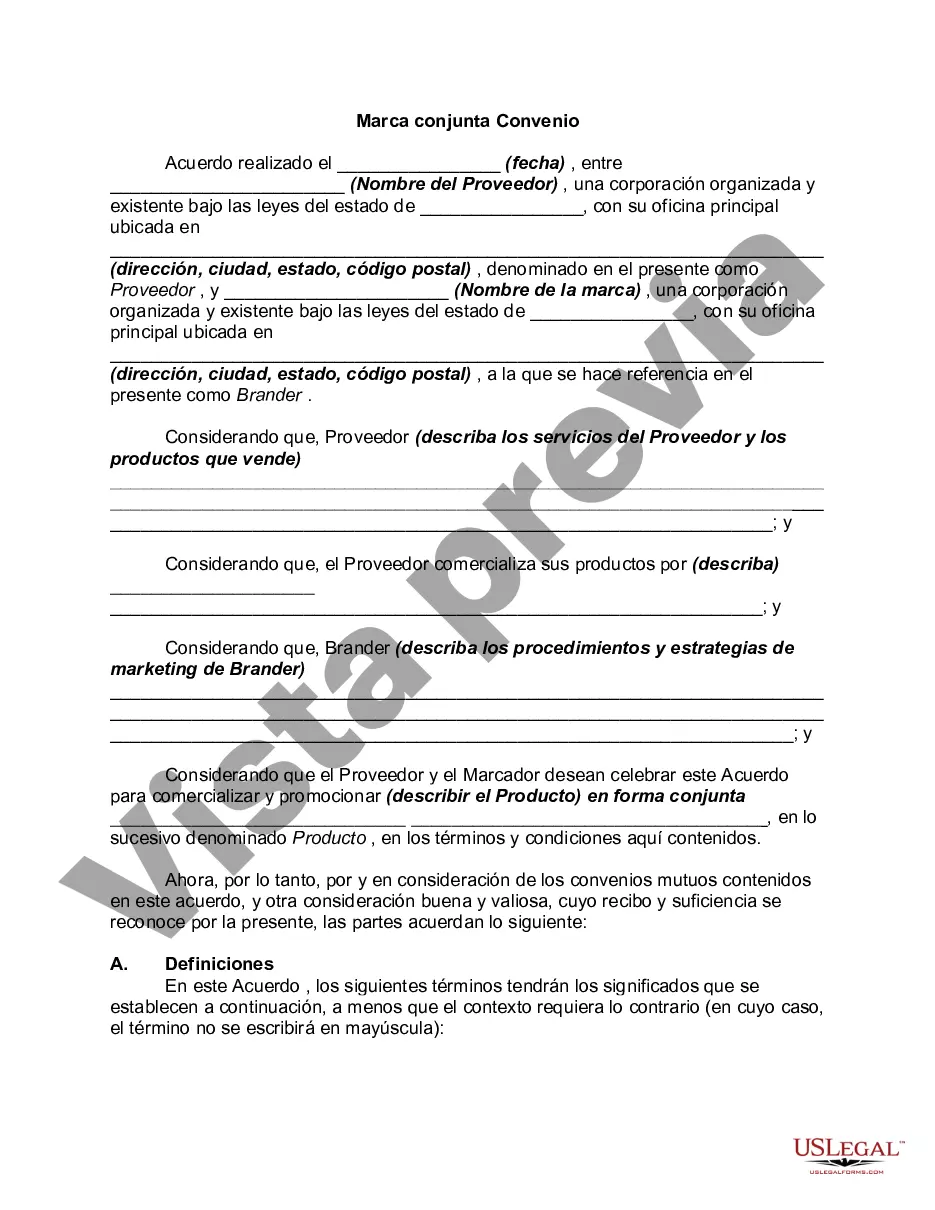
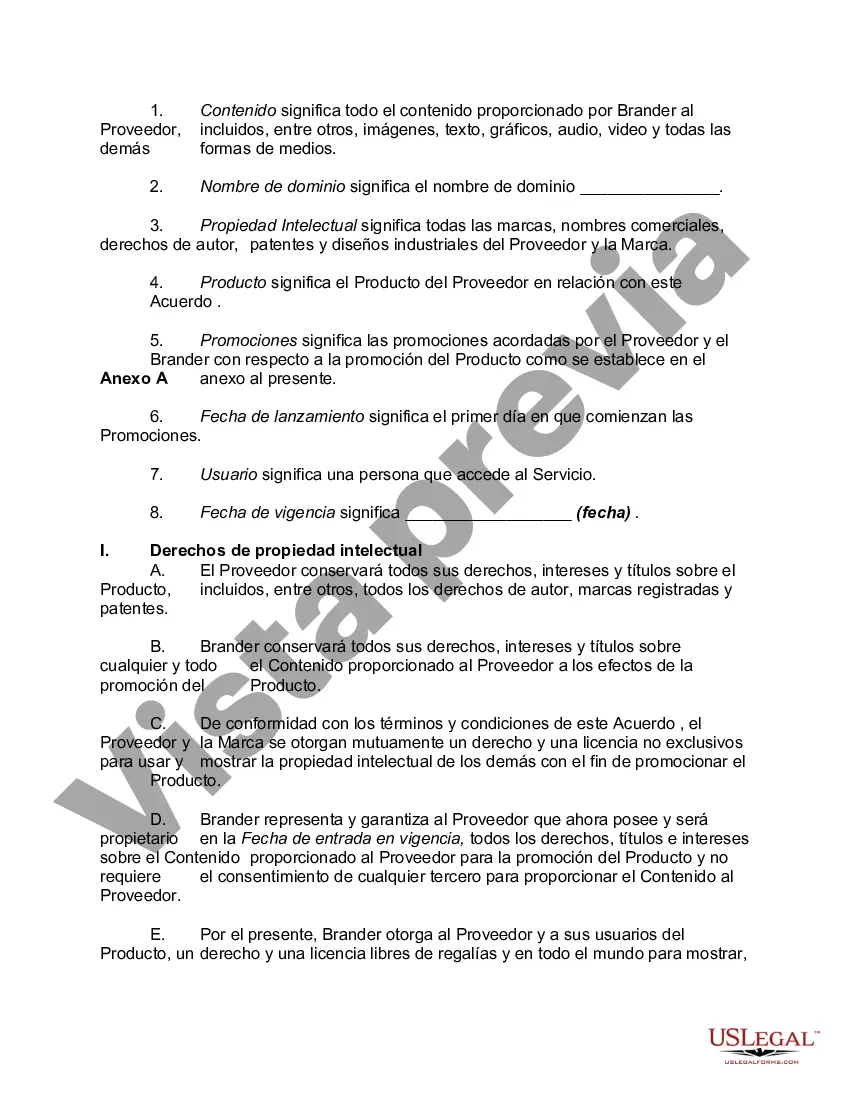
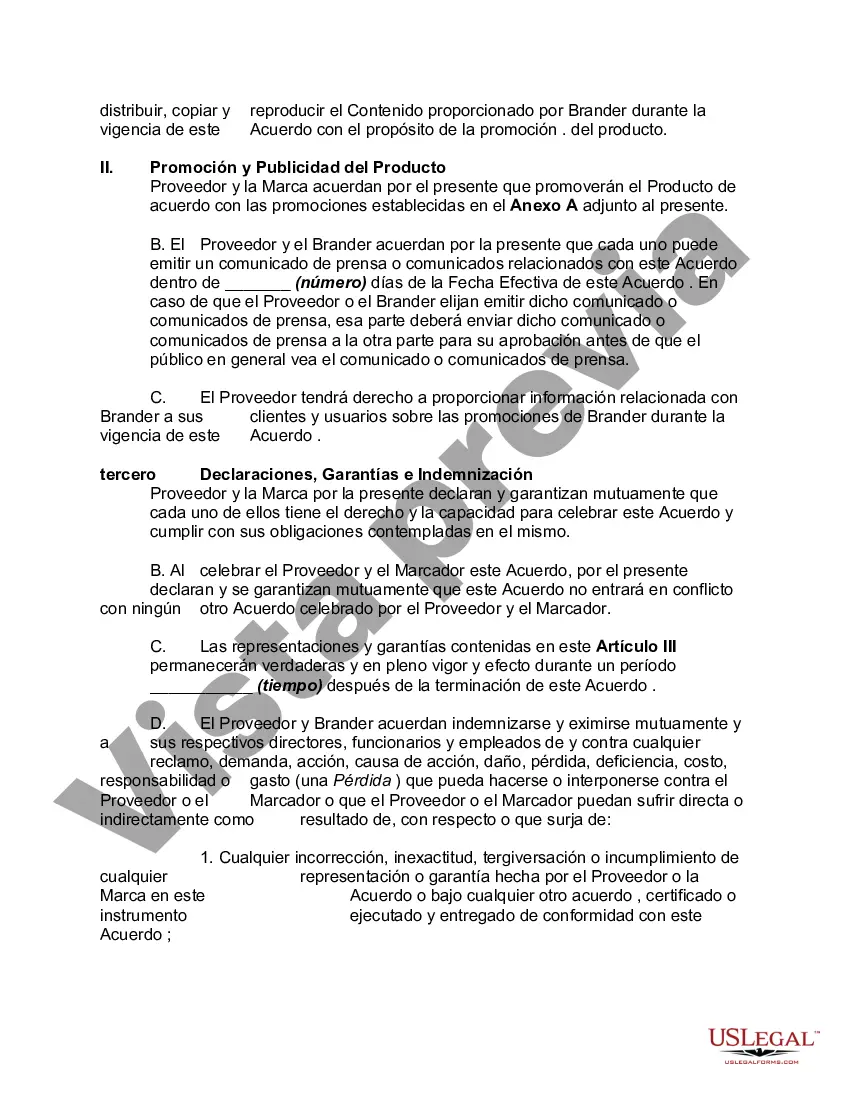
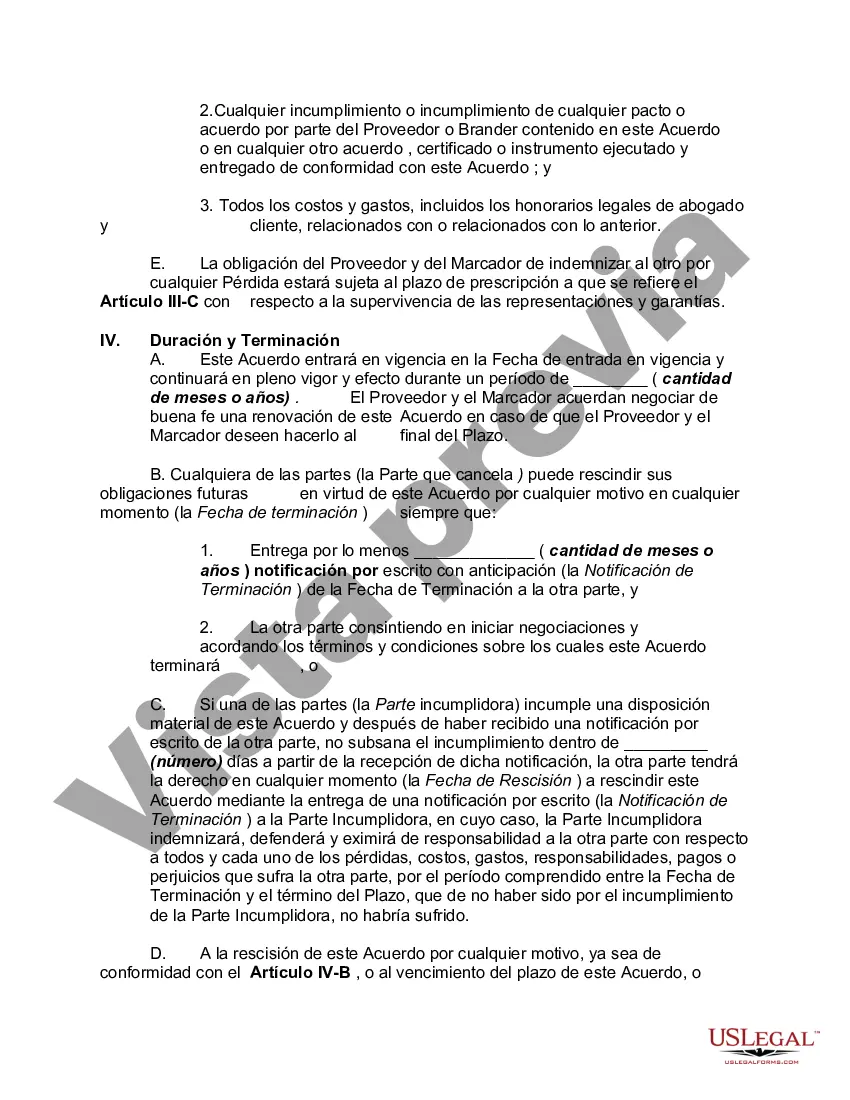
Irvine California Acuerdo de marca compartida - Co-Branding Agreement
Category:
State:
Multi-State
City:
Irvine
Control #:
US-02925BG
Format:
Word
Instant download
Description
Co-branding is a pairing of two or more branded products to form either a separate and unique product or brand; the use of distinct brands in combination with market-related products for complementary use, such as between a fast food chain and a toy company; or even physical product integration, such as a brand-name toothpaste combined with a brand-name mouthwash. A co-branding strategy can be a means to gain more marketplace exposure, fend off the threat of private label brands and share expensive promotion costs with a partner. In a co-branding relationship, both brands should have an obvious and natural relationship that has potential to be commercially beneficial to both parties.
Para su conveniencia, debajo del texto en español le brindamos la versión completa de este formulario en inglés.
For your convenience, the complete English version of this form is attached below the Spanish version.
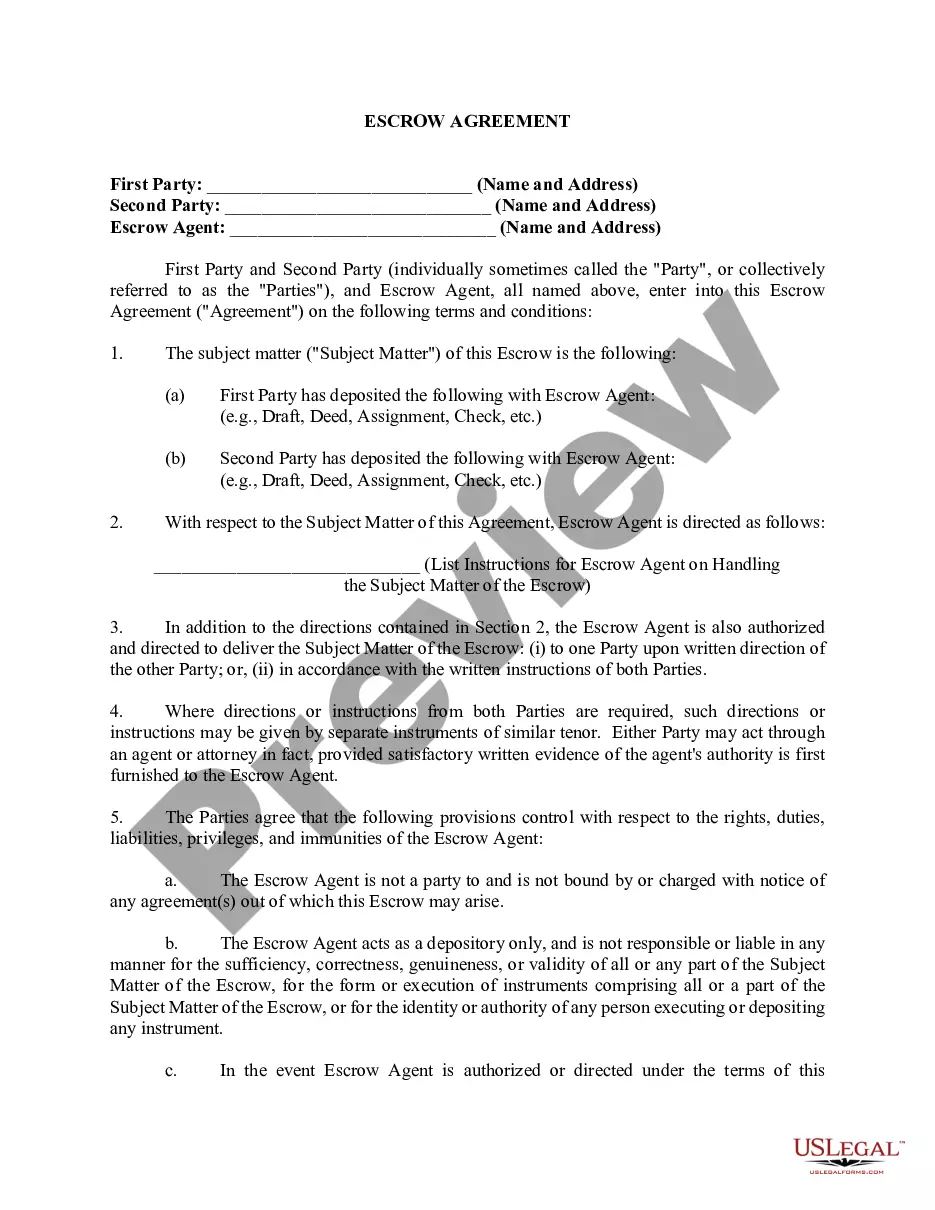
Free preview