Bill of Lading
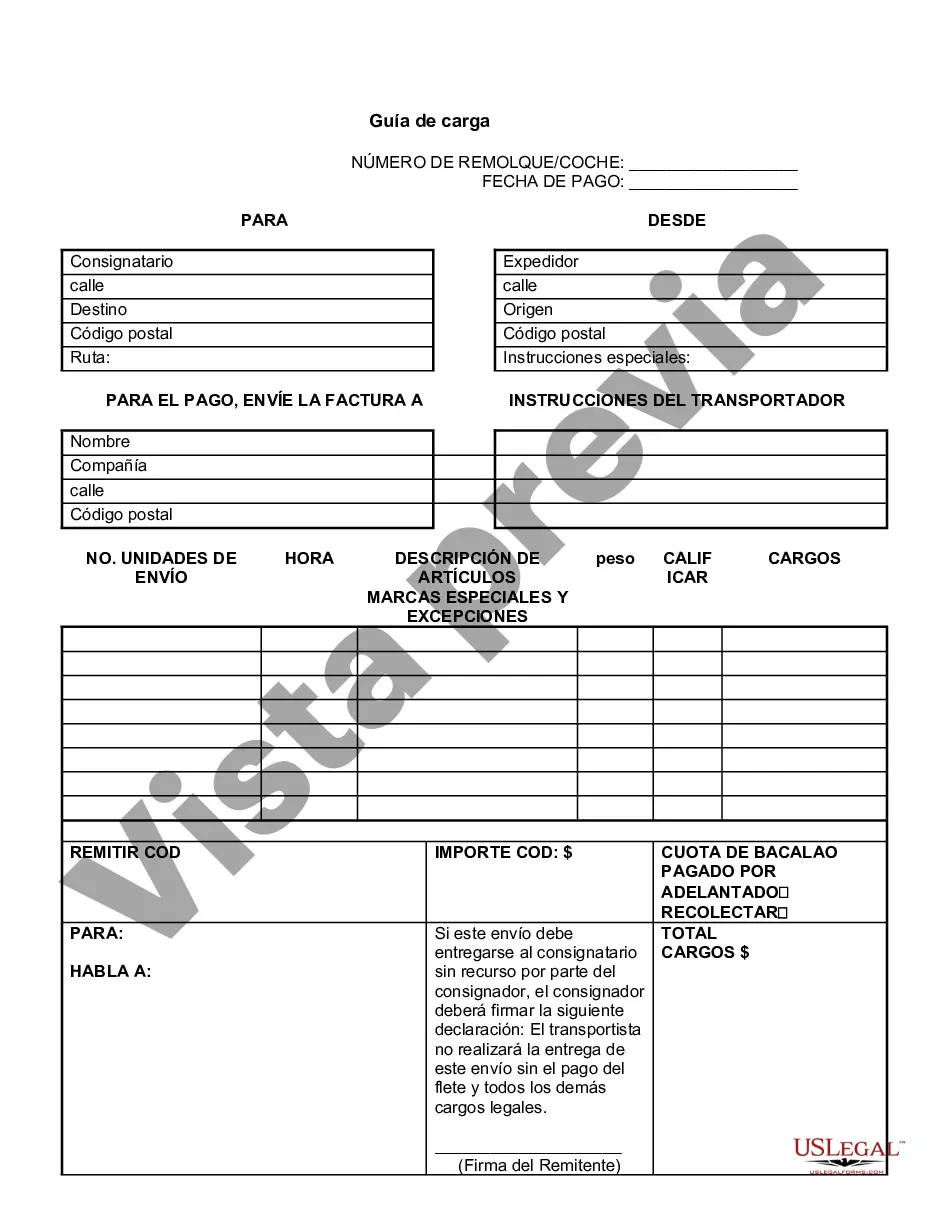
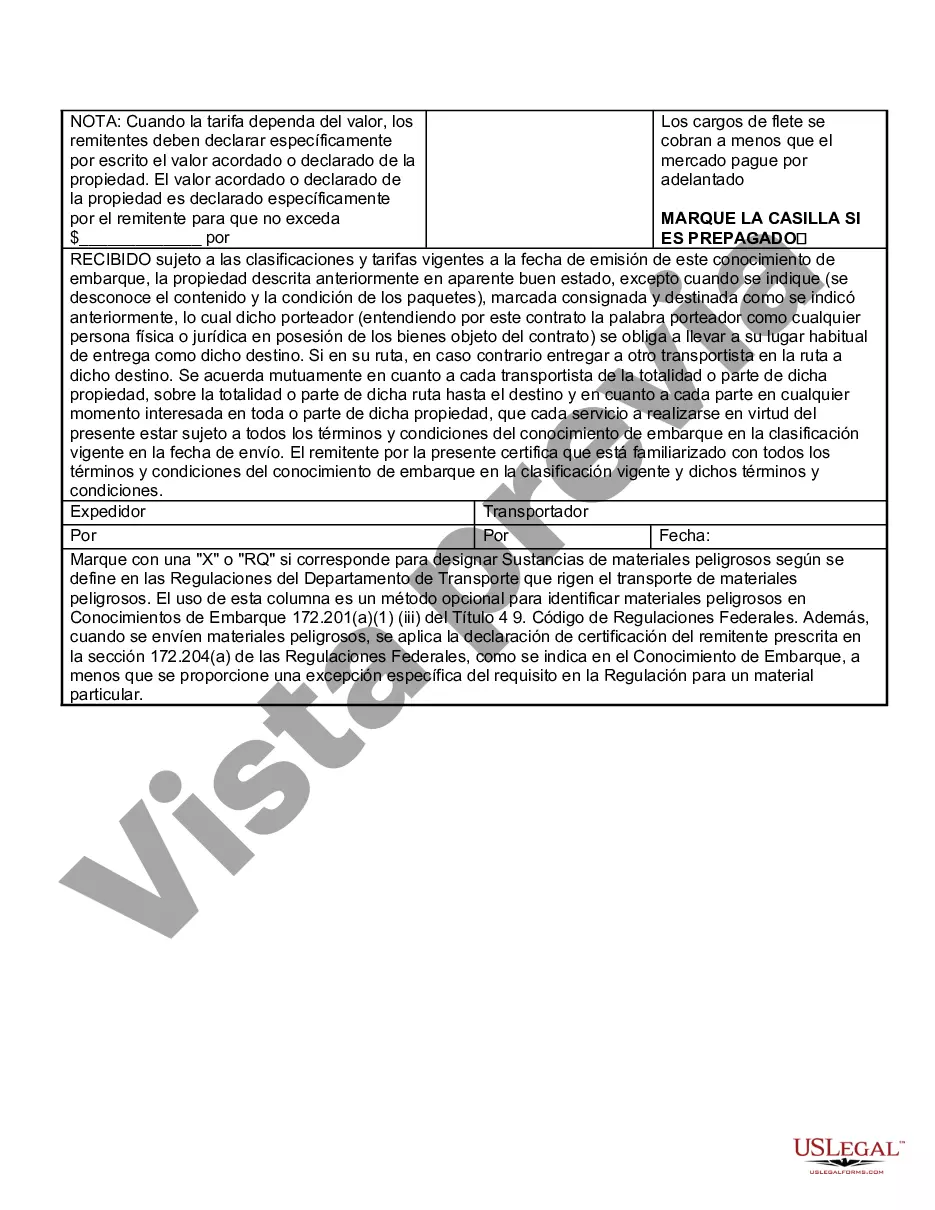
Para su conveniencia, debajo del texto en español le brindamos la versión completa de este formulario en inglés.
For your convenience, the complete English version of this form is attached below the Spanish version.
Yes, but you need to follow specific regulations to ship hazardous materials. The Bill of Lading must clearly state that the shipment contains hazardous items so that everyone handles it properly.
If you lose your Bill of Lading, it's important to notify the carrier right away. They might issue a duplicate or provide guidance on what to do next. Keeping backup copies can save you from a lot of headaches.
Yes, you can amend the Bill of Lading. However, it's best to do this as early as possible because changes can sometimes cause delays or complications down the road.
A Bill of Lading typically includes the names and addresses of the shipper and receiver, a detailed list of items being shipped, the shipping date, and any special instructions. It's like the blueprint for your shipment.
Yes, it’s usually a good idea to have a Bill of Lading for each shipment. It keeps everyone on the same page and acts as a safeguard in case any disputes arise.
To create a Bill of Lading, you'll need to gather details about the shipment, including the addresses of the sender and receiver, a description of the goods, and the method of transport. You can usually find templates online or use software for ease.
A Bill of Lading is a legal document that serves as a receipt for goods being shipped. It lays out the details of the transportation agreement between the shipper and the carrier, essentially acting as proof that the goods are on board and on their way.
Trusted and secure by over 3 million people of the world’s leading companies