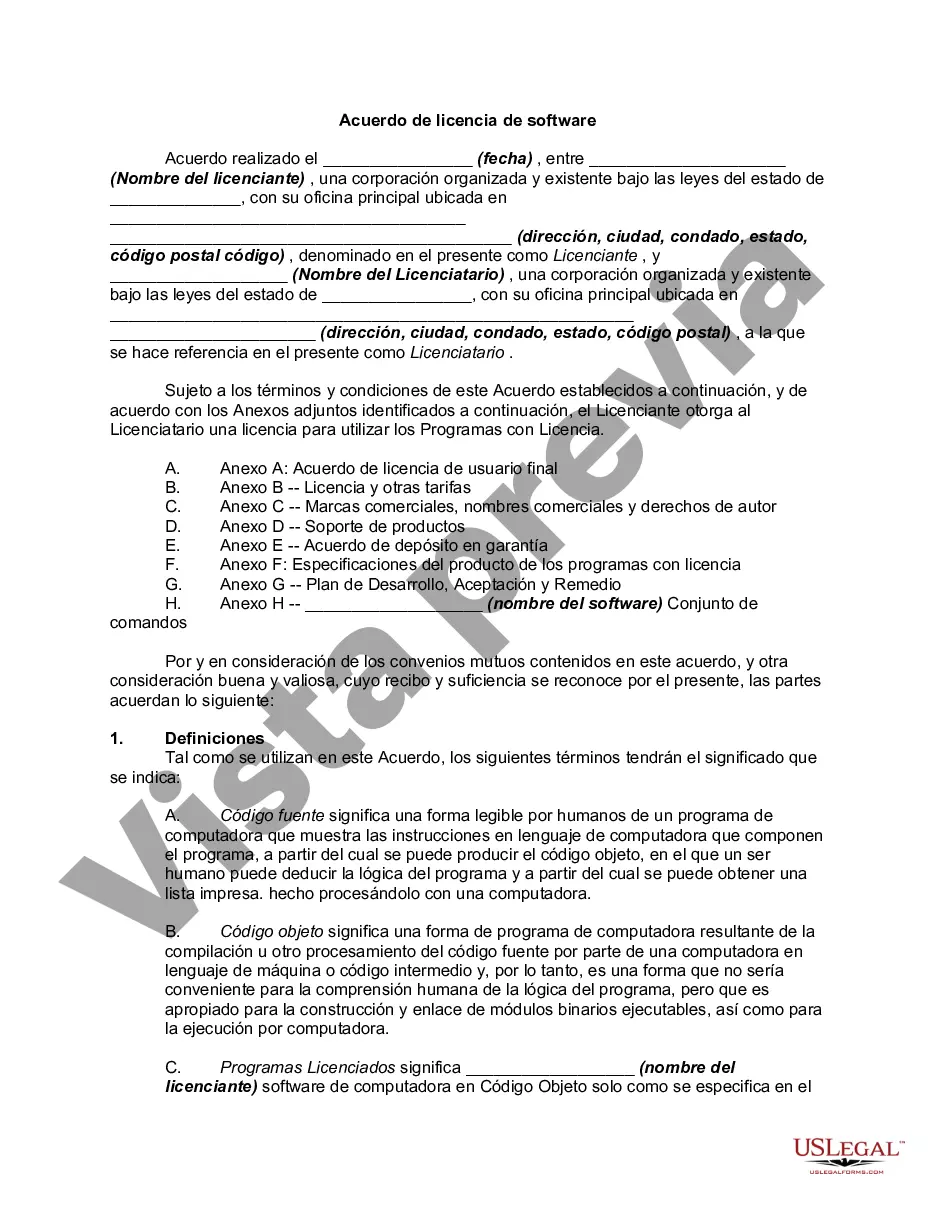
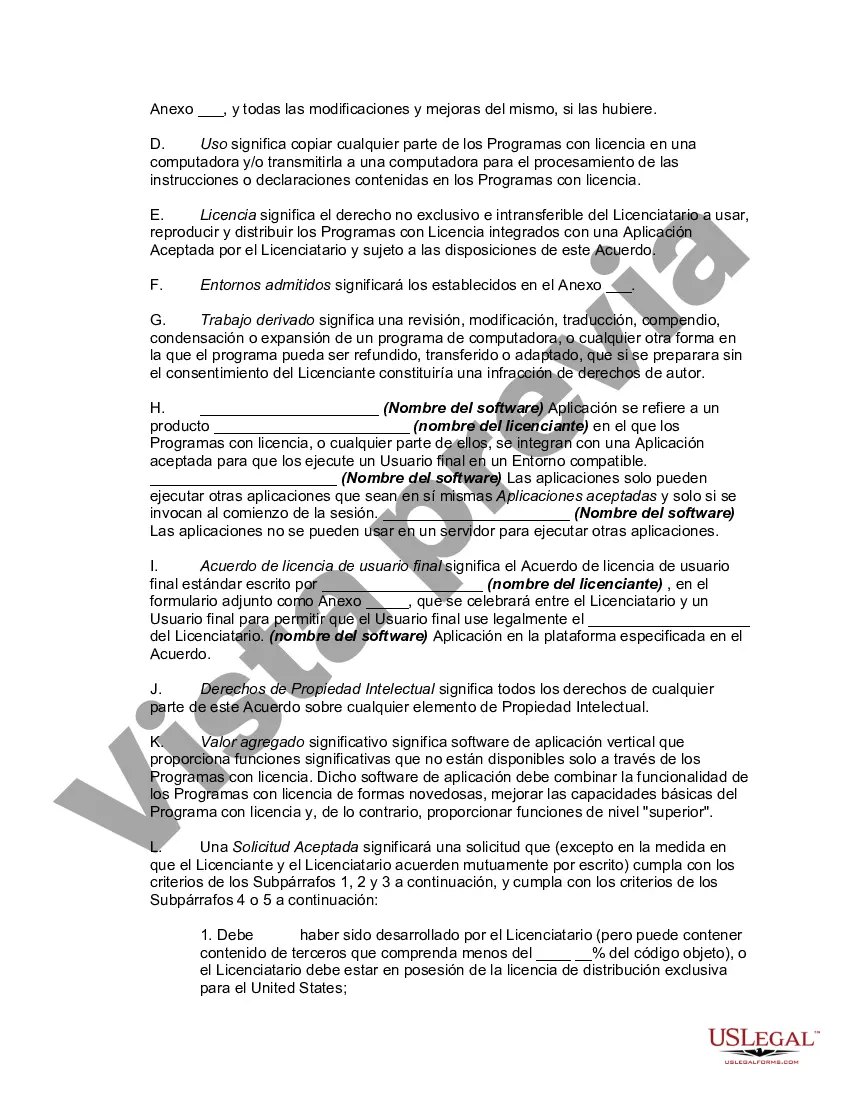
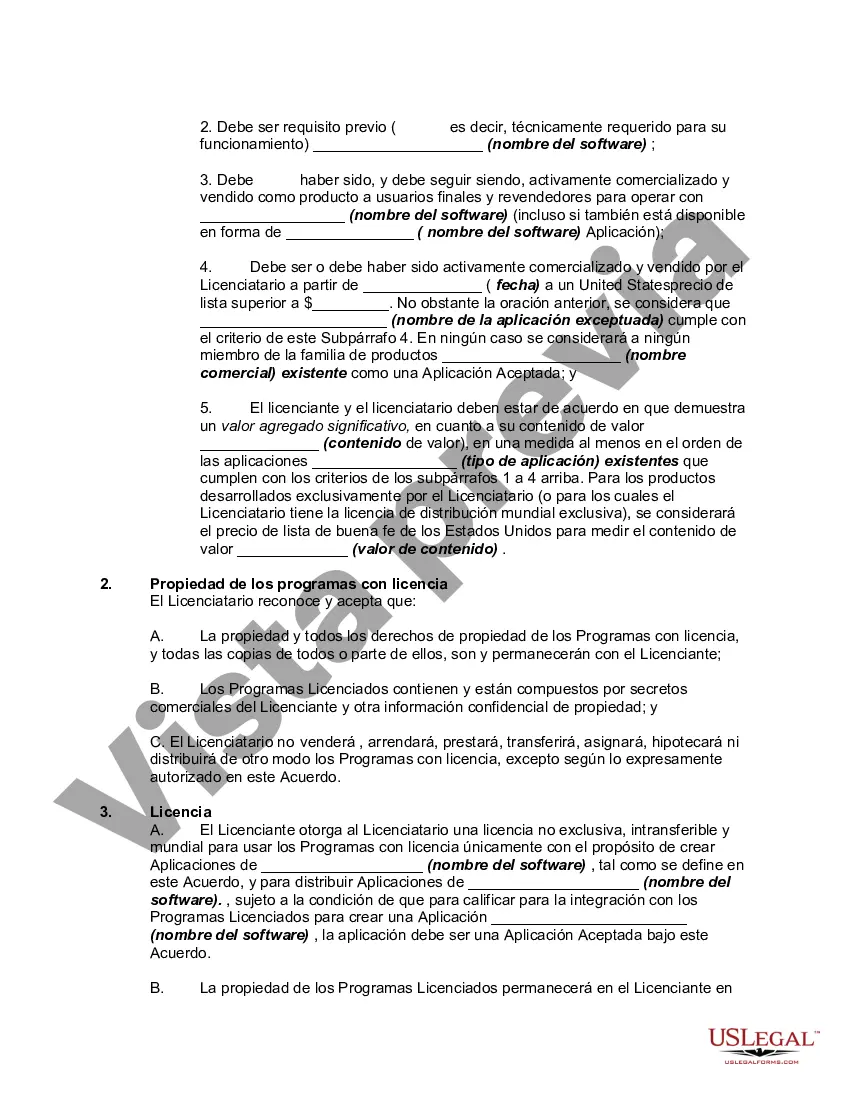
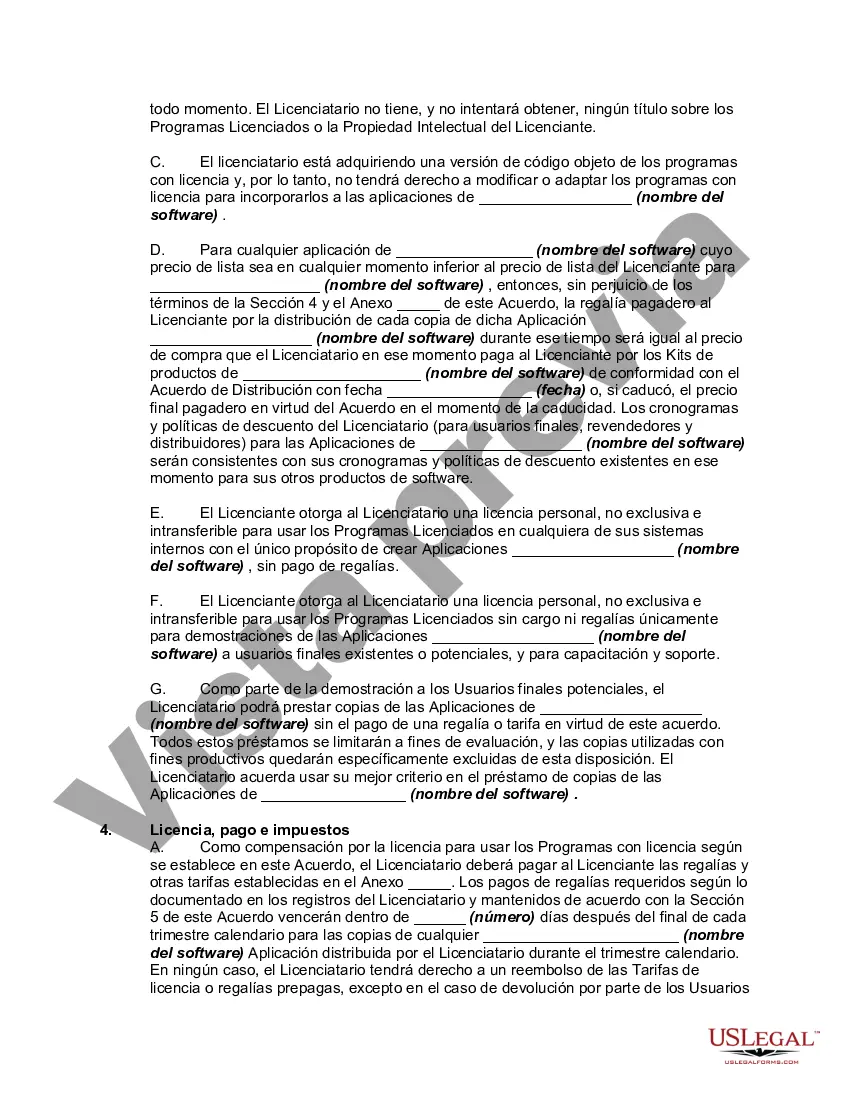
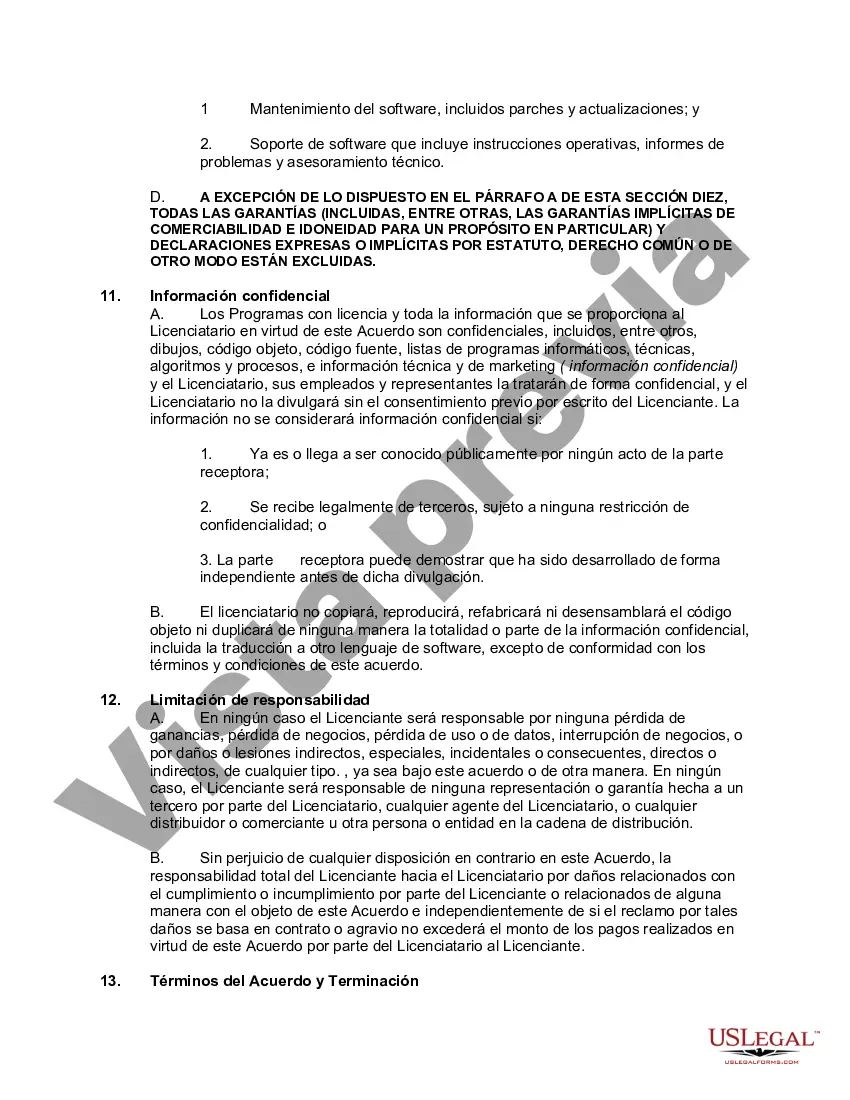
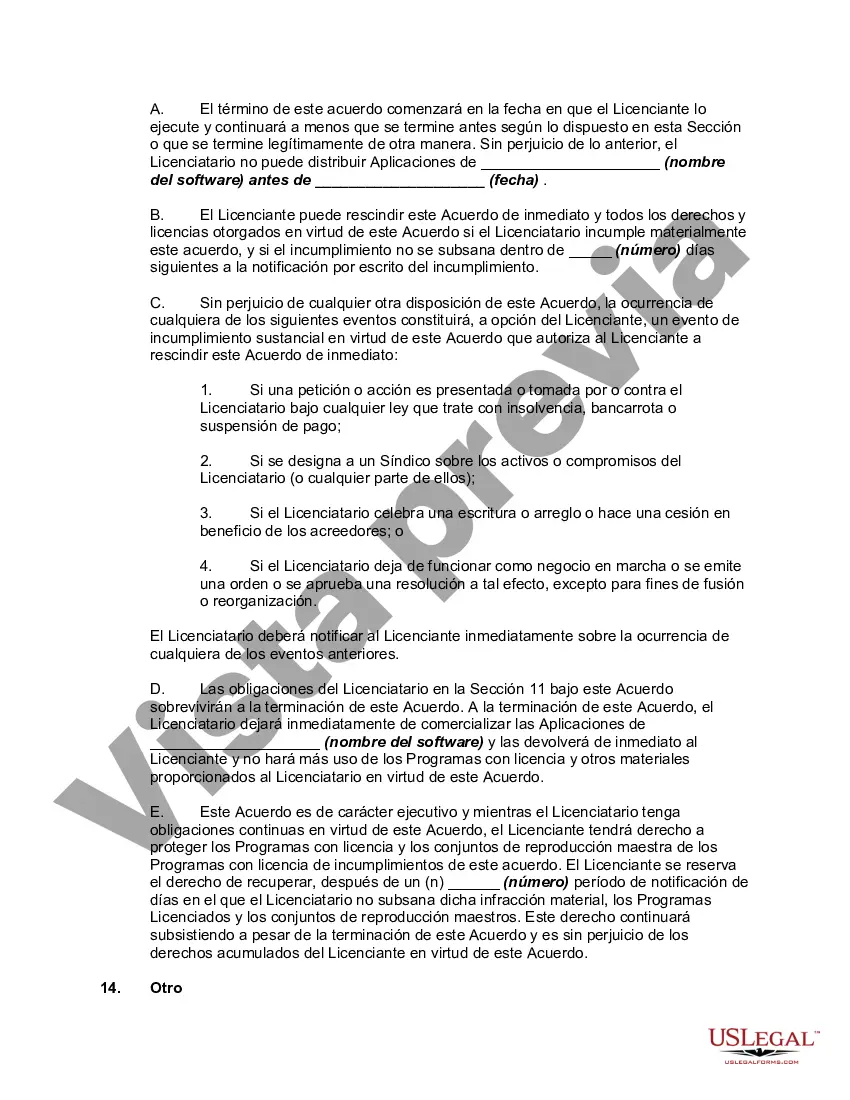
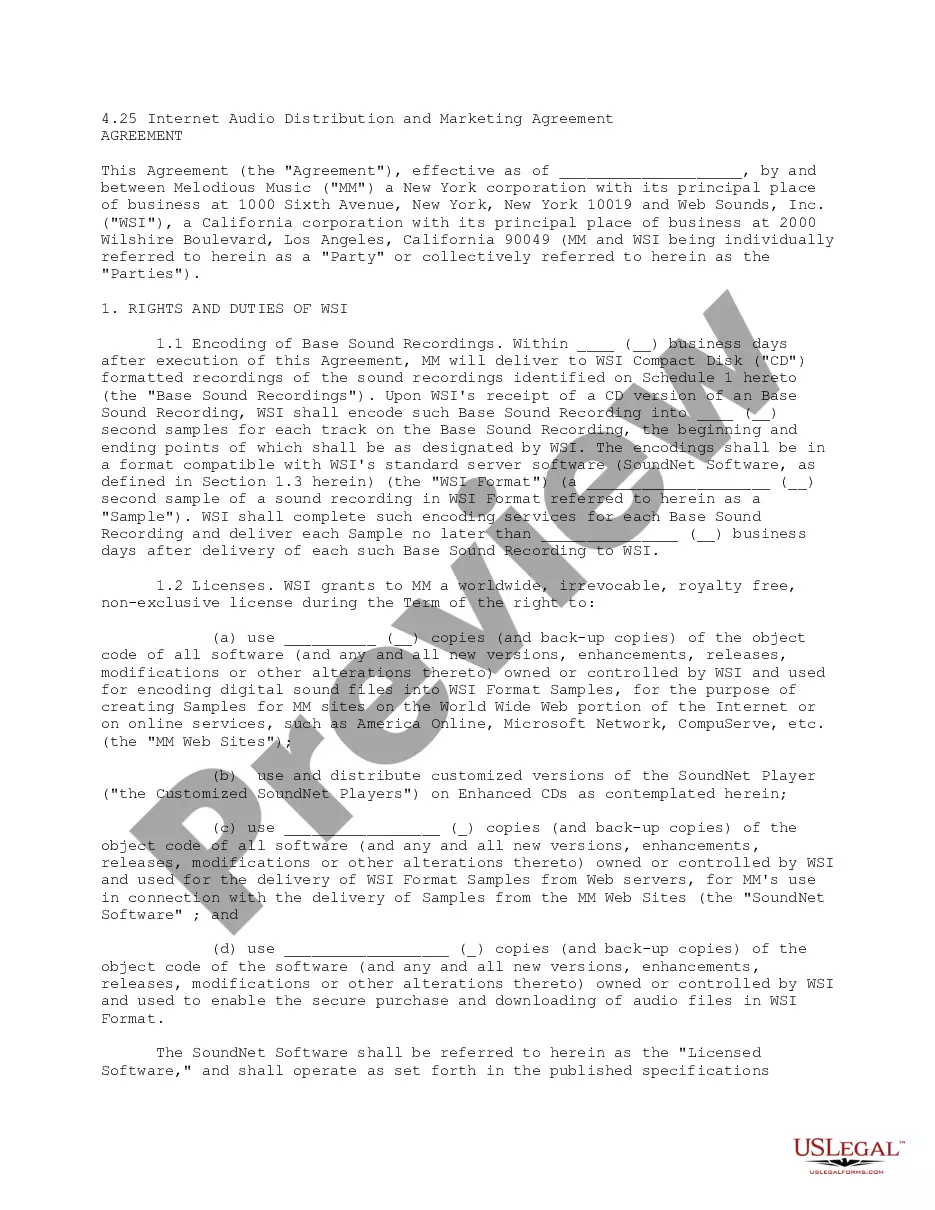
A licensing agreement is a legal contract between two parties, known as the licensor and the licensee. In a typical licensing agreement, the licensor grants the licensee the right to, in this case, to use patented technology owned by the licensor. In exchange, the licensee usually submits to a series of conditions regarding the use of the licensor's property and agrees to make payments known as royalties.
Para su conveniencia, debajo del texto en español le brindamos la versión completa de este formulario en inglés.
For your convenience, the complete English version of this form is attached below the Spanish version.
The duration of a License Agreement can vary. It might be for a specific period or until one party decides to end it. Just like a contract to rent an apartment, there’s usually a timeframe involved.
While it’s not required, having a lawyer review the License Agreement can save you from headaches down the road. Think of it as having a coach who helps you play the game better.
If you break the terms of a License Agreement, you could face penalties such as legal action or losing access to the software. It's like breaking a promise—there are consequences.
Absolutely! A License Agreement can be changed if both parties agree. It's just like tweaking a recipe to suit your taste; communication is key.
Common terms often include how you can use the software, any restrictions, and what happens if things go awry. It's like setting the ground rules so everyone plays fair.
If you're a business or an individual planning to use software that's someone else's creation, you’ll need a License Agreement. It's like asking permission before borrowing a friend’s favorite book.
A License Agreement for Software in Gilbert is simply a legal contract that allows you to use software under specific conditions. Think of it as the rules of the road for using someone's digital tools.
Trusted and secure by over 3 million people of the world’s leading companies