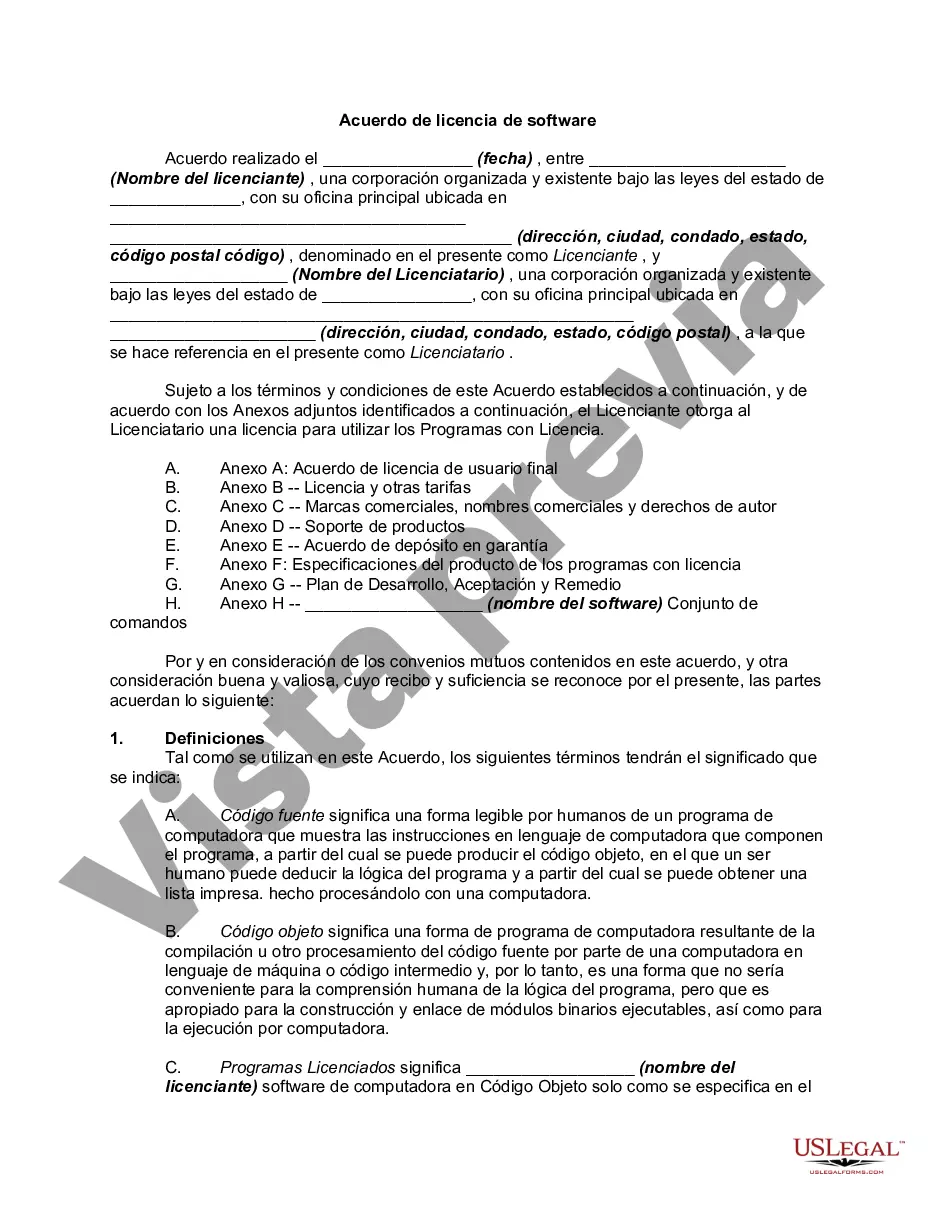
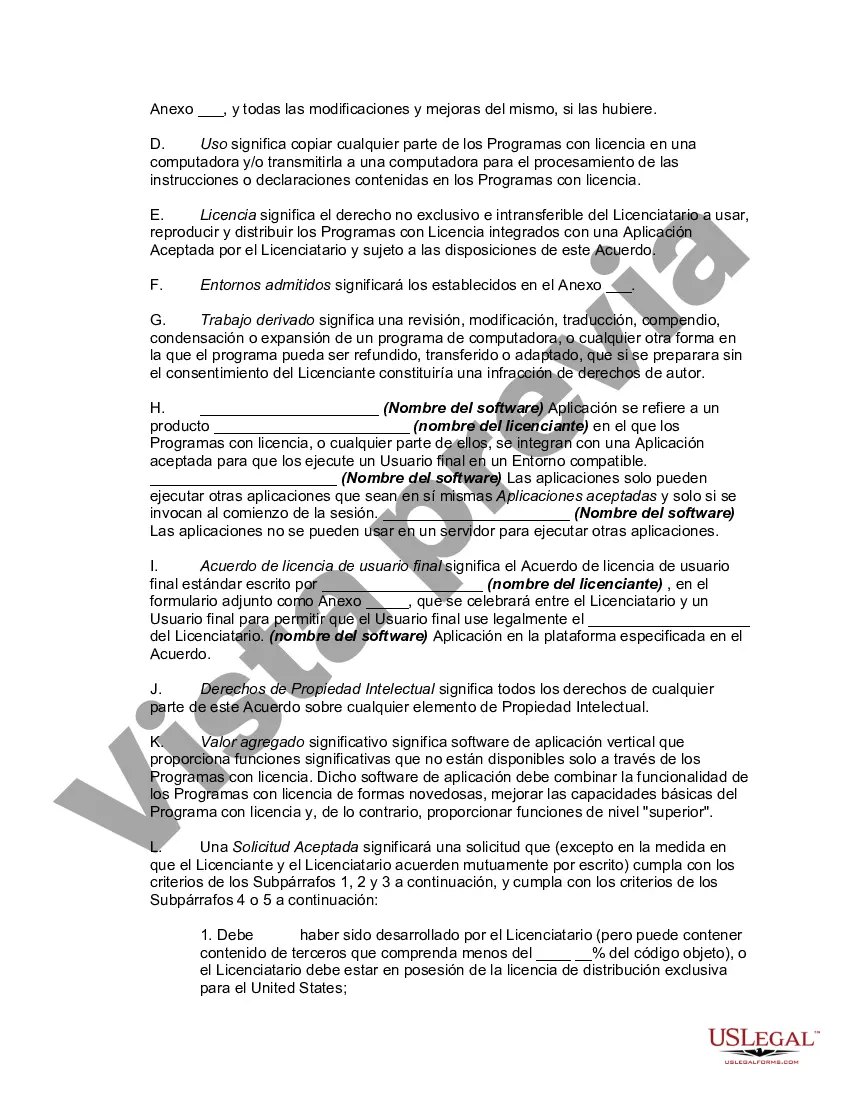
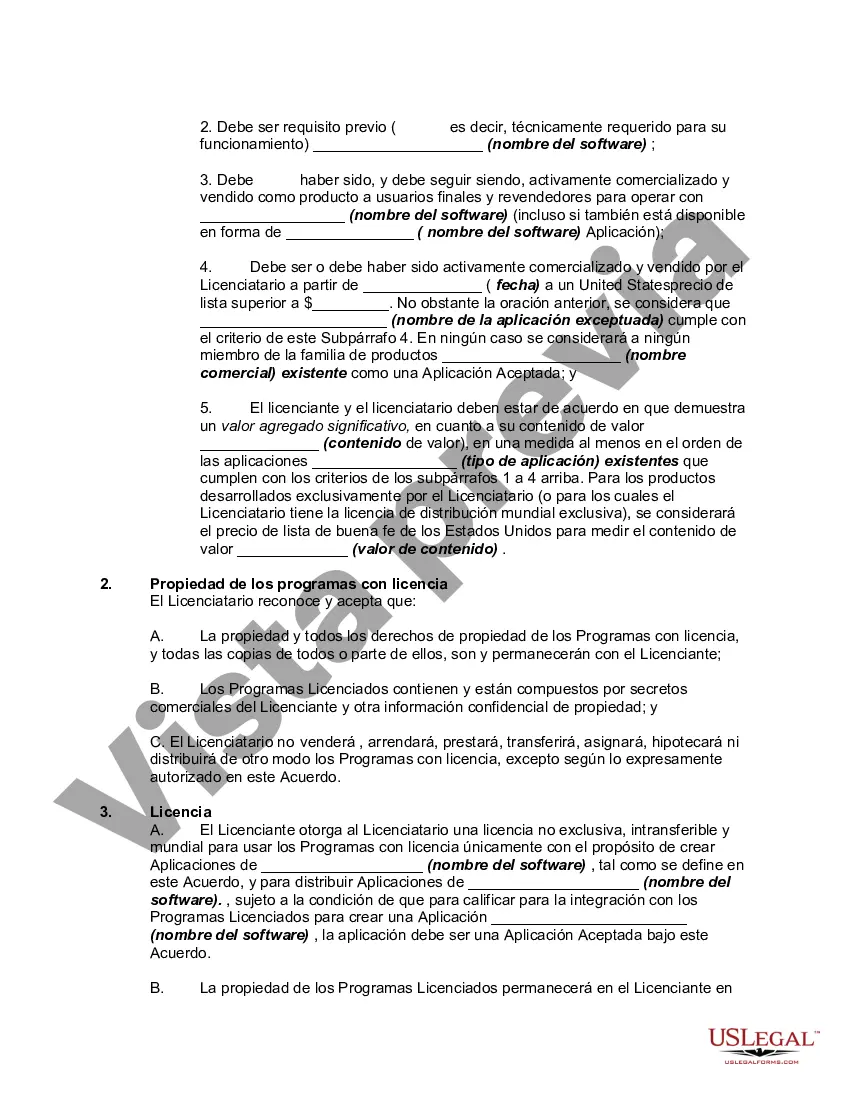
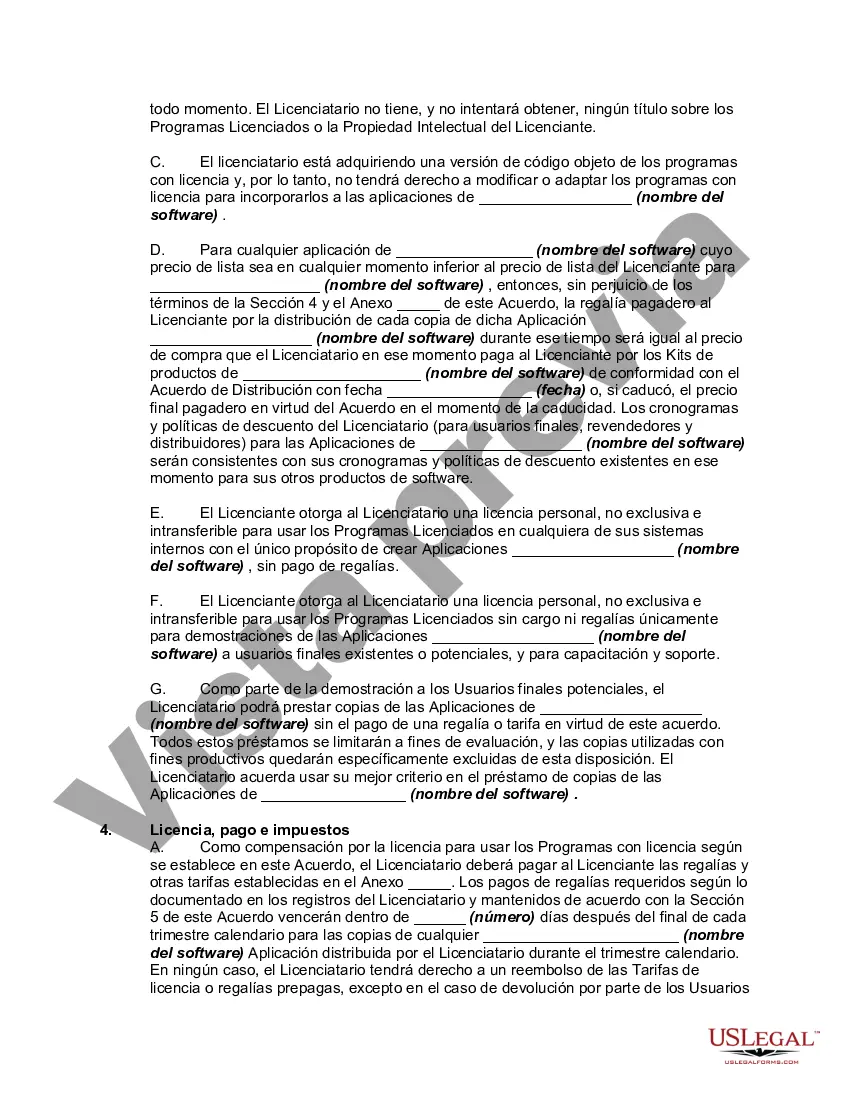
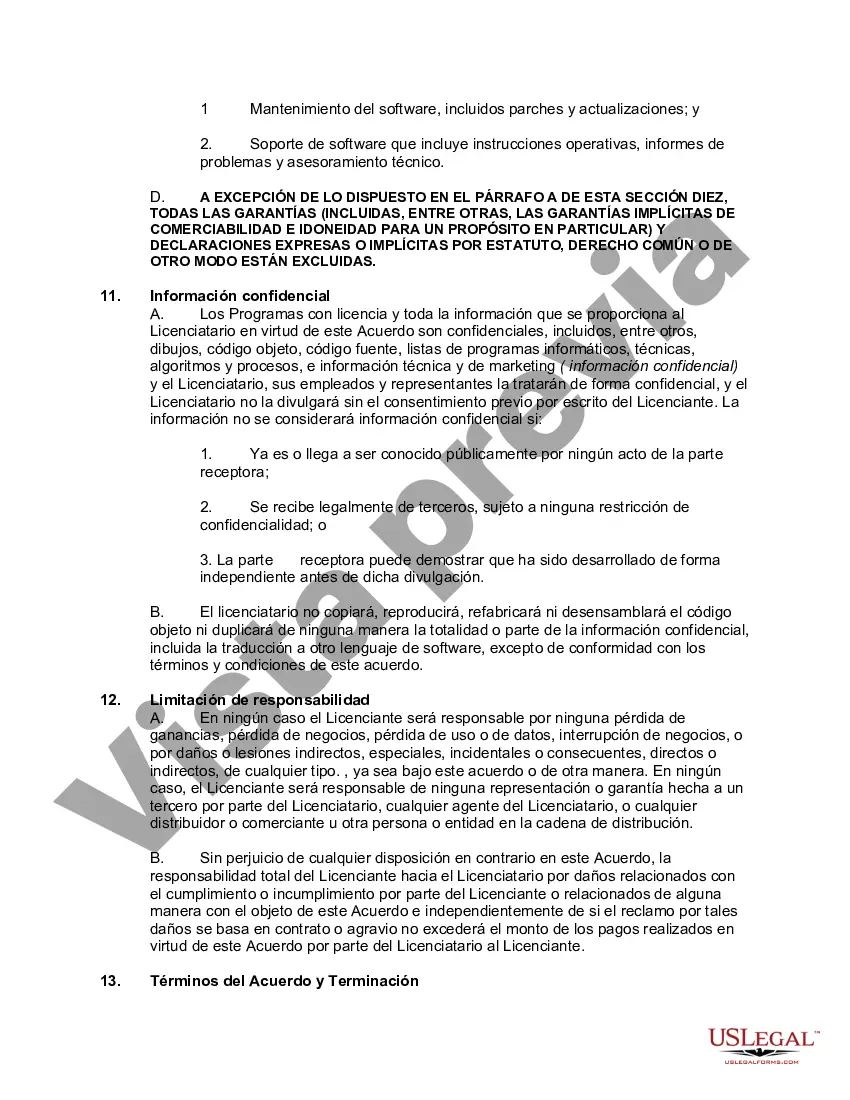
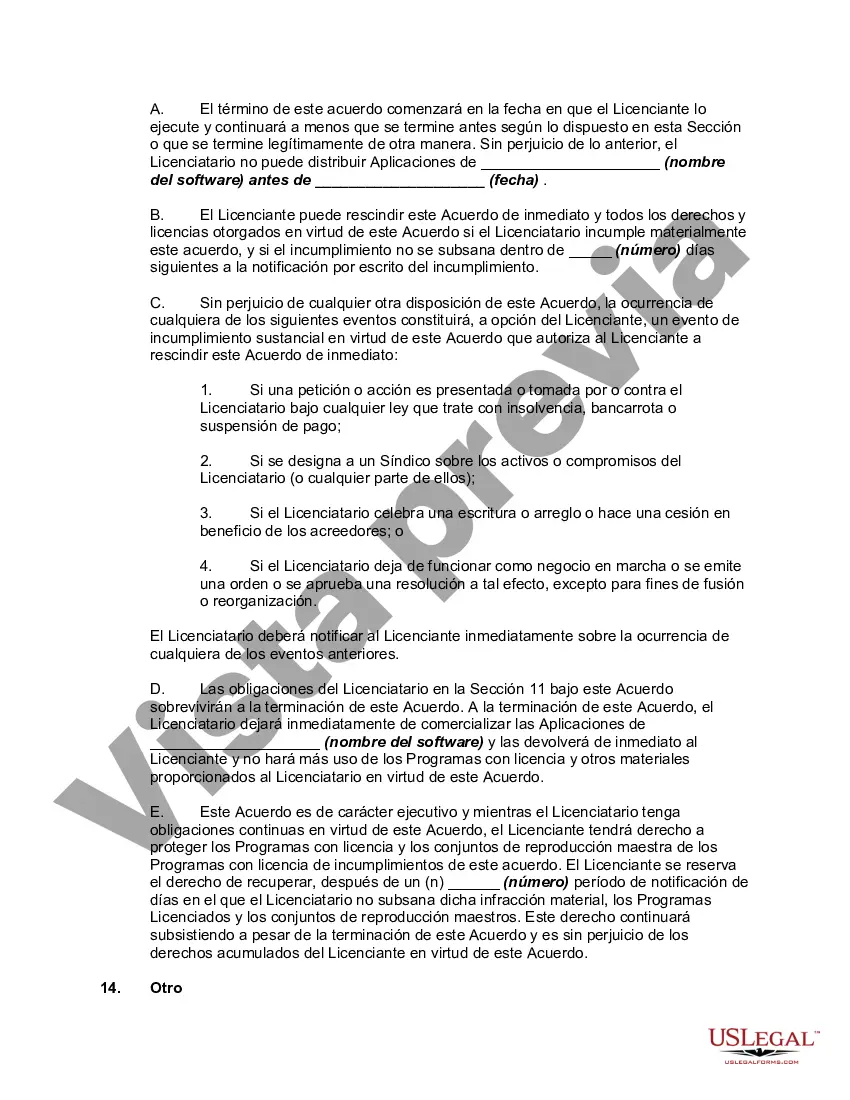
A licensing agreement is a legal contract between two parties, known as the licensor and the licensee. In a typical licensing agreement, the licensor grants the licensee the right to, in this case, to use patented technology owned by the licensor. In exchange, the licensee usually submits to a series of conditions regarding the use of the licensor's property and agrees to make payments known as royalties.
Para su conveniencia, debajo del texto en español le brindamos la versión completa de este formulario en inglés.
For your convenience, the complete English version of this form is attached below the Spanish version.
If something seems off with your software license, it’s best to reach out to the vendor’s customer support. They can help clear up the confusion and get you back on track.
You bet! There are various types like commercial licenses, open-source licenses, and freeware. Each type comes with its own set of rules and freedoms, so know what you’re signing up for.
It depends on the software's terms. Some licenses allow transfers, while others don’t budge on that. Always read the fine print before making a move.
If you use software without a license, you might run into some hot water. You could face fines or legal action. Better safe than sorry, right?
Usually, you can get a software license by purchasing it from the software provider or supplier. Once you buy it, you'll receive a license key or an agreement to follow.
A software license agreement in Cincinnati is a legal contract that allows you to use a software application according to certain terms and conditions. Think of it as the rulebook for using the program.
Trusted and secure by over 3 million people of the world’s leading companies