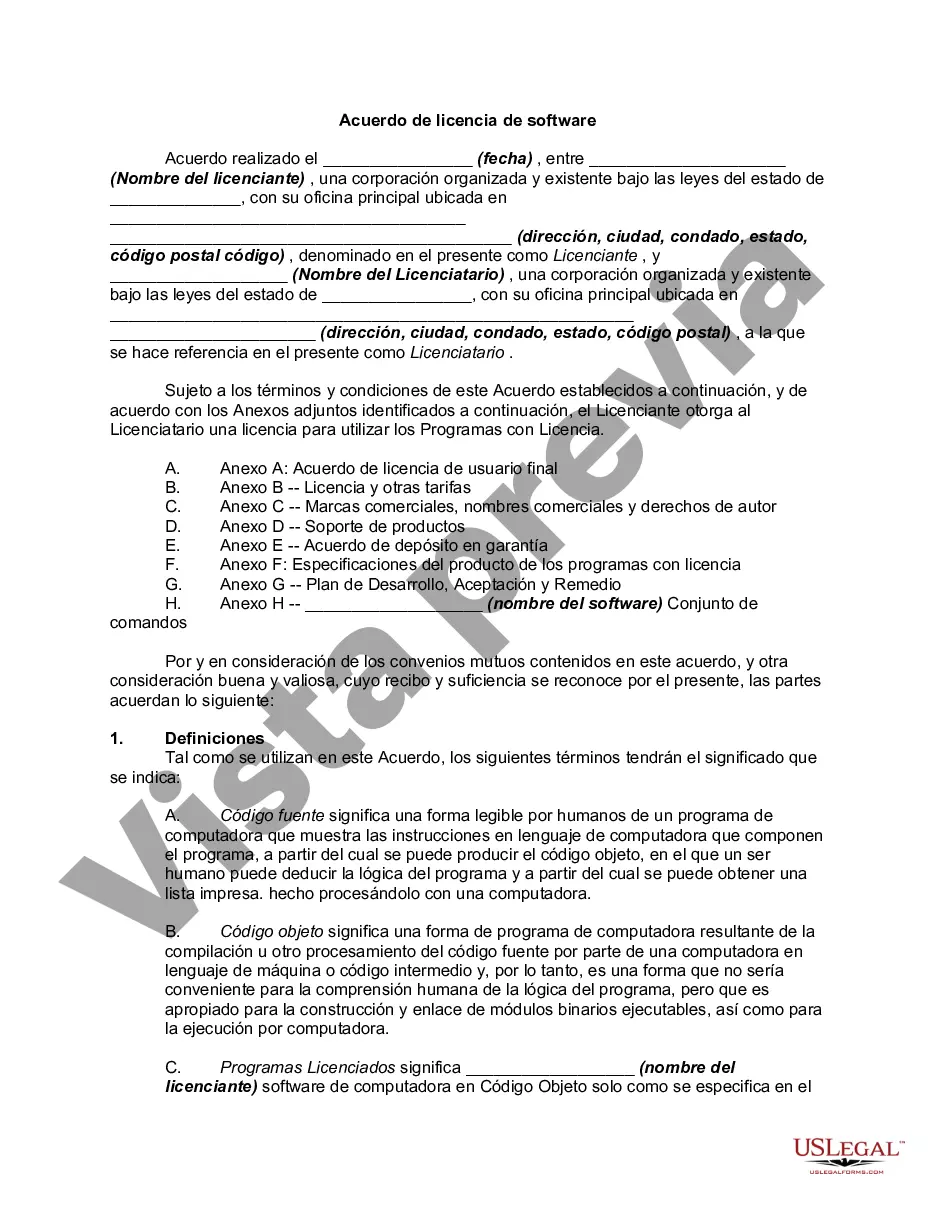
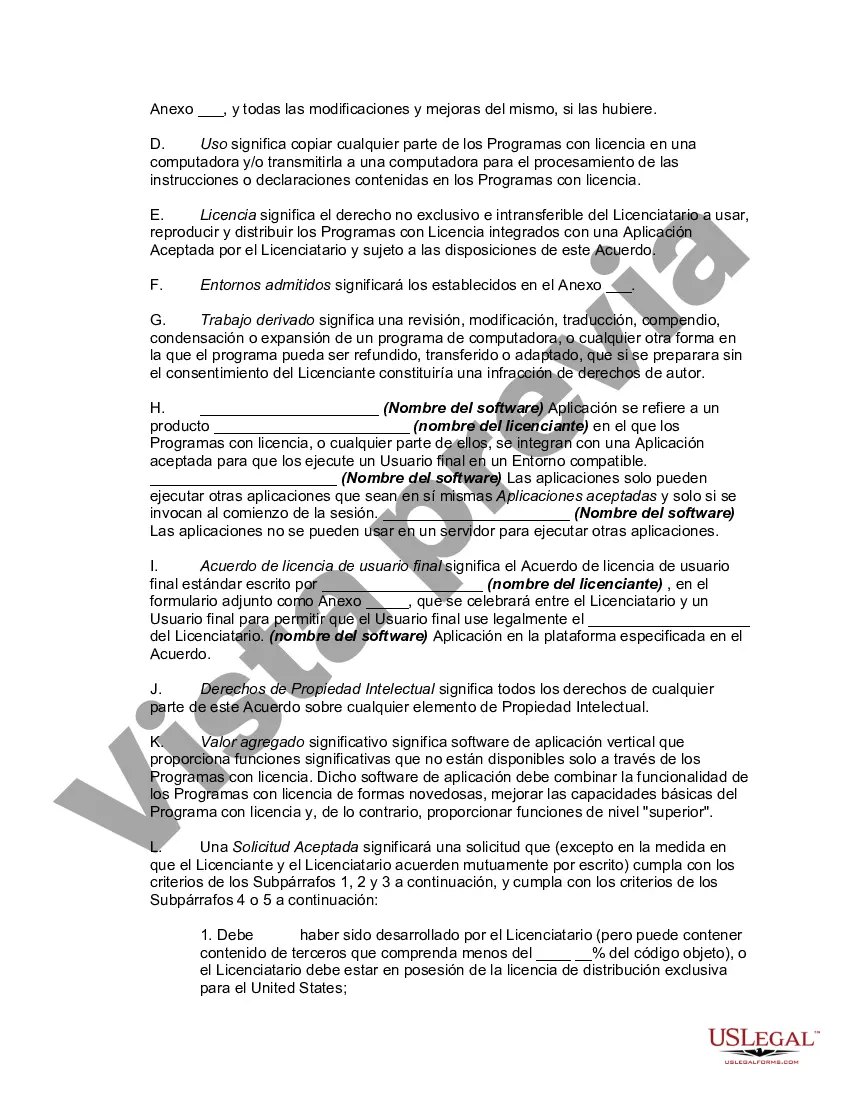
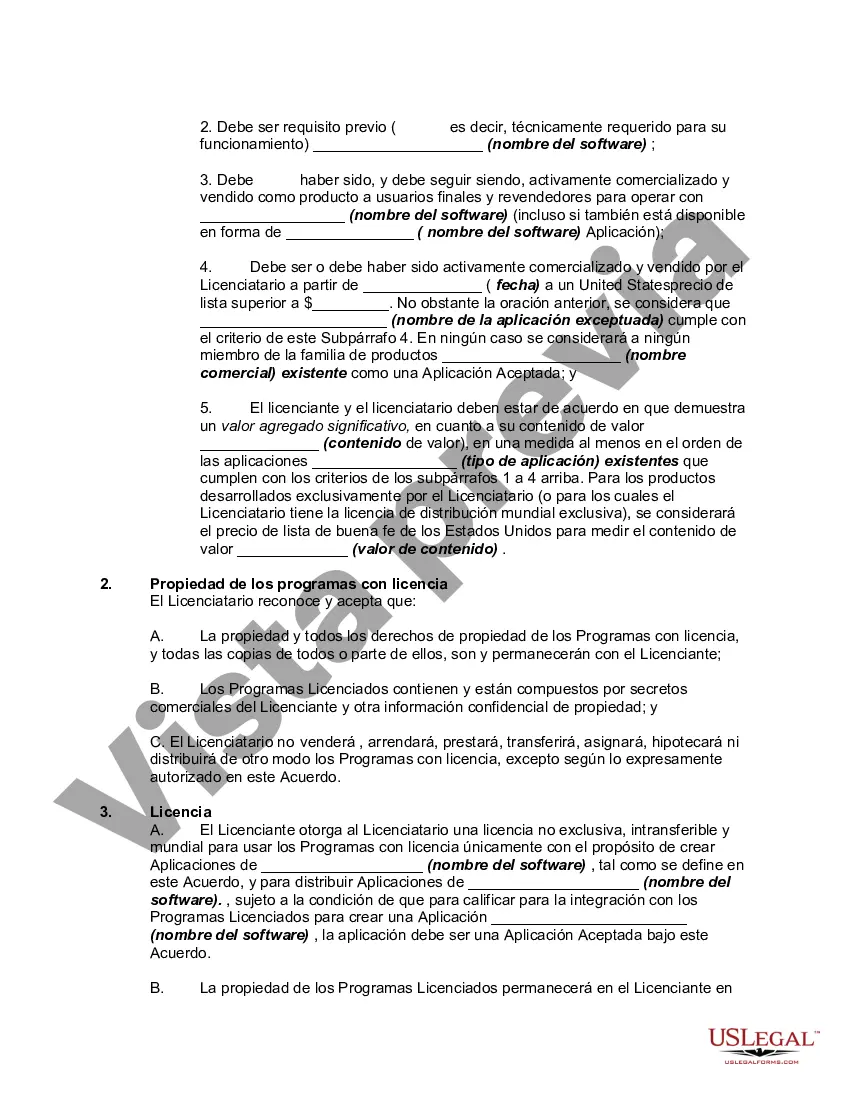
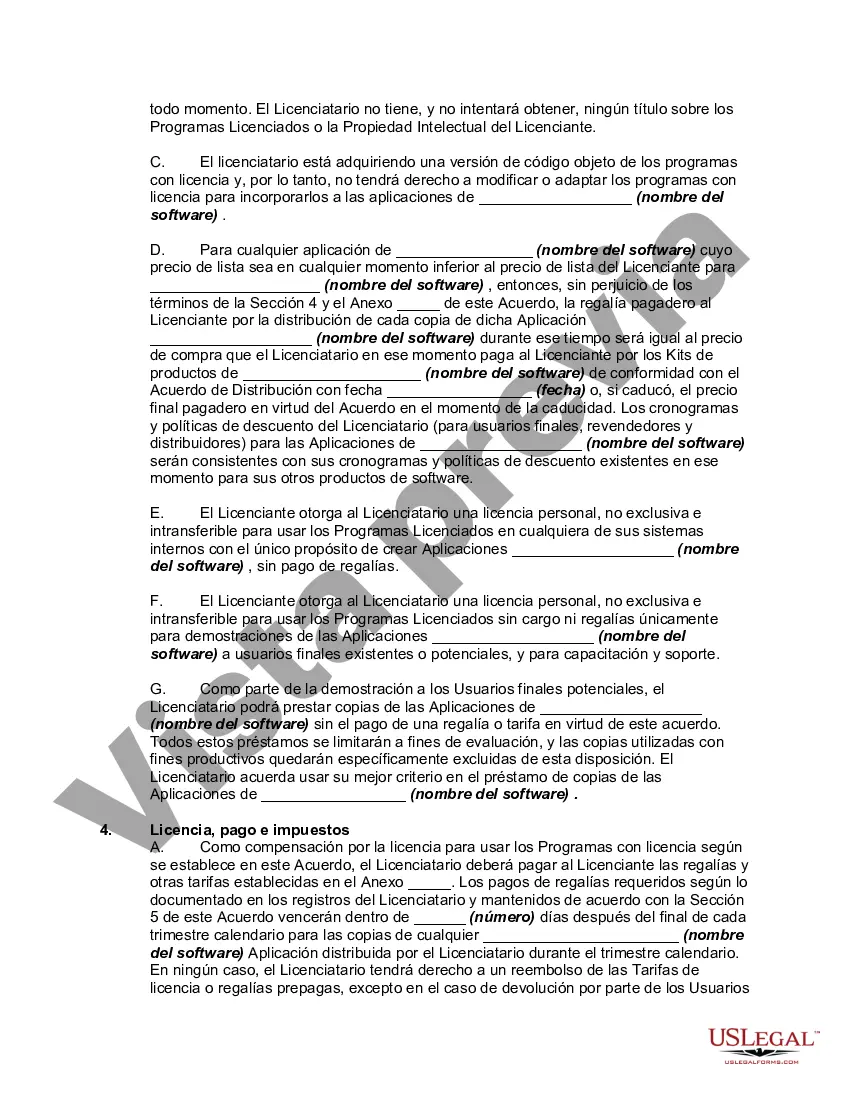
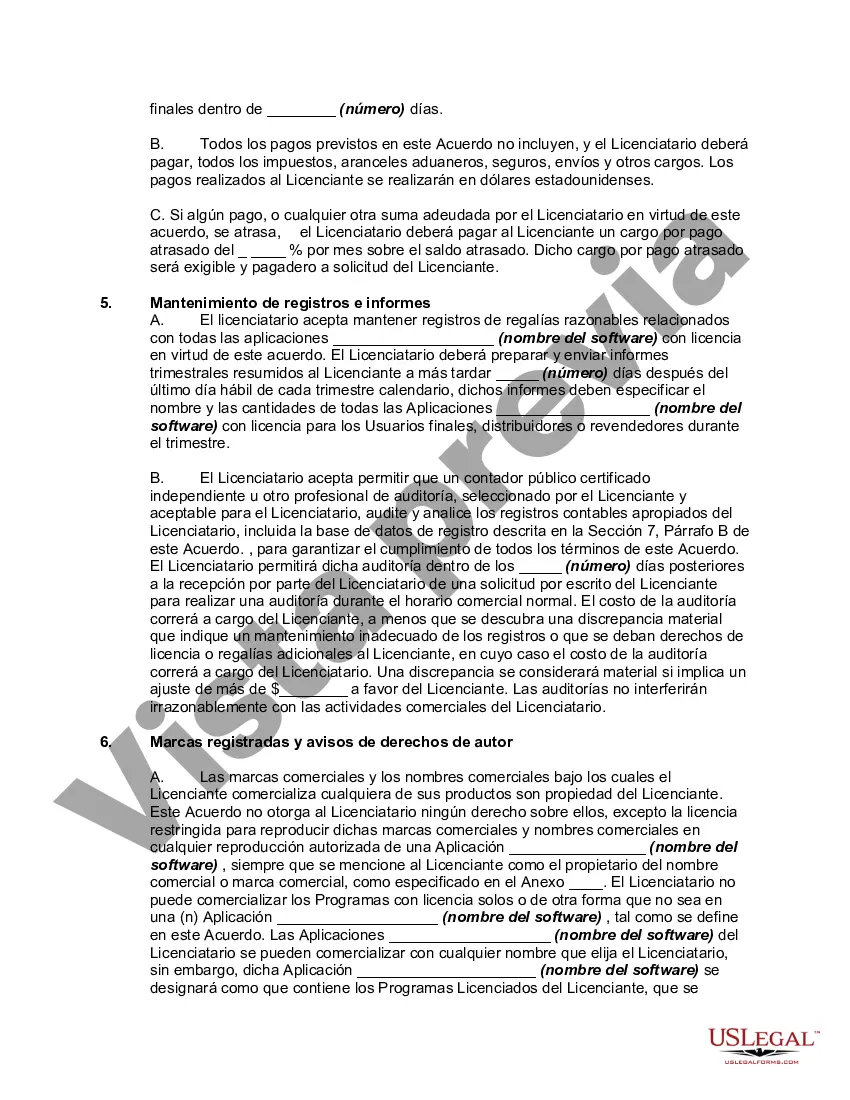
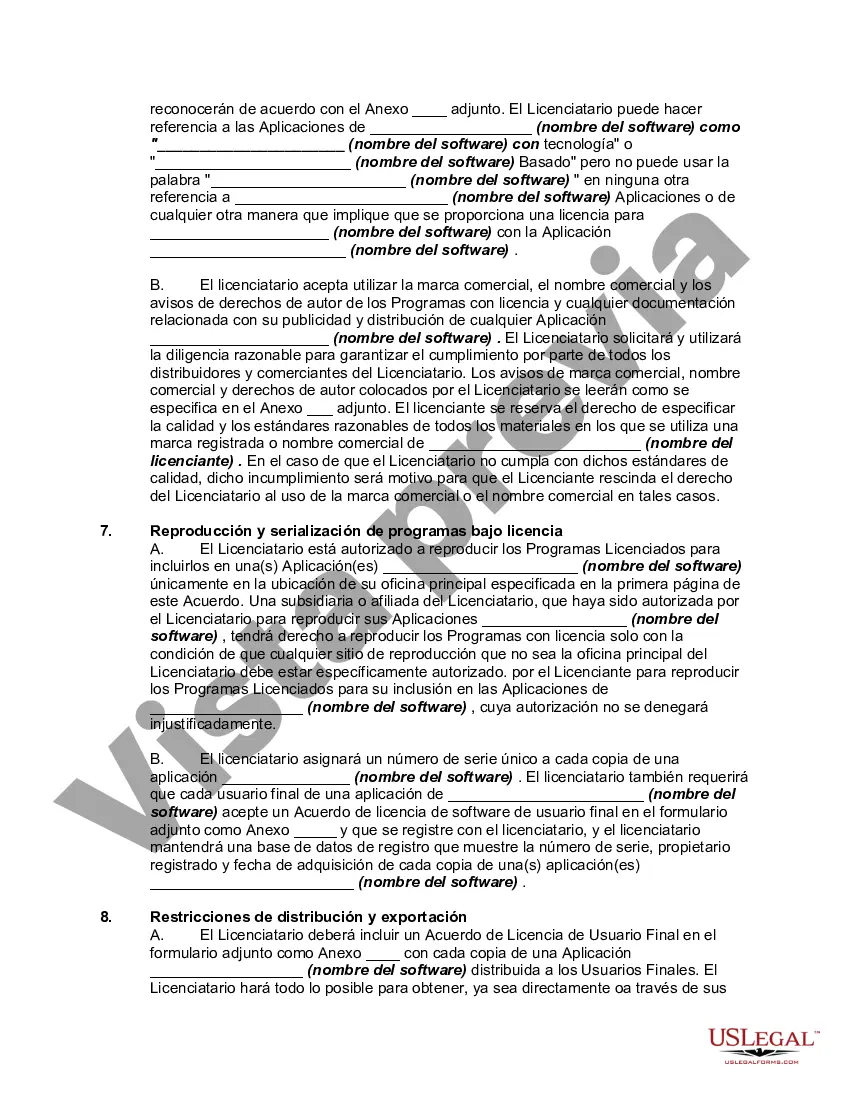
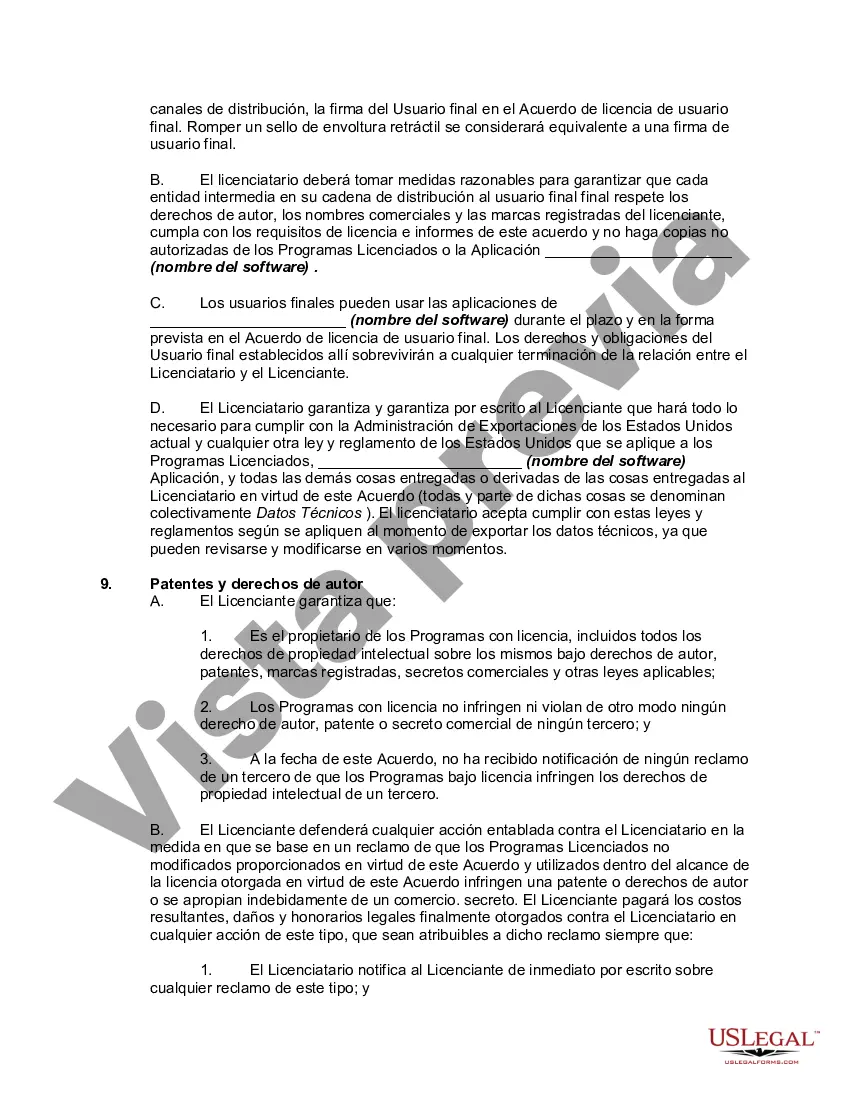
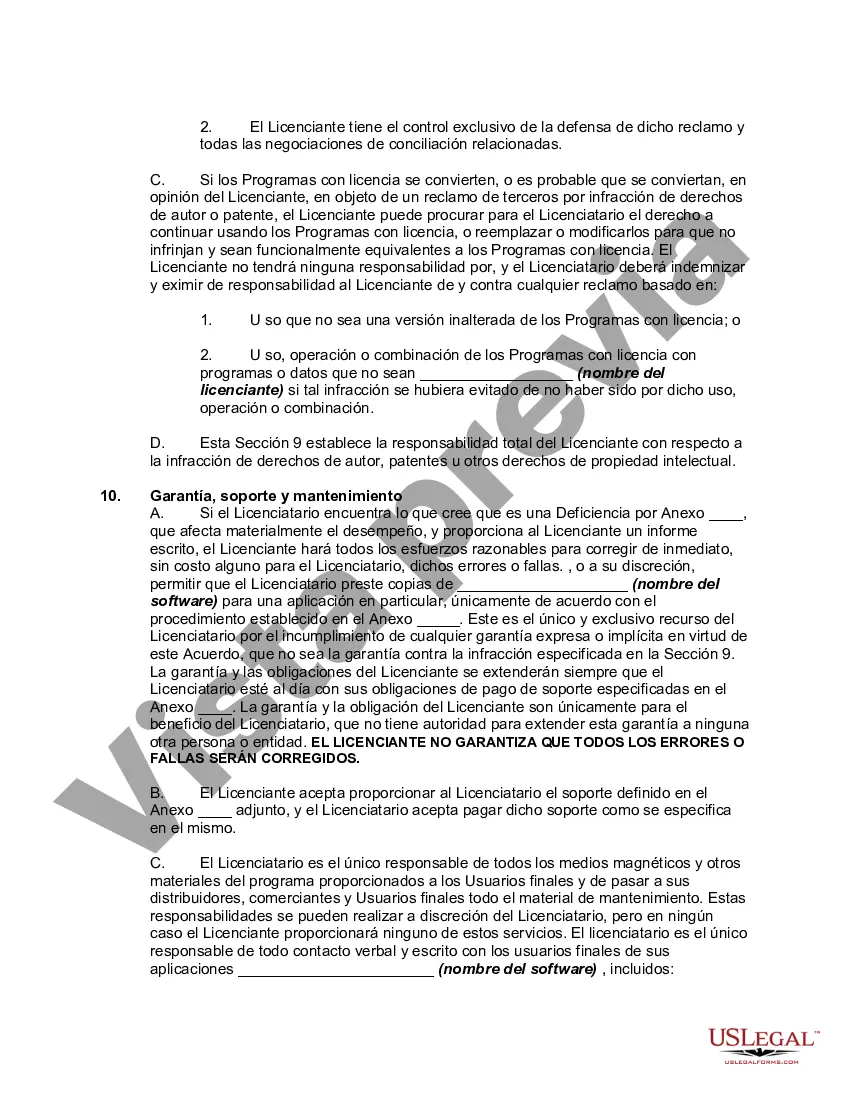
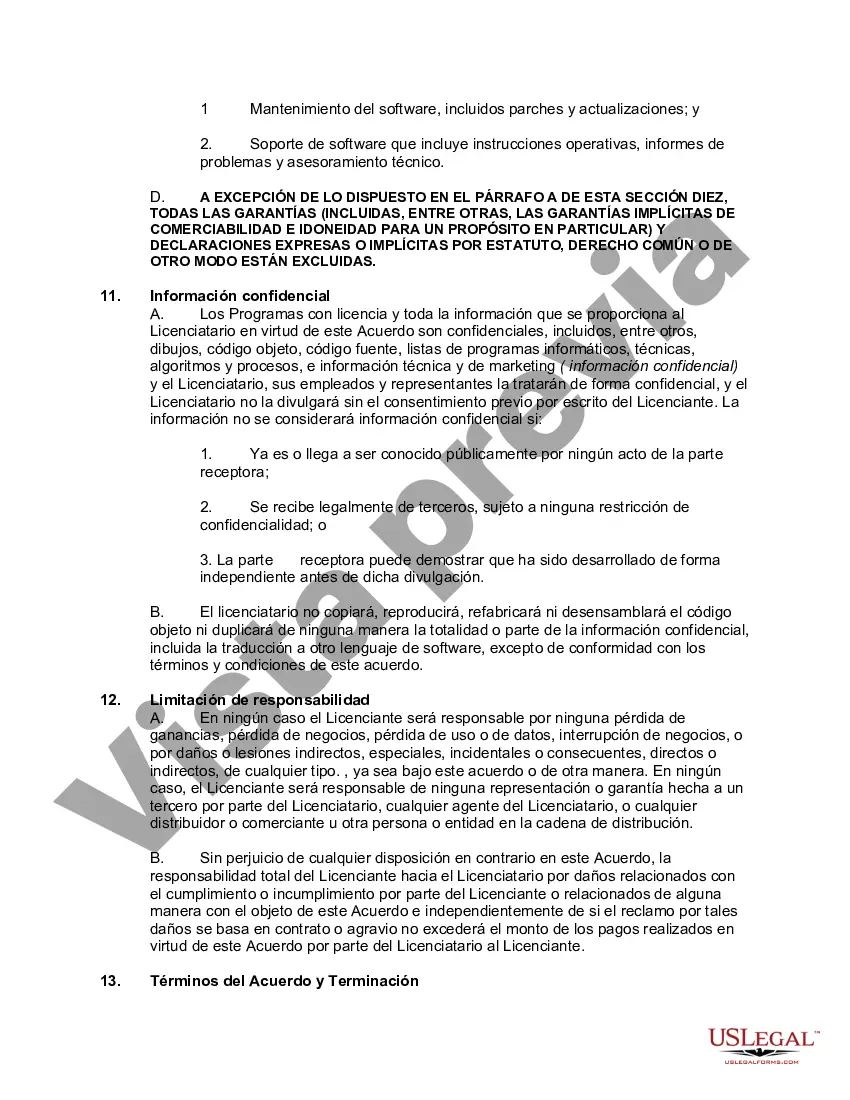
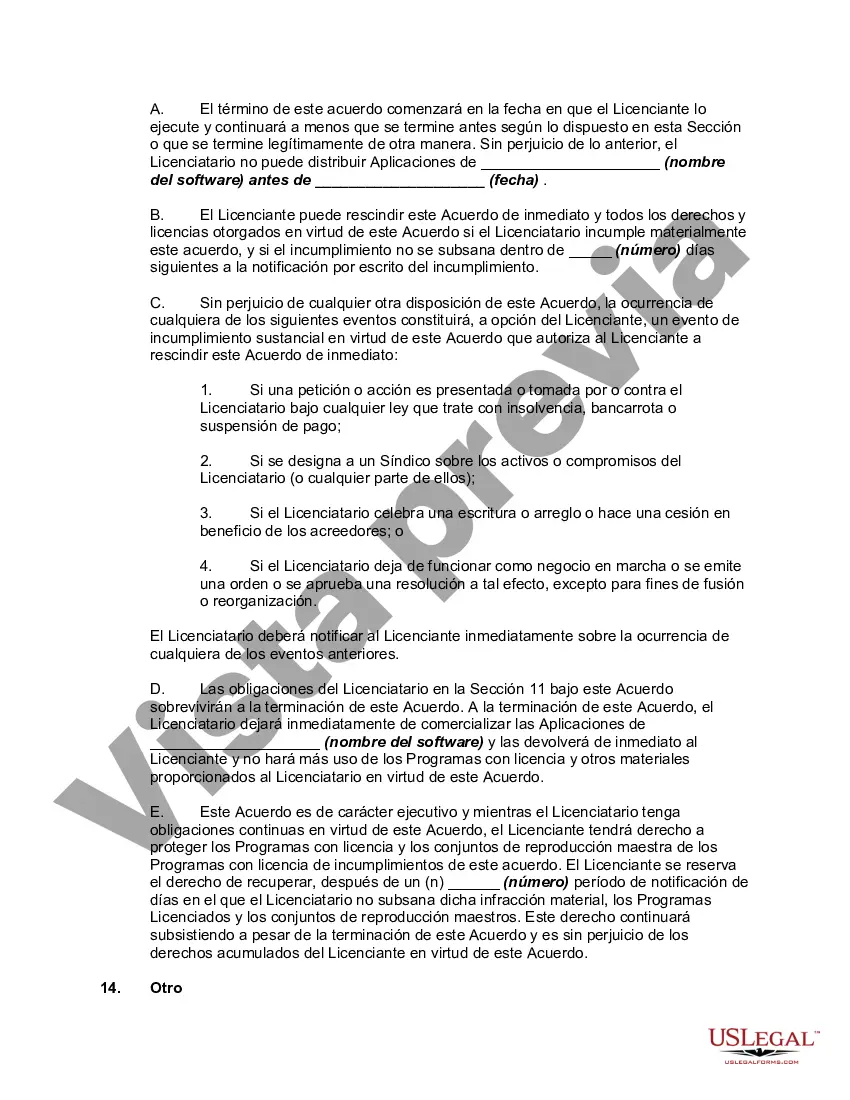
A licensing agreement is a legal contract between two parties, known as the licensor and the licensee. In a typical licensing agreement, the licensor grants the licensee the right to, in this case, to use patented technology owned by the licensor. In exchange, the licensee usually submits to a series of conditions regarding the use of the licensor's property and agrees to make payments known as royalties.
Para su conveniencia, debajo del texto en español le brindamos la versión completa de este formulario en inglés.
For your convenience, the complete English version of this form is attached below the Spanish version.
While it's possible to draft a License Agreement on your own, consulting a lawyer can help ensure that everything is legal and protects your interests properly.
If someone breaks the terms of the License Agreement, the other party can take legal action. This might include seeking damages or putting an end to the agreement.
Yes, but modifications usually require mutual consent from all parties involved. It's best to have any changes documented in writing to keep everything above board.
The validity of a License Agreement can vary; it might last for a specific time period, like a year, or it could be indefinite. It all depends on what you and the other party agree upon.
Your License Agreement should cover the intended use of the software, any restrictions, and liability clauses. It's wise to lay everything out clearly so there's no confusion down the road.
If you're a developer or a business that creates software, or if you're using someone else's software, you likely need a License Agreement to protect your rights and clarify your responsibilities.
A License Agreement for Software in Aurora is a legal document that outlines the terms under which software can be used or distributed. It explains what rights the user has and what they cannot do with the software.
Trusted and secure by over 3 million people of the world’s leading companies