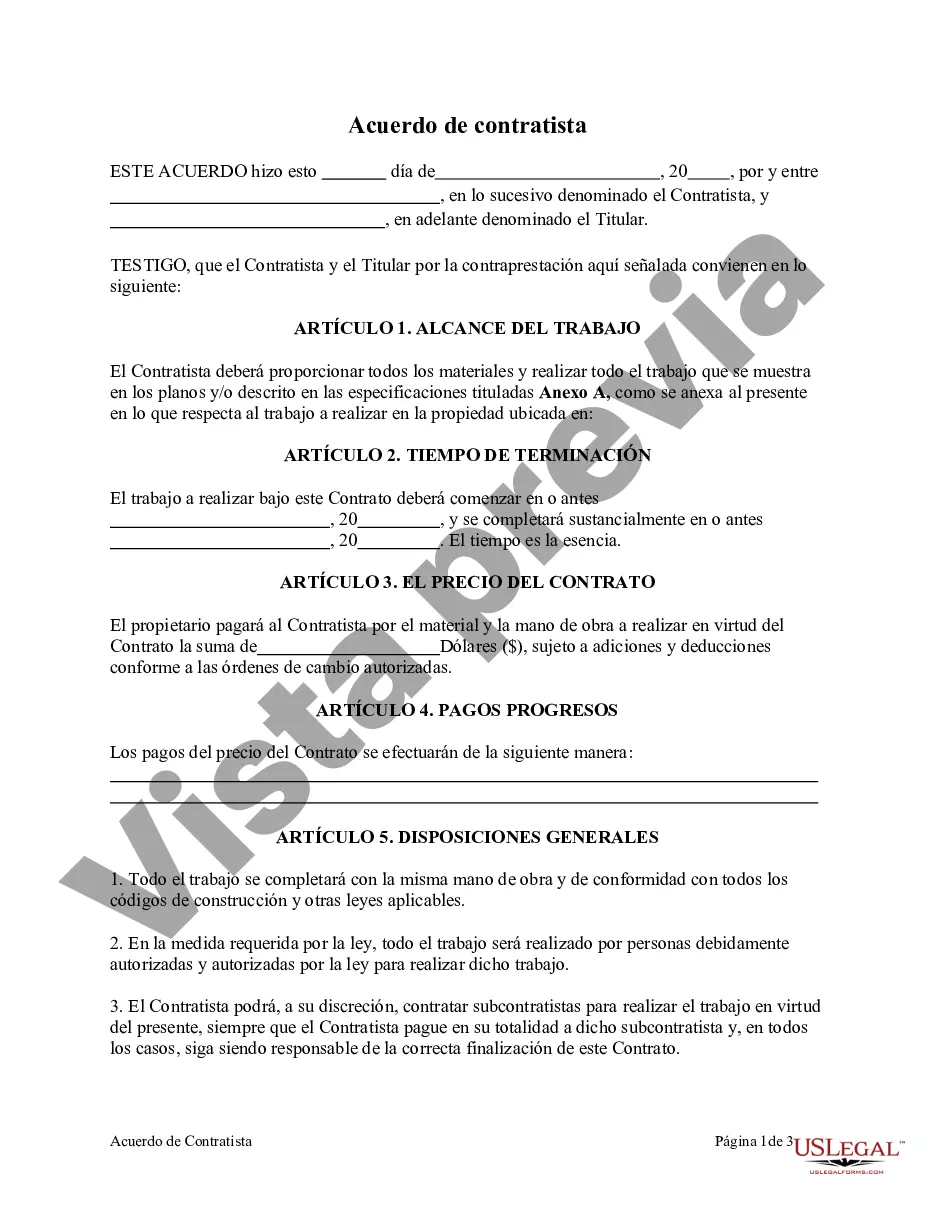
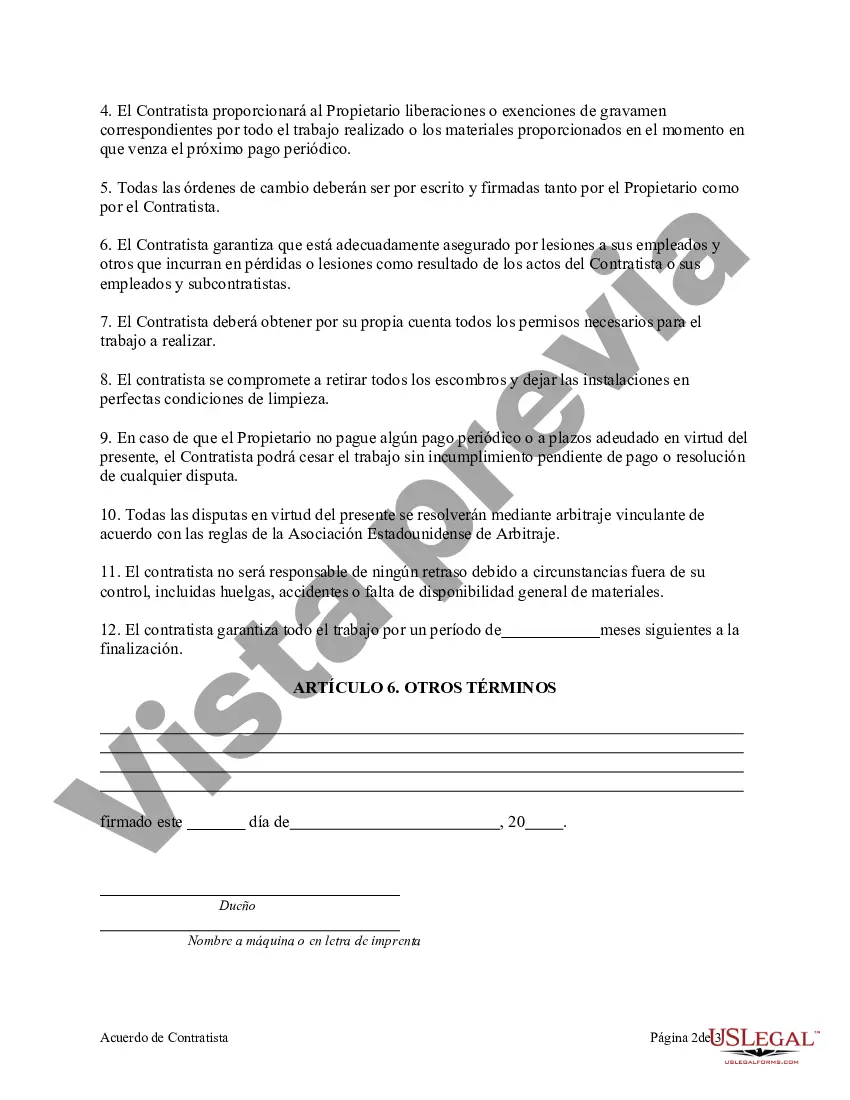
Gilbert Arizona Acuerdo de contratista - Contractor Agreement
Category:
State:
Multi-State
City:
Gilbert
Control #:
US-0235BG
Format:
Word
Instant download
Description
A general contractor is a manager employed by the client sometimes on the advice of an architect or engineer. A general contractor is responsible for the overall coordination of a project. A general contractor must first assess the project-specific documents (referred to as bid, proposal or tender documents). In the case of renovations, a site visit is required to get a better understanding of the project. Depending on the project delivery method, the contractor will submit a fixed price proposal or bid, cost plus price or an estimate. The general contractor considers the cost of home office overhead, general conditions, materials and equipment as well as the cost of labor to provide the owner with a price for the project.
Para su conveniencia, debajo del texto en español le brindamos la versión completa de este formulario en inglés.
For your convenience, the complete English version of this form is attached below the Spanish version.
Free preview