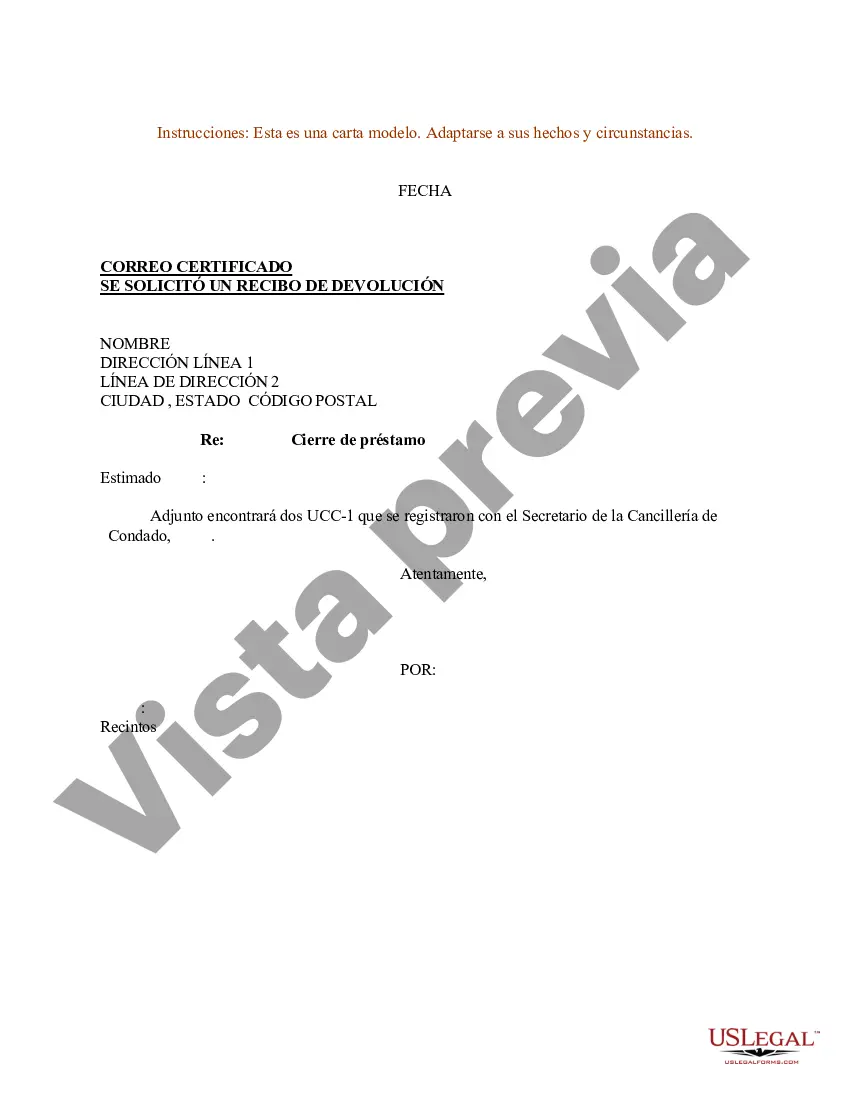
Miami-Dade Florida UCC-1 para Crédito Personal - UCC-1 for Personal Credit
Description
Get your form ready online
Our built-in tools help you complete, sign, share, and store your documents in one place.
Make edits, fill in missing information, and update formatting in US Legal Forms—just like you would in MS Word.
Download a copy, print it, send it by email, or mail it via USPS—whatever works best for your next step.
Sign and collect signatures with our SignNow integration. Send to multiple recipients, set reminders, and more. Go Premium to unlock E-Sign.
If this form requires notarization, complete it online through a secure video call—no need to meet a notary in person or wait for an appointment.
We protect your documents and personal data by following strict security and privacy standards.

Make edits, fill in missing information, and update formatting in US Legal Forms—just like you would in MS Word.

Download a copy, print it, send it by email, or mail it via USPS—whatever works best for your next step.

Sign and collect signatures with our SignNow integration. Send to multiple recipients, set reminders, and more. Go Premium to unlock E-Sign.

If this form requires notarization, complete it online through a secure video call—no need to meet a notary in person or wait for an appointment.

We protect your documents and personal data by following strict security and privacy standards.
Looking for another form?

Form popularity
FAQ
Take the certified copy of your Final Judgment to the Recording Division of the Clerk's office at 501 E. Kennedy Blvd. in Tampa. Ask the clerk to record the judgment.
Liens are valid for five years from the original filing date. Florida law allows judgment liens to be filed a second time to extend the lien's validity five more years. (See s. 55.201-55.209, F.S.)
What Happens If You Have a Judgement Against You in Florida? After a judgment is entered against you, the judgment creditor can garnish your bank account and wages, require you to reveal all assets belonging to you, and place a lien on any non-homestead property.
The sheriff's department can seize: Personal property: movable things (e.g., cars, horses, boats, furniture, jewelry) owned by the debtor. Real property: land and buildings owned by the debtor.
As a judgment creditor, you can have a lien placed on the Defendant's property which may prevent him or her from selling the property without paying the judgment. You can also have the sheriff seize and sell any non-exempt property the Defendant owns, garnish non-exempt wages, or take non-exempt bank accounts, etc.
A final judgment issued by a court establishes that the court has determined one party to be the winner and usually entitled to some amount of money. While the judgment itself does not require payment of money it allows the holder of the judgment to use the court's power to get money or property.
Take the certified copy of your judgment to the Clerk's Office of the Circuit Court, Recording Section, 22 NW 1st Street, Miami, Florida, and have it recorded. How much does it cost to record the judgment? The cost is $10 for the first page and $8.50 for each additional page.
If you want to have your final judgment entered as a lien against a real property owned by the defendant, you must obtain a certified copy at the location where your case was heard and then have it recorded at County Recorder's Office.
How long does a judgment lien last in Florida? A judgment lien in Florida will remain attached to the debtor's property (even if the property changes hands) for ten years (real estate lien) or five years (personal property lien).
You can also contact the Florida Bar at 1-800-342-8011. Step 1: Certify Your Judgment: What is the very first thing I need to do? You must obtain a certified copy of your final judgment at the Courthouse location where your case was heard.