Wichita Agreement of Combination
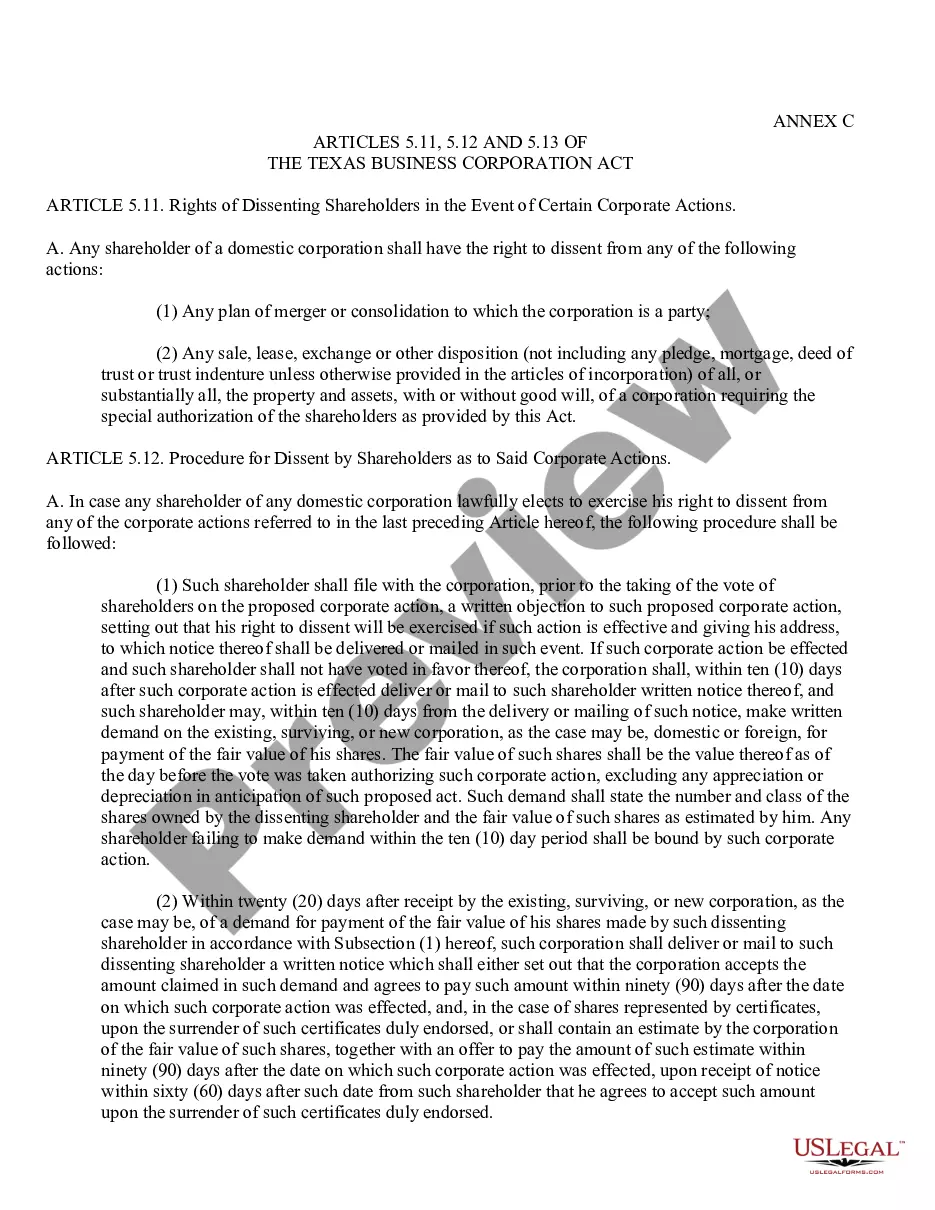
Anaheim Articles 5.11, 5.12 and 5.13 of Texas Business Corporation Act
Anchorage Articles 5.11, 5.12 and 5.13 of Texas Business Corporation Act
Atlanta Articles 5.11, 5.12 and 5.13 of Texas Business Corporation Act
Austin Articles 5.11, 5.12 and 5.13 of Texas Business Corporation Act
Hunting Lease Agreement - Land
Acuerdo de desarrollo de sitio web orientado al usuario
Pet Adoption Consideration Questionnaire
Complaint For Declaratory Judgment, Temporary Restraining Order, Preliminary and Permanent Injunction From Enforcement Of County Hog farming Ordinances
Ejemplos de procedimientos de recuperación ante desastres
Acuerdo de no divulgación y confidencialidad - Compra potencial
Contrato de Instalación y Mantenimiento de Redes Informáticas
Solicitud de equipo de software
Demanda de Defensa - Formulario de Resolución - Resoluciones Corporativas
Discovery Interrogatories from Defendant to Plaintiff with Production Requests
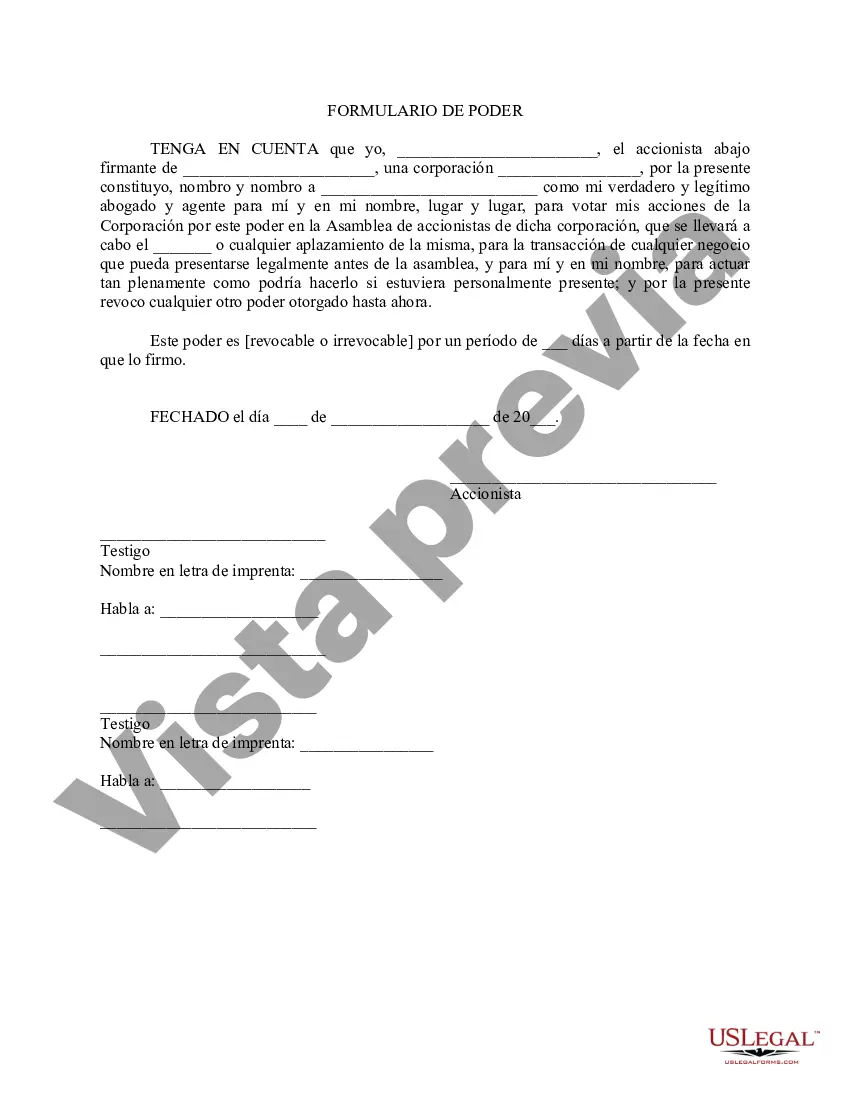
Yes indeed! You can lay out the ground rules and specify what powers you want to give your proxy, ensuring they stick to your wishes.
Not at all! Setting up either type of proxy is usually straightforward and can often be done with a simple form and your signature.
Generally, you'll need to be of legal age and mentally capable. Just make sure your document is clear and meets California's legal standards.
Absolutely! If you have a revocable proxy, you can pull the plug anytime you want without any fuss.
Choosing a revocable proxy gives you flexibility. If circumstances shift, you can change your representative without any hassle.
With an irrevocable proxy, once you hand over the voting power, you can't change your mind. It's like passing the baton and not taking it back.
A revocable proxy allows you to appoint someone to vote on your behalf, but you can change your mind anytime and take that power back.