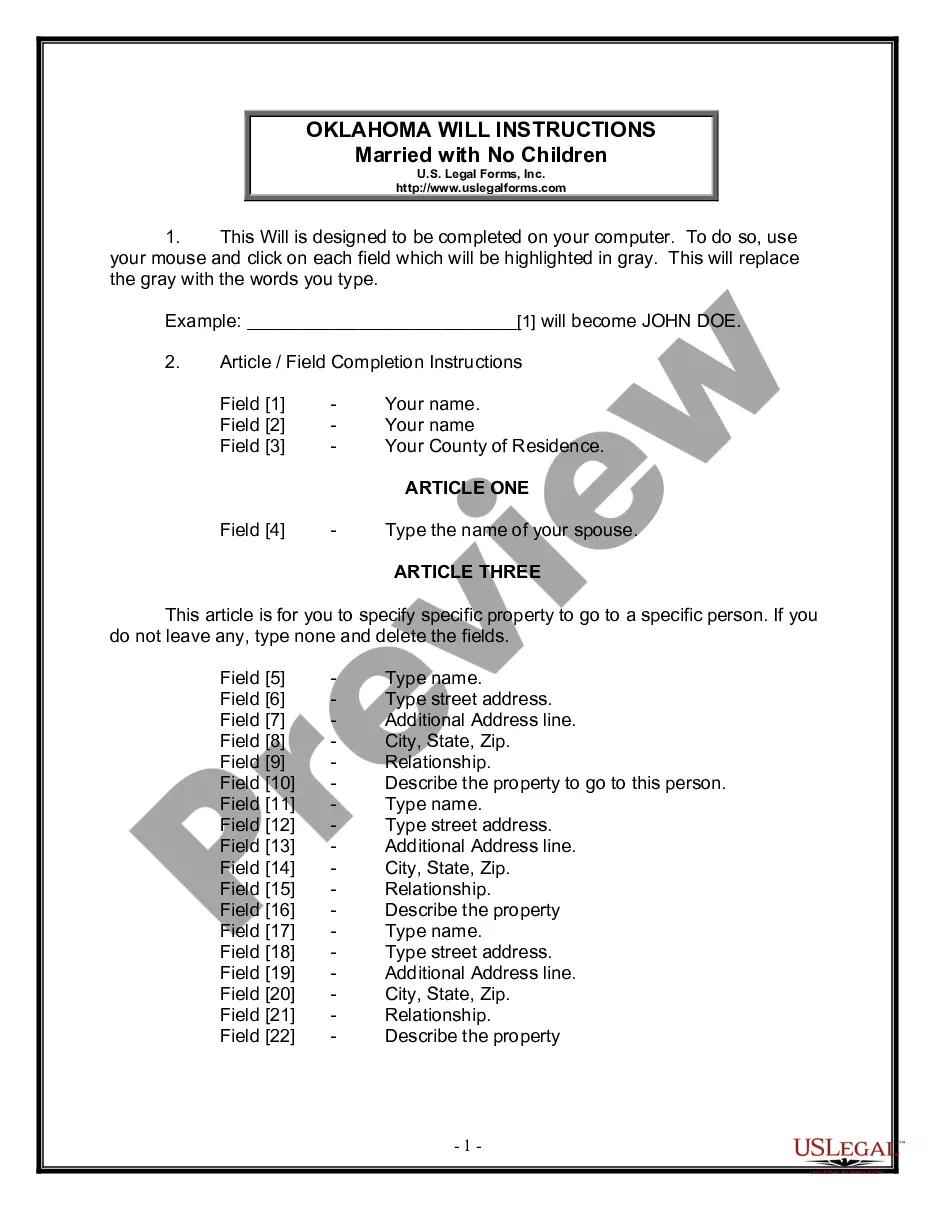
Surface Lease Agreement
What this document covers
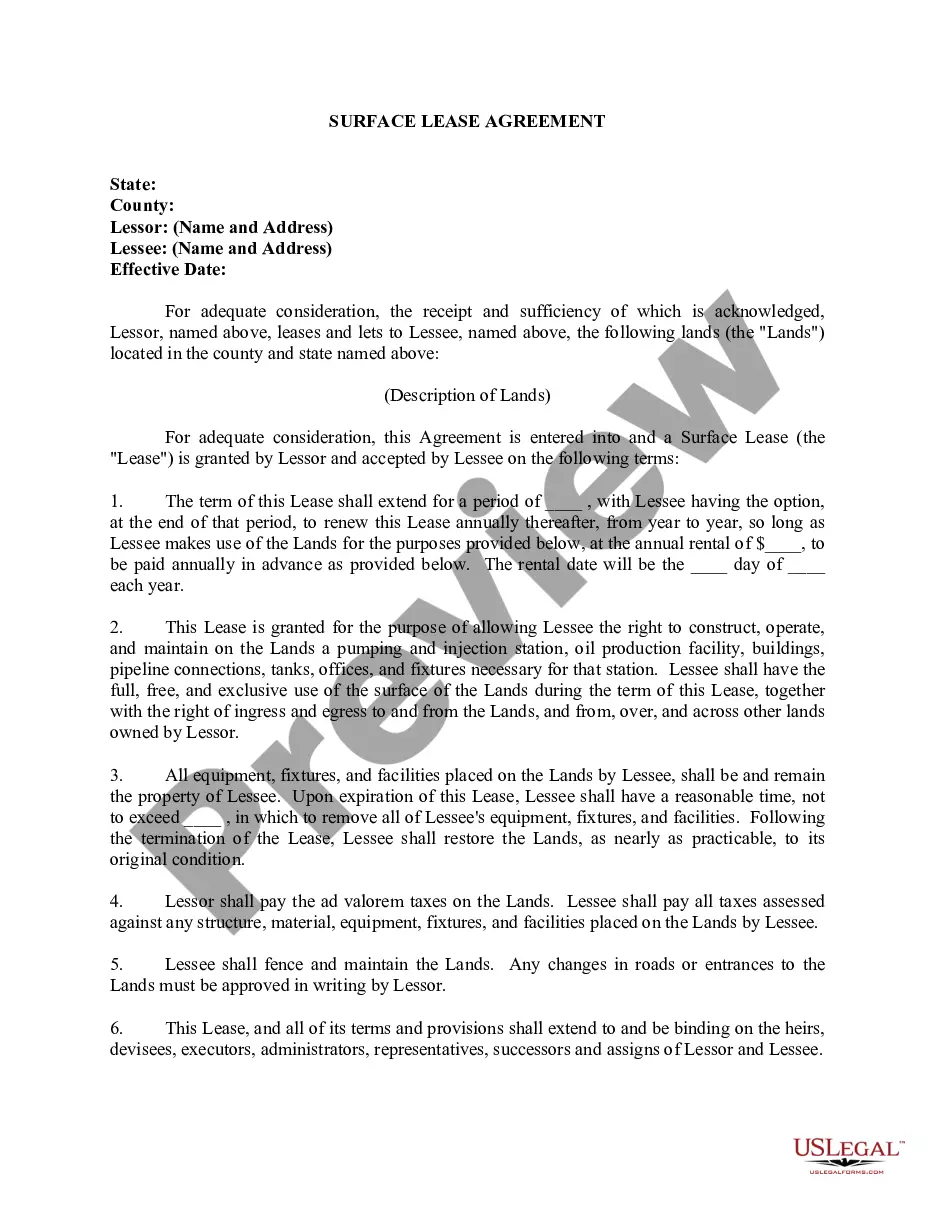
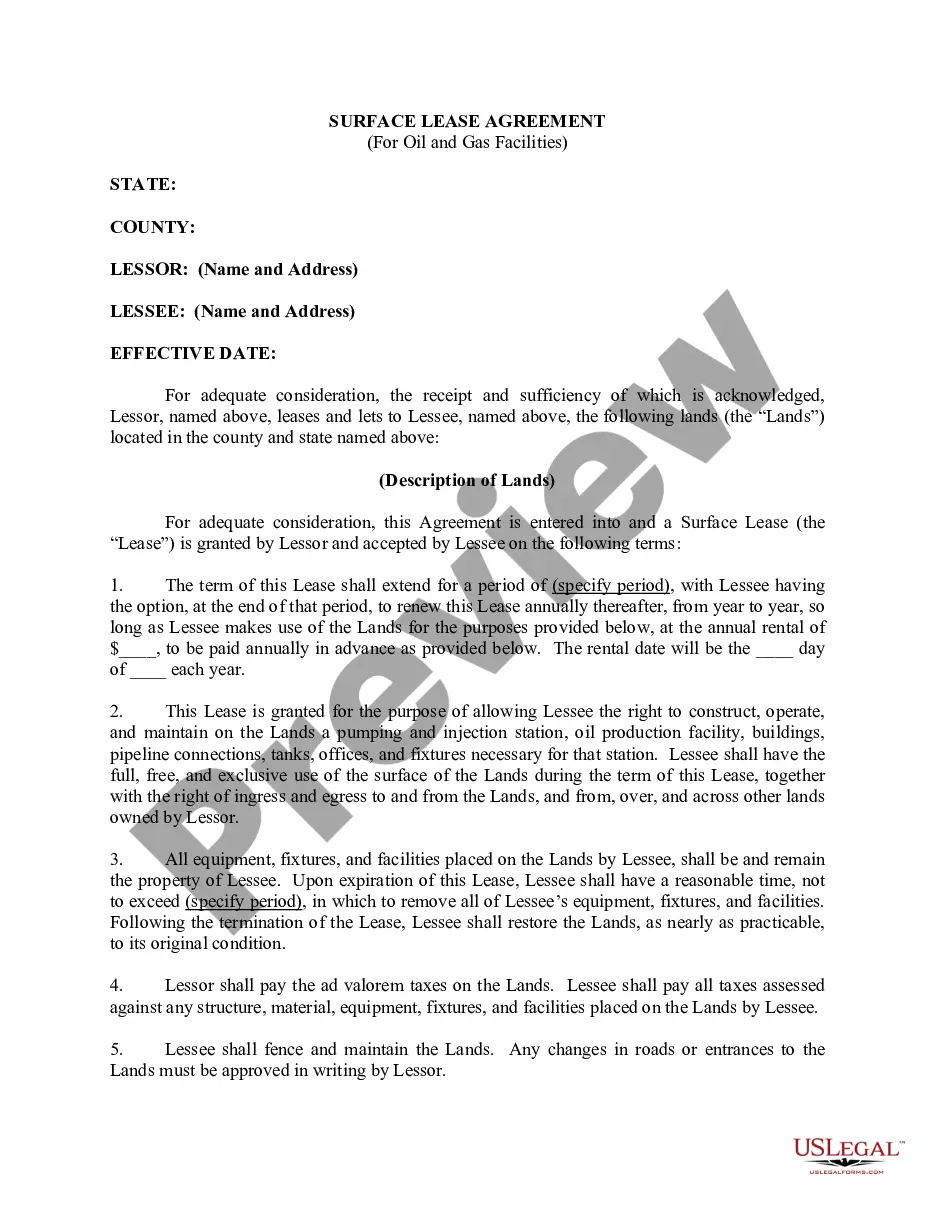
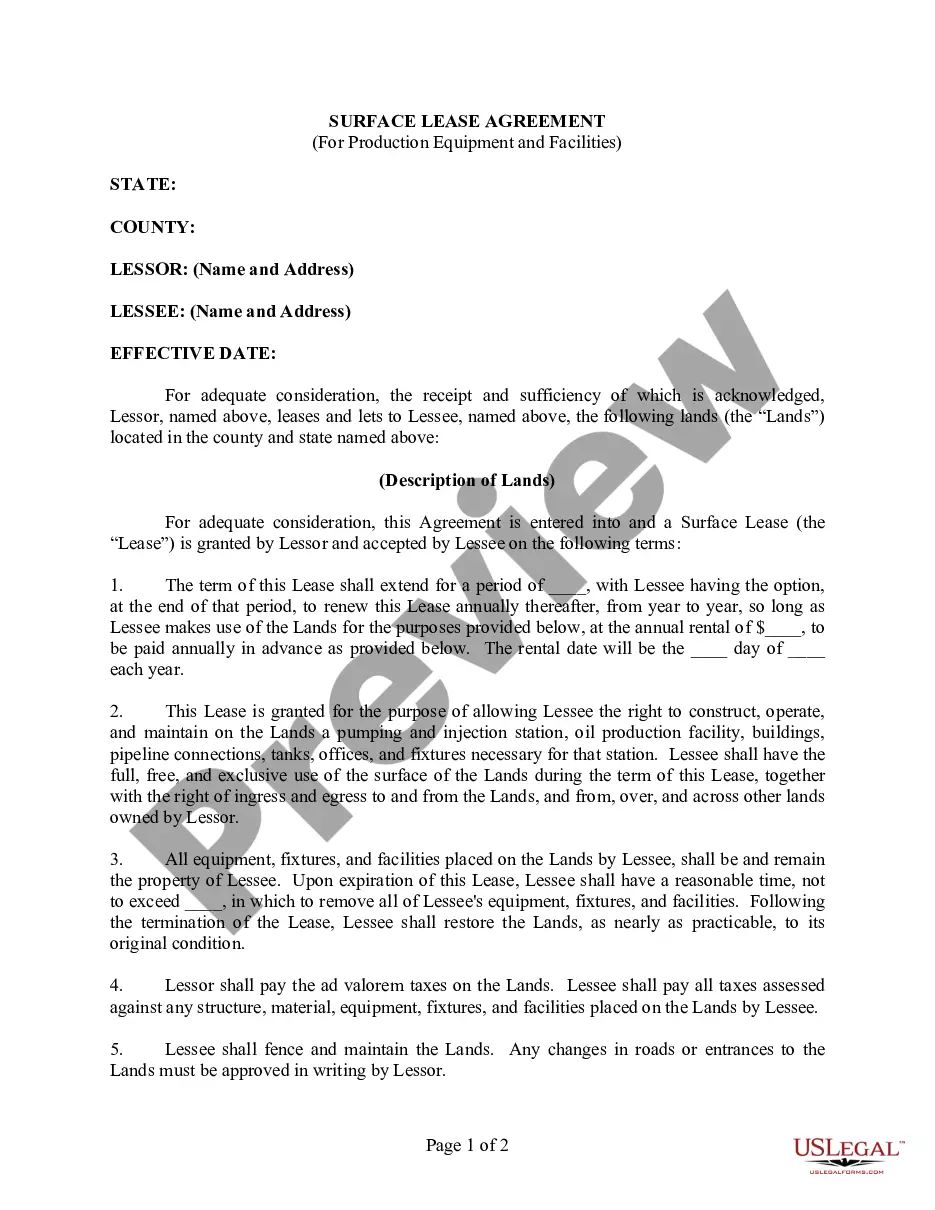
The Surface Lease Agreement is a legal document that allows a lessor to grant a lessee the rights to use a specified piece of land for constructing and maintaining oil production facilities and related infrastructure. This form is crucial for establishing the terms of surface usage and ownership during the lease period, distinguishing it from other lease types that may not focus specifically on oil and gas operations.
Key components of this form
- Details of the parties involved: Names and addresses of the lessor and lessee.
- Effective date for the lease agreement starts.
- Lease term: Specifies the duration of the lease and renewal options.
- Purpose of the lease: Describes the rights granted to the lessee regarding construction and operation on the land.
- Property ownership: Clarifies that the lessee retains ownership of their fixtures and equipment.
- Responsibilities for taxes and maintenance: Outlines who pays taxes and maintains the land.
When to use this document
This form is used when a landowner (lessor) wants to allow another party (lessee) to utilize a specific area of land for oil production operations. It is relevant in situations where energy companies need to install facilities that support pumping and injection stations or related equipment. Using this agreement ensures that both parties understand their rights and responsibilities throughout the leasing period.
Who should use this form
- Property owners (lessors) looking to lease their land for oil production.
- Oil production companies or individuals (lessees) intending to use land for constructing facilities.
- Legal representatives drafting lease agreements for clients in the oil and gas sector.
Completing this form step by step
- Identify the parties: Enter the names and addresses of both the lessor and lessee.
- Specify the property: Describe the land being leased, including location and boundaries.
- Enter the effective date: Fill in the date when the lease agreement will begin.
- Define the lease term: Indicate the duration of the lease and any renewal options.
- Outline responsibilities: Clarify the tax obligations and maintenance duties for both parties.
Does this document require notarization?
This form needs to be notarized to ensure legal validity. US Legal Forms provides secure online notarization powered by Notarize, allowing you to complete the process through a verified video call, available anytime.
Get your form ready online
Our built-in tools help you complete, sign, share, and store your documents in one place.
Make edits, fill in missing information, and update formatting in US Legal Forms—just like you would in MS Word.
Download a copy, print it, send it by email, or mail it via USPS—whatever works best for your next step.
Sign and collect signatures with our SignNow integration. Send to multiple recipients, set reminders, and more. Go Premium to unlock E-Sign.
If this form requires notarization, complete it online through a secure video call—no need to meet a notary in person or wait for an appointment.
We protect your documents and personal data by following strict security and privacy standards.

Make edits, fill in missing information, and update formatting in US Legal Forms—just like you would in MS Word.

Download a copy, print it, send it by email, or mail it via USPS—whatever works best for your next step.

Sign and collect signatures with our SignNow integration. Send to multiple recipients, set reminders, and more. Go Premium to unlock E-Sign.

If this form requires notarization, complete it online through a secure video call—no need to meet a notary in person or wait for an appointment.

We protect your documents and personal data by following strict security and privacy standards.
Avoid these common issues
- Failing to accurately describe the property in question.
- Not specifying the effective date of the lease.
- Omitting details about the term and renewal options of the lease.
- Neglecting to outline tax responsibilities clearly.
- Forgetting to include signatures from both parties.
Advantages of online completion
- Convenience of downloading and printing from anywhere at any time.
- Editability to customize the form to fit specific needs without legal jargon.
- Reliability from a source that provides forms reviewed by licensed attorneys.
Summary of main points
- The Surface Lease Agreement is essential for allowing the use of land for oil production.
- Clear expectations regarding responsibilities and property rights are outlined in this document.
- Both parties should review and understand the lease terms before signing the agreement.
Looking for another form?

Form popularity
FAQ
How far down the mineral rights go depends on the mineral and technology used. The average depth of open-pit mining a surface mining technique used to extract metals such as nickel, copper, uranium, and coal is between 100500 meters. For deep mining, the average depth is 2.83.4 kilometers.
Surface rights are, as the name implies, the rights to the surface area of a piece of land. This includes any structures on the property, as well as the rights to farm the land or exploit aboveground resources such as trees, plants, or water according to local laws and ordinances.
Mineral rights in Texas are the rights to mineral deposits that exist under the surface of a parcel of property. This right normally belongs to the owner of the surface estate; however, in Texas those rights can be transferred through sale or lease to a second party.
Surface lease means a lease, easement, or other agreement providing the holder with the right to enter the surface of any land for the purpose of constructing and operating a well, facility, flowline, roadway, or power line; Sample 1. Based on 1 documents. Save.
Texas courts have long held that the mineral estate is the dominant estate, and that the mineral owner, or the owner's lessee, has an implied easement to use the surface in a manner that is reasonably necessary to develop the minerals.
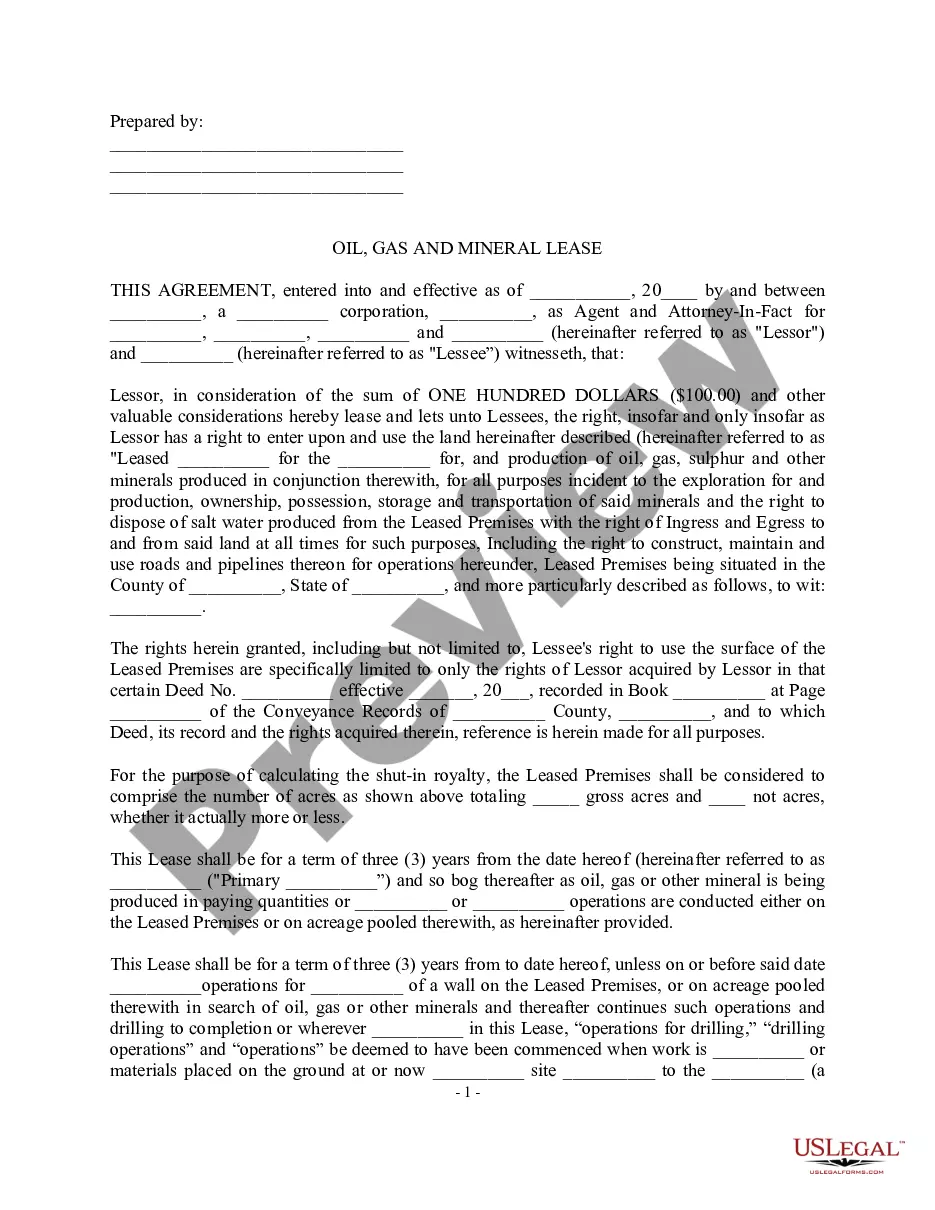
(Oil & Gas Exploration and Production) An oil, natural gas, and mineral lease gives the lessee rights to exploit minerals beneath the surface of the property.It also grants the lessee the right to utilize the surface of the property to access those minerals.
In states with split ownership laws, land can be sold to only include surface rights. This means that if oil or gas is present under the soil, the landowner will have no legal rights to them.
Texas is one of the states with split ownership of mineral and surface rights. The state considers the two to be separate estates. Landowners with mineral and surface rights to their land can extract unlimited minerals, gas, or oil from the land.
Surface rights are subservient to mineral rights, which means the owner of a mineral servitude will be able to access and use the surface to extract the minerals from underneath.