Private Placement Financing
What this document covers
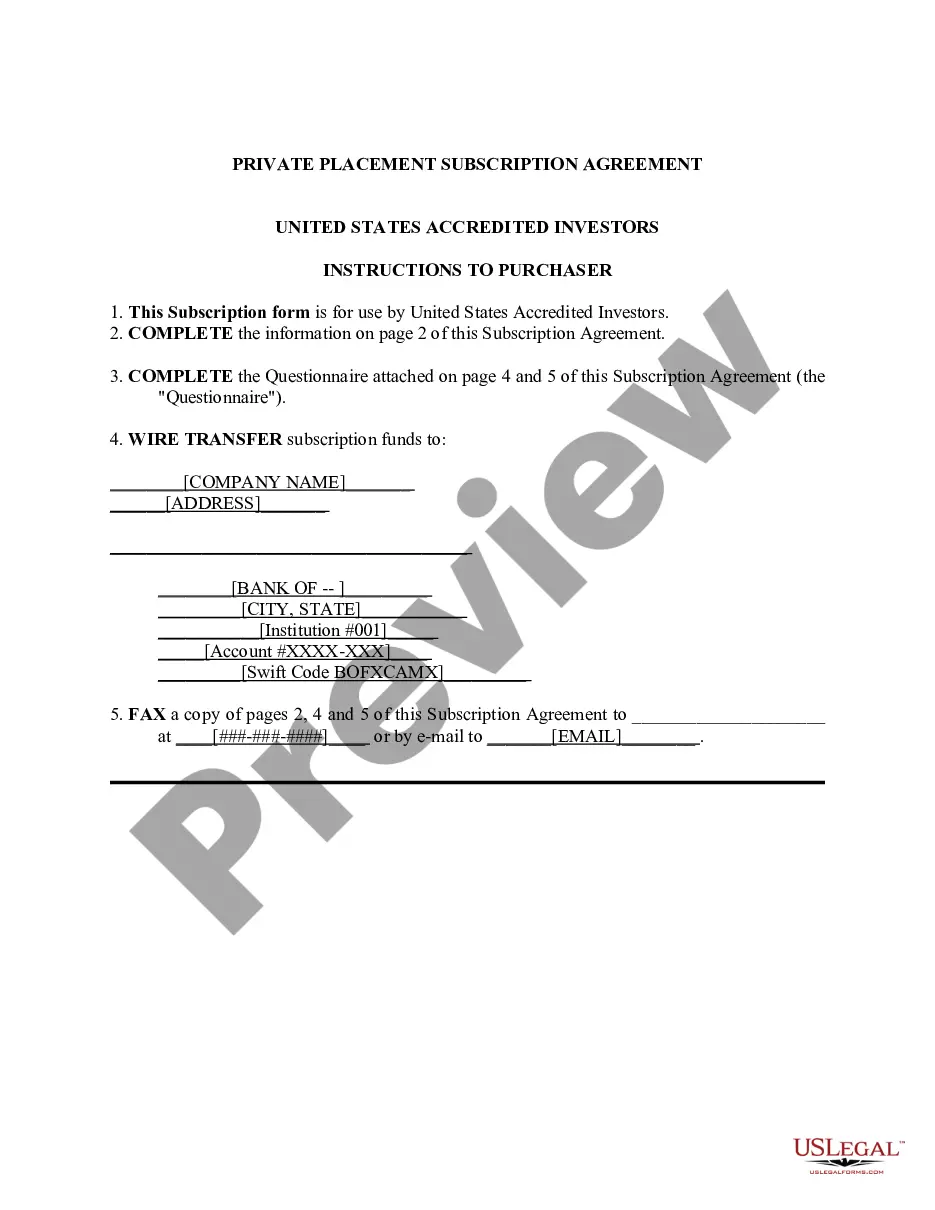
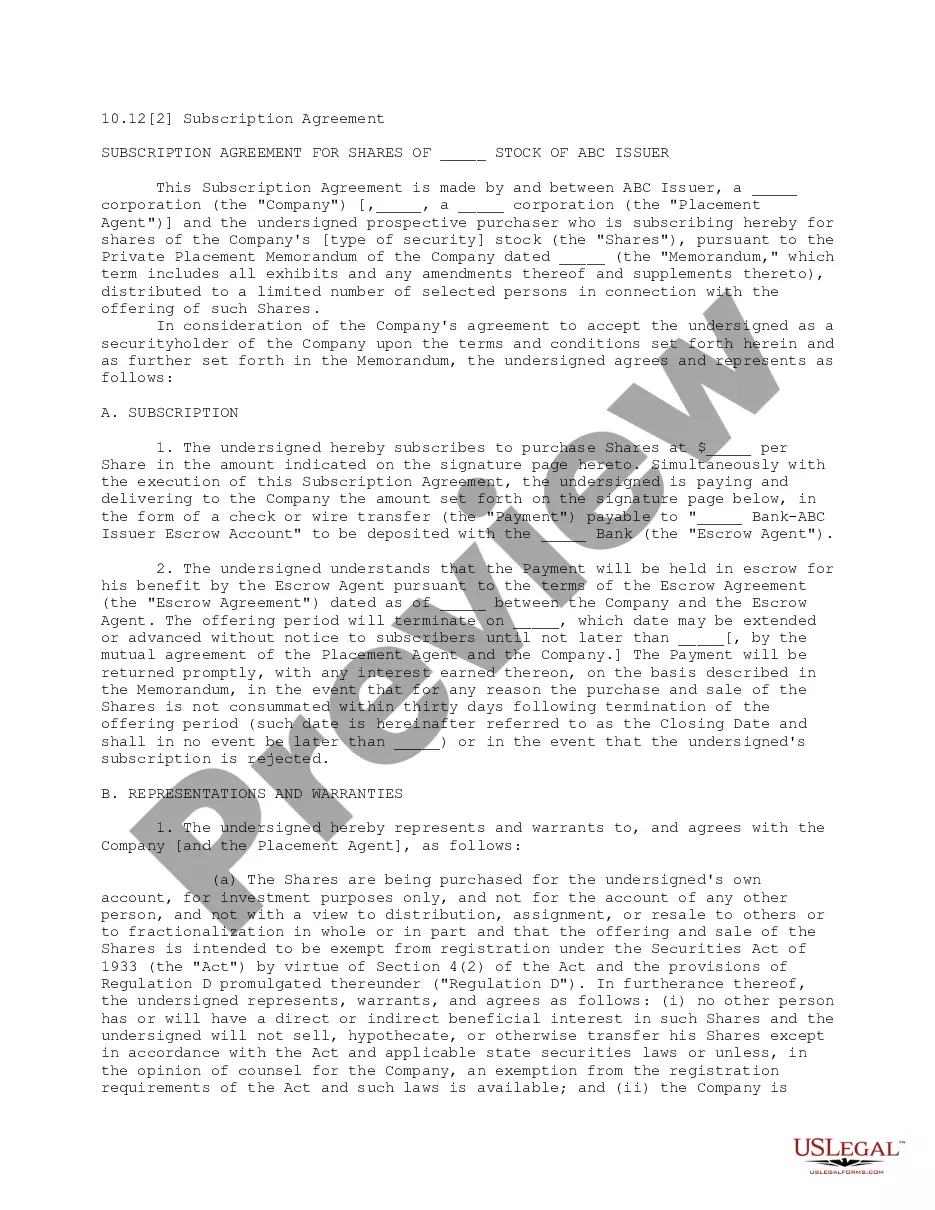
The Private Placement Financing form is a legal document used for raising capital through the private offering of securities. This form is essential for companies looking to issue stocks or warrants to investors without going through public market regulations. It outlines the terms under which the investment is made, differentiating it from public offerings and enabling companies to secure funding efficiently while adhering to compliance requirements.
Form components explained
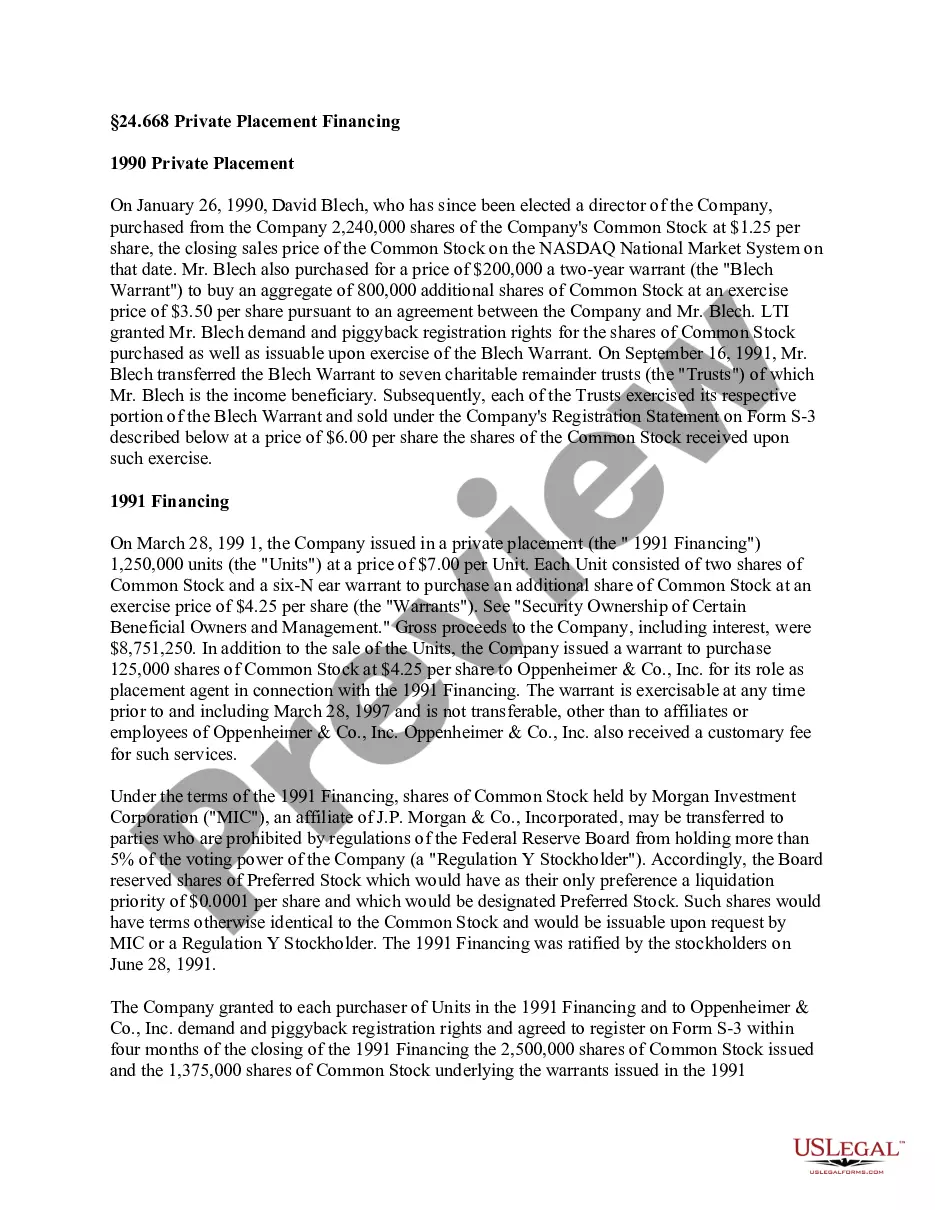
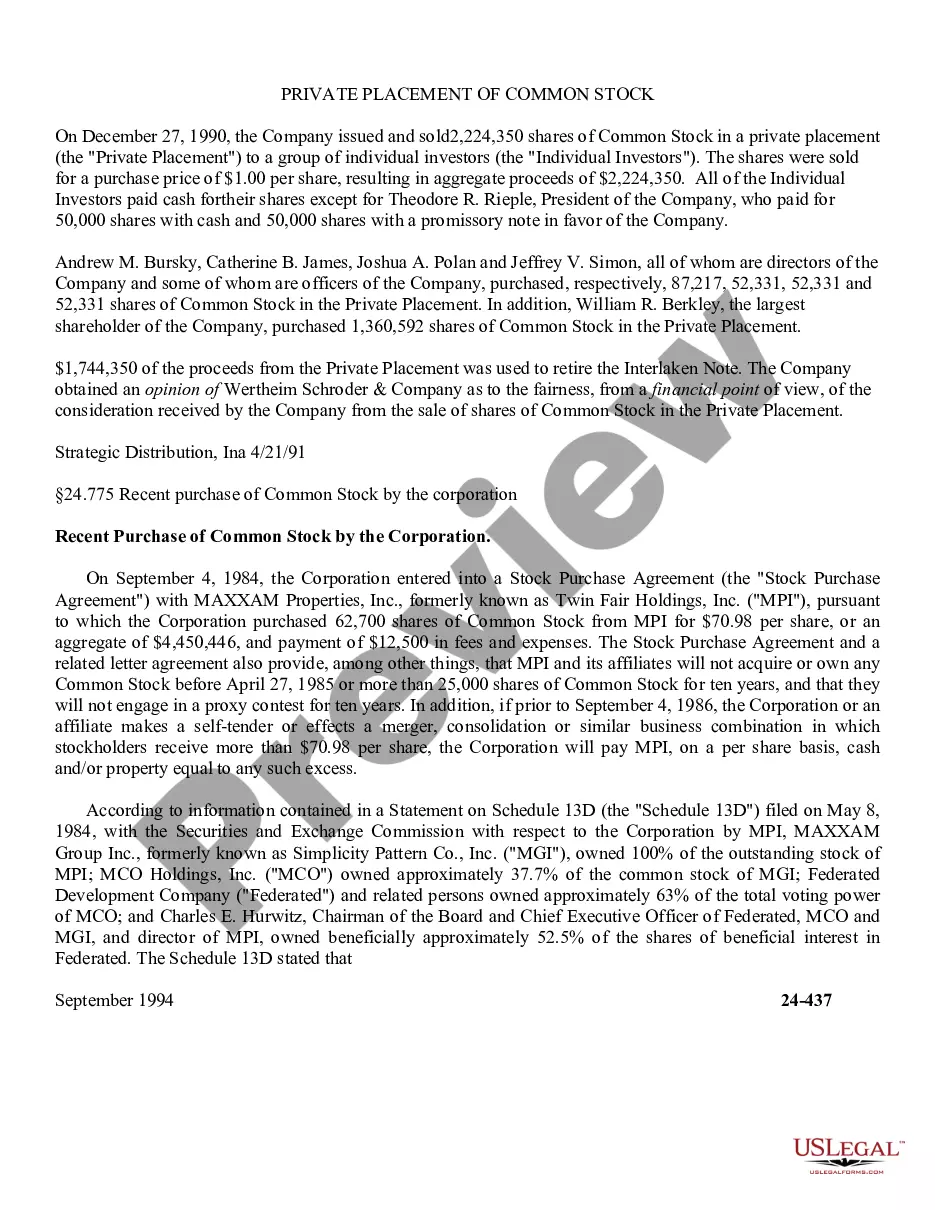
- Details of the shares being offered, including quantity and price per share.
- Information about warrants issued, including the exercise price and duration.
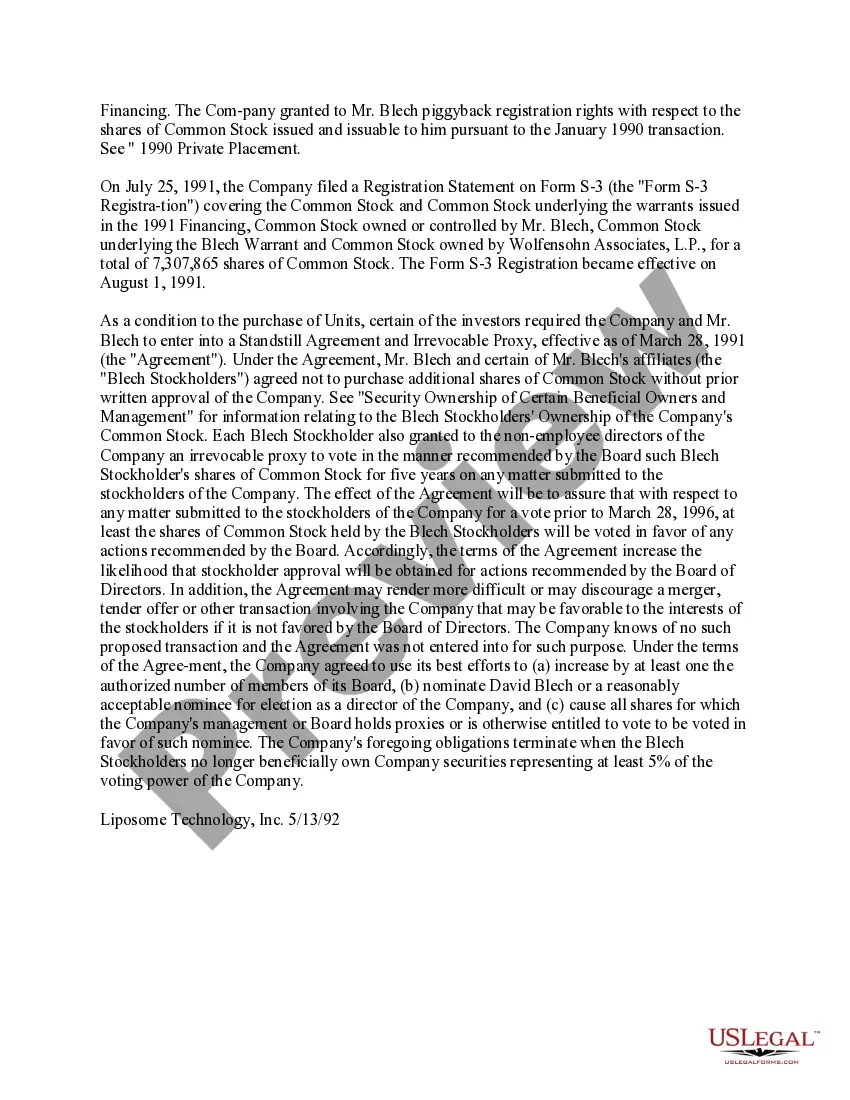
- Registration rights available to investors for better liquidity of their investments.
- Terms relating to the transfer of shares and regulatory compliance obligations.
- Standstill agreements ensuring investor cooperation in company management decisions.

Common use cases
This form is commonly used when a company seeks to raise funds from private investors through a placement of shares or securities. It is ideal in situations where companies want to avoid the complexities of public offerings and need to manage their investor base while ensuring compliance with securities regulations. If you need to secure funds for business growth or operational expenses confidentially, this form is essential.
Intended users of this form
This form is intended for:
- Corporations or limited liability companies seeking private capital investment.
- Business owners looking to issue shares or warrants in a funding round.
- Investors interested in purchasing equity or warrants without public disclosure constraints.
- Legal professionals assisting clients with private placement transactions.
Steps to complete this form
- Identify the company and the investors involved in the private placement.
- Describe the shares being offered, including quantity and pricing details.
- Specify the terms of the warrants, including exercise prices and duration.
- Outline any registration rights conferred to investors.
- Include provisions for any standstill agreements or special conditions required by investors.
Notarization guidance
In most cases, this form does not require notarization. However, some jurisdictions or signing circumstances might. US Legal Forms offers online notarization powered by Notarize, accessible 24/7 for a quick, remote process.
Get your form ready online
Our built-in tools help you complete, sign, share, and store your documents in one place.
Make edits, fill in missing information, and update formatting in US Legal Forms—just like you would in MS Word.
Download a copy, print it, send it by email, or mail it via USPS—whatever works best for your next step.
Sign and collect signatures with our SignNow integration. Send to multiple recipients, set reminders, and more. Go Premium to unlock E-Sign.
If this form requires notarization, complete it online through a secure video call—no need to meet a notary in person or wait for an appointment.
We protect your documents and personal data by following strict security and privacy standards.

Make edits, fill in missing information, and update formatting in US Legal Forms—just like you would in MS Word.

Download a copy, print it, send it by email, or mail it via USPS—whatever works best for your next step.

Sign and collect signatures with our SignNow integration. Send to multiple recipients, set reminders, and more. Go Premium to unlock E-Sign.

If this form requires notarization, complete it online through a secure video call—no need to meet a notary in person or wait for an appointment.

We protect your documents and personal data by following strict security and privacy standards.
Typical mistakes to avoid
- Failing to correctly outline the terms and conditions of the investment.
- Not including adequate registration rights which could limit liquidity for investors.
- Overlooking compliance with local securities laws when drafting the document.
- Neglecting to have all necessary parties sign the agreement.
Why complete this form online
- Immediate access to a professionally drafted form tailored to your needs.
- Easily editable for specific circumstances without needing extensive legal knowledge.
- Reduces the time and cost of consulting a lawyer for basic document creation.
Legal use & context
- Private placements are regulated under securities laws and may require compliance with state and federal regulations.
- This form serves as a key document to communicate the terms of the offering and the rights of investors.
- Ensures that all parties understand their obligations and rights, thereby minimizing disputes.
Summary of main points
- The Private Placement Financing form is designed to facilitate private equity sales and ensure compliance.
- Understanding the key components and terms involved is essential for effective use.
- This form is suitable for various entities, mainly private companies looking to secure funds from investors.
Looking for another form?




Form popularity
FAQ
A private placement is when company equity is bought and sold to a limited group of investors. That equity can be sold as stocks, bonds or other securities. Private placement is also referred to as an unregistered offering.A private placement might take place when a company needs to raise money from investors.
A private placement is a sale of stock shares or bonds to pre-selected investors and institutions rather than on the open market. It is an alternative to an initial public offering (IPO) for a company seeking to raise capital for expansion.
Solution. If a company offers shares to a selected group of investors, not exceeding 200 to raise capital is called private placement.
Private placement is a common method of raising business capital by offering equity shares.However, stockholders may see long-term gains if the company can effectively invest the extra capital obtained and ultimately increase its revenues and profitability.
Private Placements can either be good or bad for a stock. Companies often need a rush of new money for many purposes.In other words, it's harmful if the company is being used as a source of revenue in order to sustain the inflated salaries of officers.
There are three ways to qualify as an accredited investor under rules 505 and 506 of Regulation D. The first way is to be a director, executive officer or general partner of the company issuing the securities for private placement. The remaining two ways are concerned with personal net worth and income.
There are several advantages to using private placements to raise finance for your business. They: allow you to choose your own investors - this increases the chances of having investors with similar objectives to you and means they may be able to provide business advice and assistance, as well as funding.