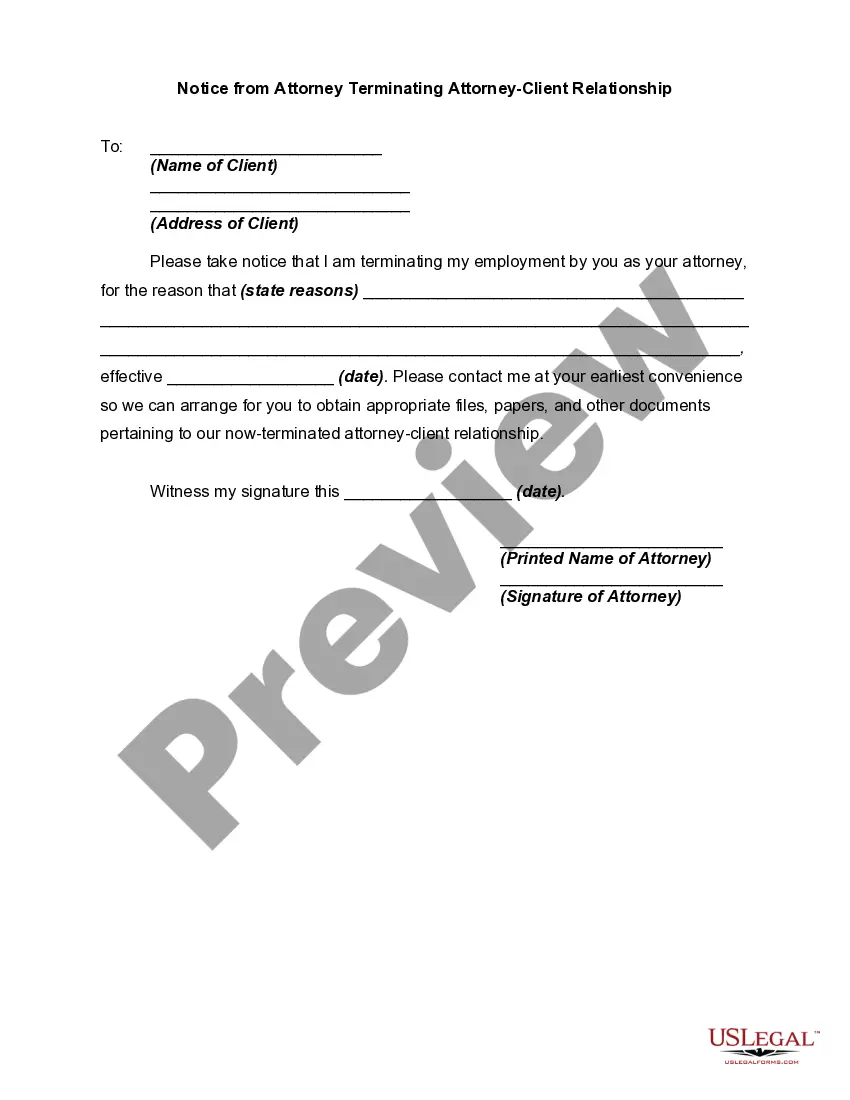
Notice from Attorney Terminating Attorney-Client Relationship
Overview of this form
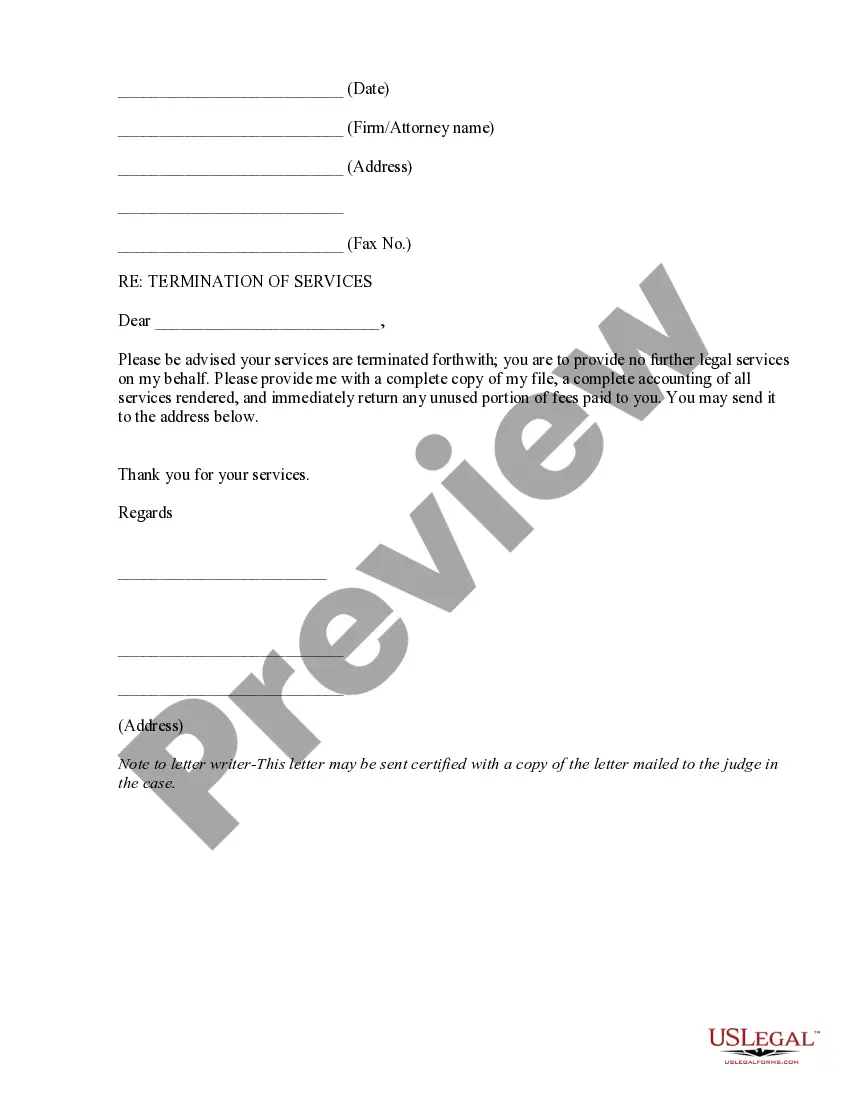
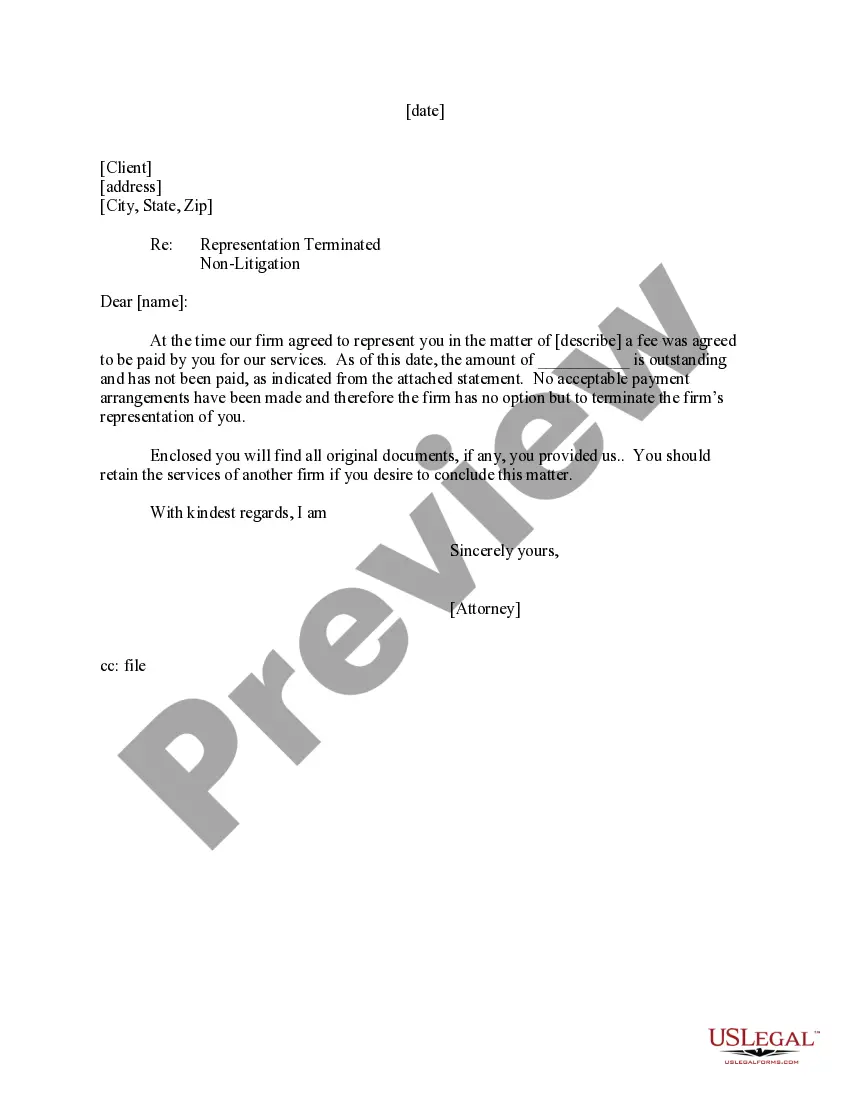
The Notice from Attorney Terminating Attorney-Client Relationship is a legal document that allows an attorney to formally withdraw from representing a client. This form outlines the reasons for termination, ensuring the process adheres to legal obligations without adversely affecting the clientâs interests. It is distinct from other forms related to attorney-client relationships, as it specifically addresses the termination and includes provisions for returning client materials and unused fees.
Key parts of this document
- Name and address of the client
- Effective date of termination
- Reasons for termination of the attorney-client relationship
- Instructions for returning client documents and files
- Attorney's signature and printed name
When this form is needed
This form is needed when an attorney determines that they must withdraw from a clientâs case due to specific reasons such as non-payment, uncooperative behavior from the client, or any situation where continuing the relationship could compromise the attorney's ethical obligations. It is crucial for formalizing the withdrawal and protecting the attorney's legal standing.
Intended users of this form
- Attorneys looking to terminate the attorney-client relationship legally
- Clients who have received notice from their attorney regarding termination
Completing this form step by step
- Enter the name and address of the client at the top of the form.
- Clearly state the reasons for termination in the designated section.
- Fill in the effective date of termination.
- Provide instructions for the client to retrieve their files and documents.
- Sign and print your name at the bottom of the form.
Notarization requirements for this form
This form does not typically require notarization unless specified by local law. Always check state-specific guidelines to ensure compliance with the legal requirements for attorney-client termination notices.
Get your form ready online
Our built-in tools help you complete, sign, share, and store your documents in one place.
Make edits, fill in missing information, and update formatting in US Legal Forms—just like you would in MS Word.
Download a copy, print it, send it by email, or mail it via USPS—whatever works best for your next step.
Sign and collect signatures with our SignNow integration. Send to multiple recipients, set reminders, and more. Go Premium to unlock E-Sign.
If this form requires notarization, complete it online through a secure video call—no need to meet a notary in person or wait for an appointment.
We protect your documents and personal data by following strict security and privacy standards.

Make edits, fill in missing information, and update formatting in US Legal Forms—just like you would in MS Word.

Download a copy, print it, send it by email, or mail it via USPS—whatever works best for your next step.

Sign and collect signatures with our SignNow integration. Send to multiple recipients, set reminders, and more. Go Premium to unlock E-Sign.

If this form requires notarization, complete it online through a secure video call—no need to meet a notary in person or wait for an appointment.

We protect your documents and personal data by following strict security and privacy standards.
Common mistakes to avoid
- Failing to specify clear reasons for termination.
- Not providing a reasonable timeframe for the client to secure new counsel.
- Omitting the effective date of termination.
Why use this form online
- Convenient access to a legally sound document.
- Easy customization to fit specific client situations.
- Downloadable format allows for quick delivery to the client.
Legal use & context
- This form solidifies the termination process and helps avoid potential disputes.
- It ensures compliance with professional ethics and legal regulations concerning client representation.
Key takeaways
- Formal notice is essential when an attorney decides to terminate representation.
- Clear communication of reasons and process helps protect legal interests.
- Using this form ensures compliance and proper documentation.
Looking for another form?
Form popularity
FAQ
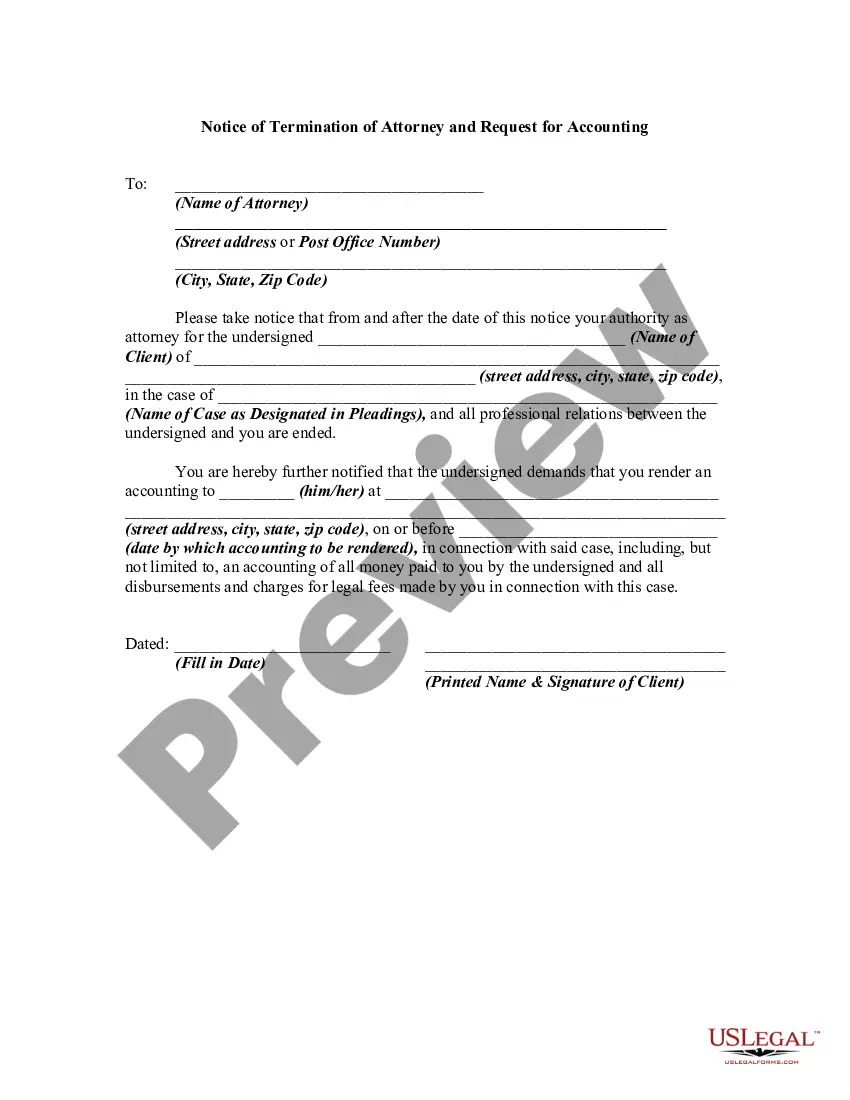
Get Straight To The Point. Be Firm. Make Your Case Plainly. Don't Be Spiteful. Acknowledge Your Responsibility For Applicable Lawyer Fees. Get A Copy Of Your Case File.
Stay calm, rational and polite. Give reasons for terminating the relationship, but keep emotion and name-calling out of the conversation. Follow-up with a phone call. You can start the process with an email, but you should follow-up with a phone call to talk your client through the process and answer any questions.
Get Straight To The Point. Be Firm. Make Your Case Plainly. Don't Be Spiteful. Acknowledge Your Responsibility For Applicable Lawyer Fees. Get A Copy Of Your Case File.
As stated above, it is uncommon for an attorney to drop or withdraw from a case in the midst of it.If you are in the middle of litigation, an attorney will need to ask for the permission from the court before they can withdraw. Withdrawal is typically granted by the court unless special circumstances apply.
Identify the Subject Matter. For your letter to be effective, it needs to be direct to the point. Give Final Reminders. Summarize the Fees. Reaffirm the Termination. Suggest to Save Copies. Describe Any Measures.
The withdrawing or discharged lawyer must take action to protect the client's interest. These steps include giving reasonable notice of withdrawal, allowing time for retention of another lawyer, and promptly returning papers and property to which the client is entitled.
Get Straight To The Point. Be Firm. Make Your Case Plainly. Don't Be Spiteful. Acknowledge Your Responsibility For Applicable Lawyer Fees. Get A Copy Of Your Case File.
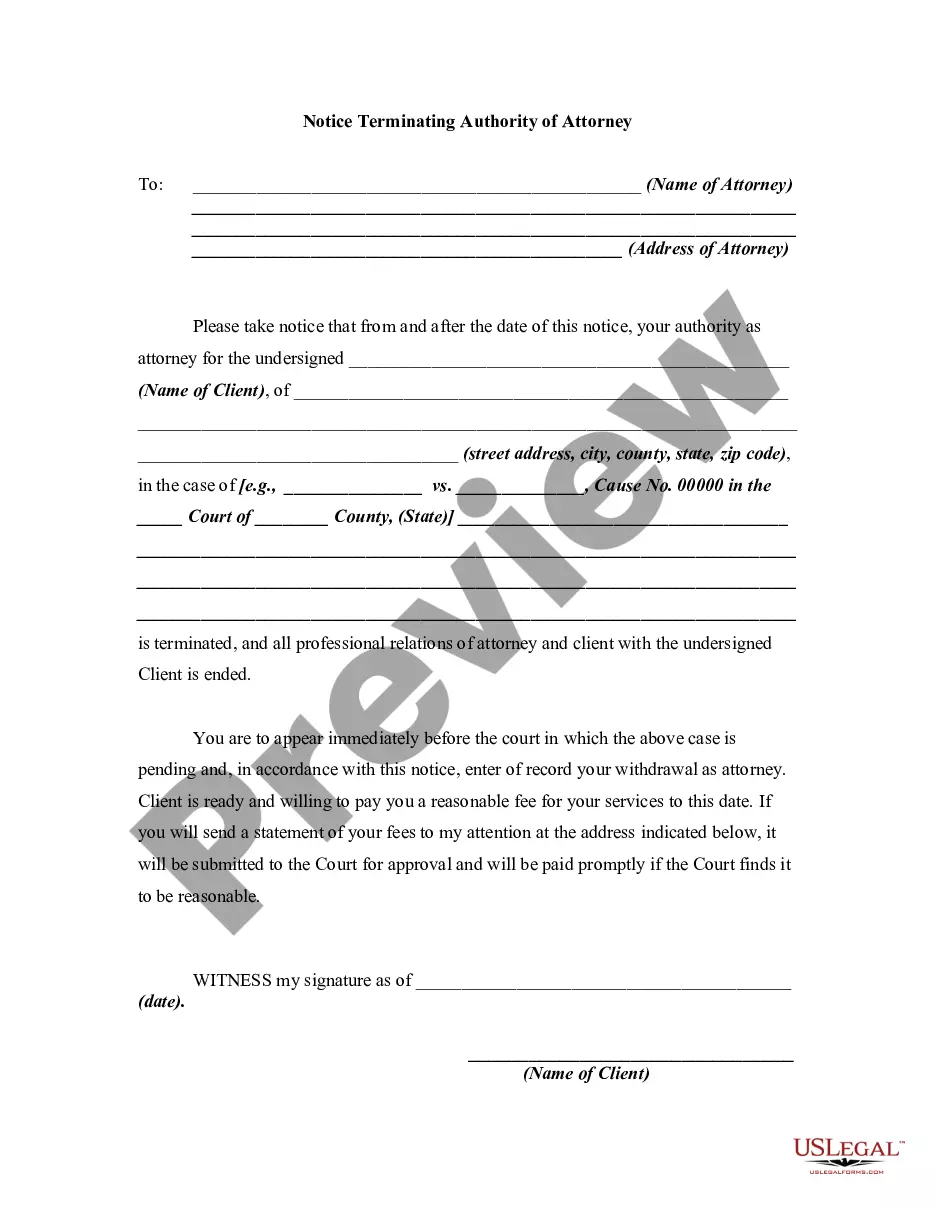
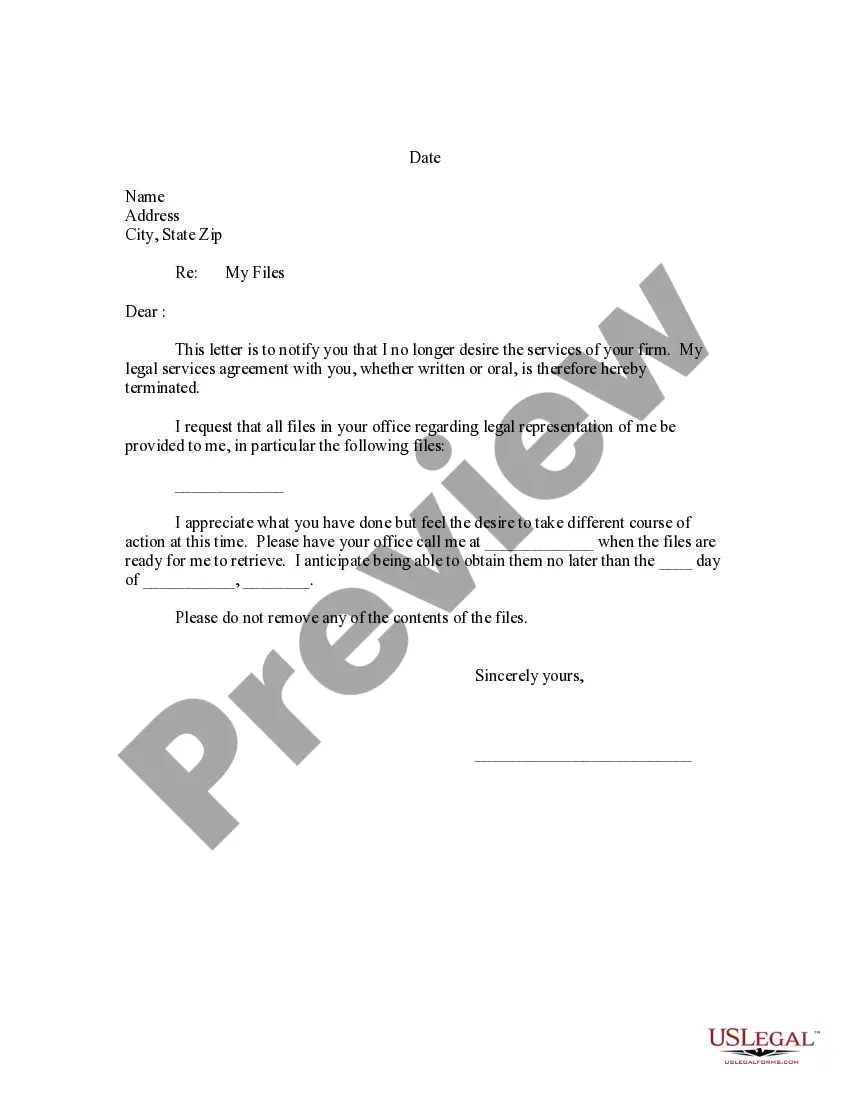
Firing Your Lawyer. If you do decide to fire your lawyer, you should do so in writing. Your letter should set forth and document any conduct or reasons supporting your decision. It should also give instruction as to where he or she needs to send your file.
The Rules of Professional Conduct of the State Bar of California specify three circumstances under which an attorney must terminate a client relationship: (1) where the attorney knows or should know that a client is bringing an action, conducting a defense, asserting a position in litigation, or taking an appeal,