Extension of Payment Date
About this form
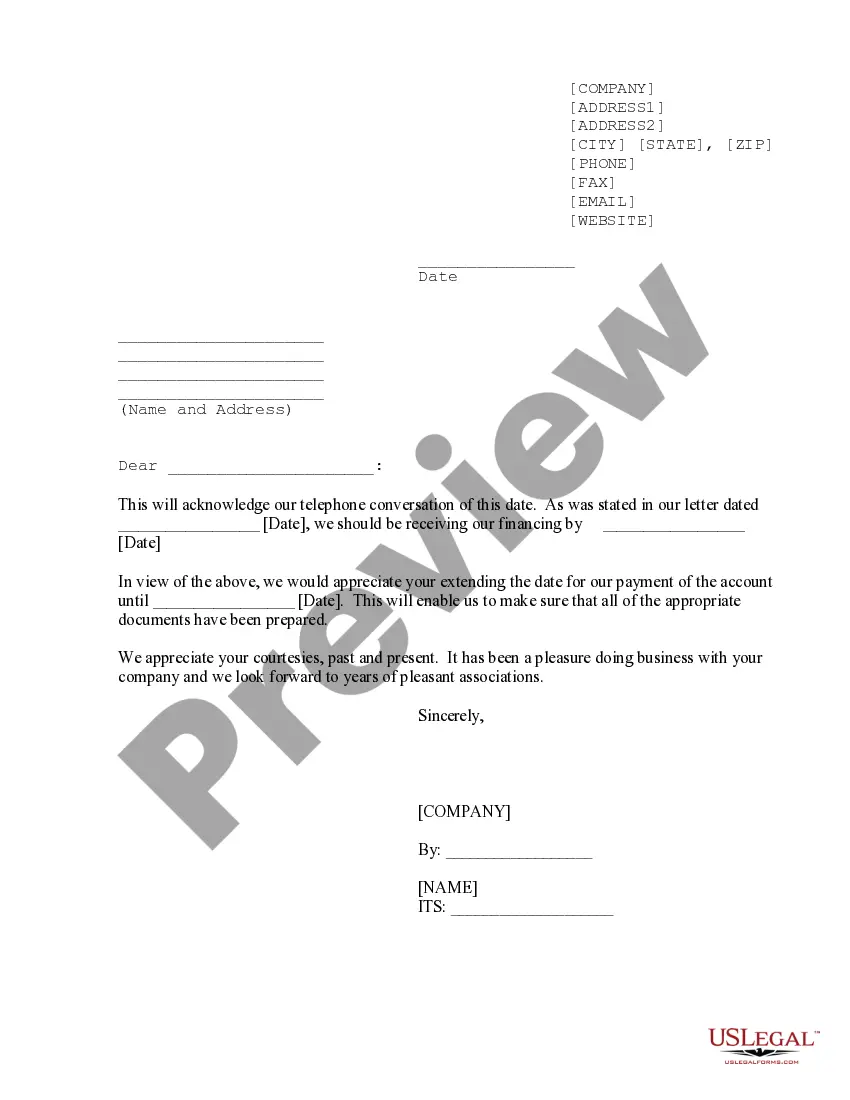
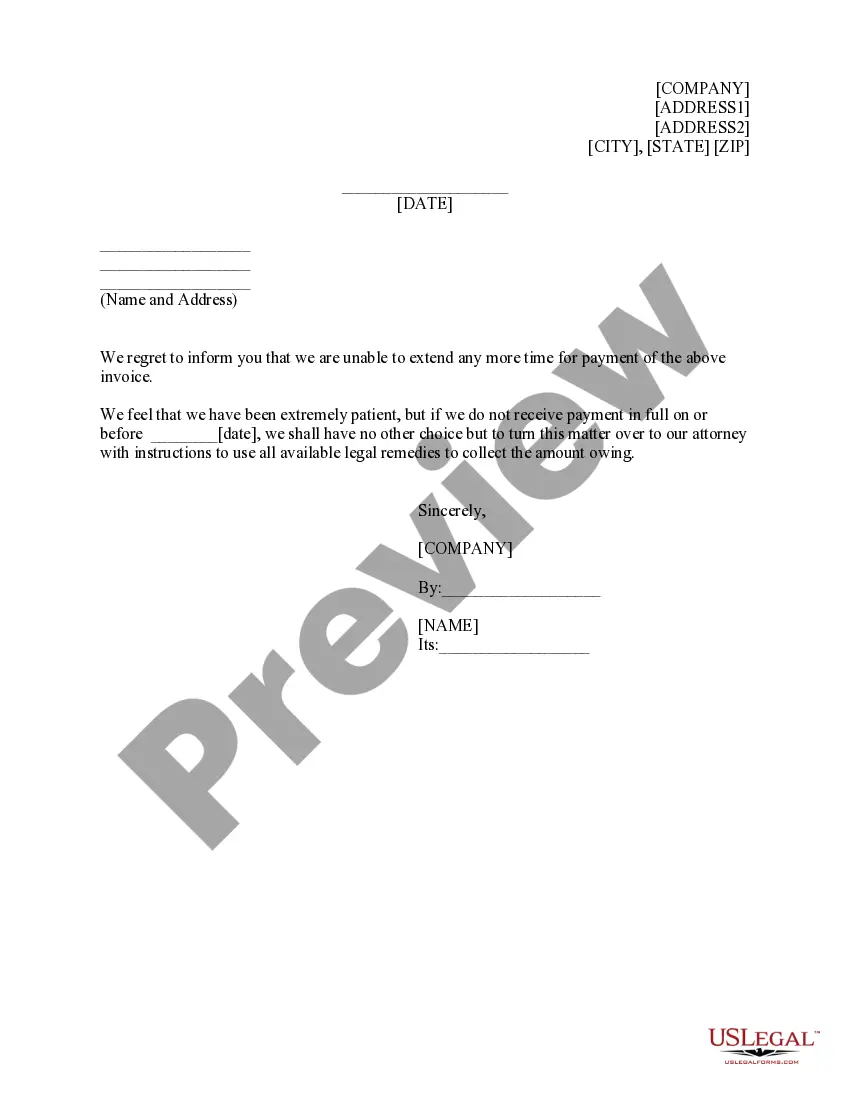
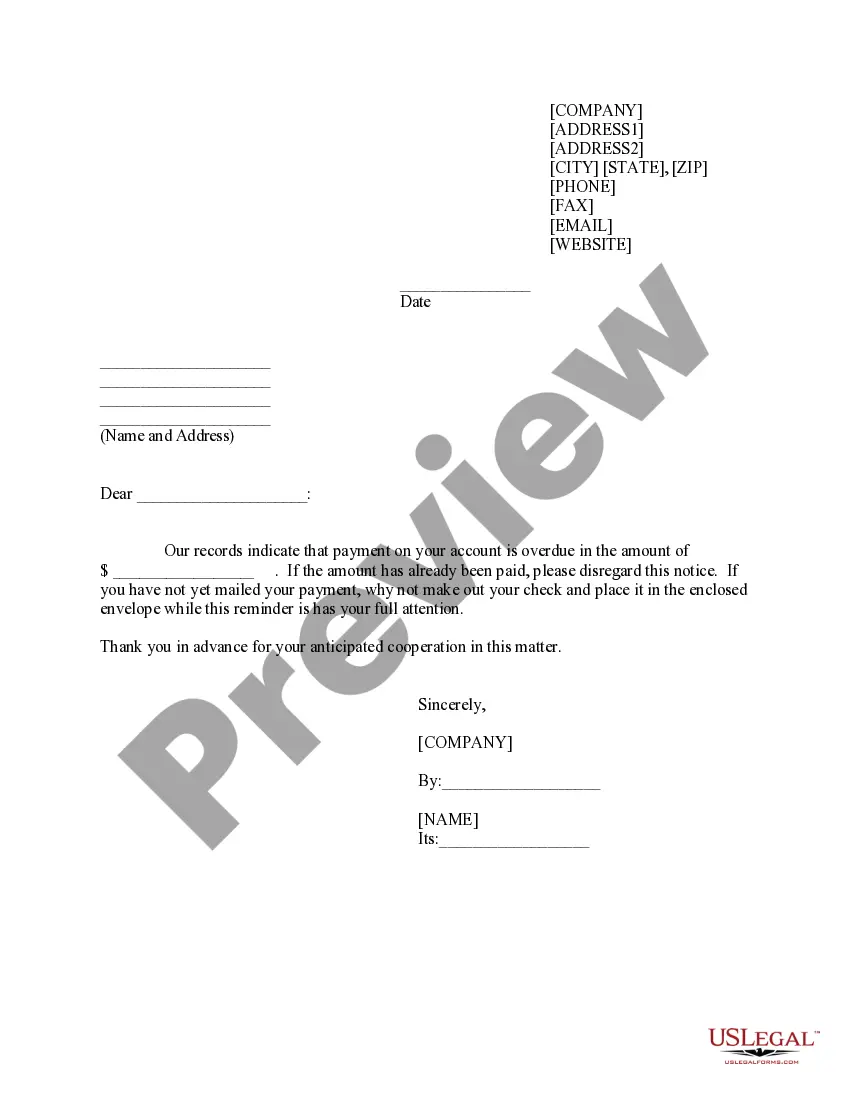
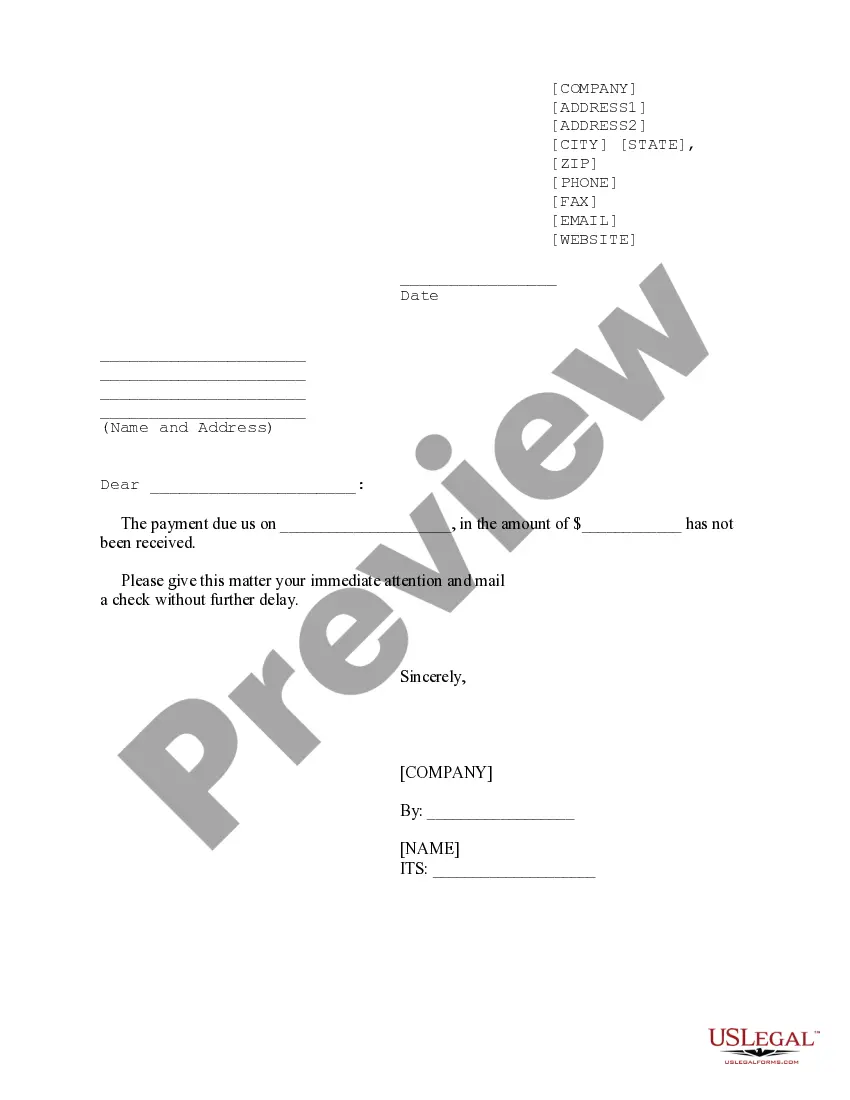
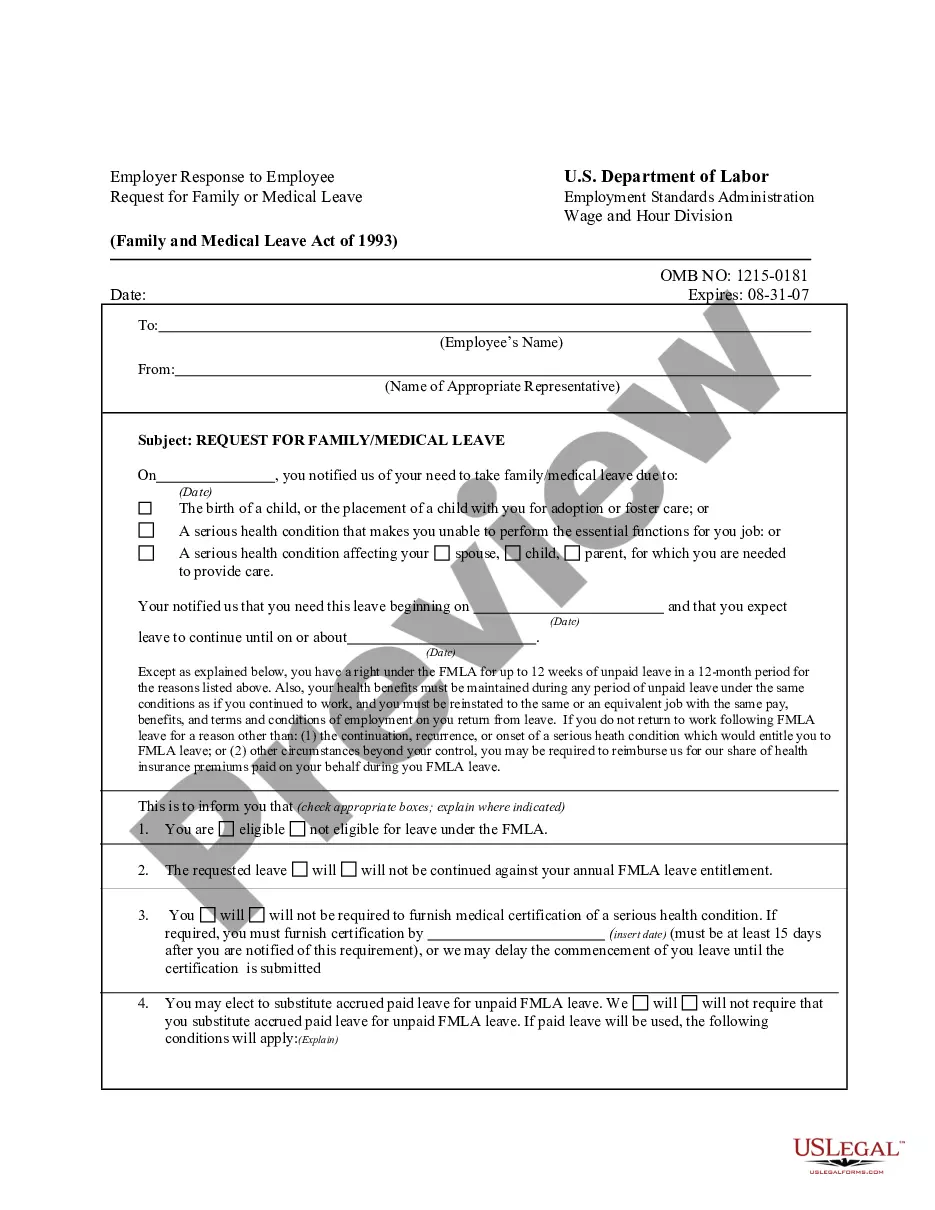
The Extension of Payment Date form is a legal document used to request additional time to make a payment on a financial obligation. It is often utilized when a borrower is unable to meet the original payment deadline due to circumstances such as delays in financing or document preparation. This form differs from other payment arrangements by specifically extending the deadline rather than renegotiating the terms of the payment itself.
What’s included in this form
- Contact information: Fields to input the address, phone number, and email of the requesting party.
- Date of request: The date when the request for extension is made.
- Original payment date: The date originally set for payment, referenced for clarity.
- New payment date: The proposed new date for making the payment.
- Acknowledgment of previous communication: Section to mention prior correspondence regarding the payment timeline.
- Signature and title: Field for the authorized representative of the company to sign, along with their name and title.


When this form is needed
This form should be used when a debtor needs to request an extension for making a payment. Common scenarios include situations where financing is delayed or when the necessary documents for payment are not yet prepared. It is particularly useful in business-to-business transactions or any context where maintaining a good relationship with a creditor is important.
Intended users of this form
- Businesses that are unable to meet payment deadlines due to unforeseen circumstances.
- Individuals needing extra time for payment due to financial difficulties.
- Any party involved in a financial agreement seeking a formal way to extend payment deadlines.
Instructions for completing this form
- Fill in the contact details, including your address, phone number, and email.
- Enter the date of the request at the top of the form.
- Reference the original payment date clearly in the designated field.
- Specify the new proposed payment date you are requesting to extend to.
- Acknowledge prior communication by mentioning relevant details from your previous correspondence.
- Sign the form and include your name and title, if applicable.
Does this document require notarization?
This form usually doesn’t need to be notarized. However, local laws or specific transactions may require it. Our online notarization service, powered by Notarize, lets you complete it remotely through a secure video session, available 24/7.
Get your form ready online
Our built-in tools help you complete, sign, share, and store your documents in one place.
Make edits, fill in missing information, and update formatting in US Legal Forms—just like you would in MS Word.
Download a copy, print it, send it by email, or mail it via USPS—whatever works best for your next step.
Sign and collect signatures with our SignNow integration. Send to multiple recipients, set reminders, and more. Go Premium to unlock E-Sign.
If this form requires notarization, complete it online through a secure video call—no need to meet a notary in person or wait for an appointment.
We protect your documents and personal data by following strict security and privacy standards.

Make edits, fill in missing information, and update formatting in US Legal Forms—just like you would in MS Word.

Download a copy, print it, send it by email, or mail it via USPS—whatever works best for your next step.

Sign and collect signatures with our SignNow integration. Send to multiple recipients, set reminders, and more. Go Premium to unlock E-Sign.

If this form requires notarization, complete it online through a secure video call—no need to meet a notary in person or wait for an appointment.

We protect your documents and personal data by following strict security and privacy standards.
Typical mistakes to avoid
- Failing to include complete contact information.
- Not providing a valid reason for the extension.
- Entering incorrect or misleading dates.
- Neglecting to sign the form, which invalidates the request.
Benefits of completing this form online
- Convenience: Easily fill out and print the form anytime and anywhere.
- Editability: Make changes and updates without the hassle of starting over.
- Accessibility: Forms are available for download directly after purchase, allowing immediate use.
Looking for another form?
Form popularity
FAQ
Once you've requested the extension, you automatically have an additional six months beyond the original filing deadline. That means your taxes are due on October 15.
File and pay what you can to reduce penalties and interest An extension to file provides an additional six months with a new filing deadline of Oct. 16. Penalties and interest apply to taxes owed after April 18 and interest is charged on tax and penalties until the balance is paid in full.
You'll have to request an extension by April 18 or you could be hit with a "failure to file" penalty. The good news is that the IRS provides an automatic extension to everyone who asks, but you'll still need to file some paperwork with the IRS.
An extension gives you extra time to file, but not extra time to pay. After you file an extension, if you owe taxes when you file your return, you might also have to pay penalties and interest on the tax due.
Common reasons for requesting an extension include a lack of organization, unanticipated events or tax planning purposes. Even if you obtain an extension to file, you must still pay your income tax in full by the tax deadline.
When you miss the tax deadline, a key thing that happens is that interest accrues on your unpaid balance and compounds daily from April 18 until you pay the balance in full. The interest rate on underpayments of tax is set each quarter. It's 7% for the first quarter of 2023.
We give you an automatic extension to file your return. No application is required. The deadline to pay is April 18, 2023. Make your extension payment for free using Web Pay .
If you can't file your federal tax return by the April 18, 2023, deadline, request an extension. An extension gives you until October 16, 2023, to file your 2022 federal income tax return.