Construction Cost Estimate 2
What is this form?
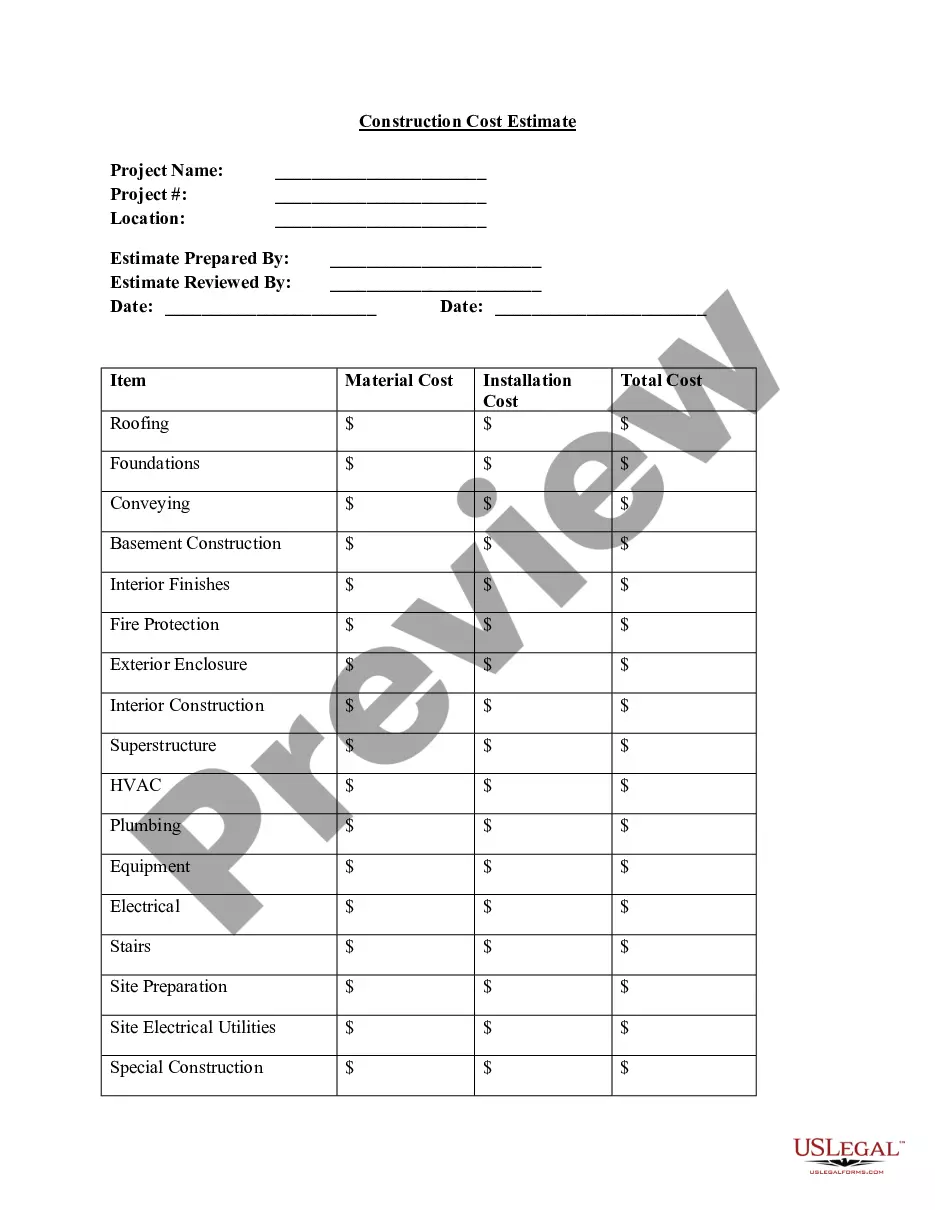
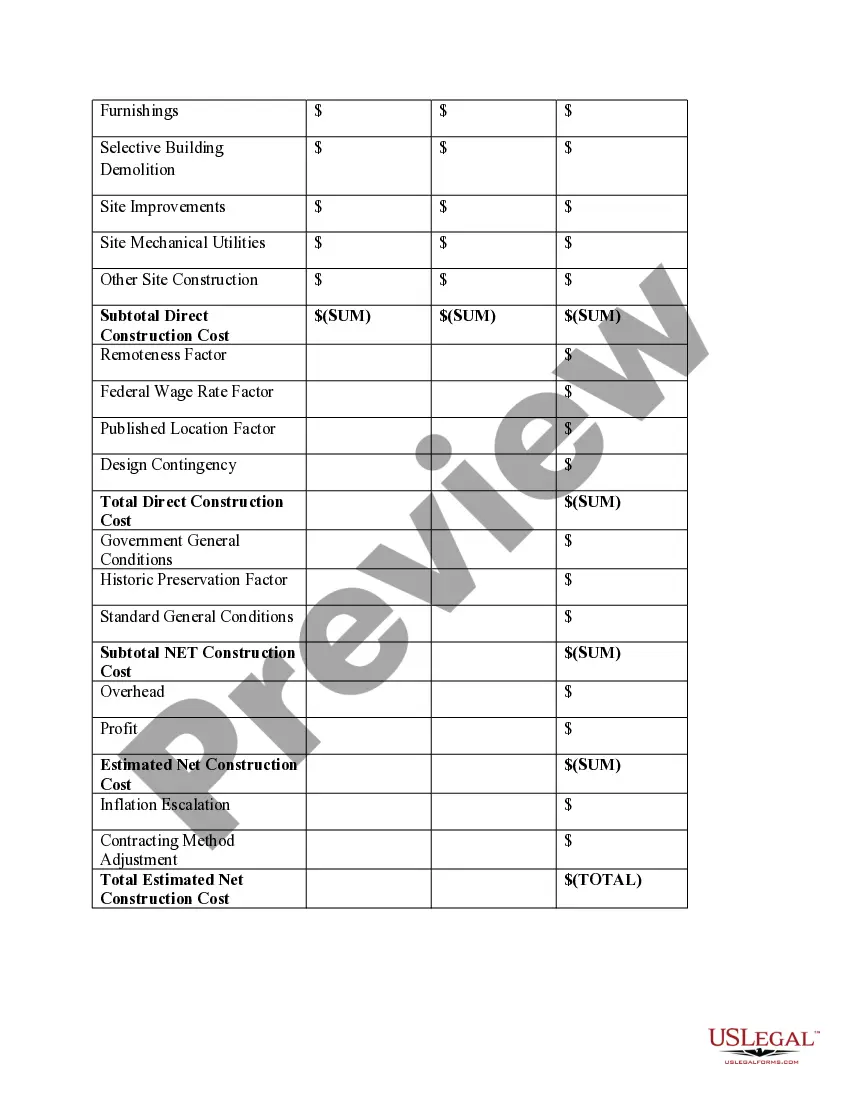
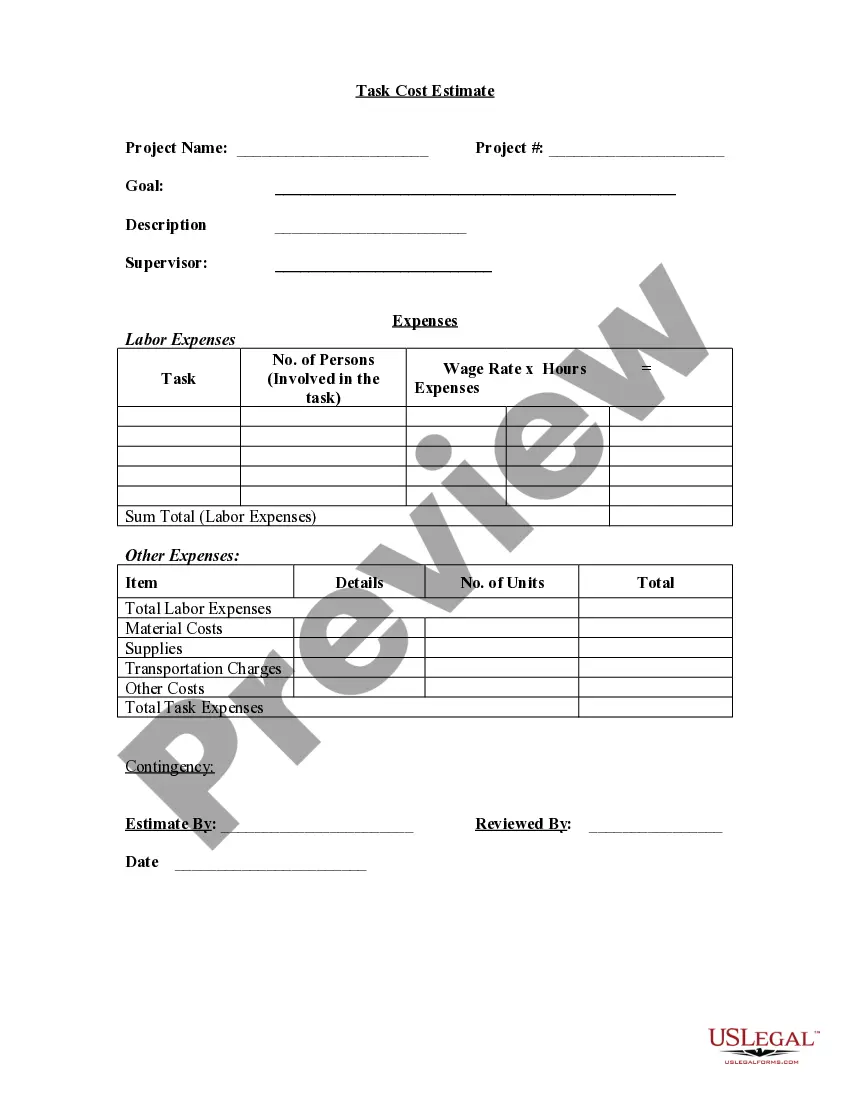
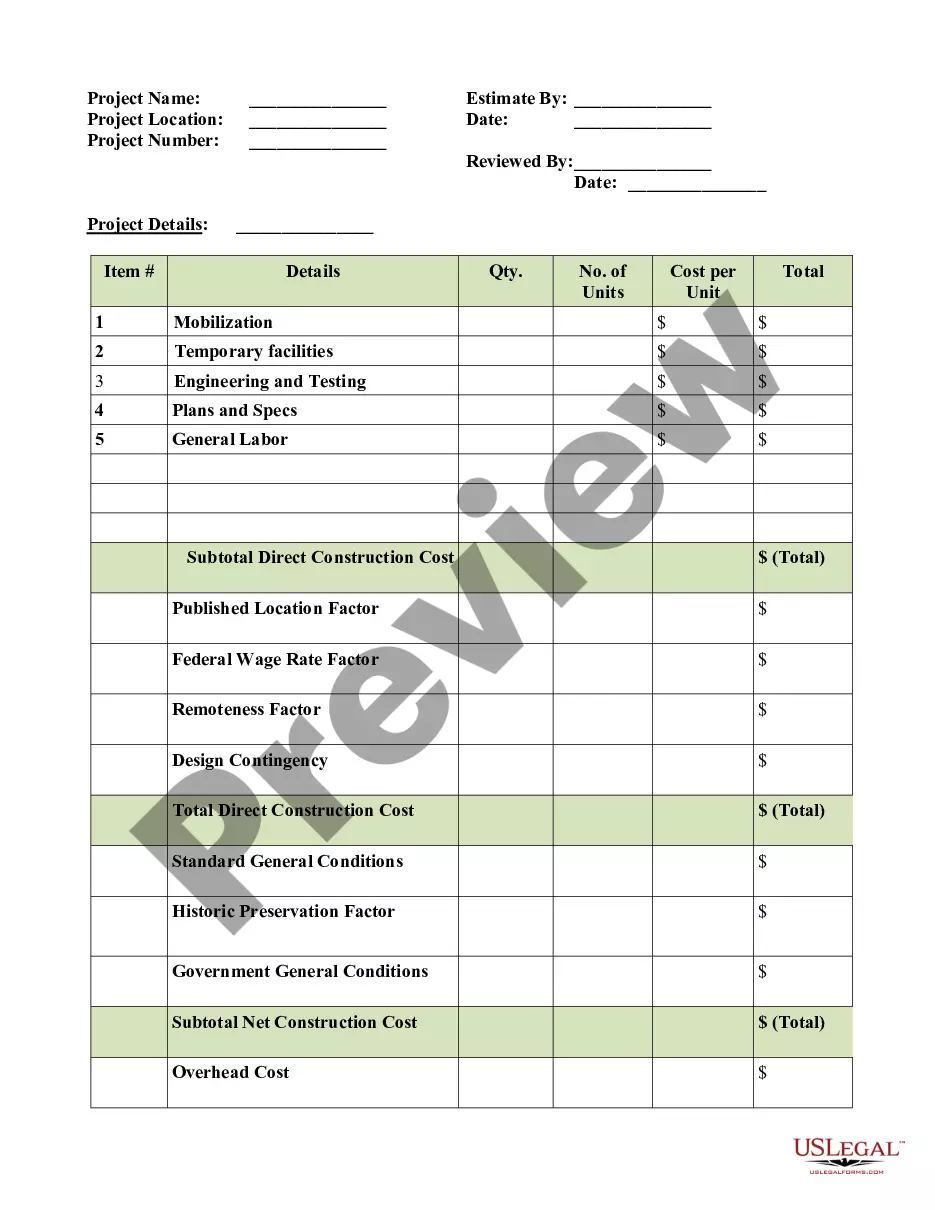
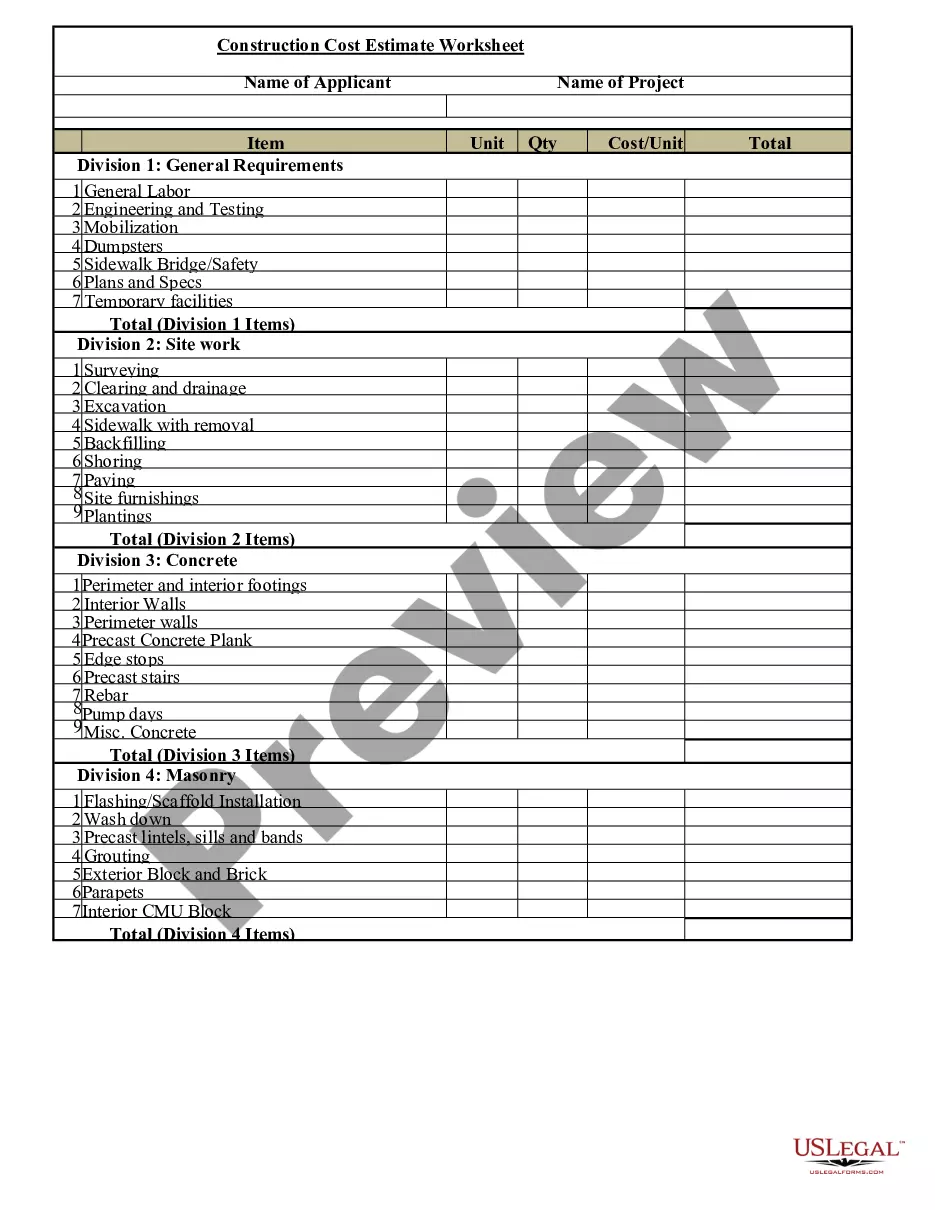
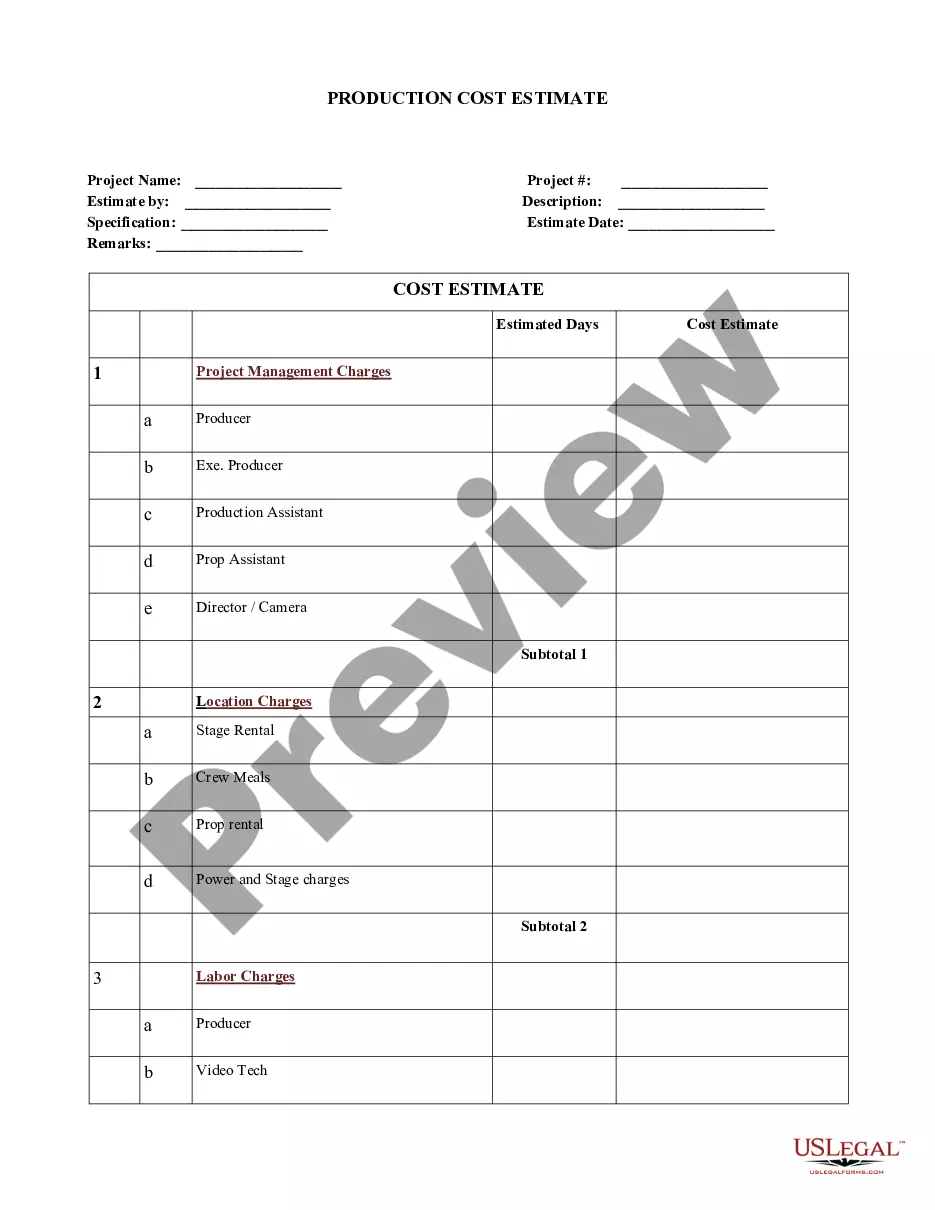
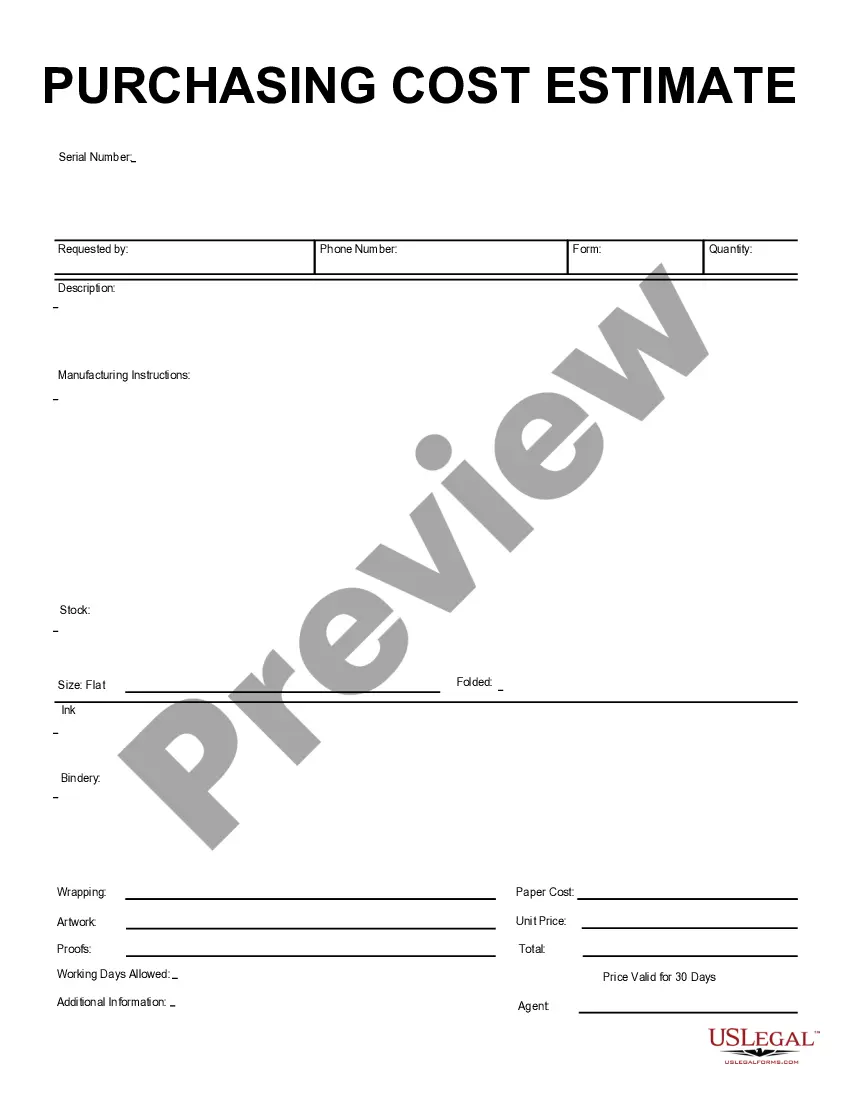
The Construction Cost Estimate 2 form is designed for construction projects to provide an approximate financial estimate based on available information and experience. This form helps project managers and contractors calculate costs related to various construction components, distinguishing it from formal contracts or binding agreements.
Form components explained
- Project name and location fields
- Cost breakdown categories including material and installation costs
- Factors such as remoteness and federal wage rate adjustments
- Direct construction costs and contingencies
- Estimated overhead, profit, and inflation escalation
When to use this document
This form is essential when preparing for a construction project where precise cost details are unclear. It is particularly useful during the initial planning and budgeting stages, allowing stakeholders to make informed decisions based on initial estimates rather than final costs.
Intended users of this form
- Construction project managers
- Contractors and subcontractors
- Estimate preparers and financial planners in construction
- Clients seeking a rough cost estimate before project commencement
How to prepare this document
- Enter the project name and location at the top of the form.
- Fill in the estimatorâs name and review date to ensure accountability.
- Itemize costs by material and installation under each construction category.
- Calculate the subtotal for direct construction costs and apply any relevant adjustment factors.
- Sum the total estimated net construction cost at the bottom of the form.
Does this document require notarization?
This form does not typically require notarization to be legally valid. However, some jurisdictions or document types may still require it. US Legal Forms provides secure online notarization powered by Notarize, available 24/7 for added convenience.
Get your form ready online
Our built-in tools help you complete, sign, share, and store your documents in one place.
Make edits, fill in missing information, and update formatting in US Legal Forms—just like you would in MS Word.
Download a copy, print it, send it by email, or mail it via USPS—whatever works best for your next step.
Sign and collect signatures with our SignNow integration. Send to multiple recipients, set reminders, and more. Go Premium to unlock E-Sign.
If this form requires notarization, complete it online through a secure video call—no need to meet a notary in person or wait for an appointment.
We protect your documents and personal data by following strict security and privacy standards.
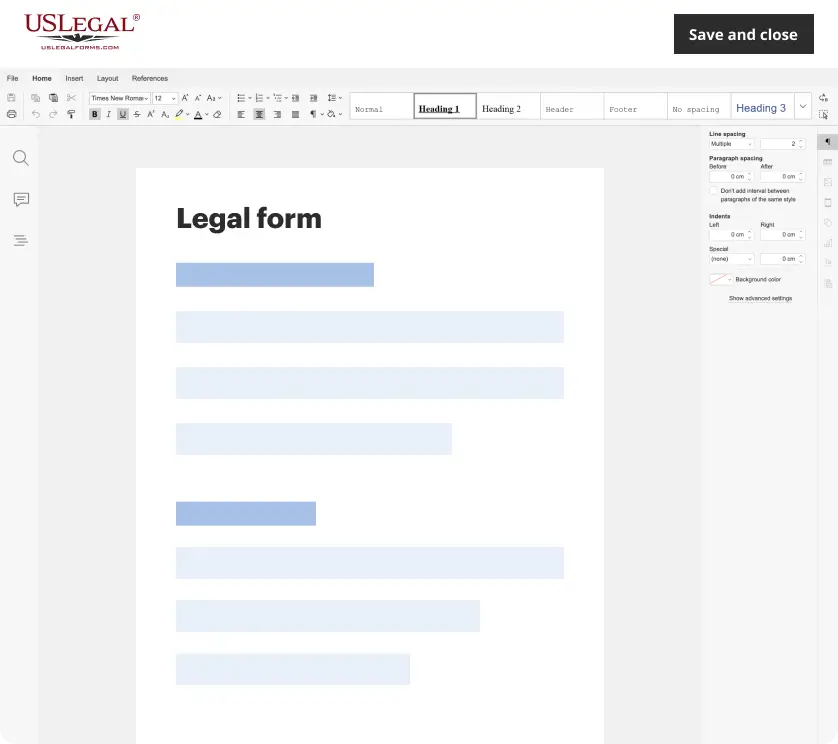
Make edits, fill in missing information, and update formatting in US Legal Forms—just like you would in MS Word.
Download a copy, print it, send it by email, or mail it via USPS—whatever works best for your next step.
Sign and collect signatures with our SignNow integration. Send to multiple recipients, set reminders, and more. Go Premium to unlock E-Sign.
If this form requires notarization, complete it online through a secure video call—no need to meet a notary in person or wait for an appointment.
We protect your documents and personal data by following strict security and privacy standards.
Typical mistakes to avoid
- Neglecting to include all necessary cost categories, leading to underestimation.
- Assuming costs will remain static without considering inflation escalation.
- Failing to adjust for remoteness factors when applicable.
Benefits of completing this form online
- Instant access to a professionally drafted cost estimate template.
- Ability to easily edit and customize fields to fit specific project needs.
- Convenience of downloading and printing the form from home or the office.
Looking for another form?


Form popularity
FAQ
Construction cost estimating is a foundational principle in forecasting the cost of construction of a structure. Project owners also use construction cost estimation to determine a project's feasibility, scope, and the necessary budget allocations.
These terms are the cornerstones of any conversation discussing the ?The Dark Arts of Estimating?. Tender schedules. Non-Price Criteria & Priced Criteria. Direct Pricing & Indirect Pricing. Estimating (rating) methods including First Principles, Second Principles & Bench Marking. Cost Planning.
The four major analytical methods or cost estimation techniques used to develop cost estimates for acquisition programs are Analogy, Parametric (Statistical), Engineering (Bottoms Up), and Actual Costs.
The American Society of Professional Estimators (ASPE) defines estimate levels in the reverse order as Level 1 ? Order (Range) of Magnitude, Level 2 ? Schematic/Conceptual Design, Level 3- Design Development, Level 4 ? Construction Document, and Level 5 ? Bid.>.? ACostE defines a Class I Estimate as definitive, a Class
Three types of estimates: Ballpark, budgetary, and definitive.
AACE developed: Level 1 Screening or Feasibility; Level 2 Conceptual Study or Feasibility; Level 3 Budget Authorization or Control; Level 4 Control or for Bid; Level 5 Check Estimate or for Bid.
Best project cost estimation techniques Expert judgement. If the project team is experienced in delivering the type of work in the scope, they can use their specialised knowledge to estimate costs.Analogous estimate.3-point estimate.Parametric estimate.Bottom-up estimate.
Class 2 estimates are generally prepared to form a detailed contractor control baseline (and update the owner control baseline) against which all project work is monitored in terms of cost and progress control. For contractors, this class of estimate is often used as the bid estimate to establish contract value.