Ohio Registered Land - Trustees Deed
What is this form?
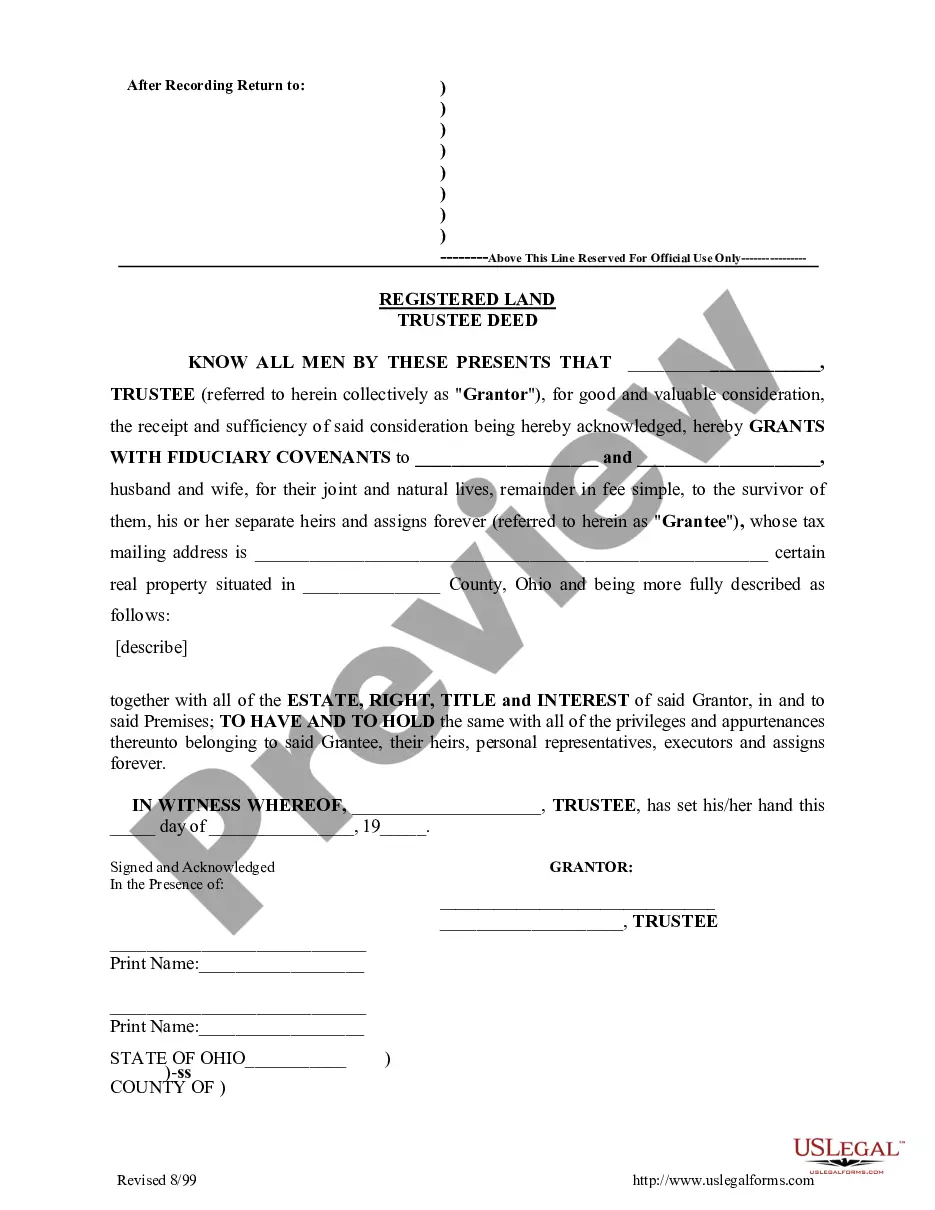
The Registered Land - Trustees Deed is a legal document used to formally transfer ownership of property held in trust. It is specifically tailored for transactions concerning registered land and includes fiduciary covenants to protect the interests of the parties involved. Unlike standard deeds, this form caters to additional requirements for properties under a trust arrangement, ensuring that the transfer adheres to relevant regulations.
What’s included in this form
- Identification of the Grantor as the Trustee.
- Details about the Grantee, including their names and tax mailing address.
- Description of the real property being transferred.
- Provision of fiduciary covenants to secure the interests of the Grantee.
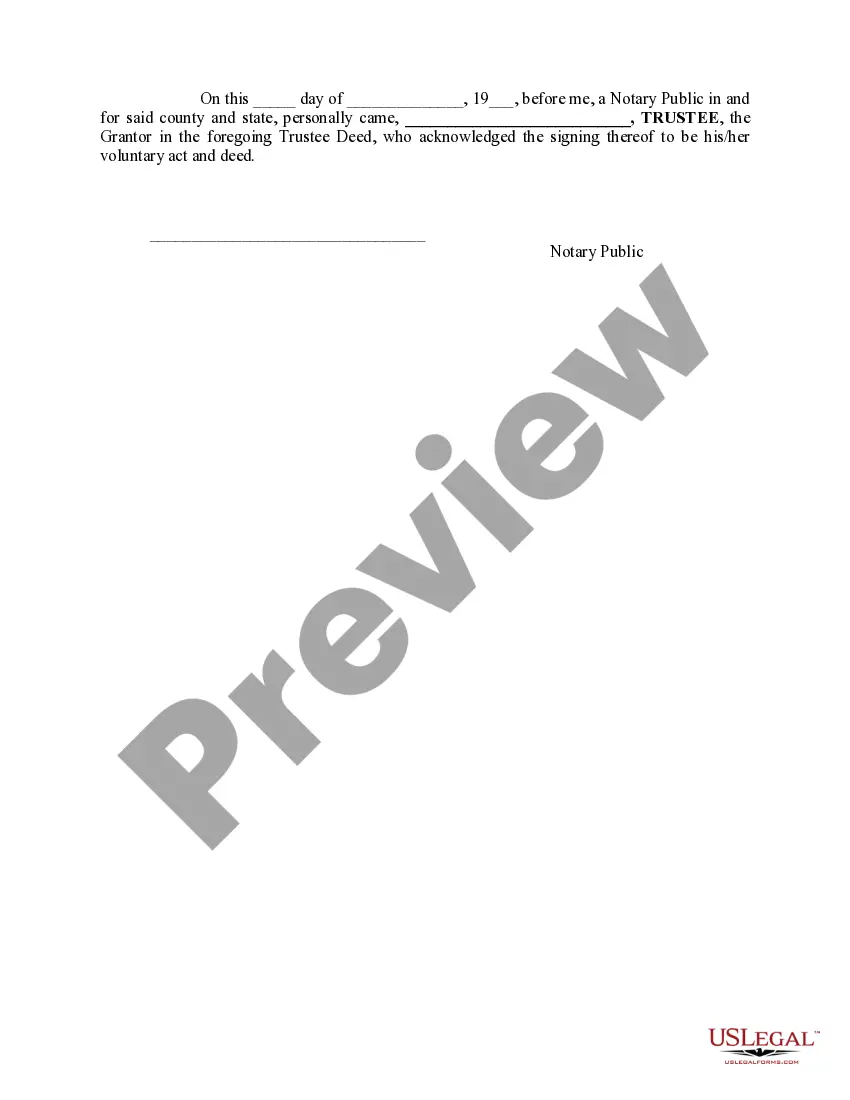
- Signature lines for the Grantor and witnesses, as well as space for notarization.



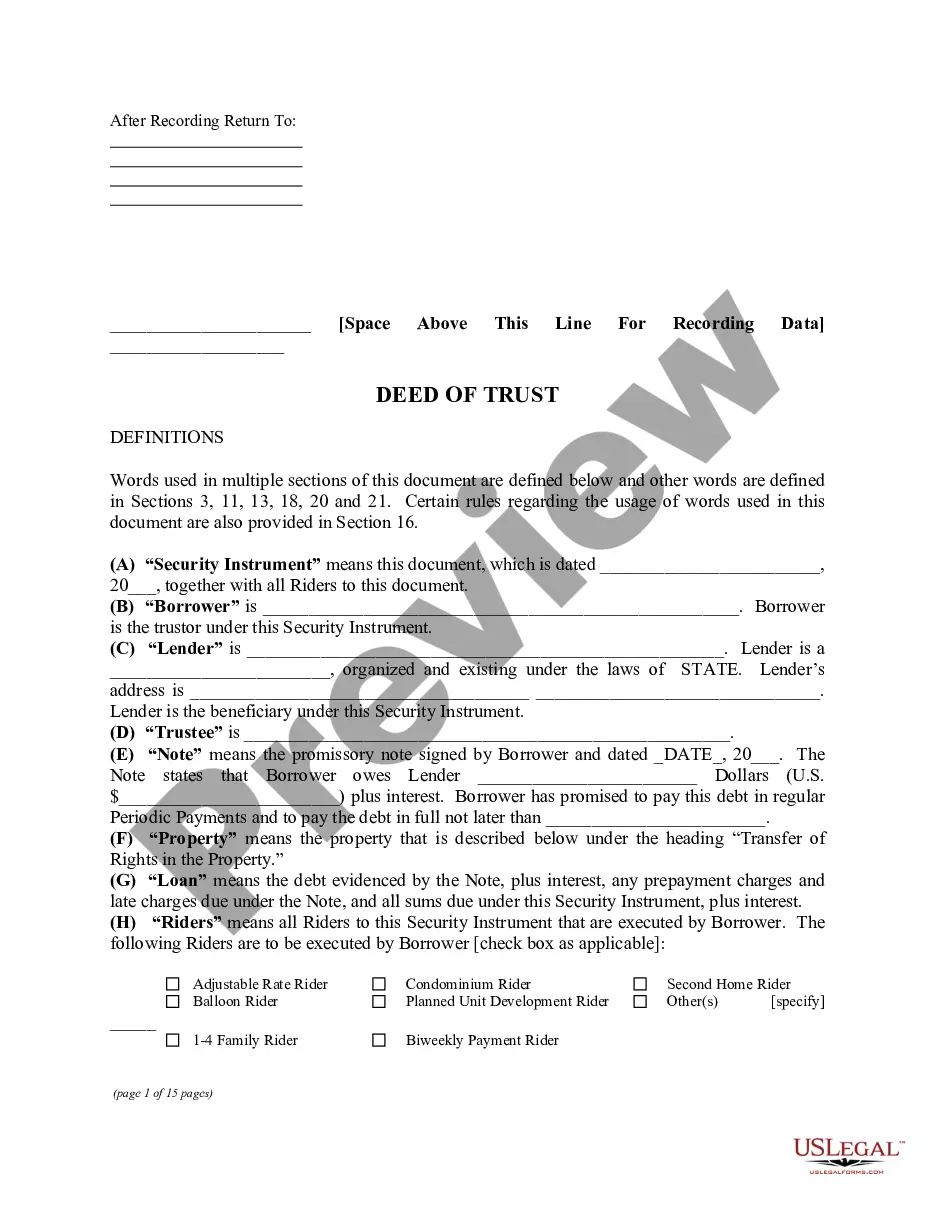
Situations where this form applies
This form is needed when a trustee is transferring property held in trust to beneficiaries. Common scenarios include the closing of a trust account, inheritance transfers where property title needs to be changed, or when trusts need to distribute assets among multiple parties. It is also vital during estate planning processes where land assets are involved.
Who should use this form
- Trustees managing property on behalf of beneficiaries.
- Beneficiaries who are receiving property under a trust arrangement.
- Property owners looking to formalize the transfer of real estate designated under a trust.
- Attorneys assisting clients with real estate transactions involving a trust.
Completing this form step by step
- Identify the parties involved: List the Trustee as the Grantor and the beneficiaries as the Grantees.
- Specify the property: Include a detailed description of the real property being conveyed.
- Enter the date of the transaction and the signature of the Grantor.
- Have the document signed in the presence of witnesses if required by state law.
- Notarize the form to ensure its legal validity.
Is notarization required?
To make this form legally binding, it must be notarized. Our online notarization service, powered by Notarize, lets you verify and sign documents remotely through an encrypted video session.
Get your form ready online
Our built-in tools help you complete, sign, share, and store your documents in one place.
Make edits, fill in missing information, and update formatting in US Legal Forms—just like you would in MS Word.
Download a copy, print it, send it by email, or mail it via USPS—whatever works best for your next step.
Sign and collect signatures with our SignNow integration. Send to multiple recipients, set reminders, and more. Go Premium to unlock E-Sign.
If this form requires notarization, complete it online through a secure video call—no need to meet a notary in person or wait for an appointment.
We protect your documents and personal data by following strict security and privacy standards.
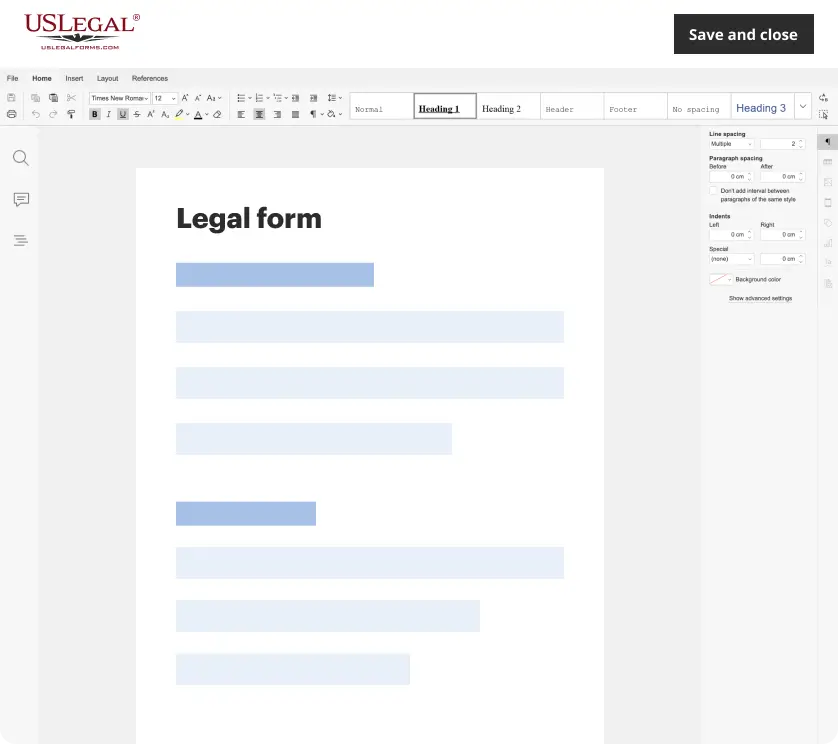
Make edits, fill in missing information, and update formatting in US Legal Forms—just like you would in MS Word.
Download a copy, print it, send it by email, or mail it via USPS—whatever works best for your next step.
Sign and collect signatures with our SignNow integration. Send to multiple recipients, set reminders, and more. Go Premium to unlock E-Sign.

If this form requires notarization, complete it online through a secure video call—no need to meet a notary in person or wait for an appointment.
We protect your documents and personal data by following strict security and privacy standards.
Common mistakes
- Failing to properly describe the property being transferred.
- Omitting essential signatures or date fields.
- Not complying with state-specific notarization requirements.
- Using outdated forms that do not reflect current legal standards.
Benefits of using this form online
- Convenient access to legally vetted forms available for immediate download.
- Editable templates allow customization to suit individual circumstances.
- Reliable and accurate content that meets legal standards.
Looking for another form?
Form popularity
FAQ
In a deed of trust, the borrower is called the trustor and the lender is the beneficiary. The trustee holds title to the property until the trustor has fully repaid the loan to the beneficiary, at which time the lender notifies the trustee, who then transfers full title of the property to the trustor.
Go to the Deed Transfer Department to obtain a transfer form for a quit claim deed or warranty deed. Take the form, along with the person to whom the the property is being transferred, to a notary public. Take the form back to the Deed Transfer Department and turn it in to the County Auditor.
The trustee will then issue a reconveyance deed, which gives the legal title of the property to you.Instead, the original trustee, or sometimes the loan servicing company, will appoint a new Substitute Trustee to handle the foreclosure. To do this, they must file an Appointment of Substitute Trustees.
Like all deeds, these two legal documents are both used to transfer titles from one owner to another. A warranty deed protects property owners from future claims that someone else actually owns a portion (or all) of their property, while trustee deeds protect lenders when borrowers default on their mortgage loans.