Mississippi Motion to Join Additional Party
Understanding this form
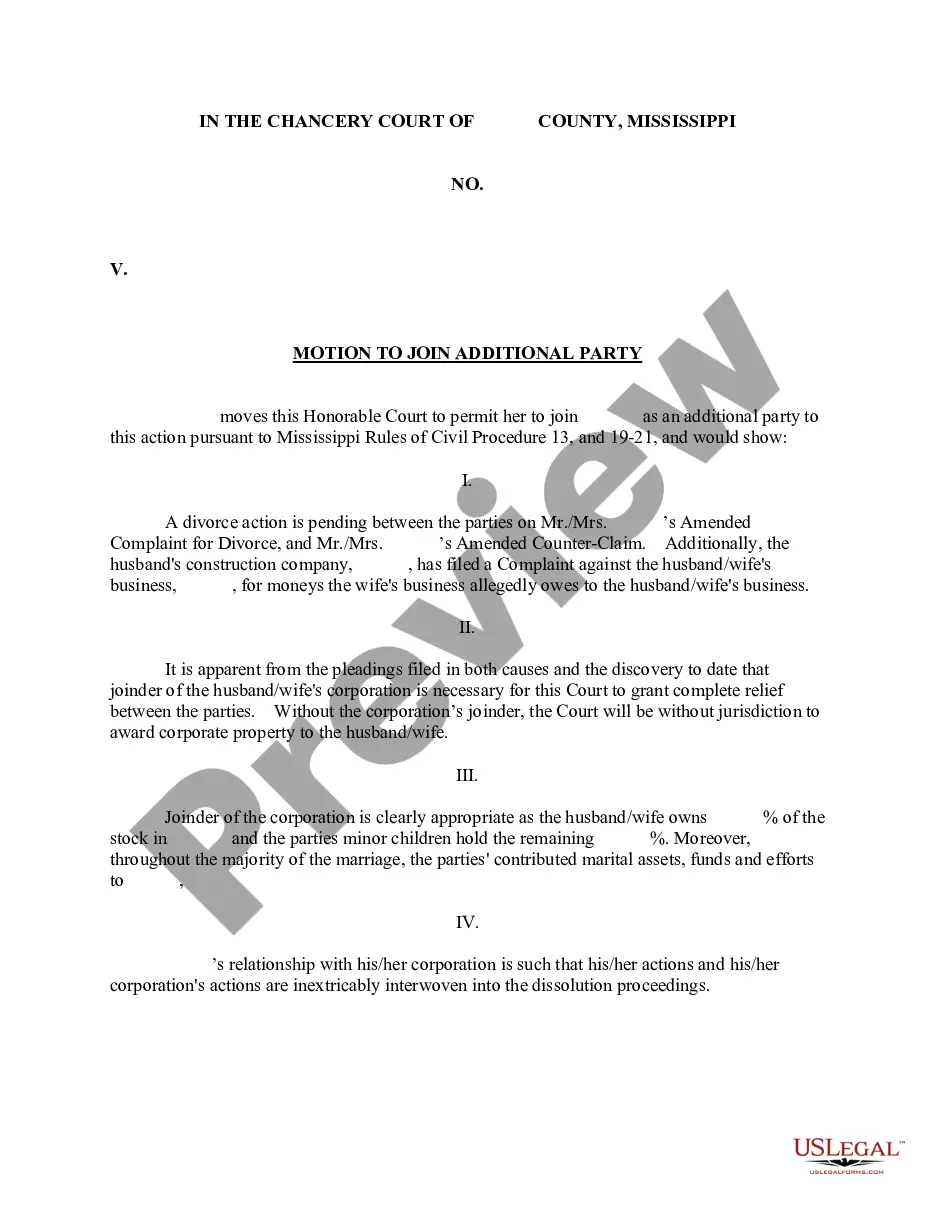
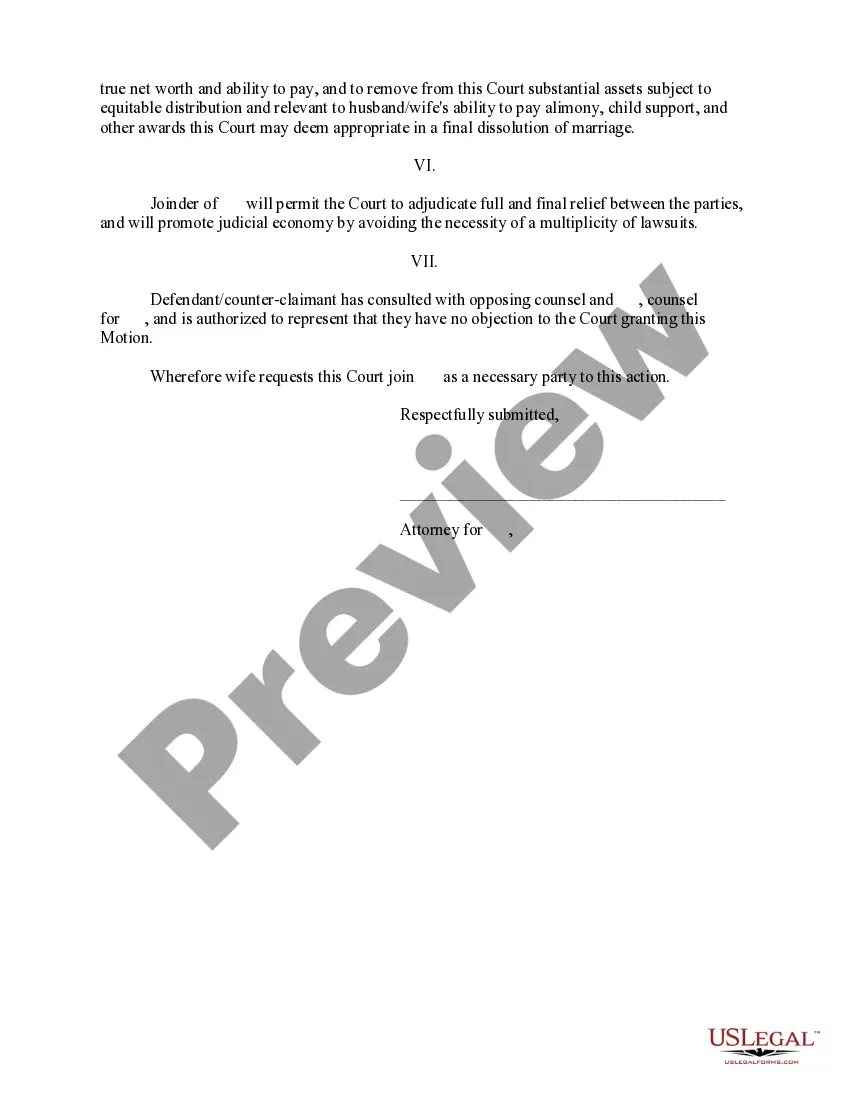
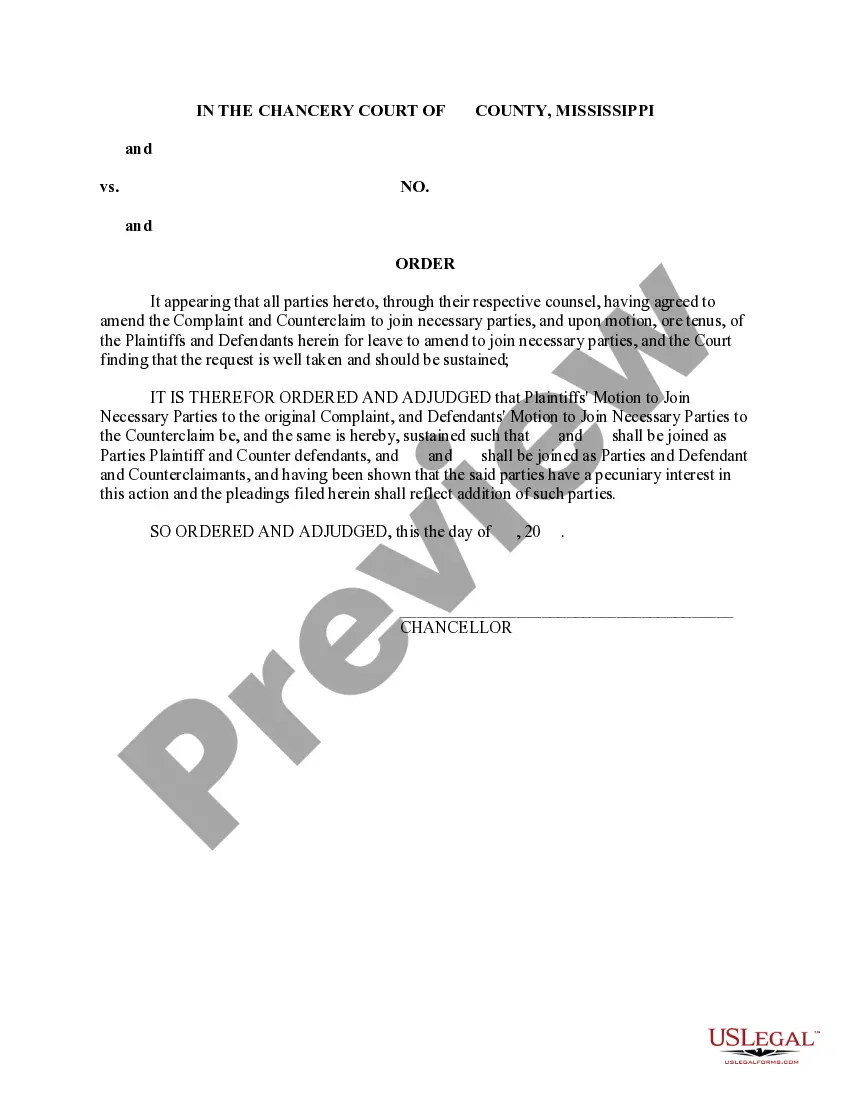
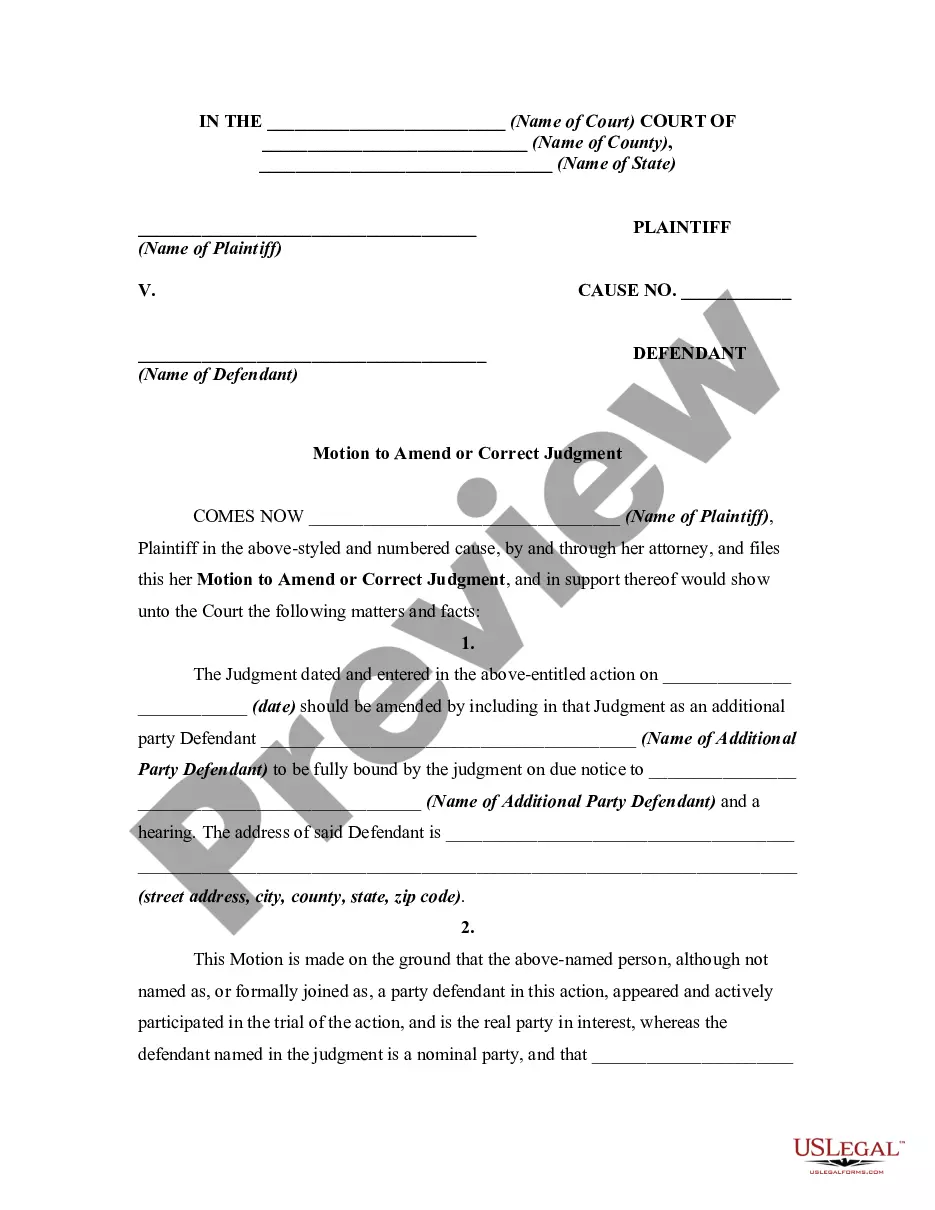
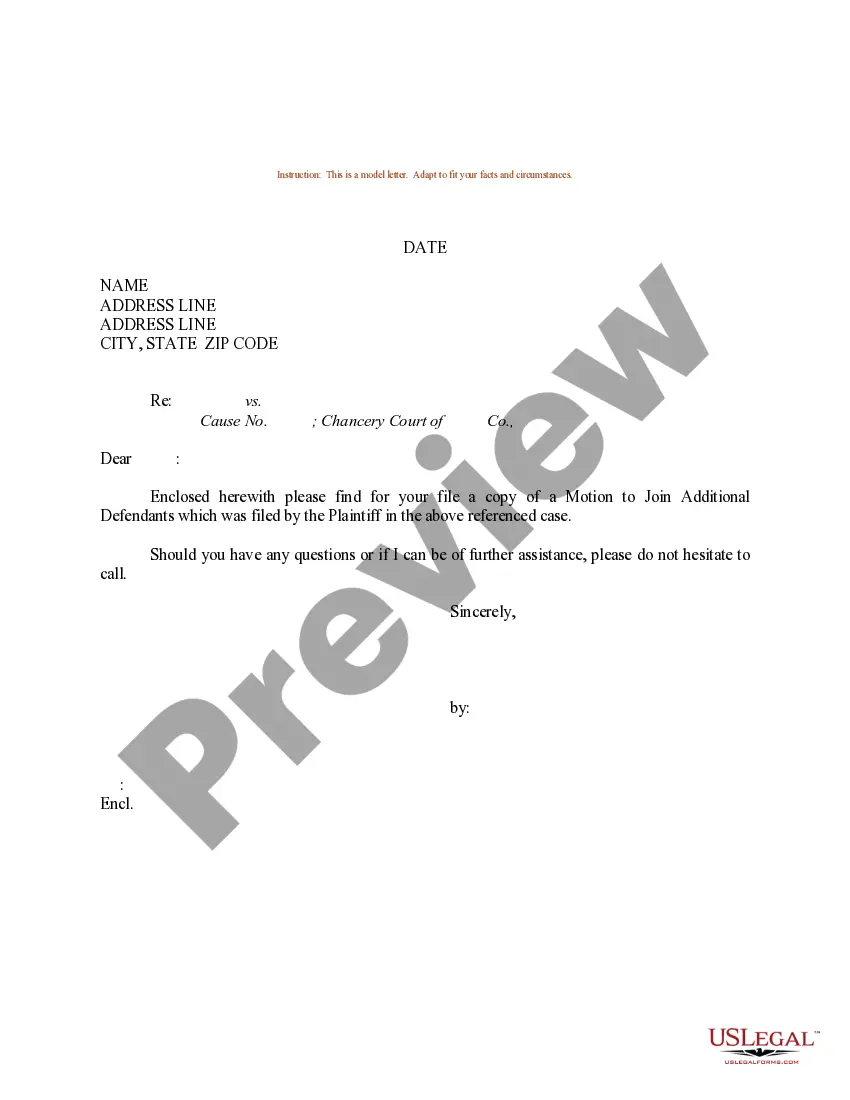
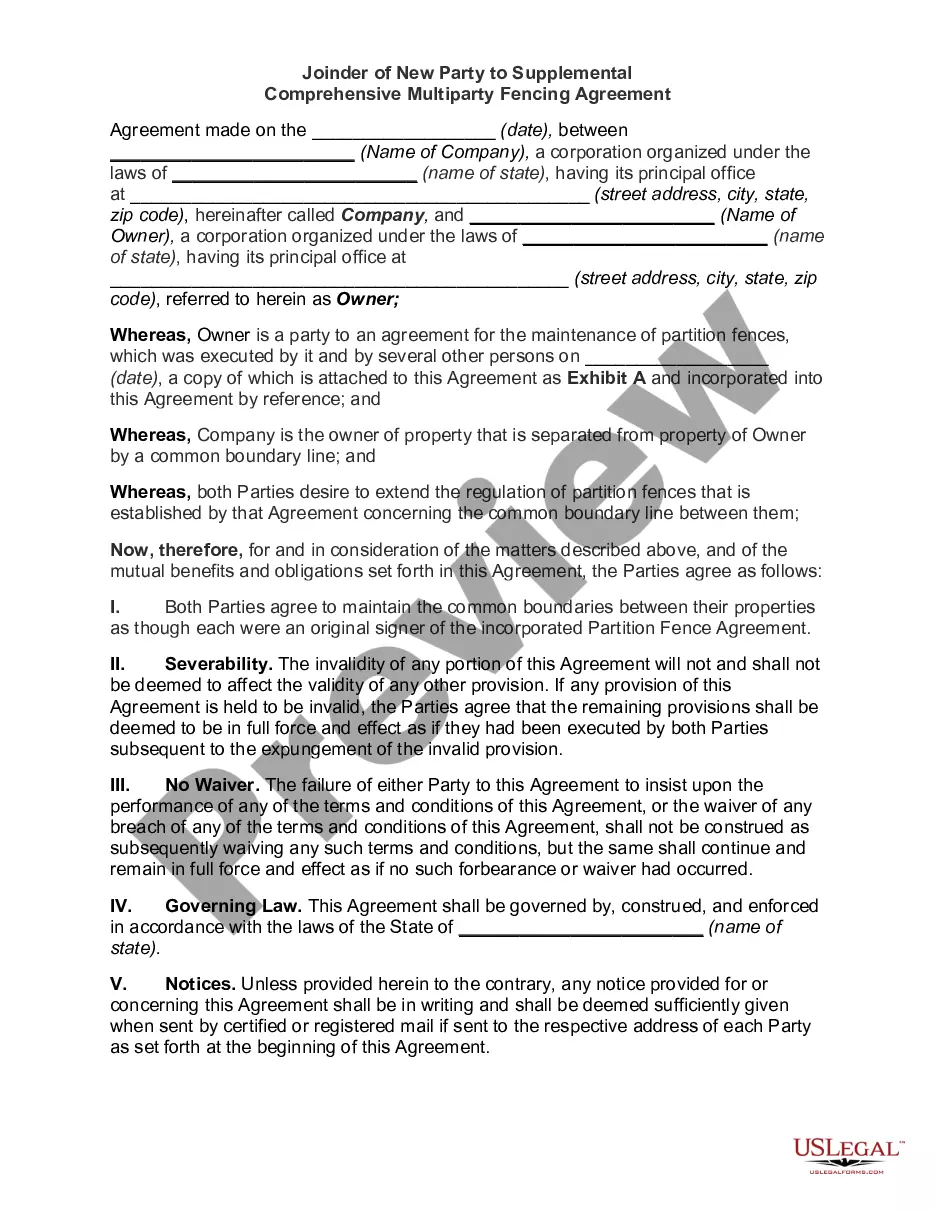
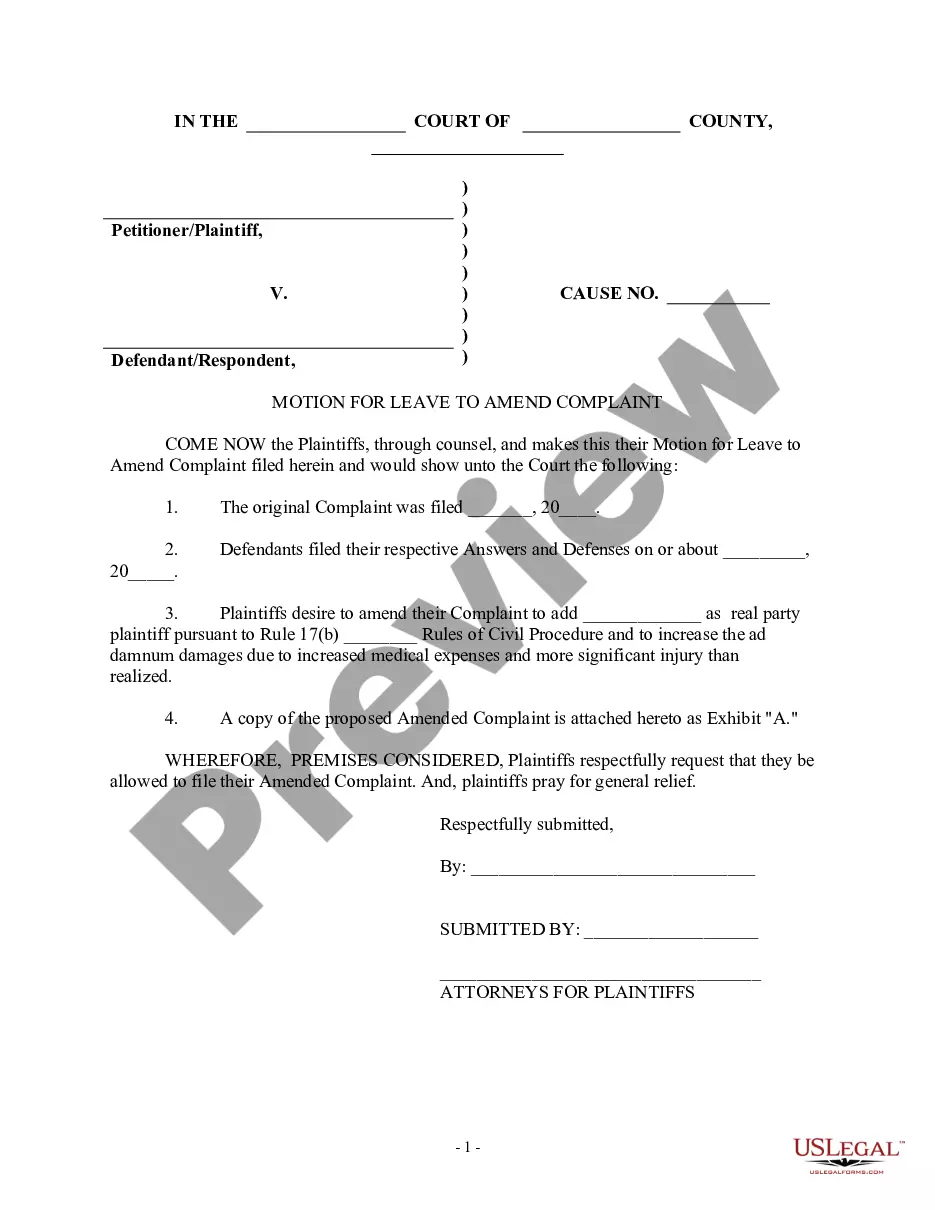
A Motion to Join Additional Party is a formal request made to the court to add another individual or entity as a party in a legal proceeding. This motion is essential in ensuring that all relevant parties are included in the case, allowing the court to provide complete and fair relief. It is particularly relevant in situations involving divorce and financial disputes, where additional parties must be involved to address all issues effectively. This form differs from other motions in that it specifically focuses on joinder, which is crucial for comprehensive resolutions in legal matters.
Key parts of this document
- Introduction: Specifies the request to join an additional party and references the relevant court rules.
- Pending actions: Describes ongoing divorce proceedings and related claims involving the parties.
- Necessity of joinder: Explains why including the additional party is essential for the court's jurisdiction and fair resolution.
- Relationship context: Details the connections between the parties and the business involved in the case.
- Authority statement: Confirms that opposing counsel has no objection to the motion.
When to use this document
This form should be used when there is a need to include an additional party in ongoing legal proceedings, such as a divorce case, where their involvement is necessary for a complete resolution of the issues at hand. Typical scenarios include situations where one party's business interests are affected by the outcome, or where asset distribution requires the participation of another entity that may hold relevant financial information.
Who needs this form
- Individuals involved in divorce proceedings where financial aspects are under dispute.
- Parties who believe that an additional entity holds relevant information or assets related to the case.
- Attorneys representing clients needing to add parties for comprehensive legal resolution.
Completing this form step by step
- Identify the parties involved: Clearly state the names of the individuals and the additional party to be joined.
- Reference the case background: Provide context about ongoing divorce proceedings and relevant financial disputes.
- Justify the necessity of joinder: Include reasons why the additional party is crucial for resolving the case.
- Consult with opposing counsel: Verify if there are any objections to the motion and document this communication.
- Sign the motion: Ensure that the attorney representing the party signs the completed form before submission.
Notarization requirements for this form
This form does not typically require notarization unless specified by local law.
Get your form ready online
Our built-in tools help you complete, sign, share, and store your documents in one place.
Make edits, fill in missing information, and update formatting in US Legal Forms—just like you would in MS Word.
Download a copy, print it, send it by email, or mail it via USPS—whatever works best for your next step.
Sign and collect signatures with our SignNow integration. Send to multiple recipients, set reminders, and more. Go Premium to unlock E-Sign.
If this form requires notarization, complete it online through a secure video call—no need to meet a notary in person or wait for an appointment.
We protect your documents and personal data by following strict security and privacy standards.

Make edits, fill in missing information, and update formatting in US Legal Forms—just like you would in MS Word.

Download a copy, print it, send it by email, or mail it via USPS—whatever works best for your next step.

Sign and collect signatures with our SignNow integration. Send to multiple recipients, set reminders, and more. Go Premium to unlock E-Sign.

If this form requires notarization, complete it online through a secure video call—no need to meet a notary in person or wait for an appointment.

We protect your documents and personal data by following strict security and privacy standards.
Common mistakes
- Failing to provide sufficient justification for the joinder of additional parties.
- Not adhering to specific local court procedures or rules regarding the filing of motions.
- Neglecting to consult with opposing counsel, which could lead to objections or delays in proceedings.
Advantages of online completion
- Convenience: Download and complete the form from anywhere, at any time.
- Editability: Easily tailor the form to your specific situation without hassle.
- Reliability: Forms are drafted by licensed attorneys to ensure compliance with legal standards.
Looking for another form?


Form popularity
FAQ
A "motion" is simply a formal request to a court that it do something or decide an issue in favor of the party that asks for it. "Granted" means the court agreed with the request, and did or decided in favor of the requester.
Joinder of Causes of Action: A plaintiff may unite in the same suit several causes of action against the same defendant, or the same defendants jointly; and any plaintiffs having cause of action in which they are jointly interested against the same defendant, or the same defendants jointly may unite such causes of
Joinder. Joinder is a process by which parties and claims are added to an ongoing lawsuit. The typical litigation scenario begins with a plaintiff who enters into a lawsuit by suing a defendant. The plaintiff has a claim against the defendant for which he or she seeks some type of relief.
21 provides that misjoinder of parties is not ground for dismissal of an action, and that parties may be dropped or added by court order on motion of any party or of the court's own initiative at any stage in the action and on such terms as are just.
Effect of a Rule 12 Motion - Absent a court order setting a different time, a Rule 12 motion extends the time to file a responsive pleading until 14 days after the court's denial of the motion or deferral to trial or, if more definite statement ordered, 14 days after service of the more definite statement. FED.
In law, a joinder is the joining of two or more legal issues together. Procedurally, a joinder allows multiple issues to be heard in one hearing or trial and is done when the issues or parties involved overlap sufficiently to make the process more efficient or more fair.
Joinder of issue, is a point in a lawsuit when the defendant has challenged some or all of the plaintiff's allegations of fact or when it is known which legal questions are in dispute--in other words, when both parties are accepting that the particular issue is in dispute the "issue is joined." Usually this point
A motion is an application to the court made by the prosecutor or defense attorney, requesting that the court make a decision on a certain issue before the trial begins. The motion can affect the trial, courtroom, defendants, evidence, or testimony. Only judges decide the outcome of motions.
A Motion for Joinder is a request made to the court by which a party is asking that a person or entity be brought before the Family Law Court and made to comply with its orders.