Mississippi Order Setting Time and Place of Hearing
Overview of this form
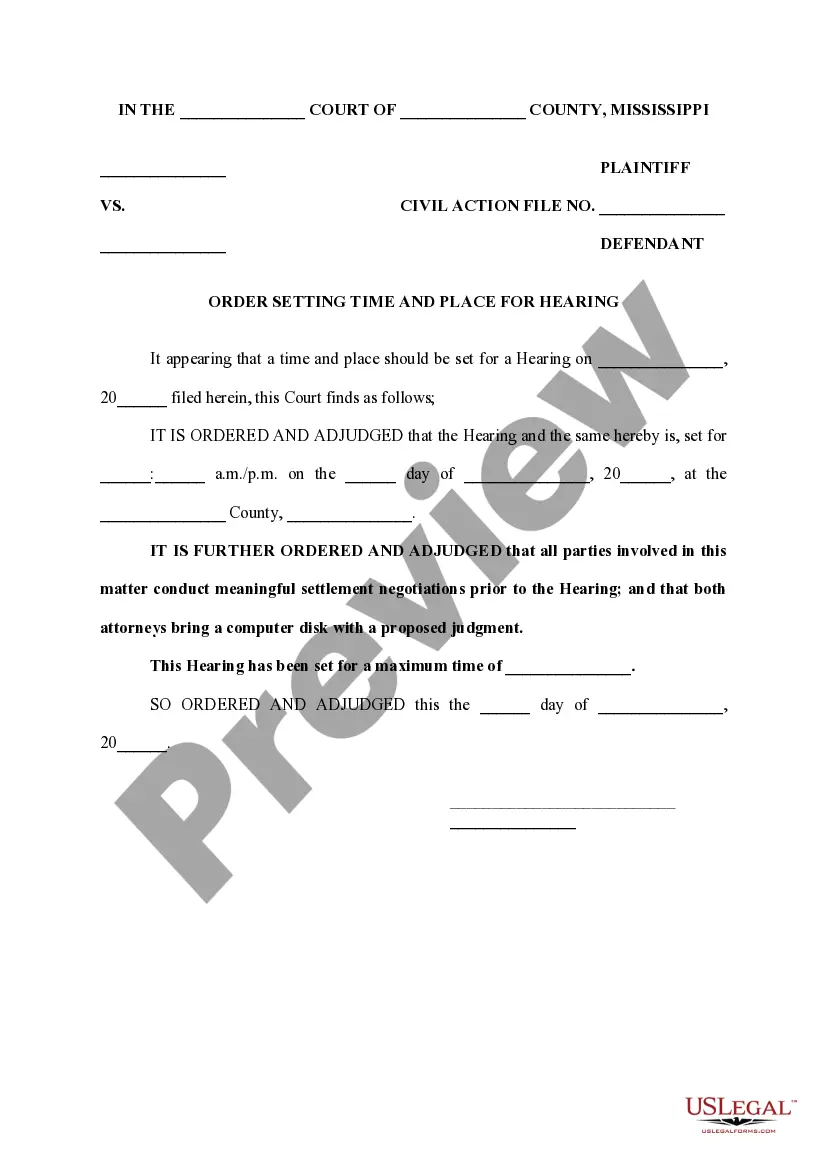
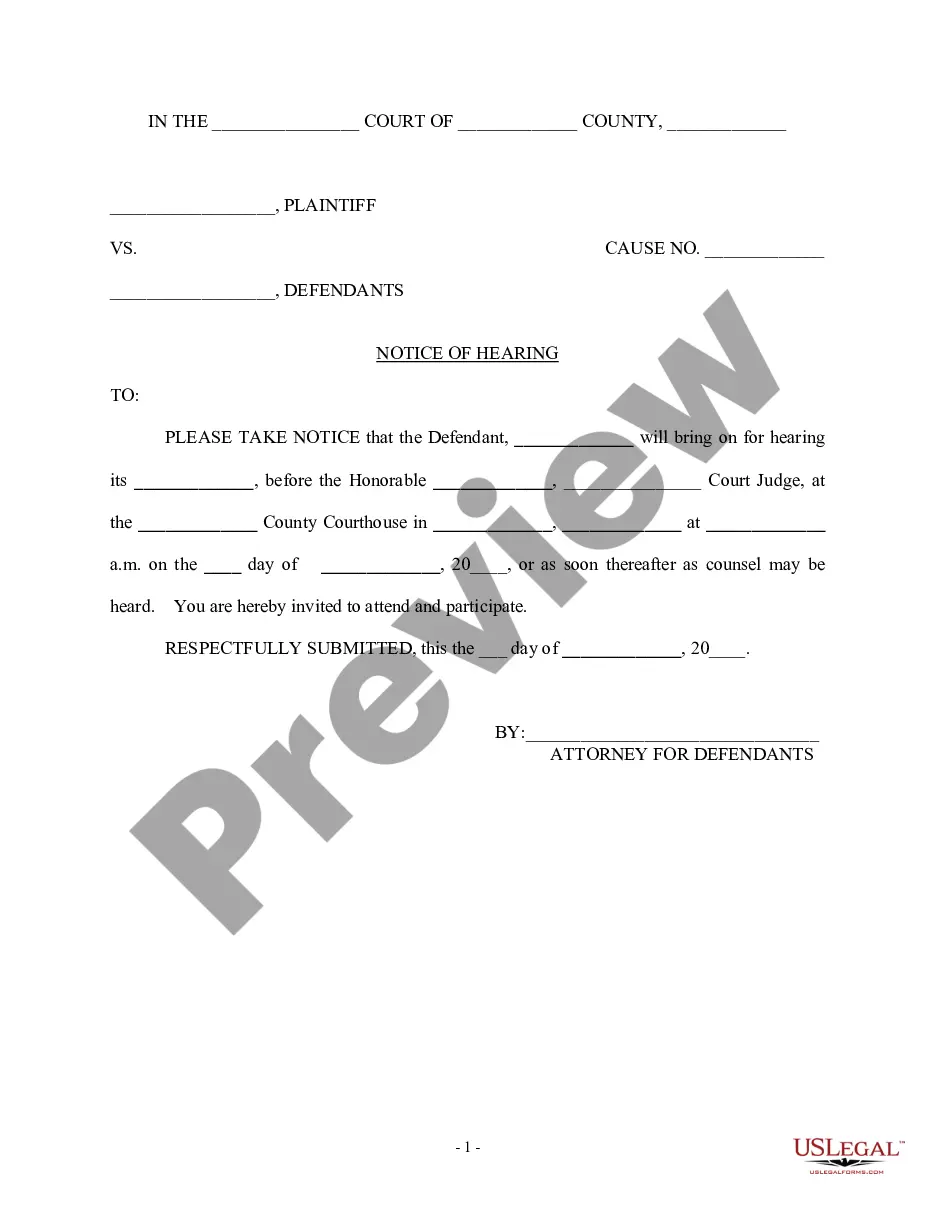
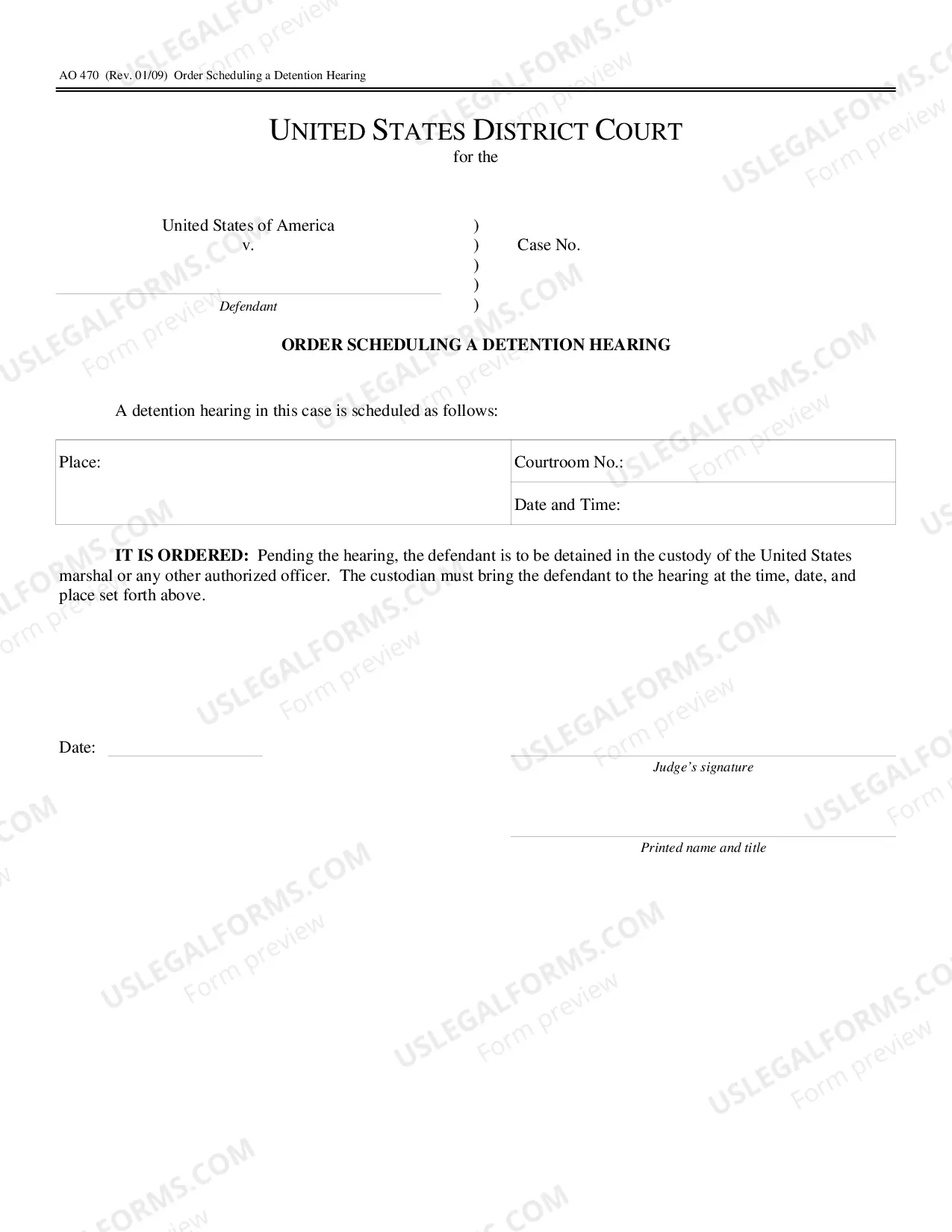
The Order Setting Time and Place of Hearing is a legal document used by the court to officially schedule a hearing at a specific date and time. This form ensures that all parties involved are required to engage in meaningful settlement negotiations before the hearing, which is essential for resolving disputes amicably. Unlike other court forms, this order is focused specifically on establishing logistics for the upcoming hearing and underscores the importance of negotiations prior to the judicial process.
Key parts of this document
- Heading and court identification with name of court and county
- Names of the plaintiff and defendant, including the legal action file number
- Specific date and time for the hearing
- Location of the hearing (county and specific address)
- Requirement for meaningful settlement negotiations before the hearing
- Instructions for attorneys regarding proposed judgment documentation

Situations where this form applies
This form is needed when a court requires a clear schedule for a hearing related to a civil action. Use this document when all parties need to come together to negotiate and resolve their disputes before a judge intervenes. It is often utilized in civil cases where negotiation is encouraged to avoid prolonged litigation.
Who should use this form
- Parties involved in a civil lawsuit who are required to attend a hearing
- Attorneys representing any party in the legal action
- Individuals who wish to ensure compliance with court scheduling requirements
How to complete this form
- Identify the correct court and county where the case is being heard.
- Fill in the names of the plaintiff and defendant, along with the civil action file number.
- Specify the date and time for the hearing, including a.m. or p.m.
- Provide the location details for the hearing, including the county and address.
- Ensure all parties understand their obligation to negotiate before the hearing.
- Have attorneys prepare a proposed judgment on a computer disk for submission at the hearing.
Does this document require notarization?
This form does not typically require notarization unless specified by local law. Always check jurisdictional requirements to confirm.
Get your form ready online
Our built-in tools help you complete, sign, share, and store your documents in one place.
Make edits, fill in missing information, and update formatting in US Legal Forms—just like you would in MS Word.
Download a copy, print it, send it by email, or mail it via USPS—whatever works best for your next step.
Sign and collect signatures with our SignNow integration. Send to multiple recipients, set reminders, and more. Go Premium to unlock E-Sign.
If this form requires notarization, complete it online through a secure video call—no need to meet a notary in person or wait for an appointment.
We protect your documents and personal data by following strict security and privacy standards.

Make edits, fill in missing information, and update formatting in US Legal Forms—just like you would in MS Word.

Download a copy, print it, send it by email, or mail it via USPS—whatever works best for your next step.

Sign and collect signatures with our SignNow integration. Send to multiple recipients, set reminders, and more. Go Premium to unlock E-Sign.

If this form requires notarization, complete it online through a secure video call—no need to meet a notary in person or wait for an appointment.

We protect your documents and personal data by following strict security and privacy standards.
Common mistakes
- Failing to fill in the date and time accurately, leading to scheduling issues.
- Not confirming the hearing location, which could result in confusion on the day of the hearing.
- Neglecting to inform all parties about the settlement negotiation requirement.
Why use this form online
- Convenient access to the form allows for quick completion and filing.
- Editable templates help ensure accuracy and compliance with legal standards.
- Reliability of forms drafted by licensed attorneys helps to mitigate errors.
Looking for another form?

Form popularity
FAQ
Unlike a criminal complaint which can only be filed 2 times without cause there is no limit on going to the grand jury. At some point there may come a time when the prosecutor decides there in not enough evidence to proceed.
You have a right to have a preliminary hearing within 10 court days of your initial arraignment. Even if you waive your right to have a speedy preliminary hearing within the initial 10 days, the court must still set your hearing within 60 days of your arraignment unless you waive this right as well.
A charge is brought against someone by a prosecutor. But in an indictment, a grand jury brings the charges against the defendant. All indictments are charges, but not all charges are indictments.
Every person arrested on a felony charge in Mississippi has a right to an initial appearance before a judge within 48 hours, unless the defendant has been indicted by a grand jury or is released from custody prior to the initial appearance occurring.
Sixteen-year-old William Haymon has spent more than 500 days in an adult jail in rural Lexington, Mississippi. There are no state rules governing how long a person can be incarcerated without being formally charged with a crime.
The criminal statute of limitations requires prosecutors to file criminal charges against a suspect within two years for misdemeanors and within five years for certain felonies, but there is no time limit in Mississippi for charges of murder, kidnapping, rape, burglary, robbery, larceny, and several other serious
If you are selected to serve on this Grand jury panel, you will serve approximately one to three days every month for an eighteen (18) month period.