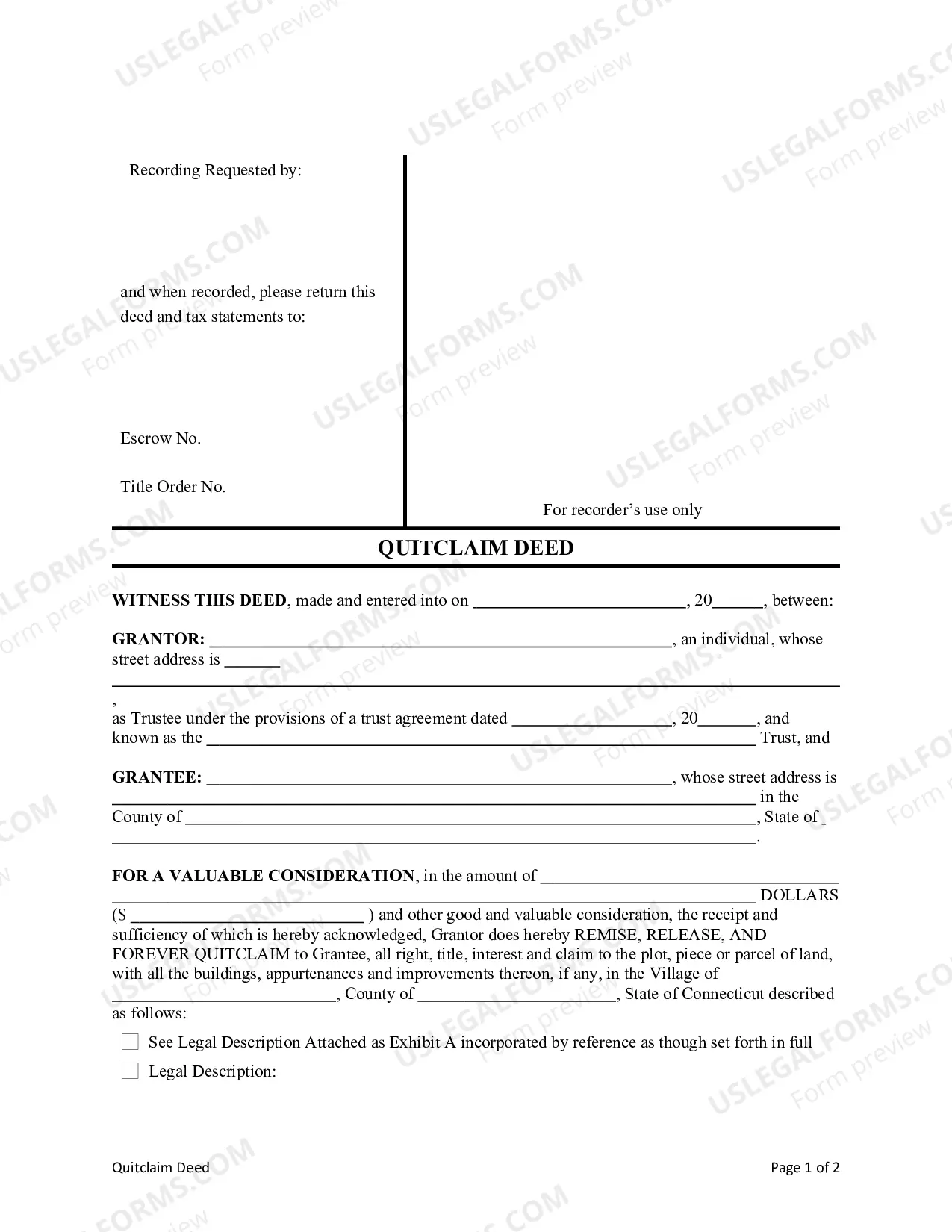
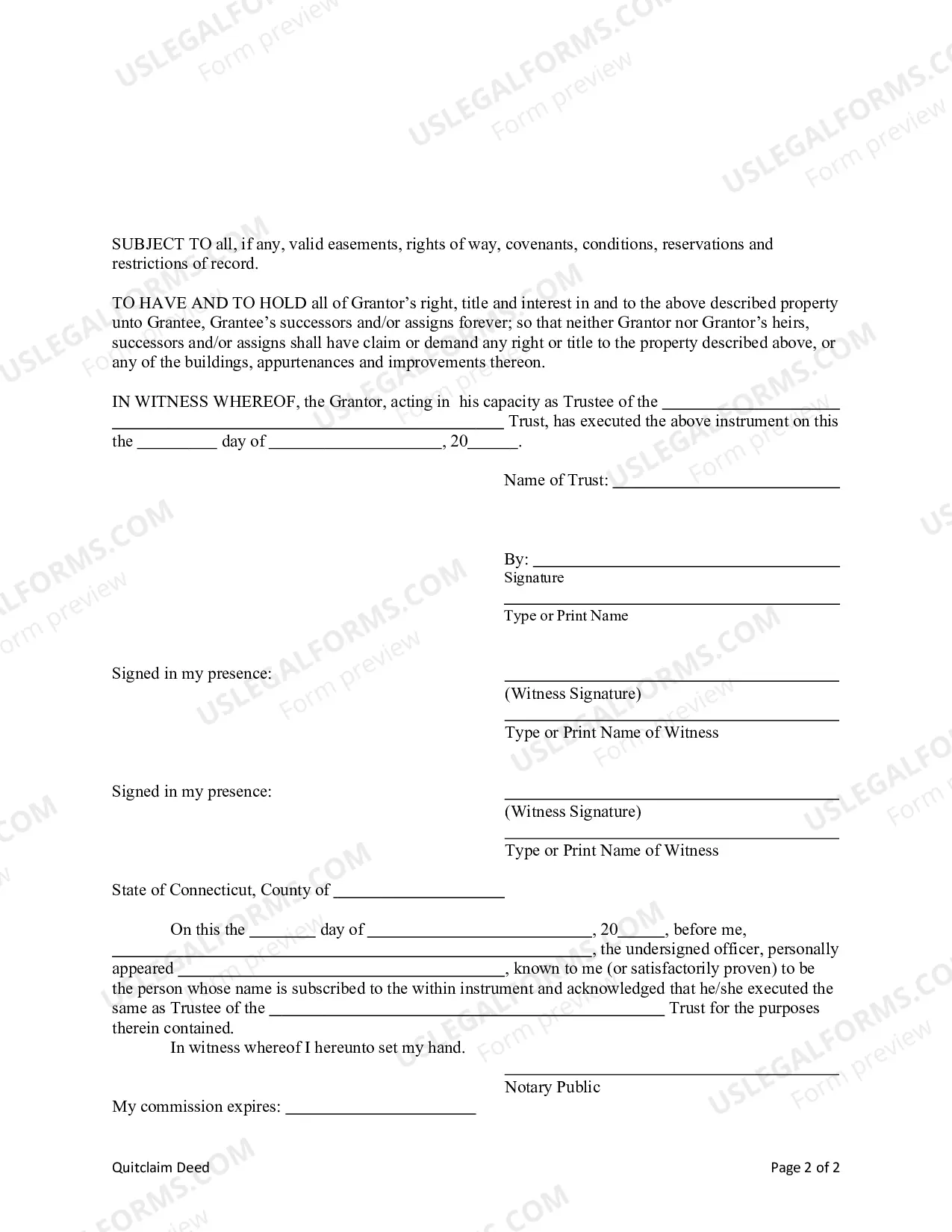
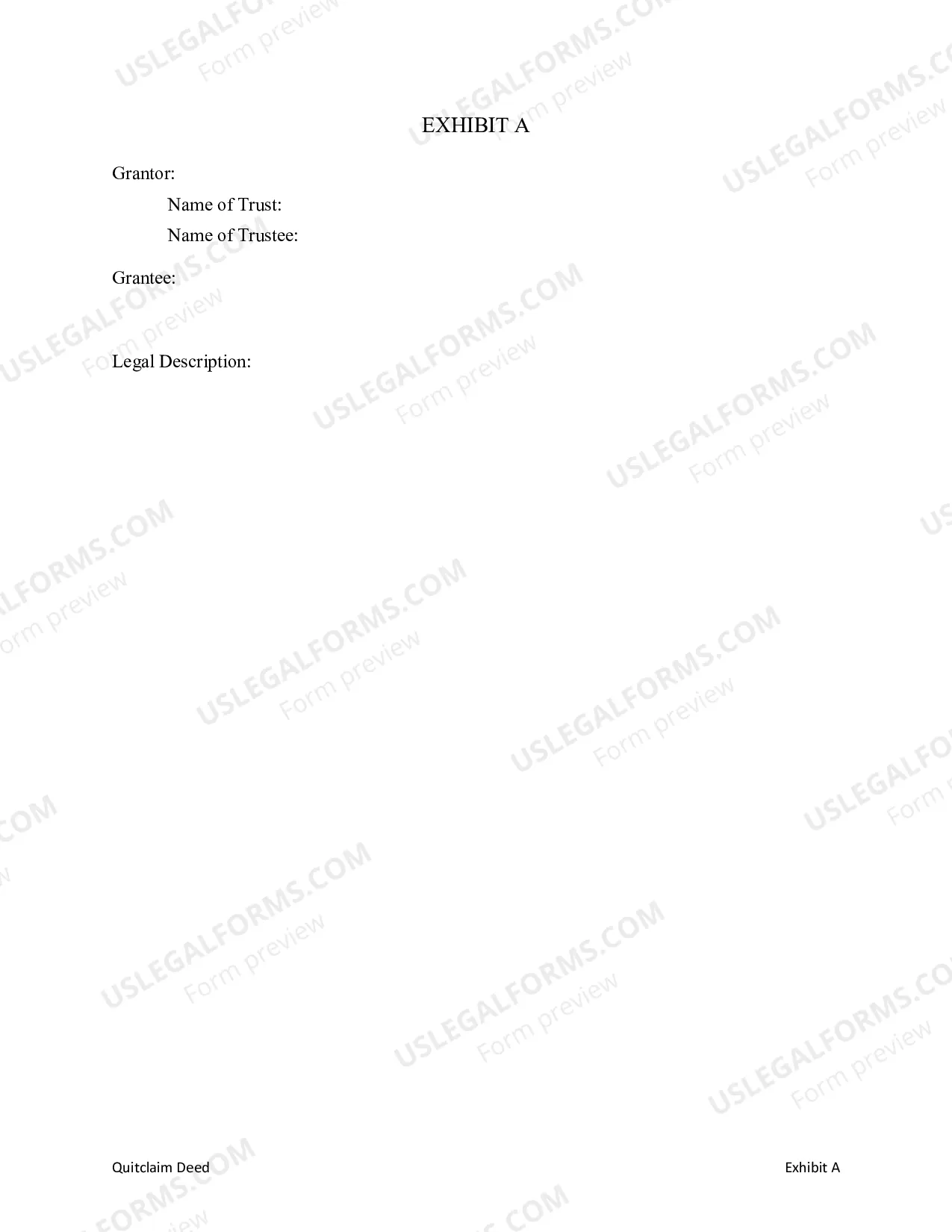
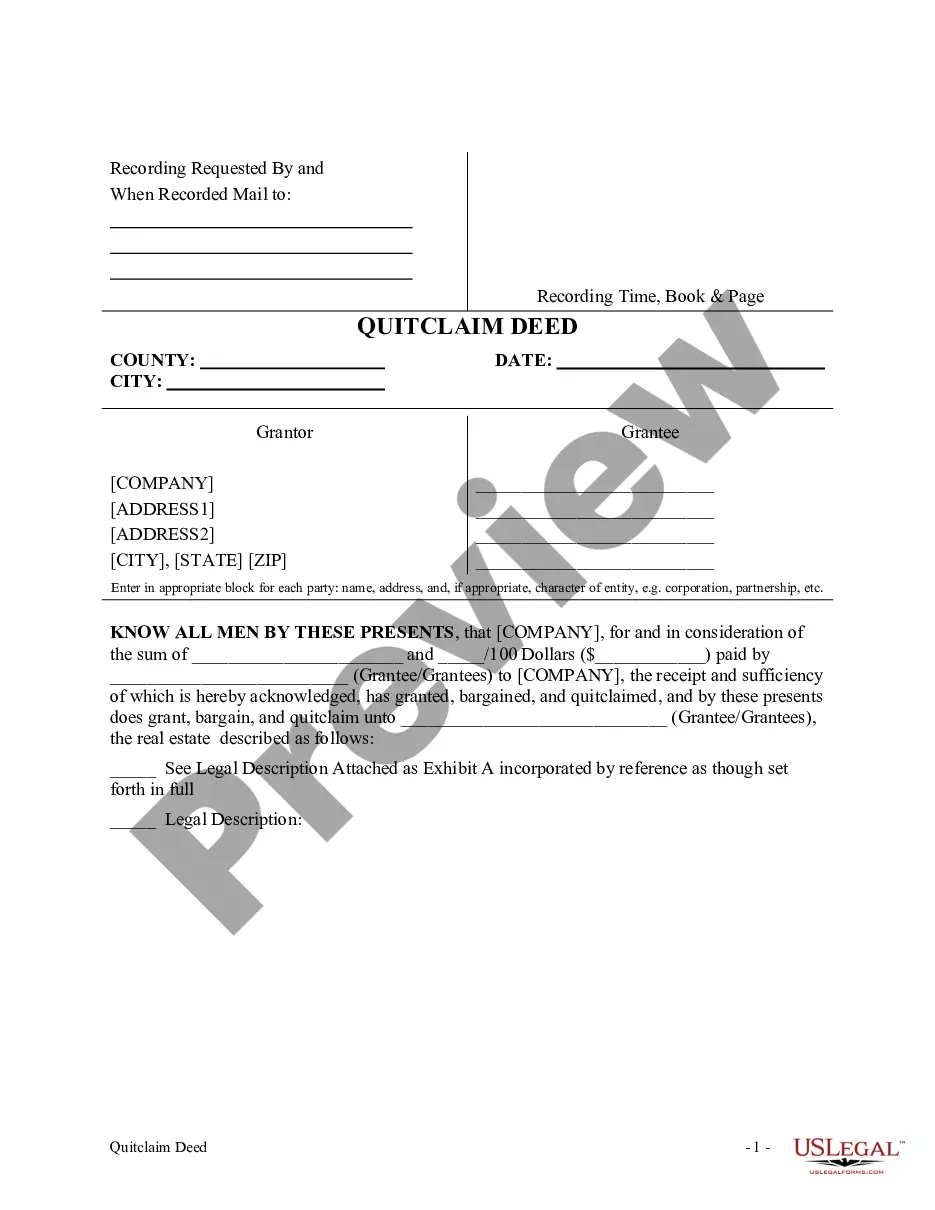
Connecticut Quitclaim Deed from a Trust to an Individual

Does this form need to be notarized?
Notarization is generally not required for this form. However, certain states or situations might demand it. You can complete notarization online through US Legal Forms, powered by Notarize, using a verified video call available anytime.
Get your form ready online
Our built-in tools help you complete, sign, share, and store your documents in one place.
Make edits, fill in missing information, and update formatting in US Legal Forms—just like you would in MS Word.
Download a copy, print it, send it by email, or mail it via USPS—whatever works best for your next step.
Sign and collect signatures with our SignNow integration. Send to multiple recipients, set reminders, and more. Go Premium to unlock E-Sign.
If this form requires notarization, complete it online through a secure video call—no need to meet a notary in person or wait for an appointment.
We protect your documents and personal data by following strict security and privacy standards.

Make edits, fill in missing information, and update formatting in US Legal Forms—just like you would in MS Word.

Download a copy, print it, send it by email, or mail it via USPS—whatever works best for your next step.

Sign and collect signatures with our SignNow integration. Send to multiple recipients, set reminders, and more. Go Premium to unlock E-Sign.

If this form requires notarization, complete it online through a secure video call—no need to meet a notary in person or wait for an appointment.

We protect your documents and personal data by following strict security and privacy standards.
Looking for another form?
Form popularity
FAQ
You can certainly do a quitclaim deed yourself if you're comfortable with the paperwork and local laws. Just remember that accuracy is key, as incorrect information can lead to complications later. If you prefer, you can use tools from US Legal Forms to assist you in crafting your Connecticut Quitclaim Deed from a Trust to an Individual. This option combines independence with support for a smoother process.
Yes, you can fill out a quitclaim deed yourself in Connecticut. It is important to ensure that you have all required information included, such as the names of both parties and property details. Using US Legal Forms can provide you with templates and guidance to help you properly draft the Connecticut Quitclaim Deed from a Trust to an Individual. This way, you minimize the risk of errors.
To file a quitclaim deed in Connecticut, start by preparing the deed document with the required information regarding the property and both parties involved. After you complete the document, it needs to be signed and notarized. You can then file the deed with your local town clerk’s office. Utilizing an online platform like US Legal Forms can simplify this process with guided assistance.
Filing a Connecticut Quitclaim Deed from a Trust to an Individual requires you to complete the deed form accurately. You can obtain the necessary form from a trusted online service or a local courthouse. After filling it out, make sure to sign it in front of a notary public. Finally, submit the signed deed at the local land records office to complete the filing process.
A quitclaim deed may not be suitable if the property has significant encumbrances, such as liens or mortgages, because it does not guarantee clear title. Additionally, it should not be used for transactions where both parties require a formal title search or insurance to ensure ownership. If you're dealing with complex real estate issues, you may want to consult legal experts or utilize resources from uslegalforms for better clarity and guidance.
Removing someone from a deed of trust can be done by executing a Connecticut quitclaim deed from the trust to the remaining individuals. This process generally involves filling out the necessary forms, obtaining signatures, and notarizing the document. After completion, it is essential to file the deed with the appropriate municipality to formalize the removal. Consider reaching out to uslegalforms for a seamless experience in creating this documentation.
To create a valid Connecticut quitclaim deed from a trust to an individual, you must include essential elements such as the names of the grantor and grantee, a description of the property, and the signatures of those involved. It is crucial to ensure that the trust is properly established and documented. Additionally, make sure to record the deed with the local town clerk to protect the transfer legally. You may find uslegalforms helpful in drafting your deed accurately.
The choice between a quitclaim deed and a trust depends on your specific circumstances. A quitclaim deed is suitable for straightforward property transfers, while a trust can provide more robust estate planning and asset protection. If you are considering a Connecticut quitclaim deed from a trust to an individual, weigh the benefits of immediate transfer versus long-term planning. Consult resources like US Legal Forms for detailed guidance tailored to your needs.
To file a quitclaim deed in Connecticut, first, you must prepare the deed by including all required information and signatures. After that, you need to submit the deed to the local town clerk's office in the town where the property is located. Remember to accompany your Connecticut quitclaim deed from a trust to an individual with the necessary filing fees and any additional documents requested. Using services like US Legal Forms can streamline this filing process for you.
Yes, a quitclaim deed can transfer property from a trust to an individual. This process allows the trustee to convey the property interest directly, simplifying ownership transfer. When using a Connecticut quitclaim deed from a trust to an individual, ensure all trust documents are accurate and reflect the intent clearly. Utilizing platforms like US Legal Forms can guide you through this process smoothly.