Primary Physical Custody With Visitation
Description
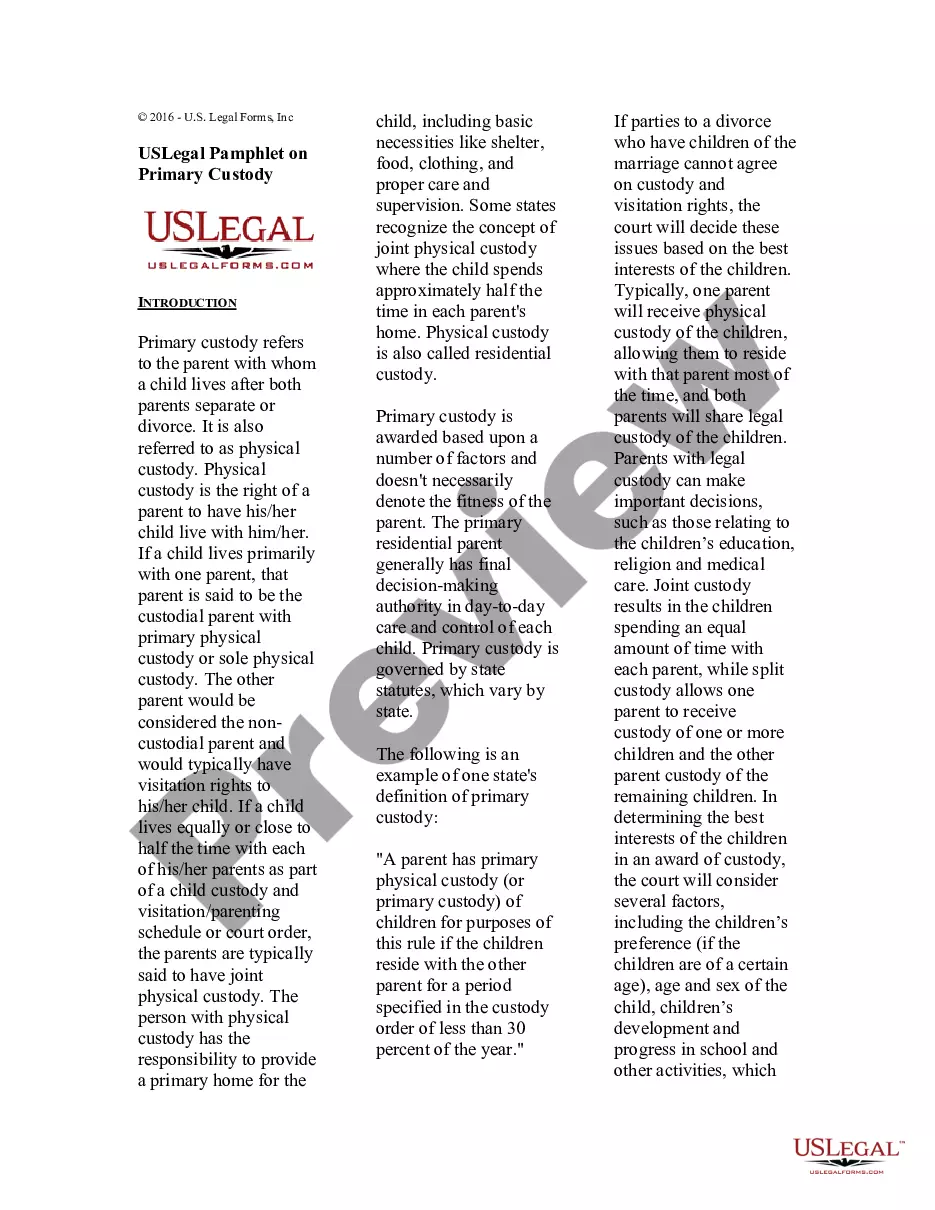
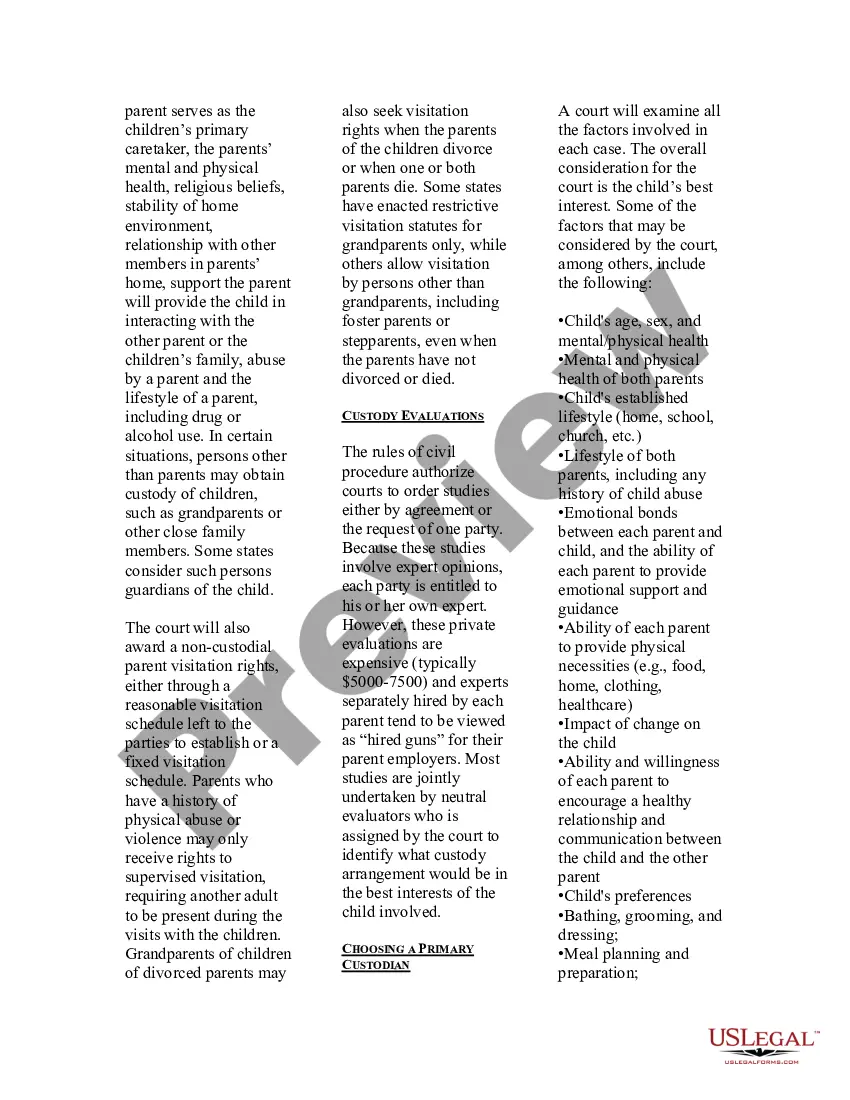
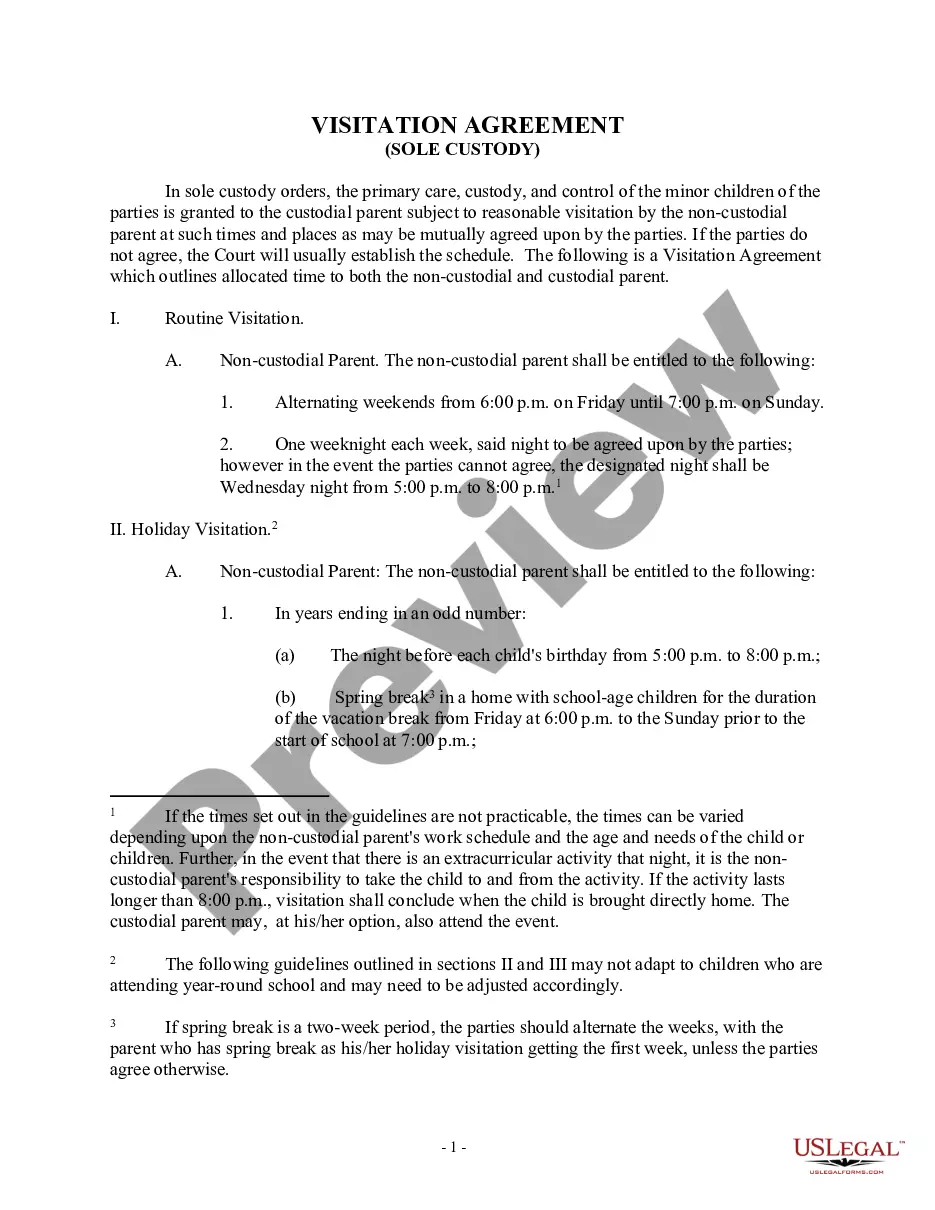
Get your form ready online
Our built-in tools help you complete, sign, share, and store your documents in one place.
Make edits, fill in missing information, and update formatting in US Legal Forms—just like you would in MS Word.
Download a copy, print it, send it by email, or mail it via USPS—whatever works best for your next step.
Sign and collect signatures with our SignNow integration. Send to multiple recipients, set reminders, and more. Go Premium to unlock E-Sign.
If this form requires notarization, complete it online through a secure video call—no need to meet a notary in person or wait for an appointment.
We protect your documents and personal data by following strict security and privacy standards.

Make edits, fill in missing information, and update formatting in US Legal Forms—just like you would in MS Word.

Download a copy, print it, send it by email, or mail it via USPS—whatever works best for your next step.

Sign and collect signatures with our SignNow integration. Send to multiple recipients, set reminders, and more. Go Premium to unlock E-Sign.

If this form requires notarization, complete it online through a secure video call—no need to meet a notary in person or wait for an appointment.

We protect your documents and personal data by following strict security and privacy standards.
Looking for another form?










How to fill out USLegal Pamphlet On Primary Custody?
Regardless of whether it's for corporate objectives or personal issues, individuals must confront legal circumstances at some point in their lives.
Completing legal documents demands meticulous care, beginning with selecting the appropriate form template.
Once it is saved, you can complete the form using editing software or print it out and fill it out by hand. With an extensive collection of US Legal Forms at your disposal, you never have to waste time searching for the correct template online. Use the library's straightforward navigation to find the right form for any circumstance.
- For example, if you choose an incorrect version of the Primary Physical Custody With Visitation, it will be rejected once you submit it.
- Thus, it is crucial to obtain a reliable source of legal documents like US Legal Forms.
- If you need to acquire a Primary Physical Custody With Visitation template, follow these straightforward steps.
- Locate the template you require by utilizing the search bar or browsing through the catalog.
- Review the form's description to confirm it aligns with your circumstances, state, and county.
- Click on the preview of the form to review it.
- If it is not the correct document, return to the search mechanism to locate the Primary Physical Custody With Visitation template you require.
- Obtain the file if it meets your specifications.
- If you already hold a US Legal Forms account, click Log in to access prior documents saved in My documents.
- If you do not yet have an account, you can download the form by clicking Buy now.
- Select the suitable pricing option.
- Complete the profile registration form.
- Select your payment method: you can utilize a credit card or PayPal account.
- Choose the document format you prefer and download the Primary Physical Custody With Visitation.
Form popularity
FAQ
One of the biggest mistakes in a custody battle is failing to prioritize the child's best interests. When emotions run high, parents may focus on winning rather than creating a nurturing environment for their child. Open communication and cooperation with the other parent can significantly improve the outcome for everyone involved. Using services like US Legal Forms can help you stay organized and focused on achieving a fair custody arrangement, including primary physical custody with visitation.
The rights of primary physical custody include having your child live with you and making day-to-day decisions regarding their upbringing. You can also determine the visitation schedule for the other parent, ensuring it aligns with the child's needs. This arrangement aims to provide stability and security for your child while fostering a healthy relationship with both parents. To better understand these rights, consider consulting legal professionals or exploring resources from US Legal Forms.
If you have primary physical custody with visitation rights, you hold the legal authority to make important decisions about your child's daily life, including their education and healthcare. You also have the right to establish a visitation schedule that works best for you and the other parent. It's essential to communicate openly and effectively with the other parent to ensure that both parties are clear on the custody terms. Utilizing resources from US Legal Forms can assist you in understanding and enforcing your rights.
The best custody arrangement for primary physical custody with visitation typically depends on the unique circumstances of your family. A stable environment for the child is crucial, and arrangements that prioritize the child's best interests often yield the best outcomes. You should consider factors such as the child's age, the parents' work schedules, and the child's relationship with each parent. Consulting with legal professionals or using platforms like US Legal Forms can help you navigate these decisions.
To obtain primary physical custody, you must demonstrate to the court that it is in the best interest of the child. Factors such as the child's age, emotional ties to each parent, and living conditions will be evaluated. It is essential to present clear evidence and a solid parenting plan to support your case. Utilizing resources from USLegalForms can guide you in preparing the necessary documentation for a successful custody arrangement, including primary physical custody with visitation.
Primary physical custody refers to the arrangement where one parent has the main responsibility for the physical care and living situation of the child. In this scenario, the child primarily resides with this parent, while the other parent typically has visitation rights. This setup aims to provide stability and security for the child, ensuring they have a consistent home environment. Understanding primary physical custody with visitation is crucial for parents navigating custody agreements.
If a child spends a majority of his/her time living with one parent, that parent has primary physical custody. Under Maryland law, majority is defined as at least 2/3 of the 'overnights' during a calendar year.
Physical custody refers to where the child(ren) are physically located. Parents can share physical custody, which means the children spend equal time with each parent. Or one parent can have primary physical custody, with the other parent having ?parenting time? or visitation.
If a parent has "primary custody," it refers to the parent with whom the child lives with after the parents have parted. However, many jurisdictions don't use the term "primary custody." For instance, in Virginia, the term physical custody is used to refer to where the child lives (rather than primary custody).
For this reason, over the years, the term primary physical custody started to replace the term sole physical custody in those situations where one parent has the great majority of the time with the children but the other parent still does have certain designated parenting time.