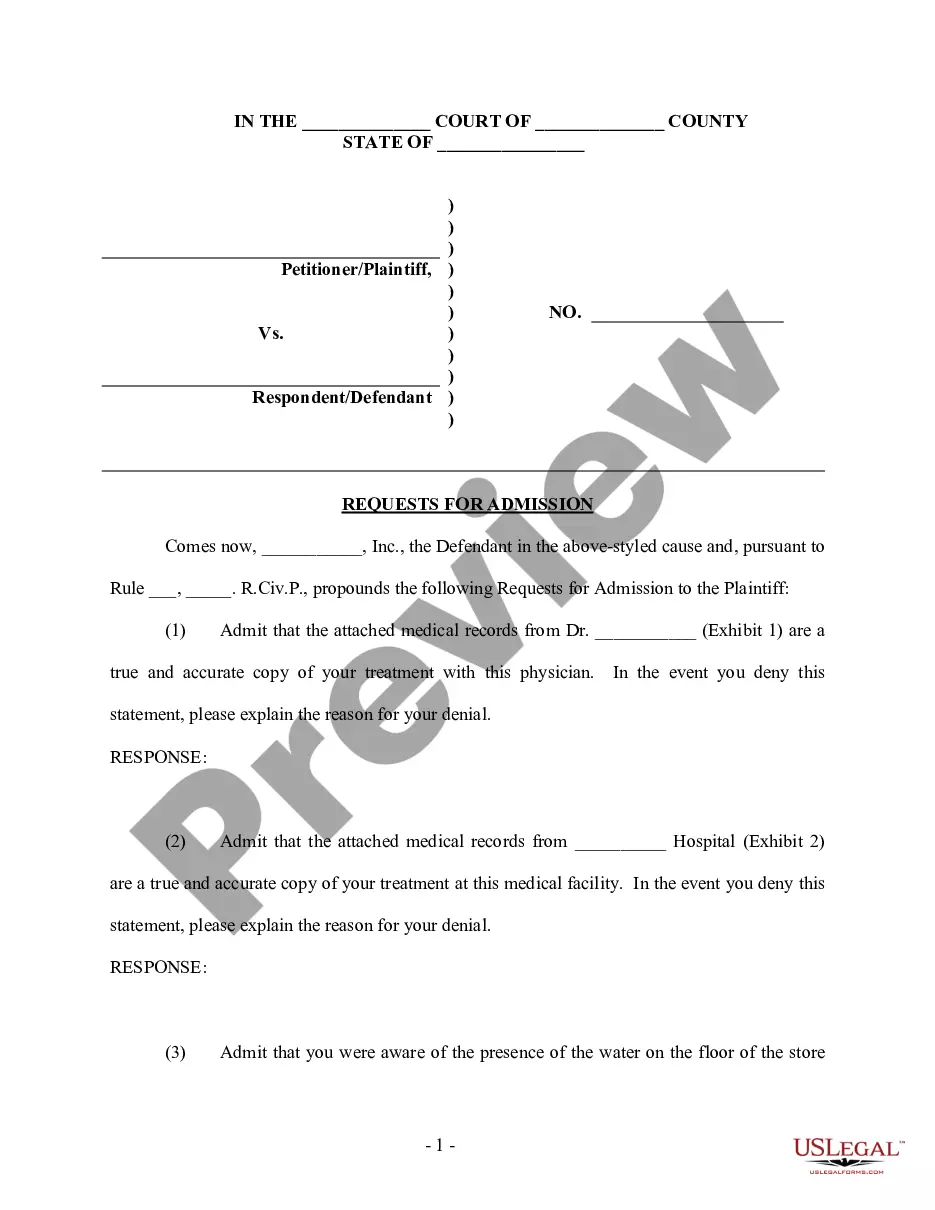
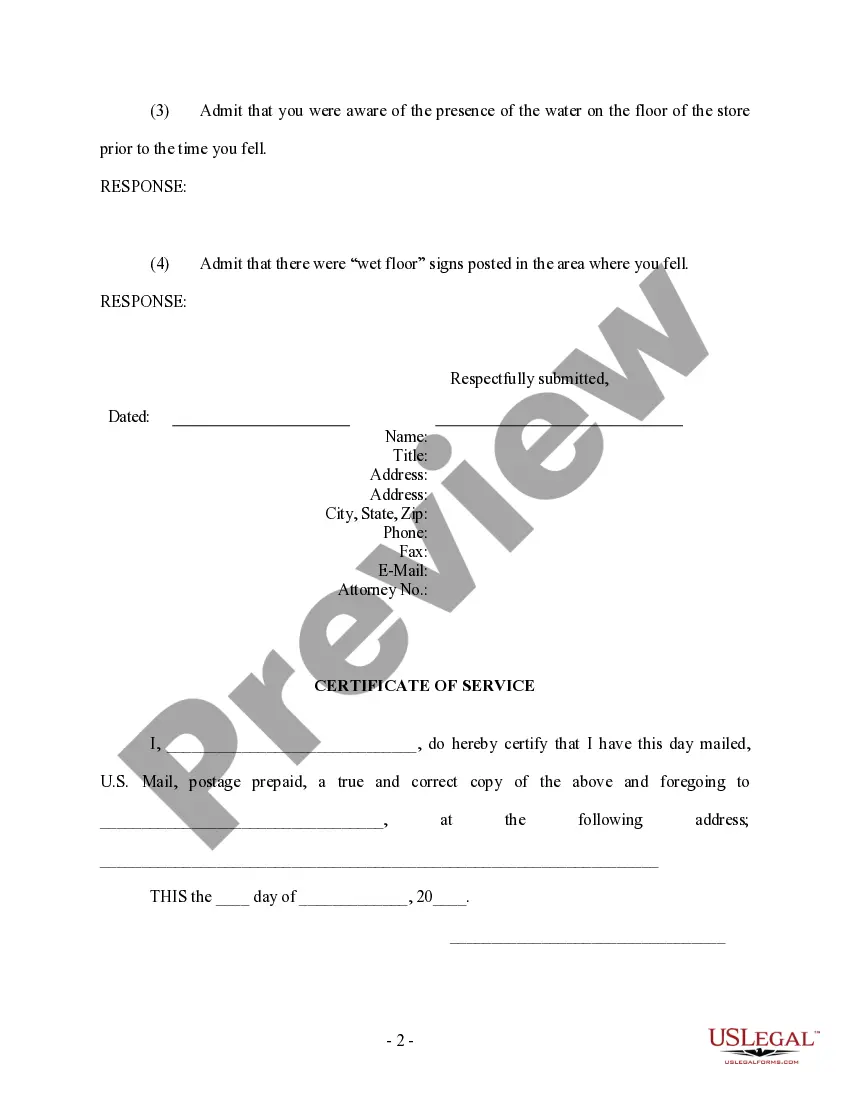
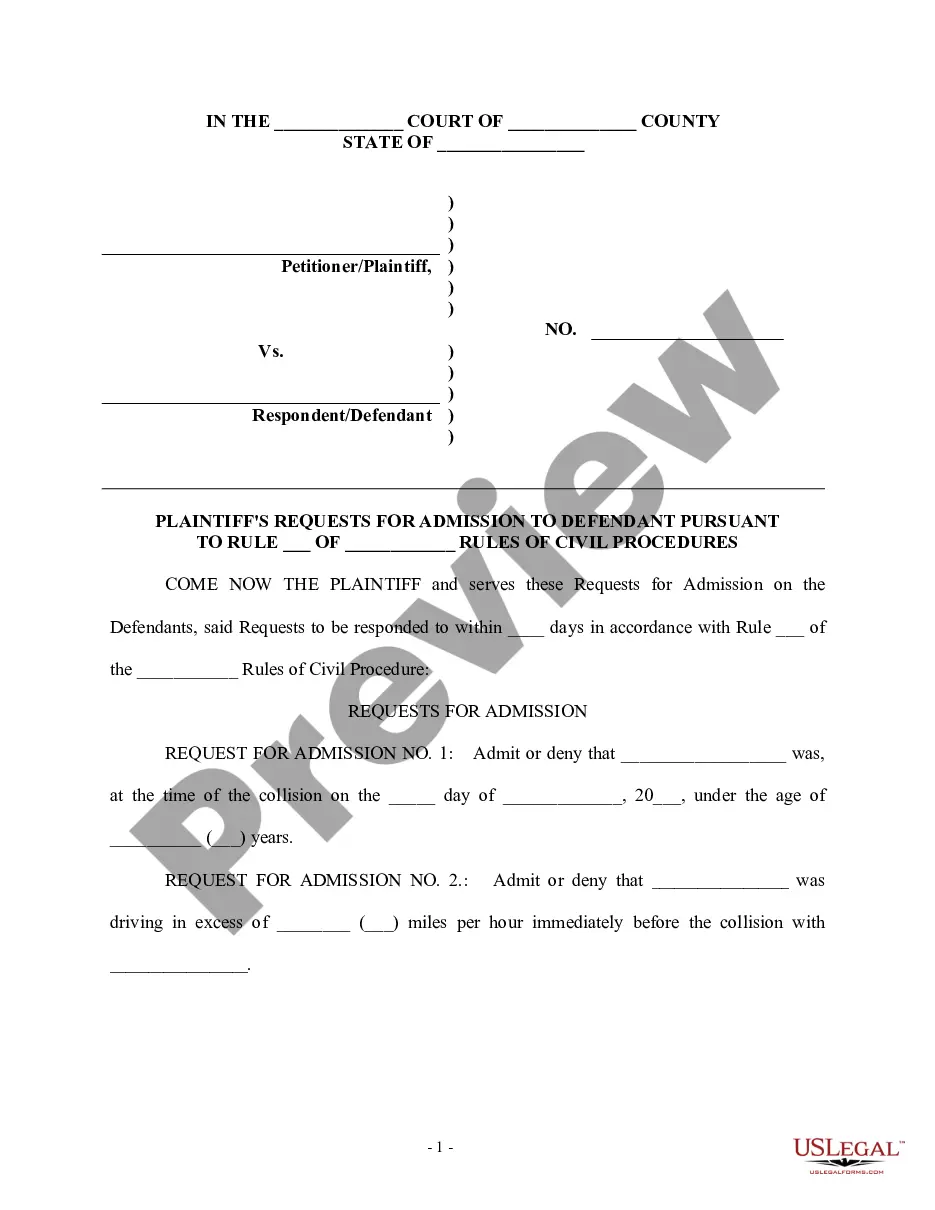
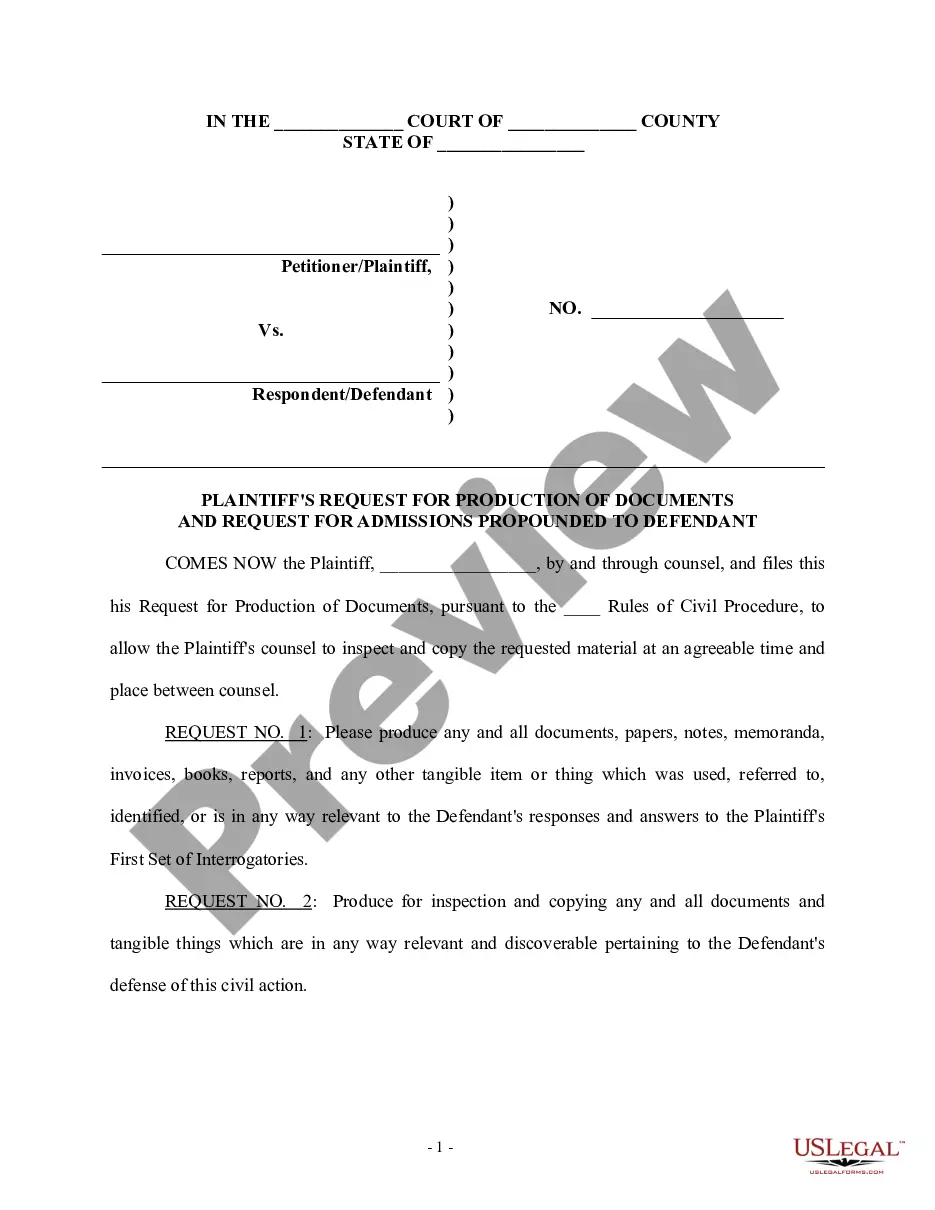
Requests For Admission To Authenticate Documents
Description
Get your form ready online
Our built-in tools help you complete, sign, share, and store your documents in one place.
Make edits, fill in missing information, and update formatting in US Legal Forms—just like you would in MS Word.
Download a copy, print it, send it by email, or mail it via USPS—whatever works best for your next step.
Sign and collect signatures with our SignNow integration. Send to multiple recipients, set reminders, and more. Go Premium to unlock E-Sign.
If this form requires notarization, complete it online through a secure video call—no need to meet a notary in person or wait for an appointment.
We protect your documents and personal data by following strict security and privacy standards.

Make edits, fill in missing information, and update formatting in US Legal Forms—just like you would in MS Word.

Download a copy, print it, send it by email, or mail it via USPS—whatever works best for your next step.

Sign and collect signatures with our SignNow integration. Send to multiple recipients, set reminders, and more. Go Premium to unlock E-Sign.

If this form requires notarization, complete it online through a secure video call—no need to meet a notary in person or wait for an appointment.

We protect your documents and personal data by following strict security and privacy standards.
Looking for another form?
How to fill out Requests For Admissions?
It's clear that you cannot instantly become a legal expert, nor can you swiftly learn how to prepare Requests For Admission To Authenticate Documents without a specific background.
Assembling legal papers is a lengthy undertaking that demands a specialized education and expertise.
Therefore, why not entrust the compilation of the Requests For Admission To Authenticate Documents to the professionals.
You can regain access to your files from the My documents section at any time.
If you are a returning client, you can simply Log In and locate and download the template from the same section.
- Discover the document you need by using the search feature located at the top of the webpage.
- View it (if this option is available) and examine the accompanying description to determine if Requests For Admission To Authenticate Documents is what you are looking for.
- Initiate your search again if you require a different document.
- Create a complimentary account and select a subscription plan to purchase the document.
- Click Buy now. Once the payment is completed, you can download the Requests For Admission To Authenticate Documents, fill it out, print it, and send or mail it to the appropriate individuals or organizations.
Form popularity
FAQ
An admission request is a formal tool used in legal proceedings to seek acknowledgment from the opposing party regarding specific facts. It serves to clarify issues in a case, helping to foster mutual understanding. When you employ requests for admission to authenticate documents, you strengthen your position by confirming the authenticity of critical evidence.
Rule 36 of the Federal Rules of Civil Procedure governs requests for admission, allowing parties to request that others admit the truth of specific matters. This rule provides a framework for the discovery process, ensuring that parties engage in clear communication. By using requests for admission to authenticate documents, you can effectively utilize this rule to facilitate smoother legal proceedings.
To write a request for admission, start by clearly stating the fact you want the other party to admit. Use straightforward language and be specific about the details. Including requests for admission to authenticate documents makes it easier to establish agreed facts, which can be pivotal in advancing your case.
An example of a request for admission is asking a party to admit that a specific email was sent on a certain date. This allows both parties to focus on substantive claims rather than questioning the authenticity of evidence. Incorporating requests for admission to authenticate documents can clarify mutual agreements concerning factual matters.
Requests for admission are best used to clarify facts that are not in dispute, helping to narrow down the issues for trial. By obtaining admissions, you can enhance your case's strength and potentially avoid unnecessary litigation. Utilizing requests for admission to authenticate documents can effectively expedite the legal process and promote a resolution.
Admitting a document is genuine means that a party acknowledges its authenticity in legal proceedings. This admission simplifies the process of proving the document's legitimacy, thereby saving time and resources. Through requests for admission to authenticate documents, parties can streamline the discovery phase, focusing on essential matters rather than disputing document validity.
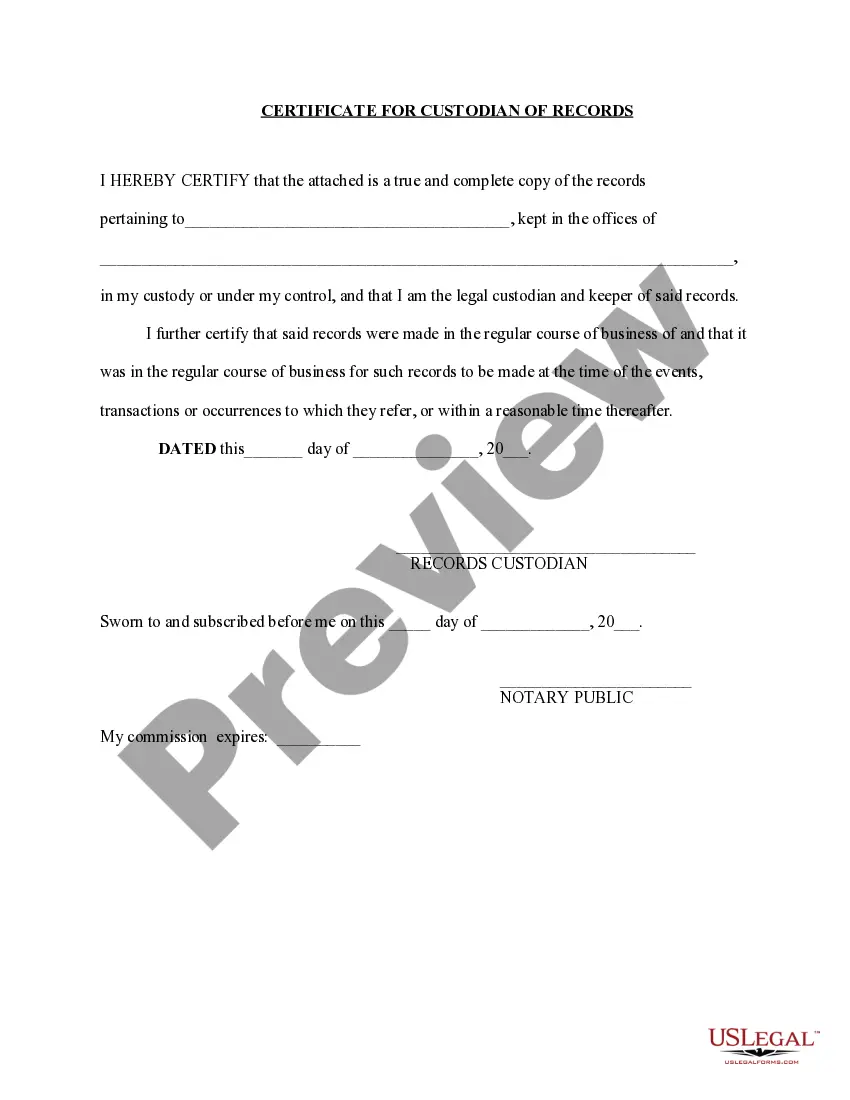
Requests for admission to authenticate documents are legal tools used to establish the genuineness of documents in a case. These requests aim to streamline litigation by confirming certain facts and reducing disputes over evidentiary issues. Utilizing a platform like uslegalforms can greatly assist in drafting and managing these requests effectively.
Typically, parties have 30 days to respond to a request for admission in federal court. This response time allows for careful consideration of each admission's implications. Planning ahead allows you to gather the necessary information needed to formulate accurate responses, particularly when addressing requests for admission to authenticate documents.
Similar to requests for admission, there is no definitive limit on document requests in federal court. The key is to ensure that all document requests are relevant and reasonable. This strategic approach facilitates effective communication and aligns with requests for admission to authenticate documents.
Federal court rules do not impose a strict numerical limit on requests for admission. However, requests must be relevant and not overly burdensome. Your legal strategy should involve a careful balance when preparing requests for admission to authenticate documents to avoid unnecessary complications.