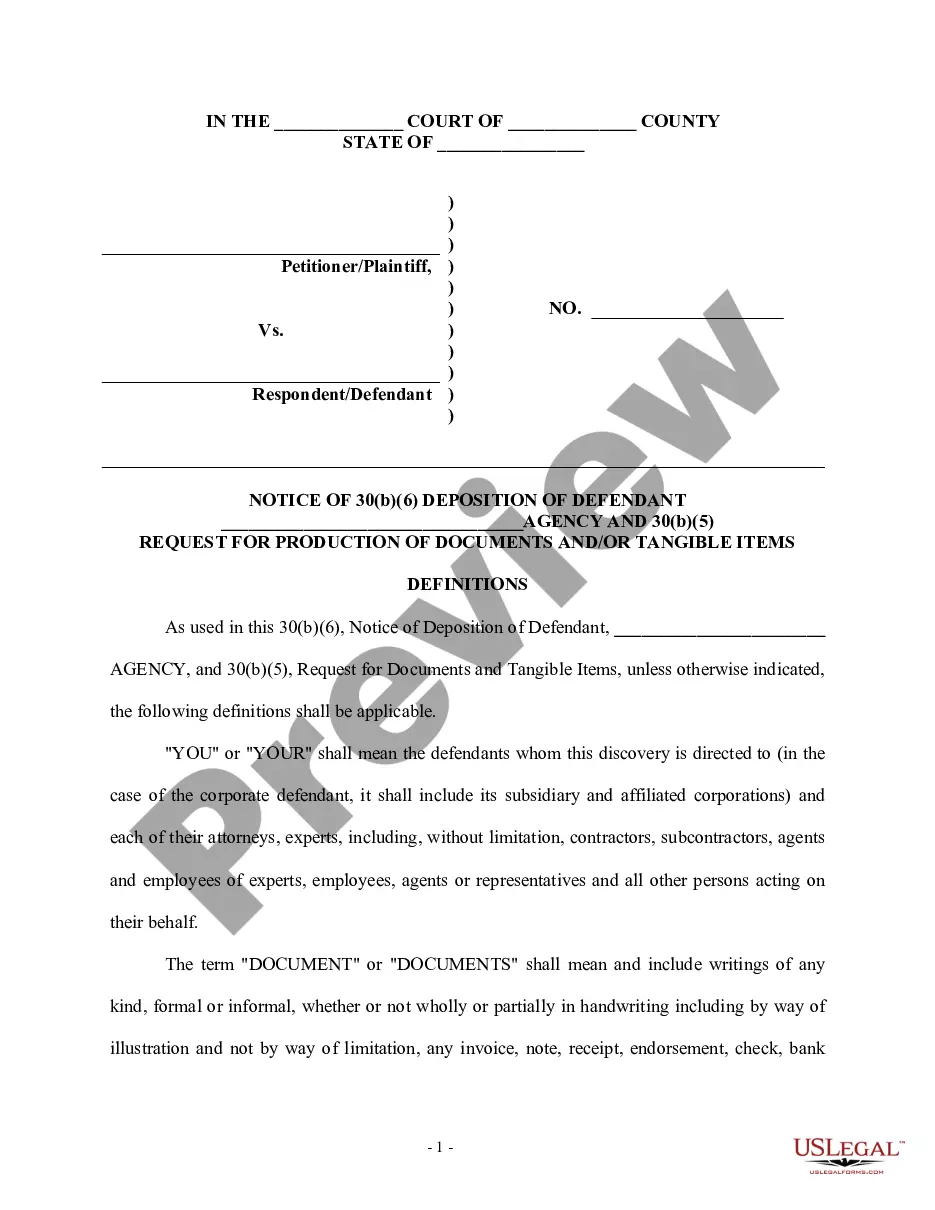
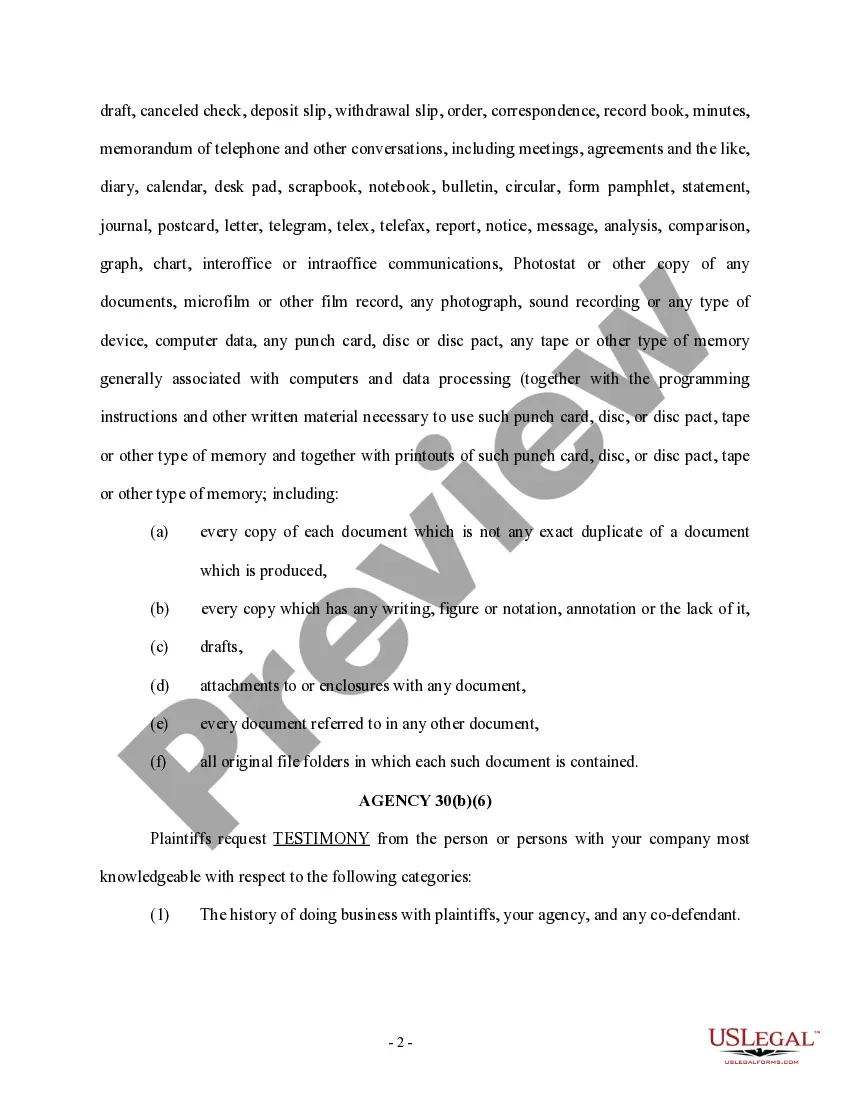
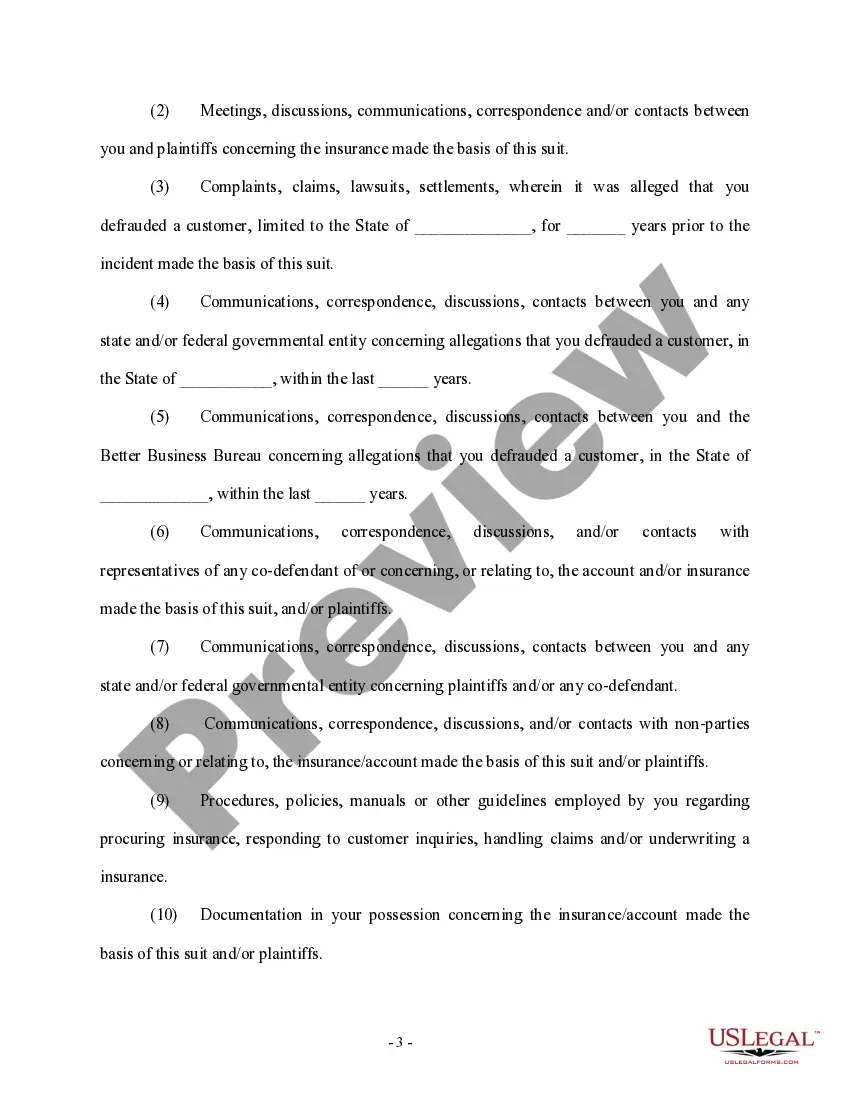
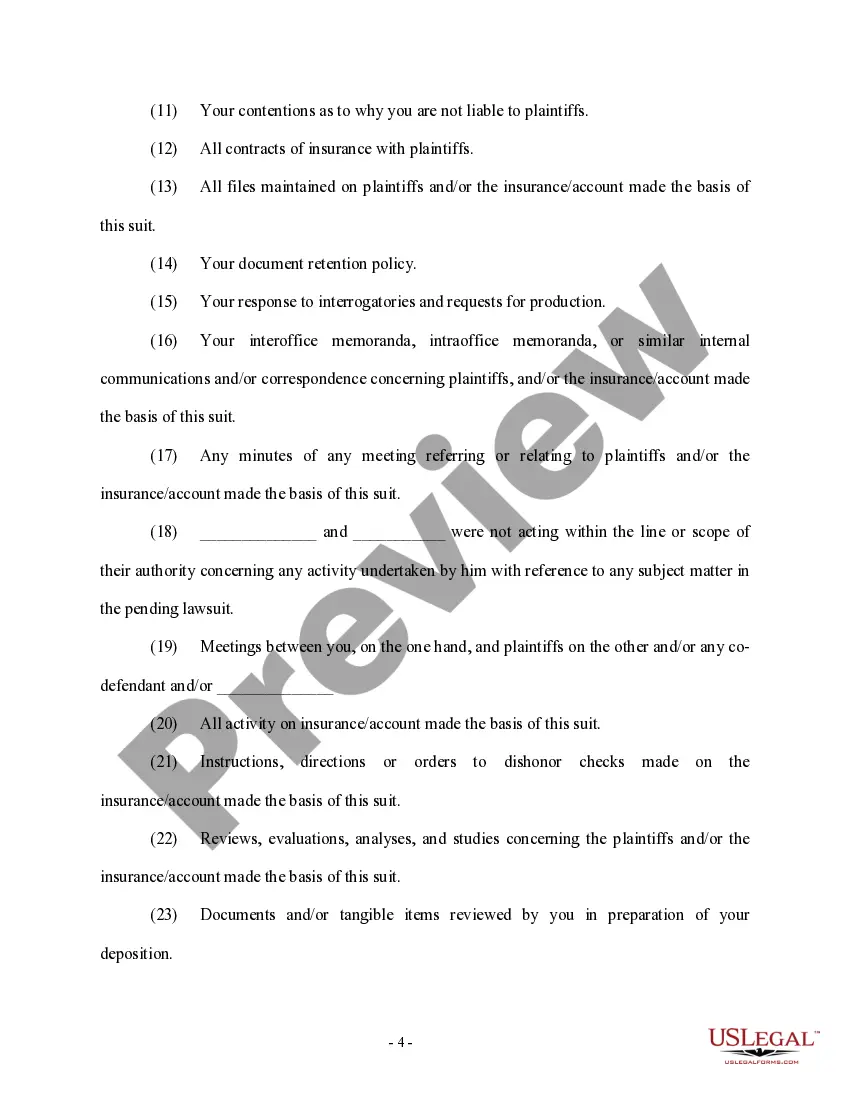
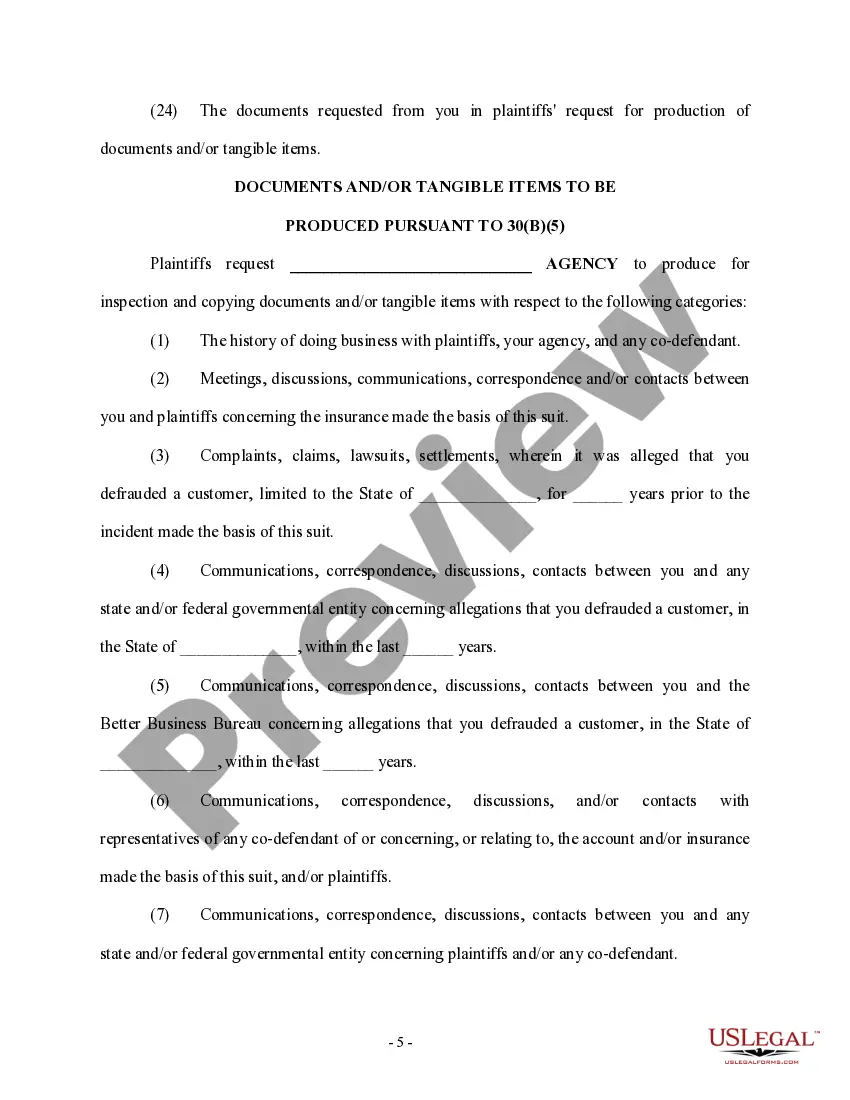
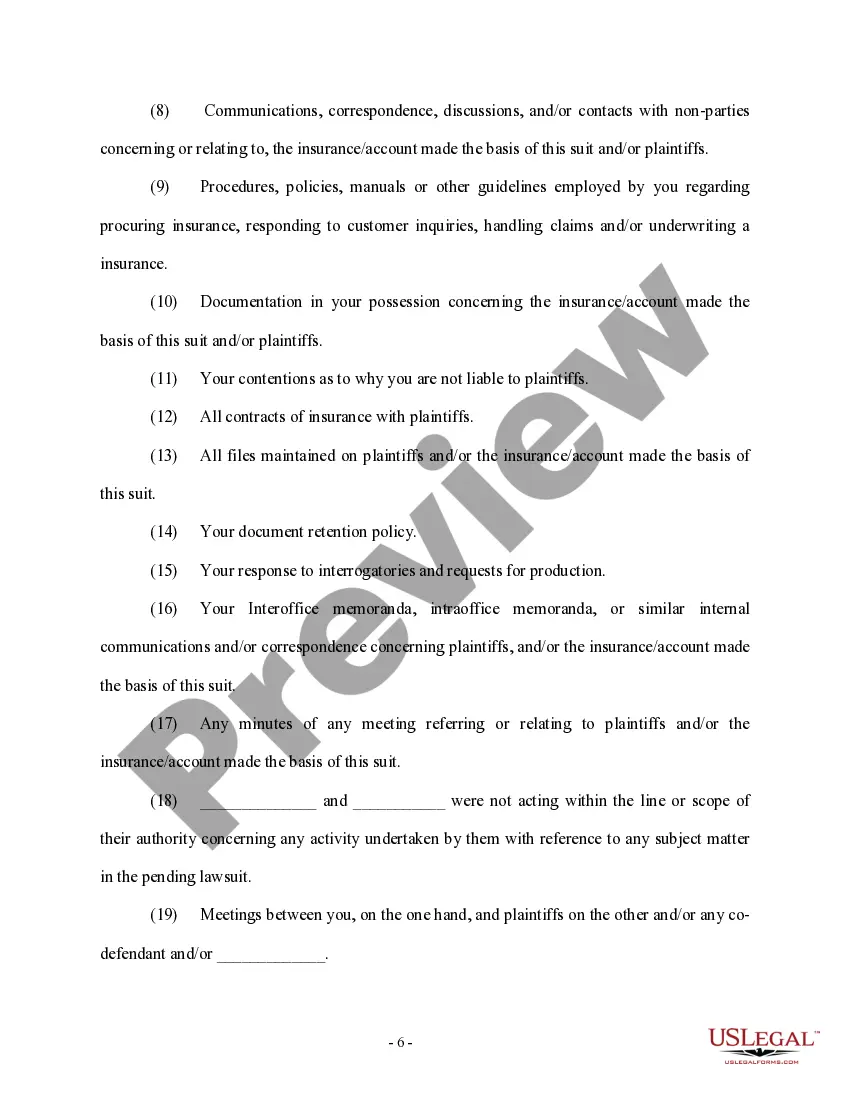
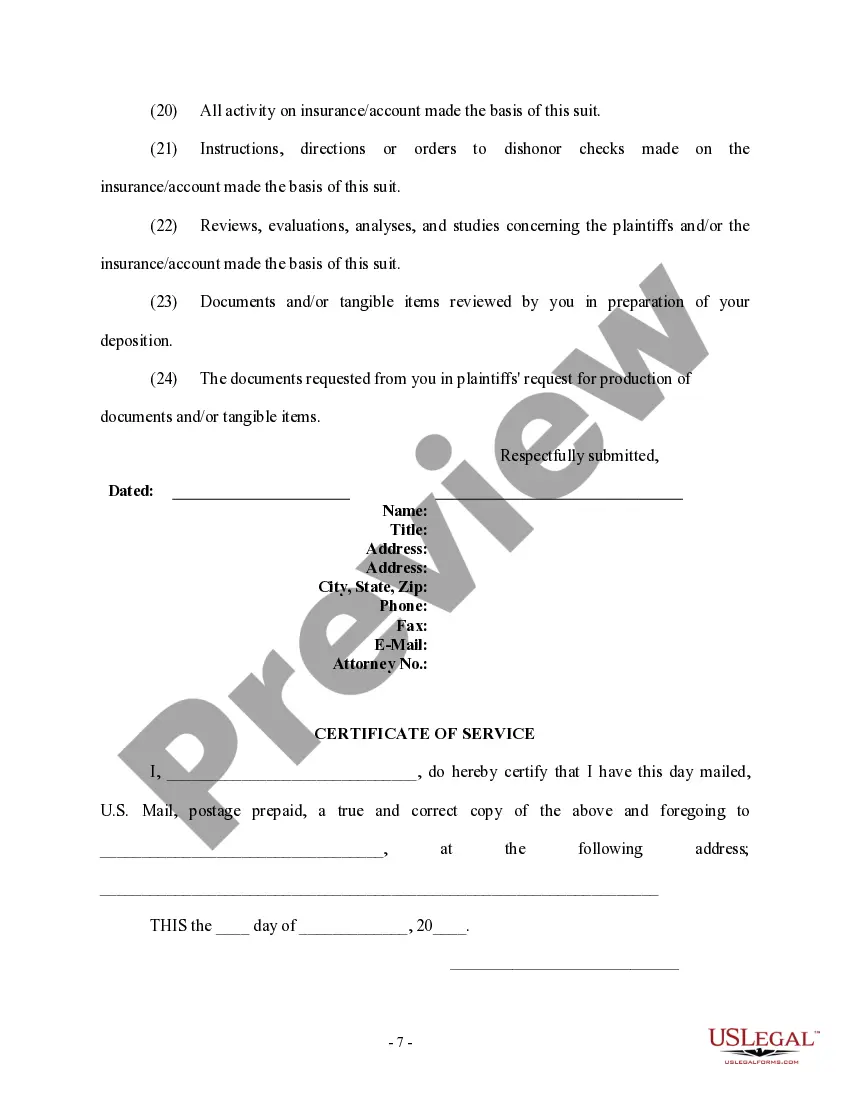
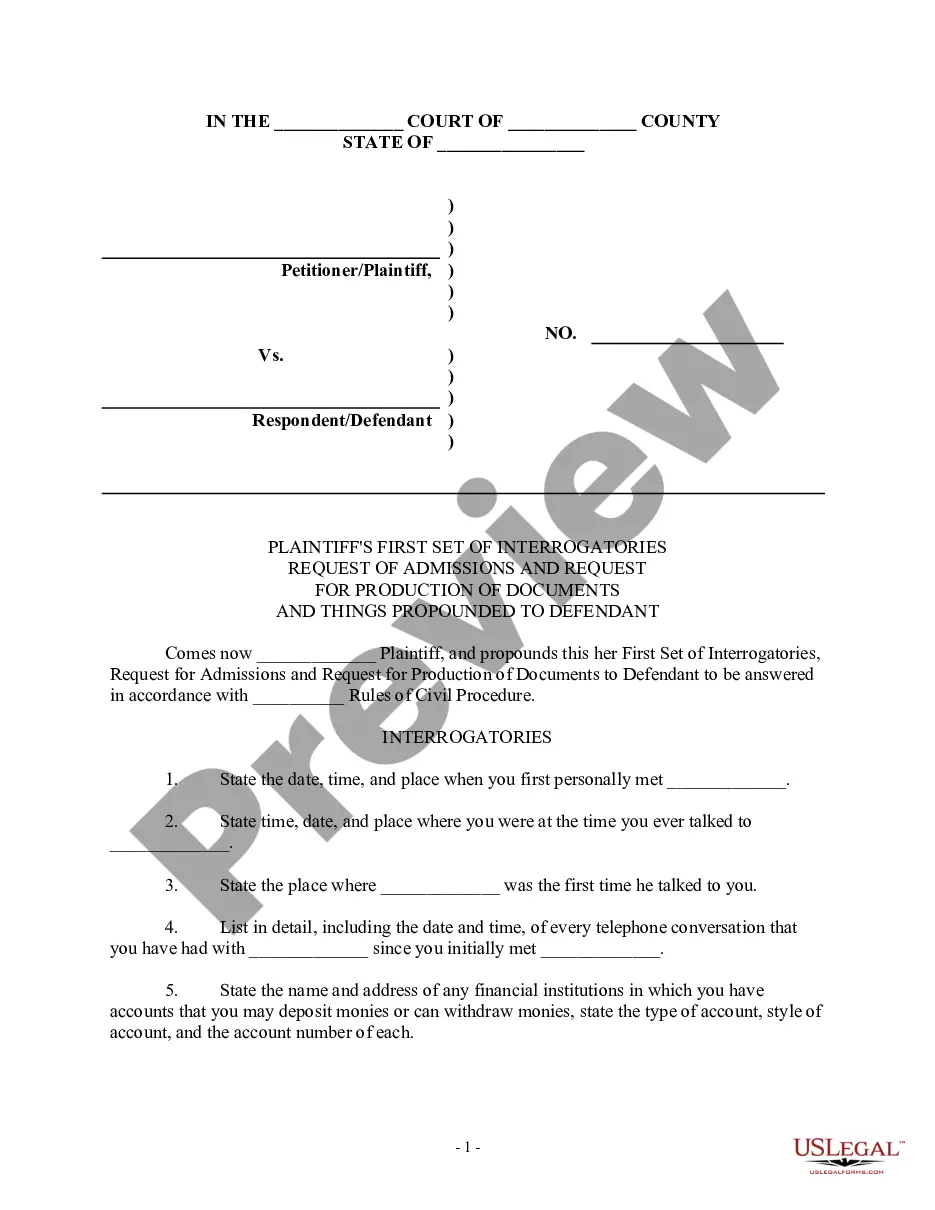
30 B Notice 6 With Rule 30(b)(6)
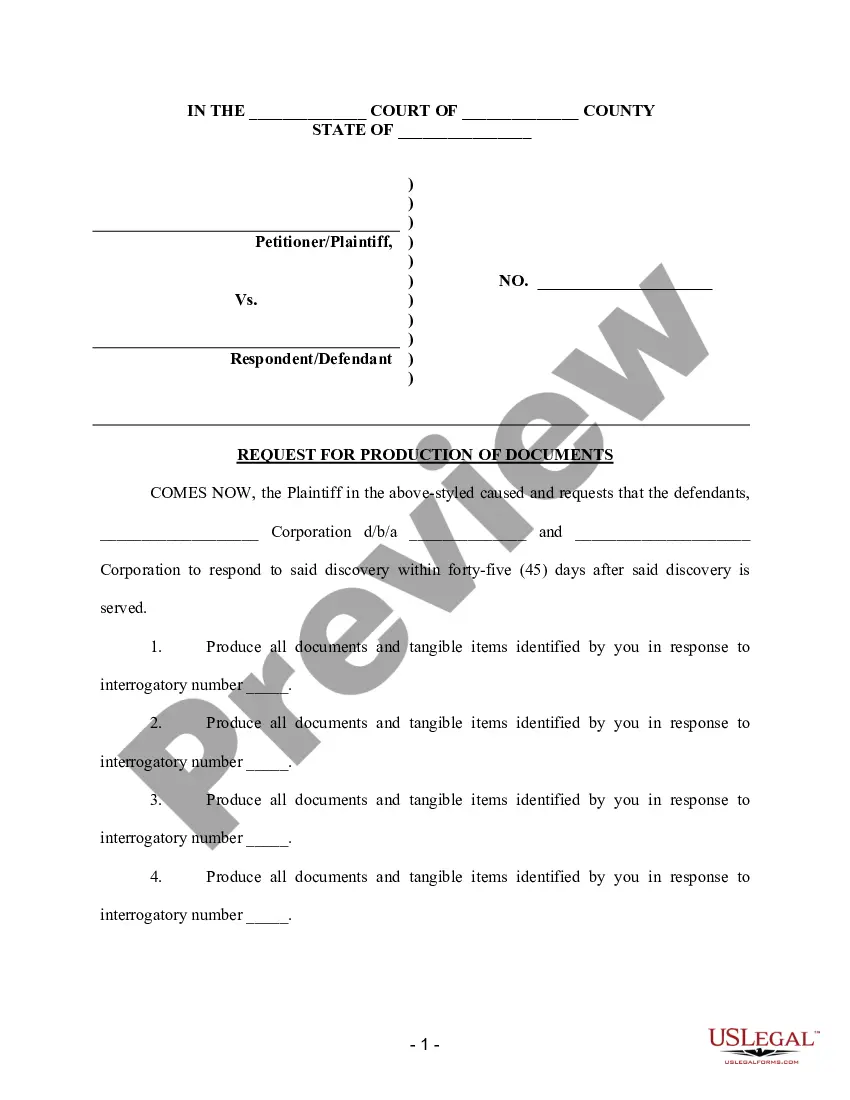
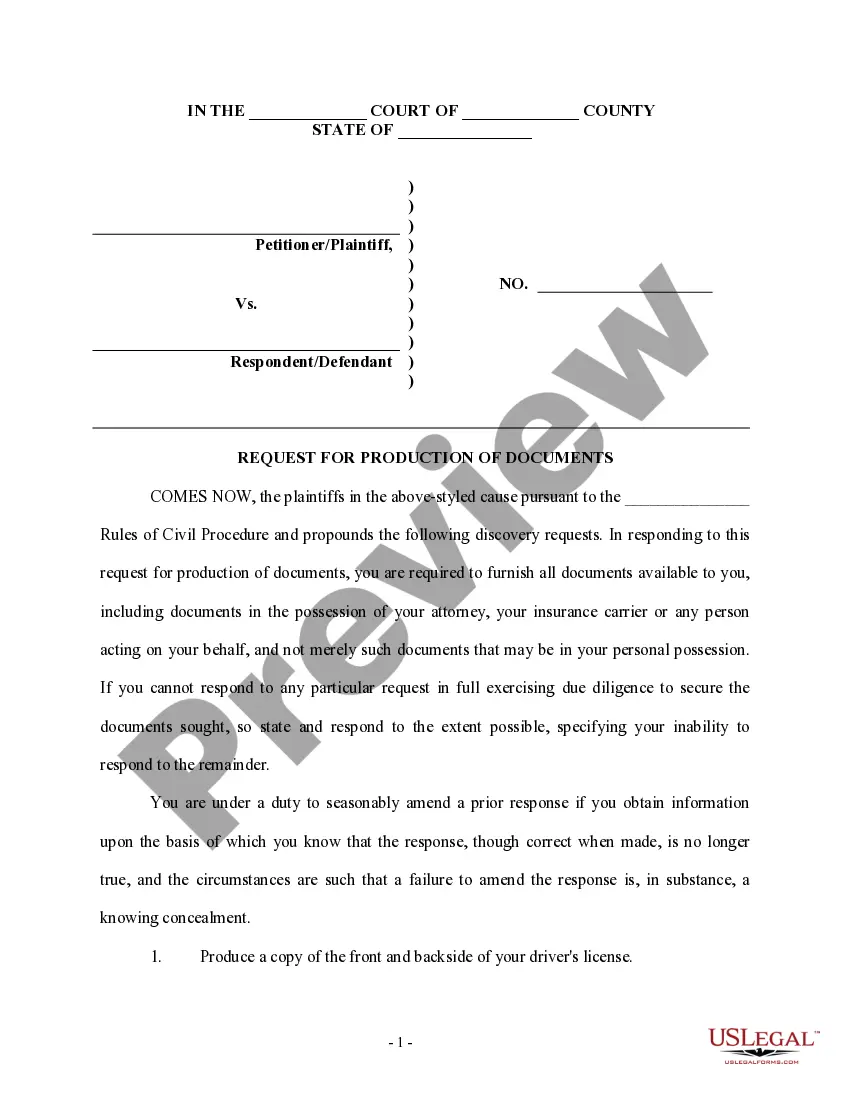
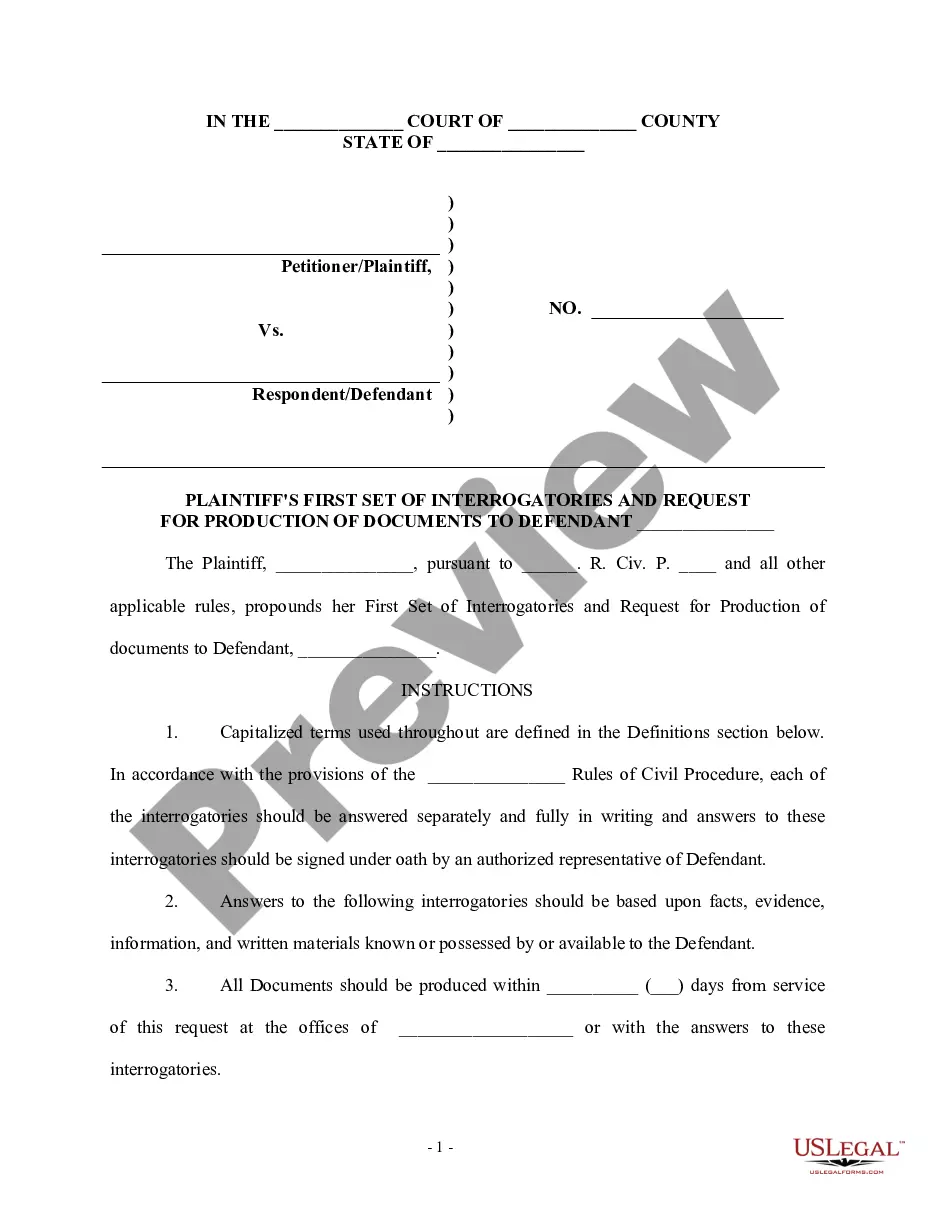
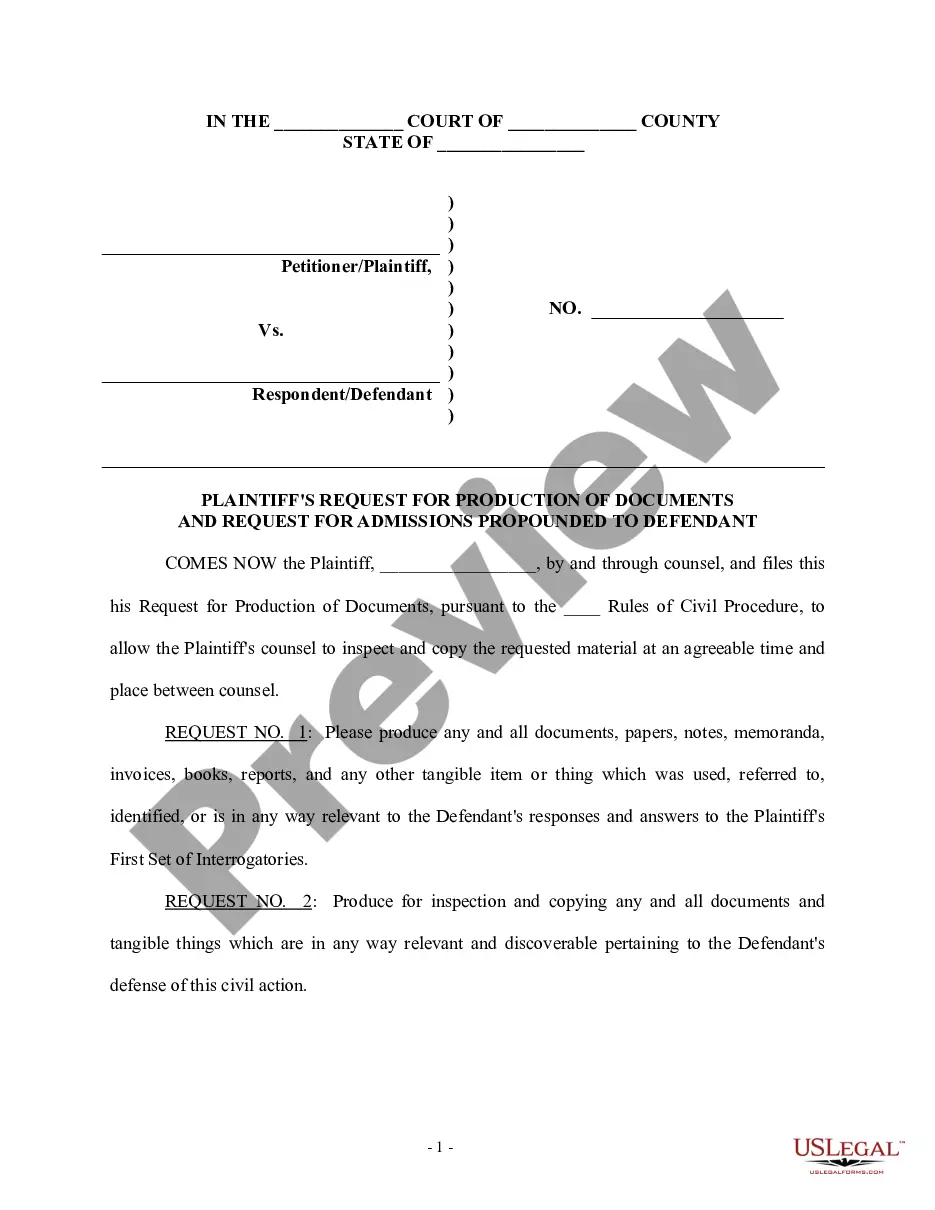
Description
Get your form ready online
Our built-in tools help you complete, sign, share, and store your documents in one place.
Make edits, fill in missing information, and update formatting in US Legal Forms—just like you would in MS Word.
Download a copy, print it, send it by email, or mail it via USPS—whatever works best for your next step.
Sign and collect signatures with our SignNow integration. Send to multiple recipients, set reminders, and more. Go Premium to unlock E-Sign.
If this form requires notarization, complete it online through a secure video call—no need to meet a notary in person or wait for an appointment.
We protect your documents and personal data by following strict security and privacy standards.

Make edits, fill in missing information, and update formatting in US Legal Forms—just like you would in MS Word.

Download a copy, print it, send it by email, or mail it via USPS—whatever works best for your next step.

Sign and collect signatures with our SignNow integration. Send to multiple recipients, set reminders, and more. Go Premium to unlock E-Sign.

If this form requires notarization, complete it online through a secure video call—no need to meet a notary in person or wait for an appointment.

We protect your documents and personal data by following strict security and privacy standards.
Looking for another form?

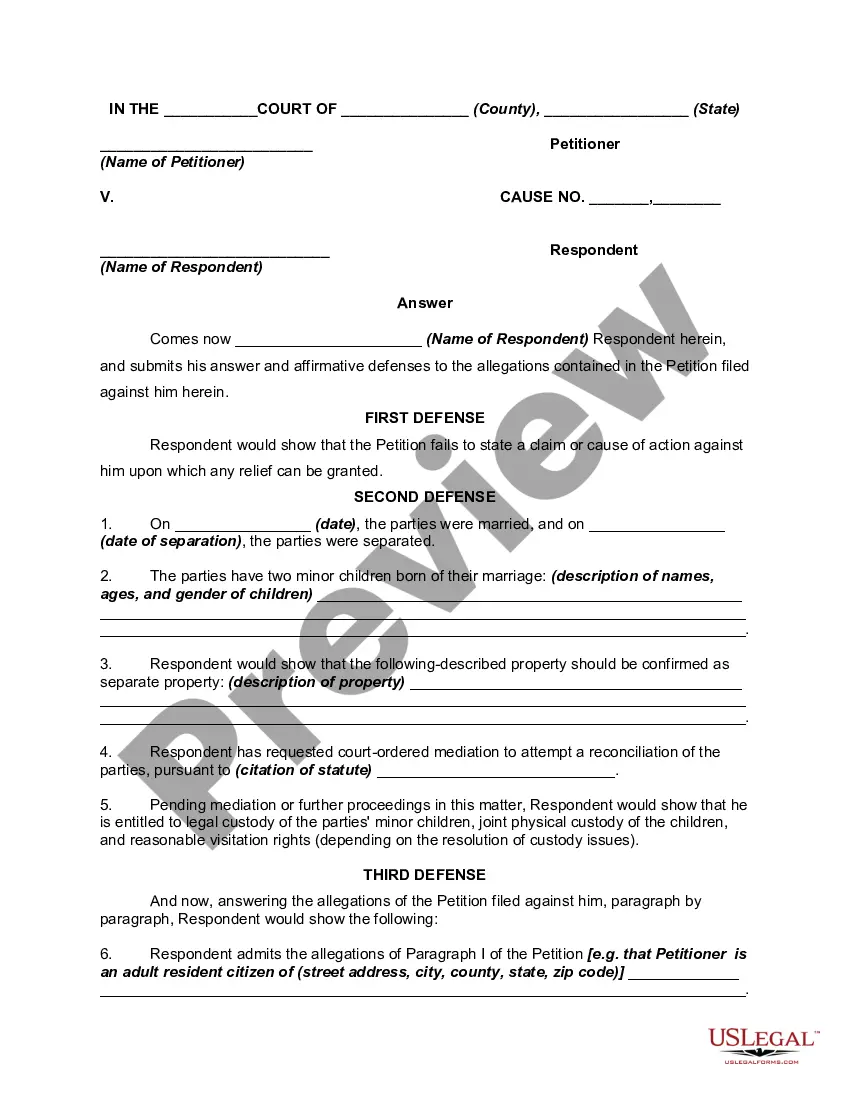
How to fill out Notice Of 30(b)(6) Deposition Of Defendant And 30(b)(5) Request For Production Of Documents And Or Things - Discovery?
The 30 B Notice 6 With Rule 30(b)(6) presented on this page is a reusable legal template crafted by experienced attorneys in compliance with federal and local laws.
For over 25 years, US Legal Forms has offered individuals, businesses, and lawyers more than 85,000 confirmed, state-specific documents for any commercial and personal needs. It’s the fastest, most direct, and most dependable method to obtain the documents you require, as the service ensures bank-level data security and anti-malware safeguards.
Register with US Legal Forms to have confirmed legal templates for all of life’s circumstances at your fingertips.
- Search for the document you require and examine it.
- Review the sample you searched and preview it or check the form description to confirm it meets your criteria. If it doesn’t, use the search feature to find the right one. Click Buy Now when you have located the template you need.
- Subscribe and Log In.
- Choose the payment plan that works for you and set up an account. Use PayPal or a credit card for immediate payment. If you already have an account, Log In and verify your subscription to proceed.
- Obtain the editable template.
- Select the format you desire for your 30 B Notice 6 With Rule 30(b)(6) (PDF, Word, RTF) and download the sample onto your device.
- Complete and sign the document.
- Print the template to fill it out manually. Alternatively, use an online versatile PDF editor to quickly and accurately complete and sign your form with a legally-binding electronic signature.
- Download your documents again.
- Use the same document again whenever necessary. Access the My documents tab in your profile to redownload any forms you previously saved.
Form popularity
FAQ
A 30 b)(6) notice is a legal document that mandates an organization to designate a representative who can provide testimony on its behalf about specific topics. This type of notice is crucial during legal proceedings, as it helps clarify complex issues through informed representation. It is a fundamental tool in discovery, ensuring that companies prepare adequately to respond to legal inquiries. By using the 30 b notice 6 with rule 30(b)(6), parties can optimize their legal strategies effectively.
The first step in protecting the prospective deponent from an improper 30(b)(6) notice is to confer with opposing counsel in an attempt to clarify or limit the objectionable topics. For this purpose, written objections may certainly serve as a starting point.
Rule 30(b)(6) creates obligations on both sides: the side being deposed has an obligation to prepare one or more witnesses to testify, and the side taking the deposition has an obligation to ?designate with painstaking specificity, the particular subject areas that are intended to be questioned, and that are relevant ...
A Rule 30(b)(6) notice must (1) provide the date, time, and place for taking the deposition; (2) specify the name and address of the entity being deposed; (3) set forth with reasonable particularity the matters for examination; (4) indicate the method by which the testimony will be recorded and whether documents are ...
Make Strategic Objections during the Deposition When a question falls outside of the scope of the noticed topics, defense attorneys should object to the question on the grounds that it exceeds the scope of the witness's corporate knowledge.
Federal Rule of Civil Procedure (?FRCP?) 30(b)(6) governs the depositions of organizations, including corporations, partnerships, associations, and governmental agencies. The party seeking to depose the organization must ?describe with reasonable particularity the matters for examination? in its deposition notice.