Wrongful
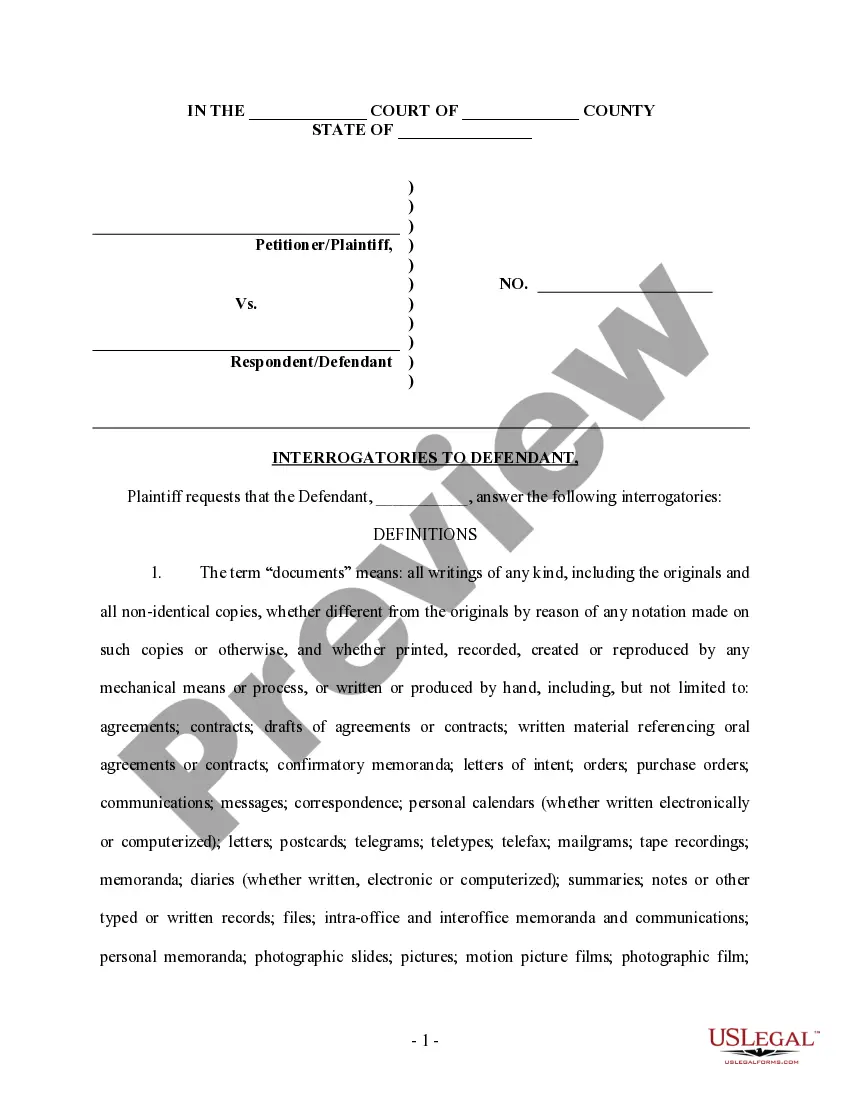
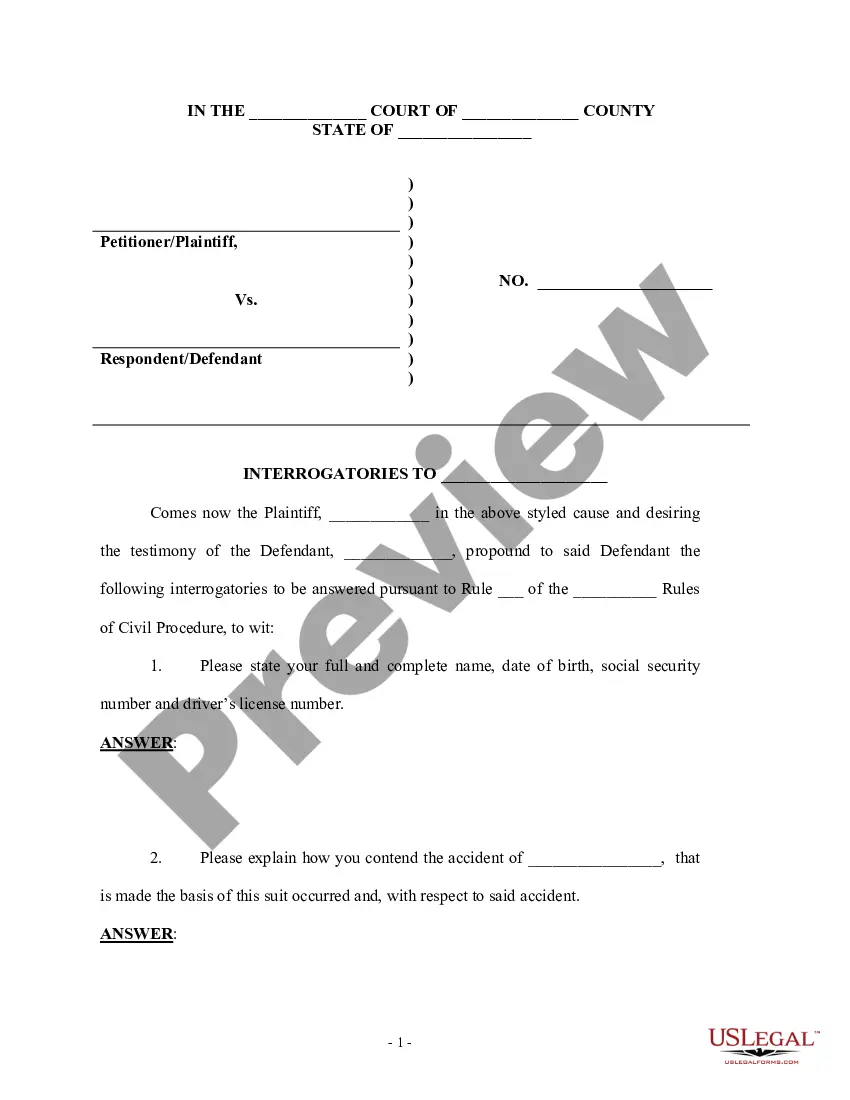
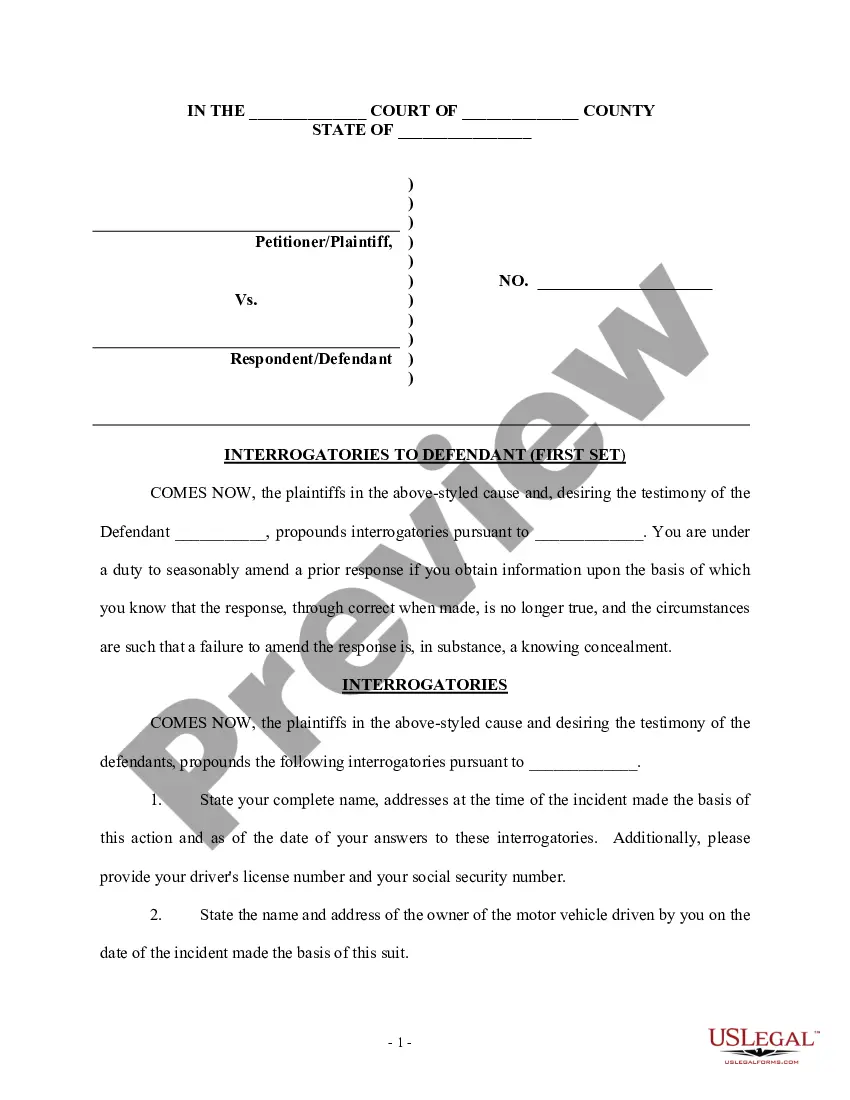
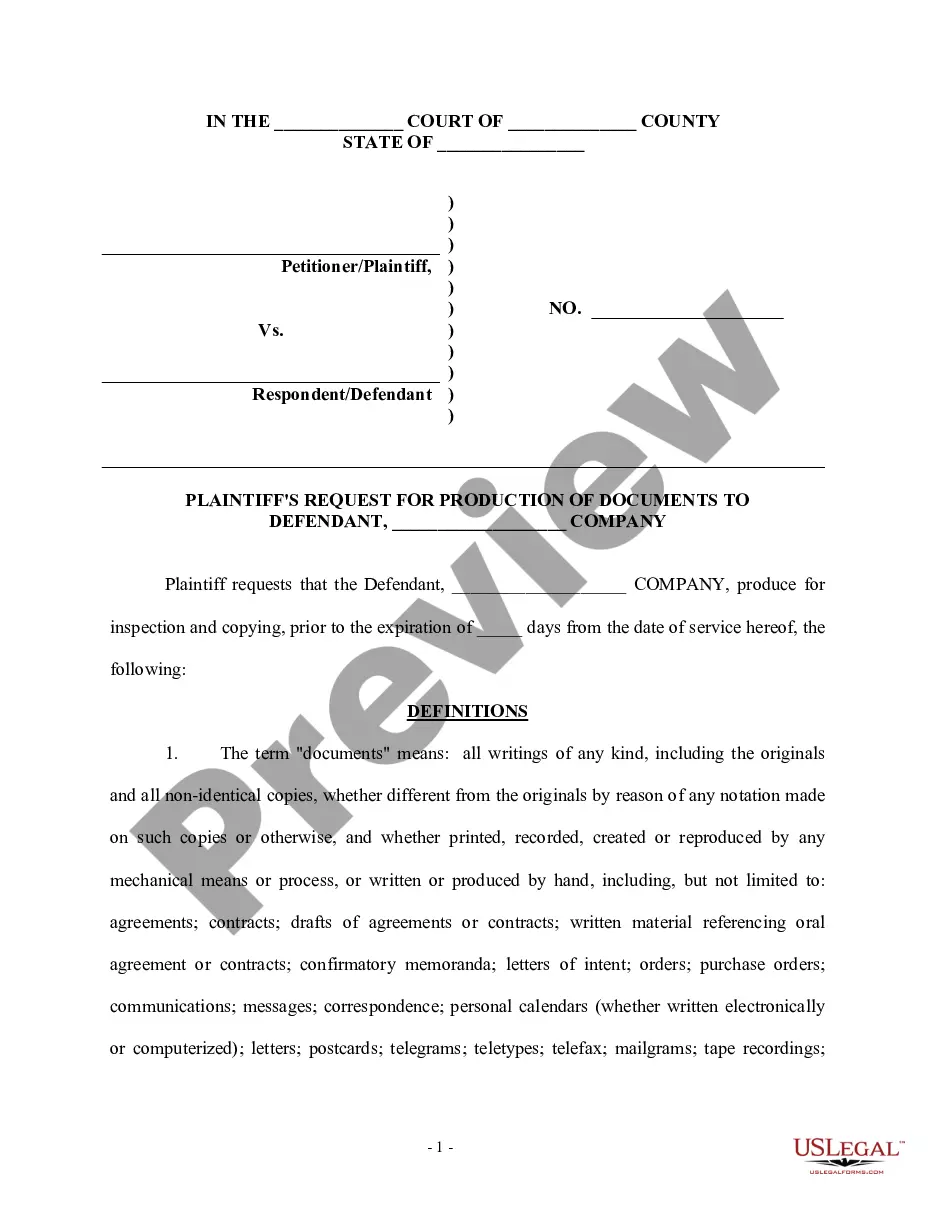
Description
Get your form ready online
Our built-in tools help you complete, sign, share, and store your documents in one place.
Make edits, fill in missing information, and update formatting in US Legal Forms—just like you would in MS Word.
Download a copy, print it, send it by email, or mail it via USPS—whatever works best for your next step.
Sign and collect signatures with our SignNow integration. Send to multiple recipients, set reminders, and more. Go Premium to unlock E-Sign.
If this form requires notarization, complete it online through a secure video call—no need to meet a notary in person or wait for an appointment.
We protect your documents and personal data by following strict security and privacy standards.

Make edits, fill in missing information, and update formatting in US Legal Forms—just like you would in MS Word.

Download a copy, print it, send it by email, or mail it via USPS—whatever works best for your next step.

Sign and collect signatures with our SignNow integration. Send to multiple recipients, set reminders, and more. Go Premium to unlock E-Sign.

If this form requires notarization, complete it online through a secure video call—no need to meet a notary in person or wait for an appointment.

We protect your documents and personal data by following strict security and privacy standards.
Looking for another form?

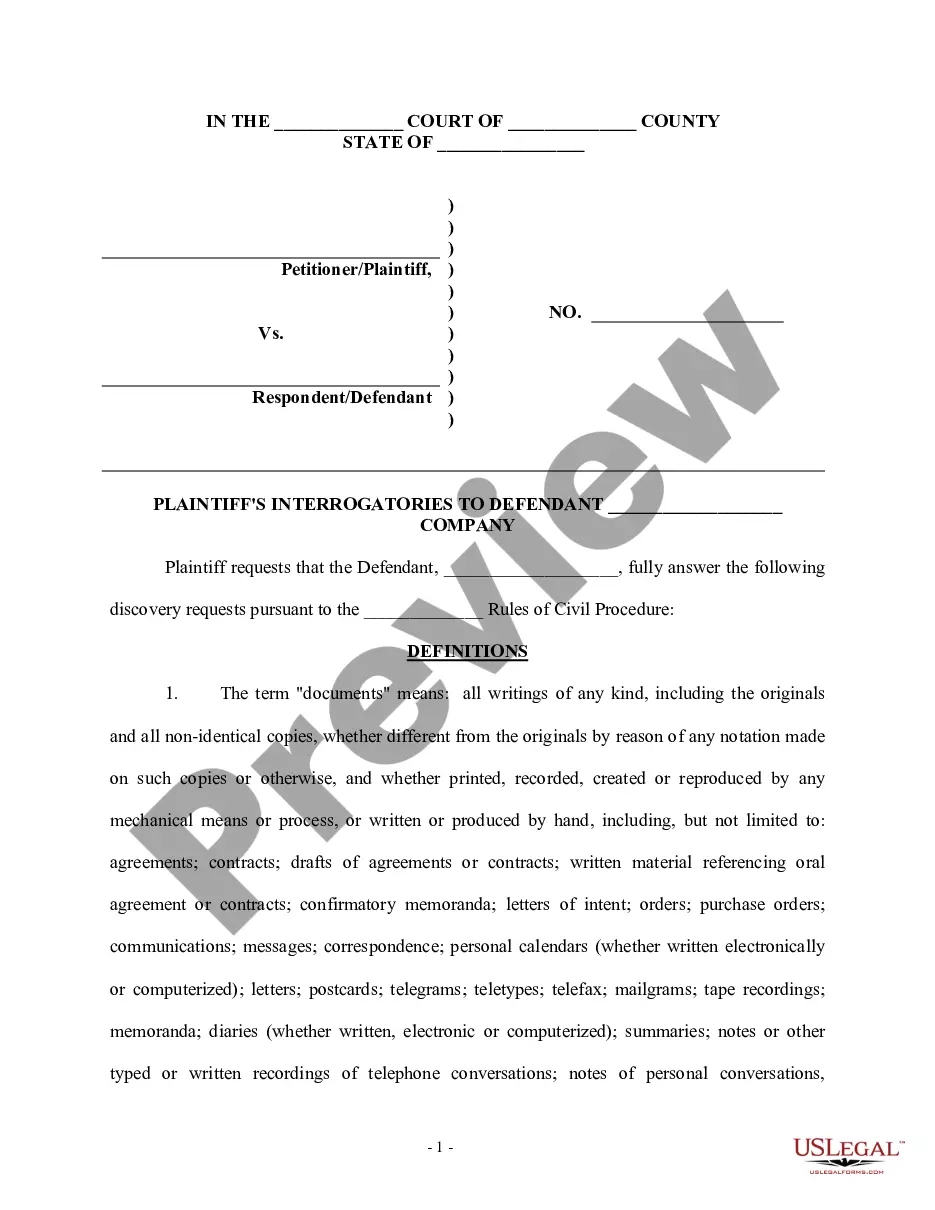
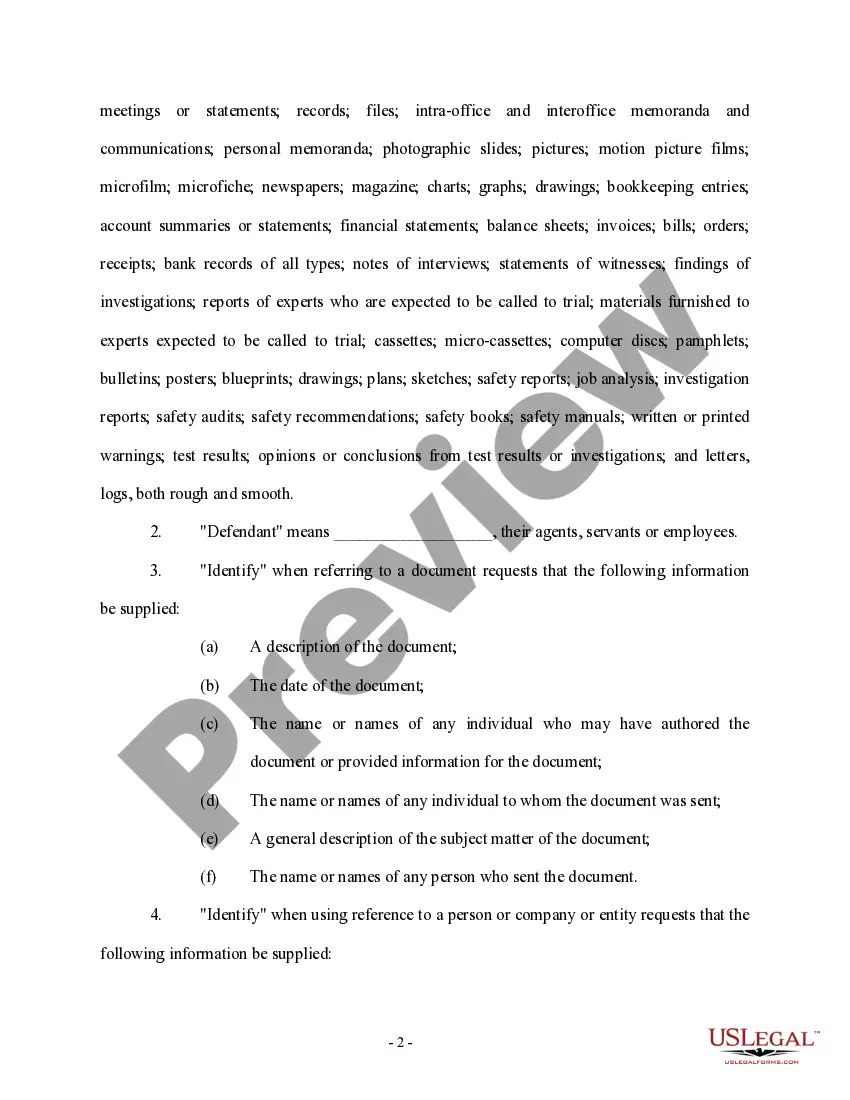
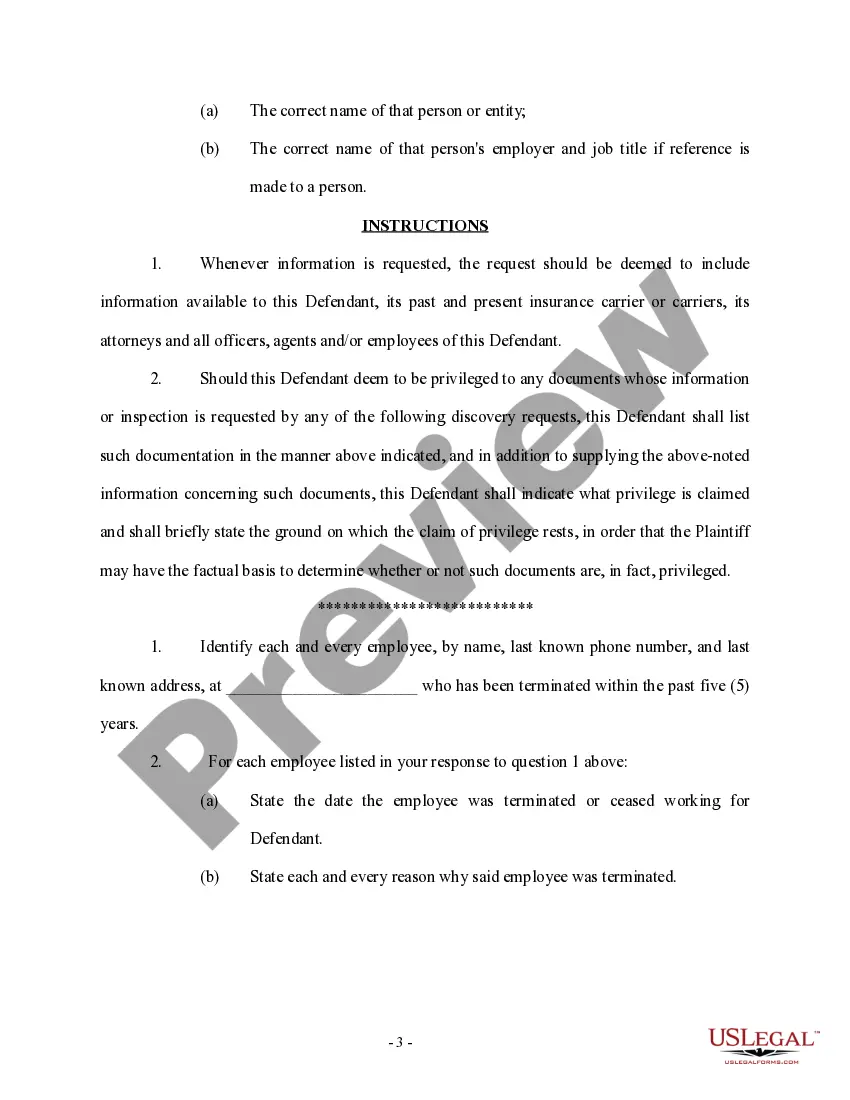
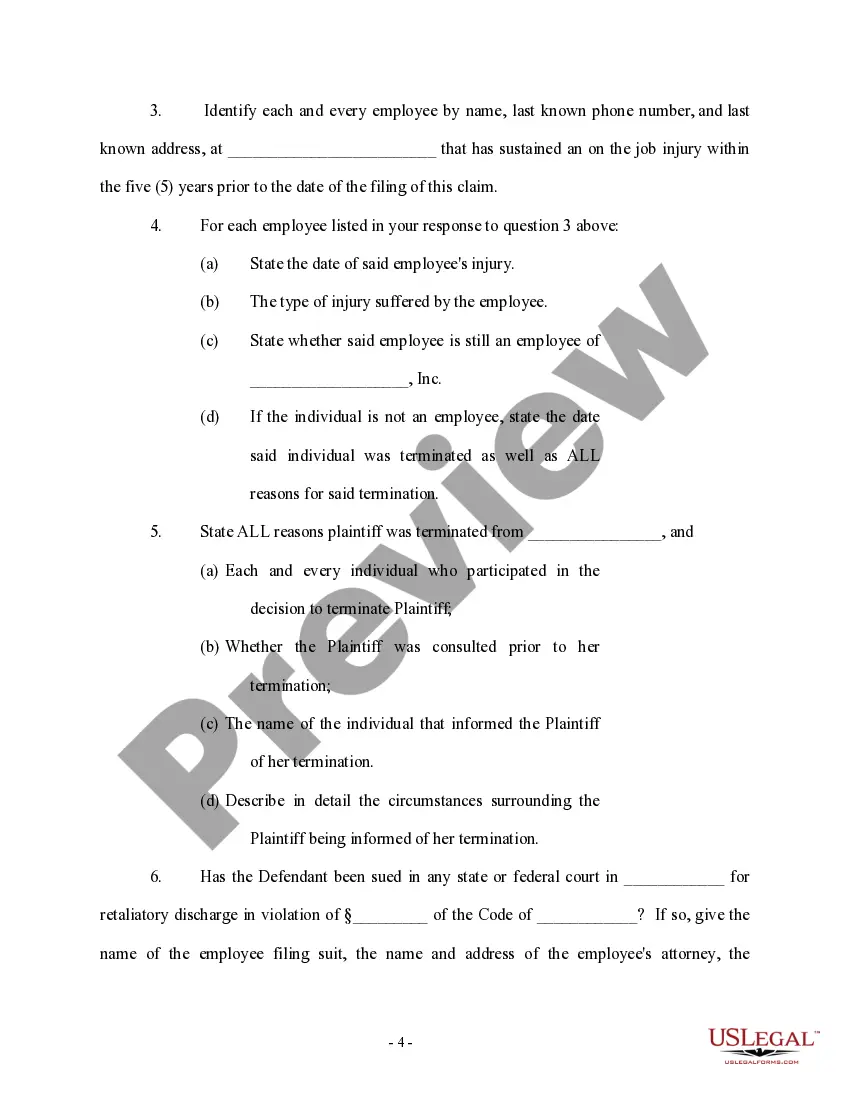
How to fill out Interrogatories To Defendant - Worker's Compensation - Wrongful Termination?
- If you're a returning user, log in to your account and select the required template. Ensure your subscription is active; renew if necessary.
- For first-time users, start by checking the form previews and descriptions. Confirm it's the right template that meets local jurisdiction needs.
- If the chosen template doesn't meet your expectations, utilize the Search tab to find alternative forms. Ensure any new selection aligns with your requirements.
- Once you find the appropriate document, click the Buy Now button and select your preferred subscription plan. Register for an account to access our extensive library.
- Make your purchase by entering your credit card details or selecting your PayPal account for payment.
- After completing your purchase, download the form to your device for easy access. You can also find it anytime in the My Forms section of your account.
US Legal Forms stands out with its extensive library of over 85,000 customizable legal forms, offering more options than competitors at similar costs. This ensures you have exactly what you need at your fingertips.
In conclusion, using US Legal Forms simplifies the process of obtaining wrongful legal documents. With expert assistance available, ensure your documents are completed accurately. Start your journey today and experience seamless legal documentation!
Form popularity
FAQ
Fighting wrongful termination can be worthwhile, especially when you believe your rights have been violated. By pursuing a wrongful termination claim, you may reclaim lost wages, secure compensation for emotional distress, and restore your reputation. Engaging with the US Legal Forms platform allows you to access the necessary legal forms and resources to navigate this process effectively. Ultimately, standing up for your rights can also help ensure that others do not face similar wrongful actions in the workplace.
The amount you can sue for wrongful termination varies based on factors such as lost wages, emotional distress, and legal fees. If you have a strong case, compensation can cover the financial impacts of losing your job. Consulting with a legal professional can help you understand potential damages. Assessing your situation can provide clarity on what to expect in a wrongful termination lawsuit.
HR typically needs documentation that justifies an employee's termination, such as performance evaluations, disciplinary records, and written warnings. These documents should detail any behavioral or performance issues that led to the decision. It's important that HR follows company policies and relevant laws to avoid wrongful termination claims. Transparency in the process is essential.
The odds of winning a wrongful termination case depend on several factors, including the strength of your evidence and the legal circumstances surrounding your termination. Cases with clear documentation and witness testimonies often have higher success rates. Each situation is unique, so it is essential to consult a legal professional to assess your specific case. A thorough understanding can help improve your chances.
An example of wrongful termination could involve an employee being fired shortly after reporting unsafe working conditions. In another scenario, an employee might be dismissed due to their race or gender, which violates employment laws. Each case varies, but understanding these examples can help you recognize potential wrongful termination situations. Knowing your rights is vital in such circumstances.
To prove wrongful termination, you need to present evidence that shows your employer violated laws or contractual agreements. This can include demonstrating that you were fired for discriminatory reasons or in retaliation for reporting unlawful practices. Gathering documentation and testimonies can strengthen your case. Seeking professional legal guidance can further clarify the process of proving wrongful termination.
To prove wrongful termination, you need to establish that your dismissal violated a law or employment agreement. Documentation, like performance reviews or emails, can support your claim. Additionally, you should demonstrate that your termination was unfair or retaliatory. Consulting with legal experts can provide clarity on your situation.
People can get wrongfully convicted due to various reasons, including faulty evidence, witness misidentification, or prosecutorial misconduct. Sometimes, a lack of adequate legal representation can lead to wrongful convictions. These errors highlight the importance of having a robust legal system. Understanding your rights can help prevent wrongful convictions.
A suitable word for 'wrongful' is 'unlawful'. Both terms indicate that an action goes against established laws or moral principles. Whether dealing with personal disputes or broader legal contexts, recognizing unlawful behavior is essential for pursuing appropriate actions through platforms like US Legal Forms.
In legal terms, 'wrongful' refers to actions that are unlawful or unethical, leading to harm or injury to others. This can include wrongful acts like negligence or intentional misconduct. Understanding the legal definition is vital for individuals seeking justice or remedies for wrongful actions.